Pattern identification Math Worksheets for Ages 6-7
6 filtered results
-
From - To
Discover our engaging Pattern Identification Math Worksheets designed specifically for children ages 6-7! These worksheets provide a fun and interactive way for young learners to recognize and create patterns, a key skill in early mathematics. Through a variety of exercises, kids will enhance their critical thinking and problem-solving abilities while developing a solid foundation in mathematical concepts. With colorful illustrations and age-appropriate challenges, these printable resources make learning enjoyable and effective. Perfect for use at home or in the classroom, our pattern identification worksheets encourage creativity and concentration, helping your child to thrive in their educational journey. Start exploring today!
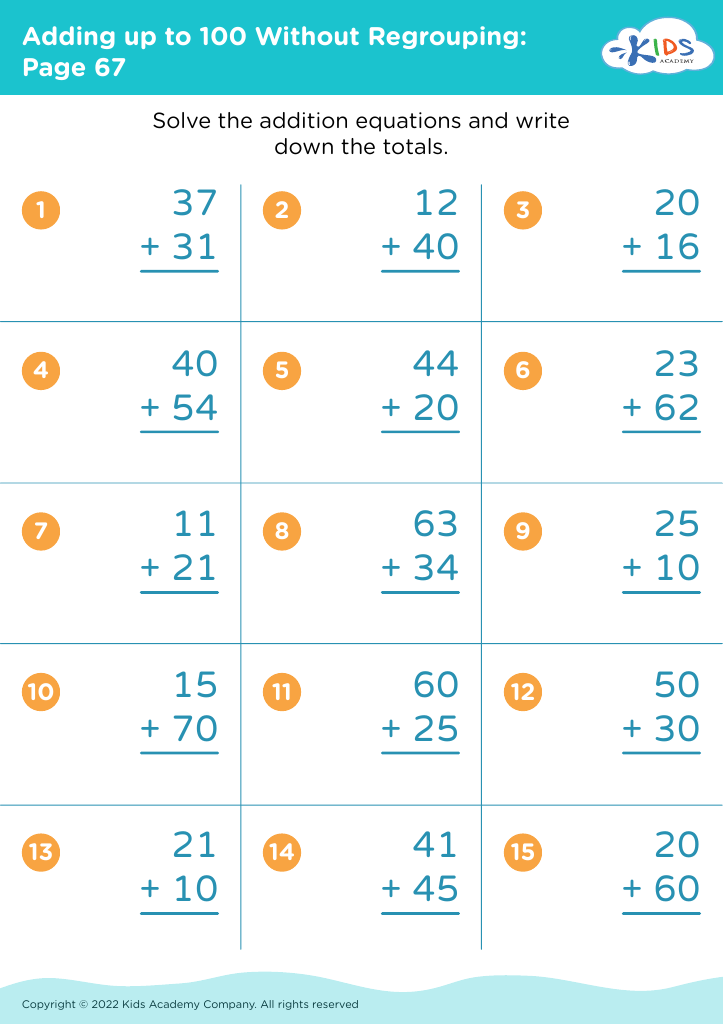
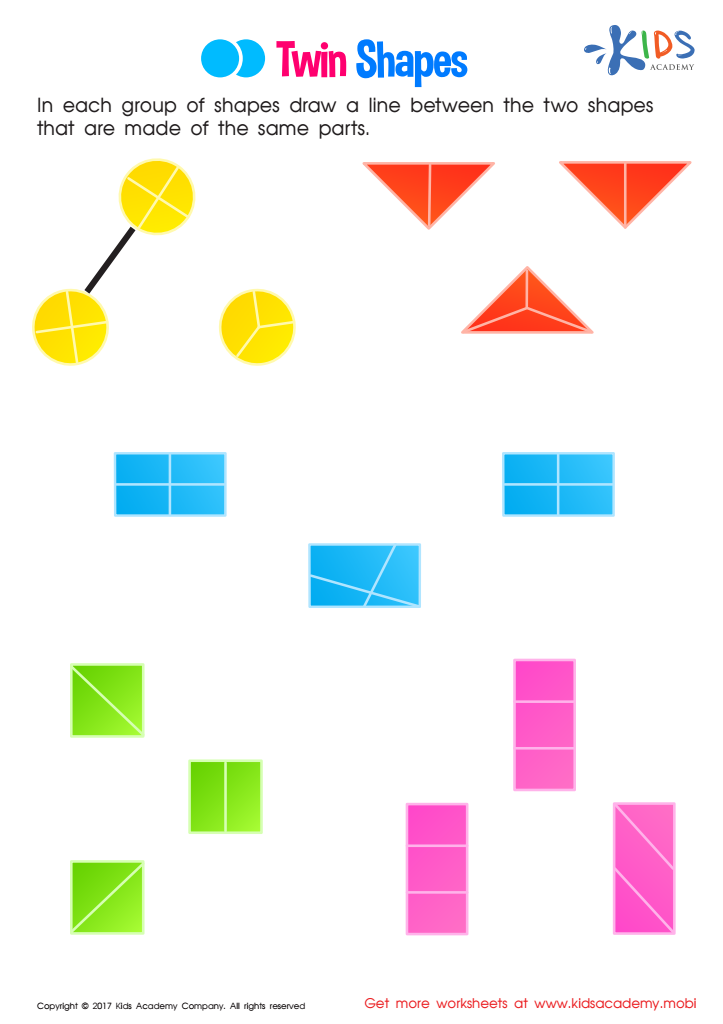
Twin Shapes Worksheet
 Assign to My Students
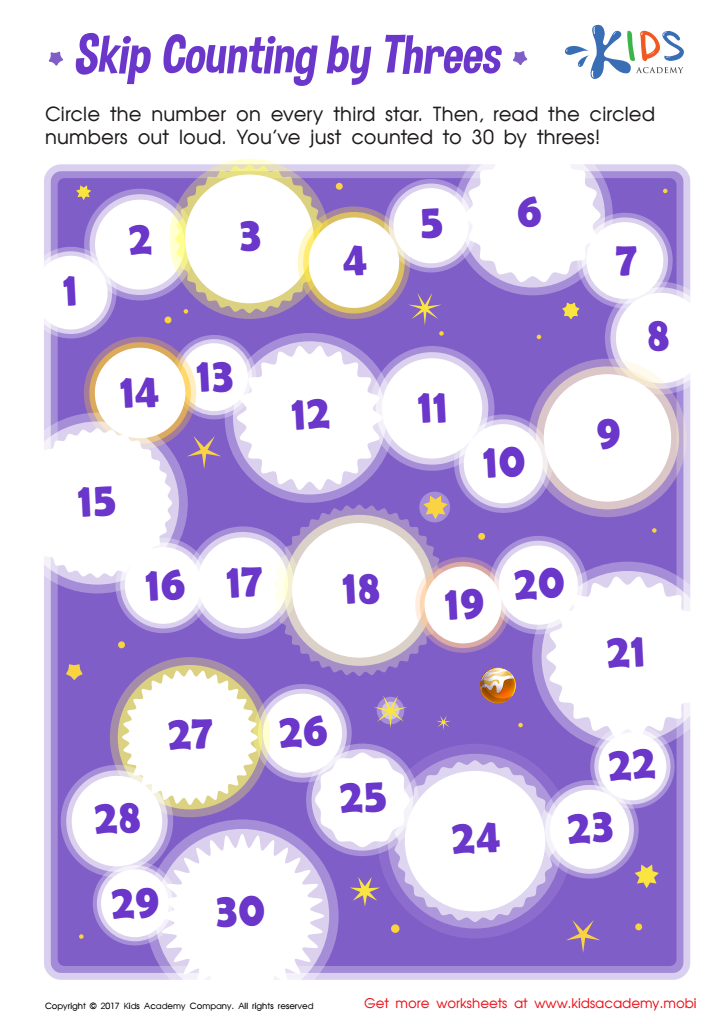
Skip Counting By Three Printable
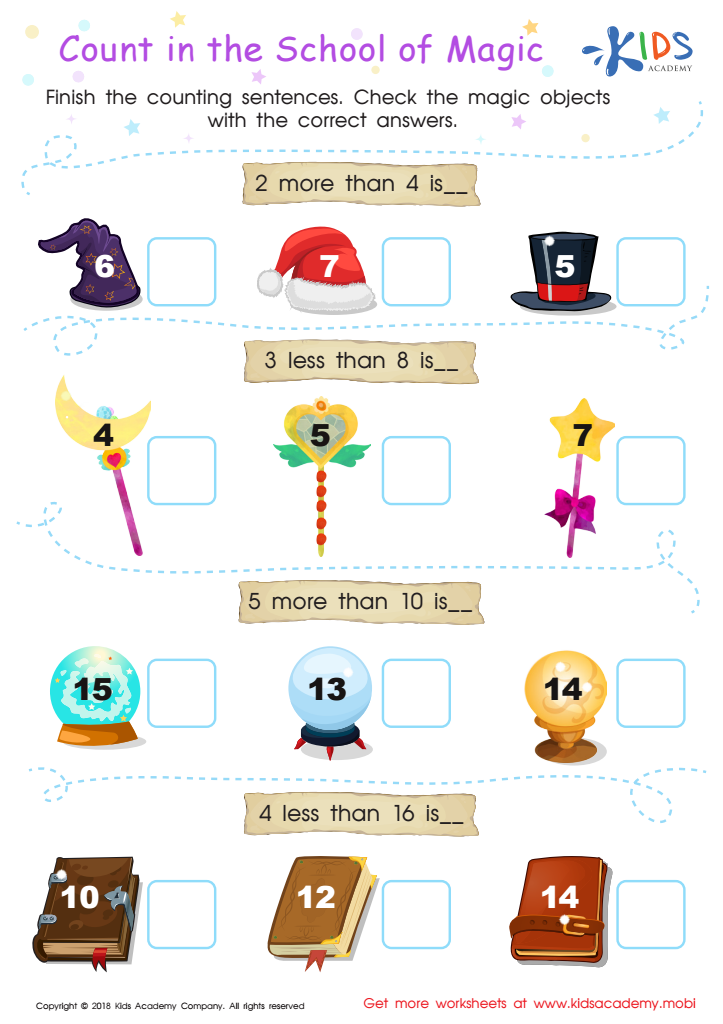
Count in the School of Magic Worksheet
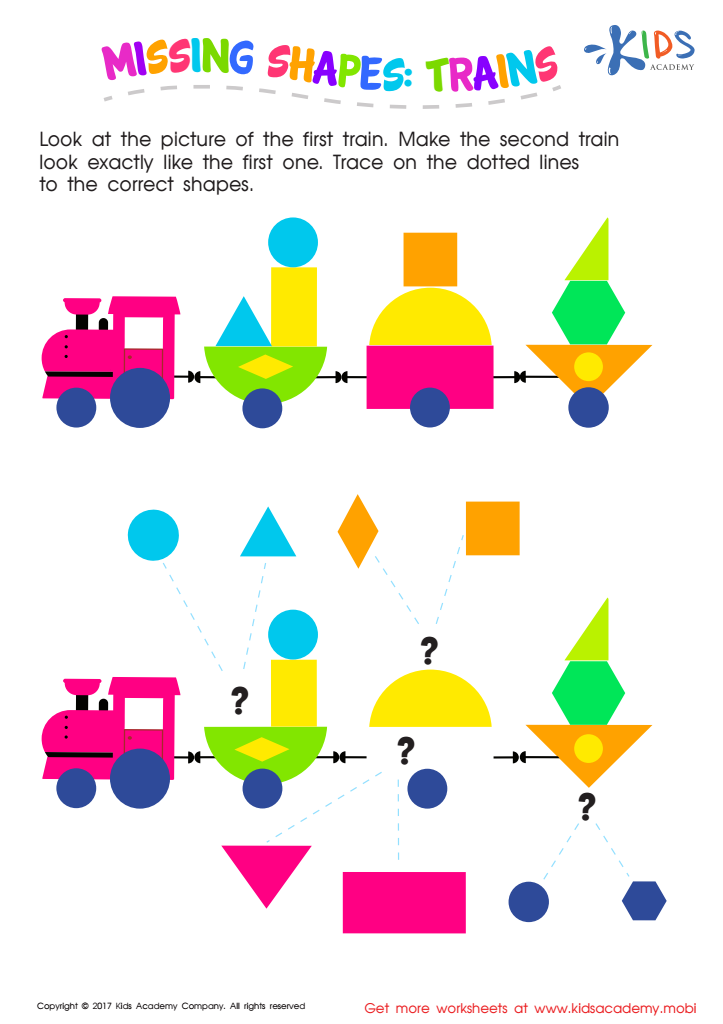
Missing Shapes: Trains Worksheet








Pattern identification in mathematics is a crucial skill for children aged 6-7, and it holds significant importance for both parents and teachers. At this developmental stage, children begin to develop critical thinking and problem-solving abilities, and recognizing patterns helps strengthen these skills. Patterns serve as the foundation for understanding more complex mathematical concepts, such as addition, subtraction, and multiplication later on.
When children identify patterns, they learn to anticipate and predict outcomes, enhancing their analytical thinking. This skill is not only limited to math but extends to science, language arts, and even everyday life. For instance, recognizing patterns in sounds, behaviors, or shapes helps children categorize and make sense of the world around them.
Moreover, pattern identification fosters cognitive development. It encourages children to engage in logical reasoning and can be a fun and engaging way to learn. Parents and teachers who value and support this learning will find that it builds confidence and curiosity in young learners, ultimately instilling a love for math. By focusing on pattern recognition now, they prepare children for future academic challenges and everyday problem-solving skills essential for success in life.








