
Recognizing equivalent fractions Math Worksheets for Ages 6-7
5 filtered results
Difficulty Level
Grade
Age
-
From - To
Subject
Activity
Standards
Enhance your child's math skills with our Recognizing Equivalent Fractions worksheets, designed specifically for ages 6-7! These engaging worksheets provide young learners with the tools they need to grasp the concept of equivalent fractions through fun exercises and colorful visuals. With age-appropriate activities, kids will practice identifying fractions that are equal, building a solid foundation for future math success. Our worksheets encourage independent learning and help develop critical thinking skills, making math enjoyable and accessible. Perfect for classroom use or at-home practice, these resources ensure that your child gains confidence and proficiency in recognizing fractions. Download now to start the adventure in learning!
Favorites
With answer key
Interactive
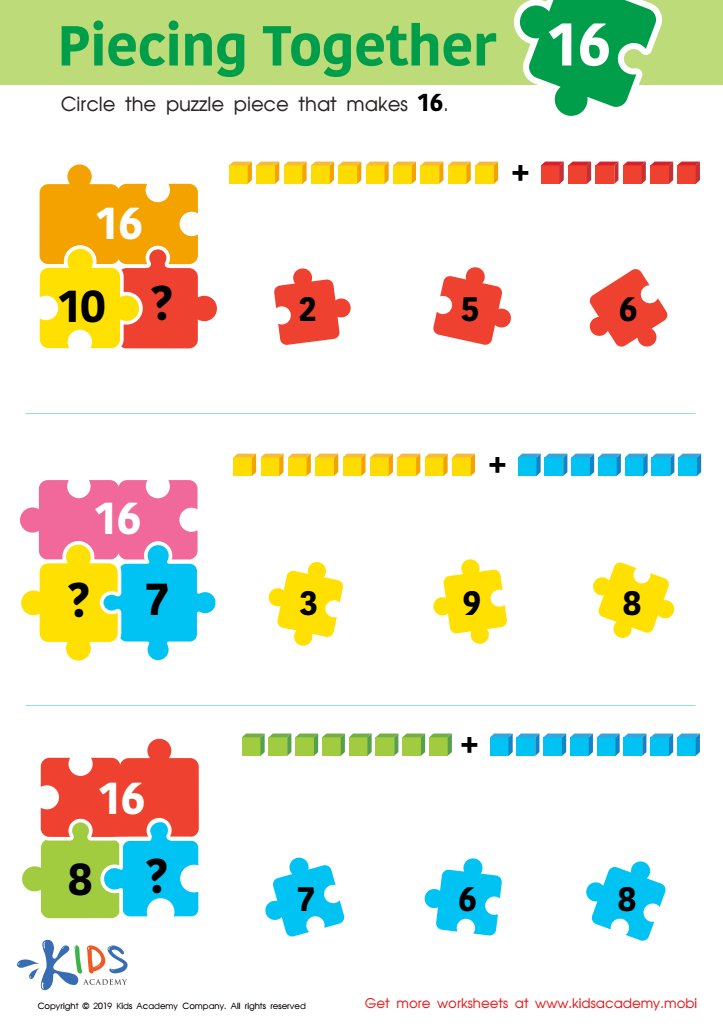
Piecing Together 16 Worksheet
Combine learning with fun using this colorful worksheet! Ask your preschoolers what they see in the picture, then help them solve the mathematical equations on the puzzle pieces. One equation is missing on each; have them circle the piece that will make the bottom puzzle piece numbers equal 16. Use puzzles and bright colors to teach - it's one of the best ways your kids can learn!
 Assign to My Students
Piecing Together 16 Worksheet
Worksheet
Join Kids Academy for Free
Who is primarily going to use this learning content?






Recognizing equivalent fractions is vital for children aged 6-7 as it lays the foundation for their mathematical understanding and problem-solving skills. At this early stage, students are developing critical thinking and reasoning abilities, and grasping the concept of equivalent fractions helps them to make connections between different numbers and values.
First, recognizing equivalent fractions enhances a child's number sense, allowing them to see relationships between fractions, such as 1/2 being equal to 2/4. This understanding fosters flexibility in their mathematical thinking, enabling them to compare and simplify fractions effortlessly. Additionally, it aids in their comprehension of more complex concepts as they progress in mathematics, such as adding, subtracting, and multiplying fractions.
For parents and teachers, supporting children in this learning endeavor promotes confidence and a positive attitude towards mathematics. It enhances their ability to tackle future challenges, as a solid grasp of fractions serves as a cornerstone for future success in both math and daily life scenarios, such as cooking or sharing. Encouraging discussions about fractions at home or in the classroom can create rich learning experiences that stimulate interest and engagement, ultimately cultivating a lifelong love for math.








