Reinforce math concepts Math Worksheets for Ages 6-7
3 filtered results
-
From - To
Discover the ideal resource for young learners with Kids Academy's "Reinforce Math Concepts" worksheets for ages 6-7. Our expertly crafted worksheets focus on essential math skills including addition, subtraction, geometry, and number sense. Designed to align with educational standards, each worksheet provides engaging and interactive activities that keep children motivated and excited to learn. Perfect for both classroom and at-home practice, these worksheets ensure that foundational math concepts are reinforced in a fun and meaningful way. Help your child build confidence in their math abilities and develop a love for learning with Kids Academy's dedicated resources.
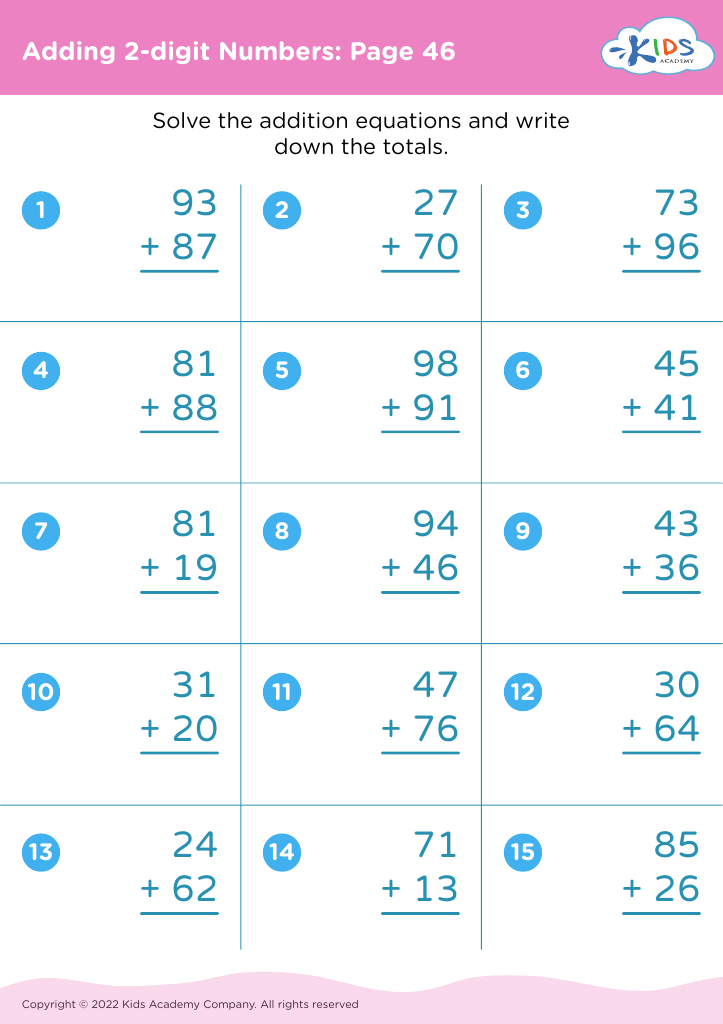
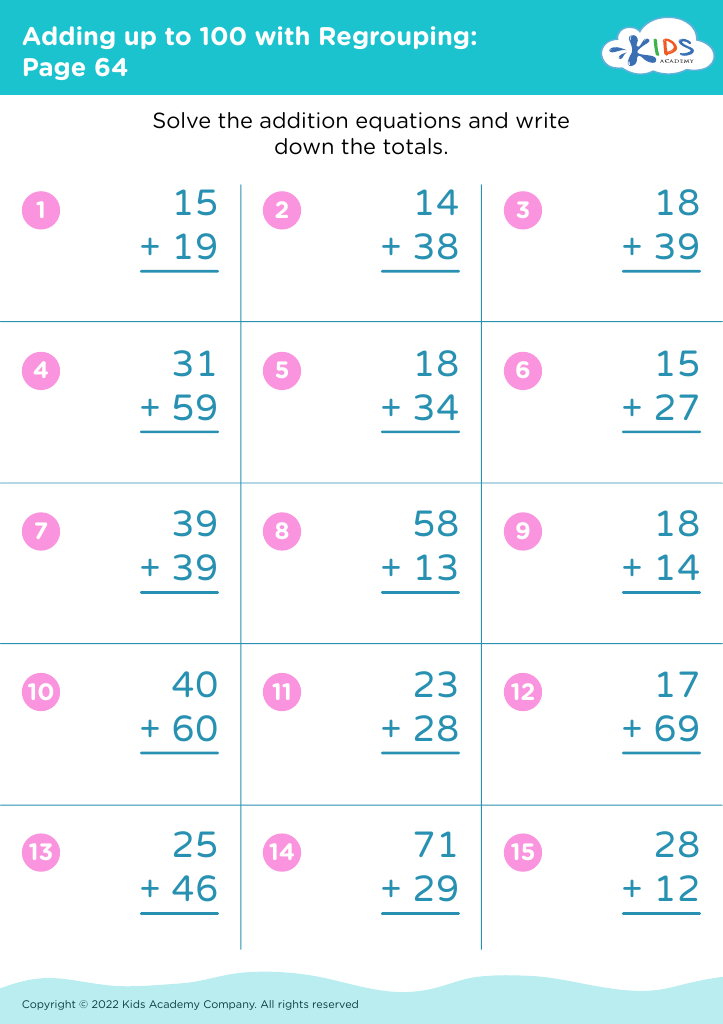
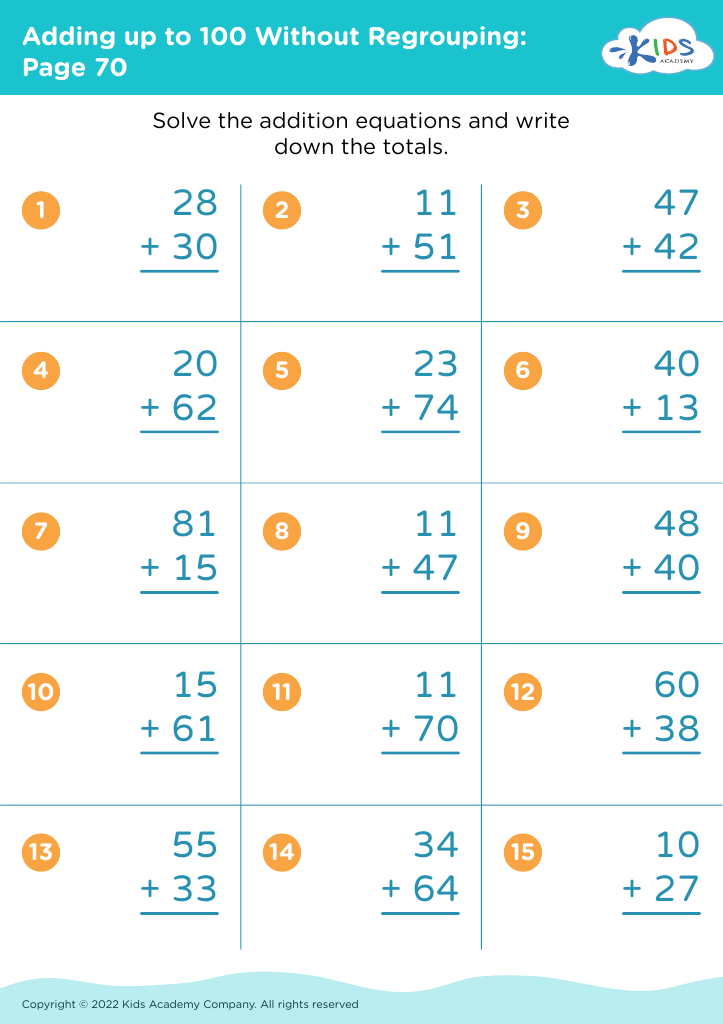








Parents and teachers should prioritize reinforcing math concepts for children aged 6-7 because it lays the foundation for their future academic success and everyday life skills. At this critical developmental stage, kids are naturally curious and rapidly developing cognitive abilities that are essential for grasping basic math. By reinforcing math concepts, adults help children build a strong numerical foundation, understanding relationships between numbers, and solving simple problems, which are pivotal for more advanced concepts they will encounter later.
Reinforcement helps to solidify what children learn in the classroom, reducing the likelihood of knowledge gaps that could hinder future learning. It boosts their confidence in their math abilities, encouraging a positive attitude towards the subject, which is crucial for sustained interest and success in math. Parents and teachers can use engaging methods, like games or practical examples, to make math fun and relevant to everyday situations, further solidifying their understanding and making the learning process enjoyable.
Moreover, early math skills are closely linked with other cognitive abilities, fostering overall intellectual growth. By caring about and reinforcing math concepts at this age, parents and teachers are not only contributing to academic success but also equipping children with critical problem-solving and logical thinking skills that are invaluable throughout life.








