Shape comparison Math Worksheets for Ages 6-7
3 filtered results
-
From - To
Help young learners master essential geometry skills with our Shape Comparison Math Worksheets for ages 6-7. These engaging activities focus on identifying, comparing, and categorizing shapes, fostering critical thinking and spatial reasoning. With colorful illustrations and fun exercises, children will learn to recognize different shapes and understand their attributes, such as size and symmetry. Perfect for classroom use or at-home practice, our worksheets provide a solid foundation for more advanced geometry concepts. Parents and teachers can support their students' mathematical development with our expertly designed materials tailored specifically for young minds. Empower your child with the tools they need to succeed in math!
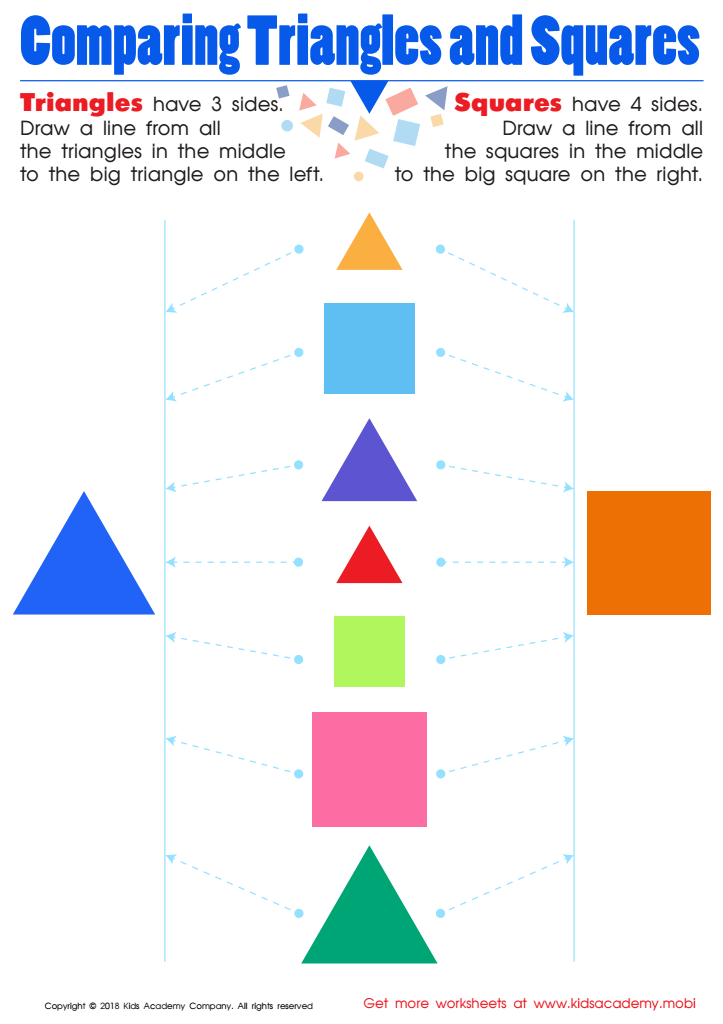
Comparing Triangles Squares Worksheet
 Assign to My Students
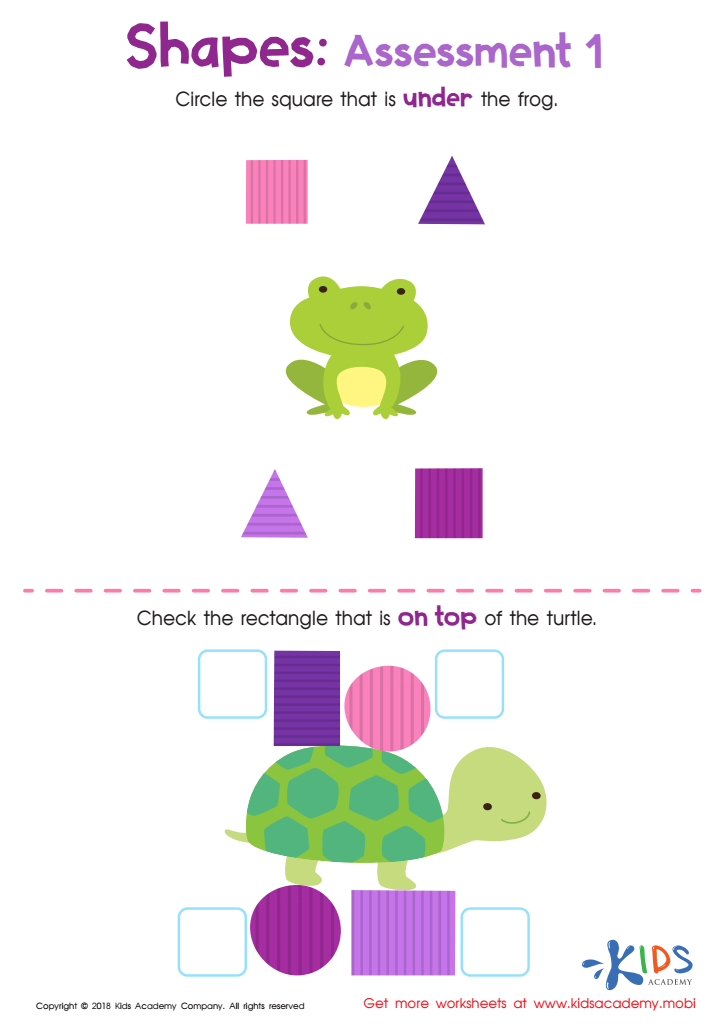
Geometry – Assessment 1 Worksheet
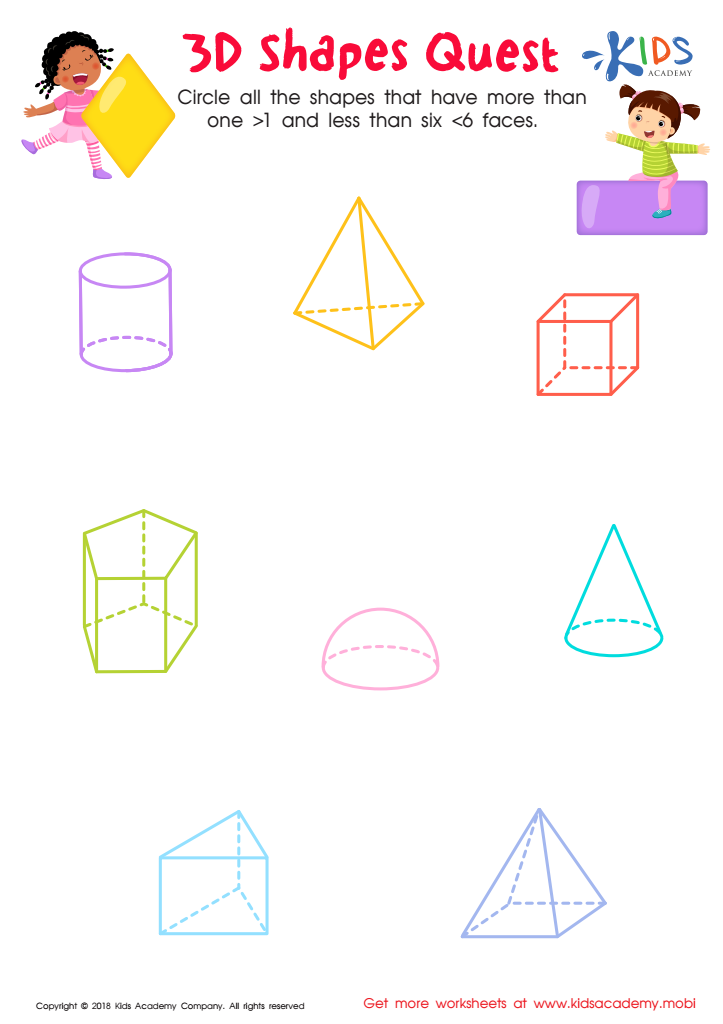
3D Shapes Quest Worksheet


.jpg)





Shape comparison math is a fundamental skill for children aged 6-7, and parents and teachers should prioritize it for several key reasons. Firstly, it lays the groundwork for more advanced mathematical concepts, such as geometry and spatial reasoning. By recognizing and comparing shapes, children begin to understand properties and attributes like size, symmetry, and position, which are critical for later math success.
Additionally, shape comparison helps develop visual discrimination, which is not only vital in math but also enhances reading and writing skills. For example, the ability to distinguish between similar letters like 'b' and 'd' hinges on strong visual discrimination skills developed through activities like shape comparison.
Shape comparison also fosters critical thinking and problem-solving abilities. When children compare shapes, they engage in analysis, identify patterns, and make judgments based on observed characteristics—skills that are transferable to a wide range of academic subjects and real-world situations.
Lastly, engaging young children in shape comparison activities can be fun and interactive, which keeps them motivated and interested in learning. Using puzzles, games, and hands-on activities, parents and teachers can turn learning into an enjoyable process, further encouraging cognitive development and a lifelong love for math. All these factors make shape comparison an indispensable component of early childhood education.








