Spatial Orientation Math Worksheets for Ages 6-7
4 filtered results
-
From - To
Explore our engaging "Spatial Orientation Math Worksheets for Ages 6-7" designed to develop your child's understanding of spatial awareness. These worksheets from Kids Academy offer exciting activities that enhance learning by combining math concepts with spatial orientation. Children will practice recognizing shapes, following directions, and understanding position and movement within a space. Perfect for first graders, these exercises foster critical thinking and reasoning skills in a fun, educational manner. Boost your child's confidence in math by helping them visualize and interact with the world around them through our expertly crafted materials. Start their learning journey today!
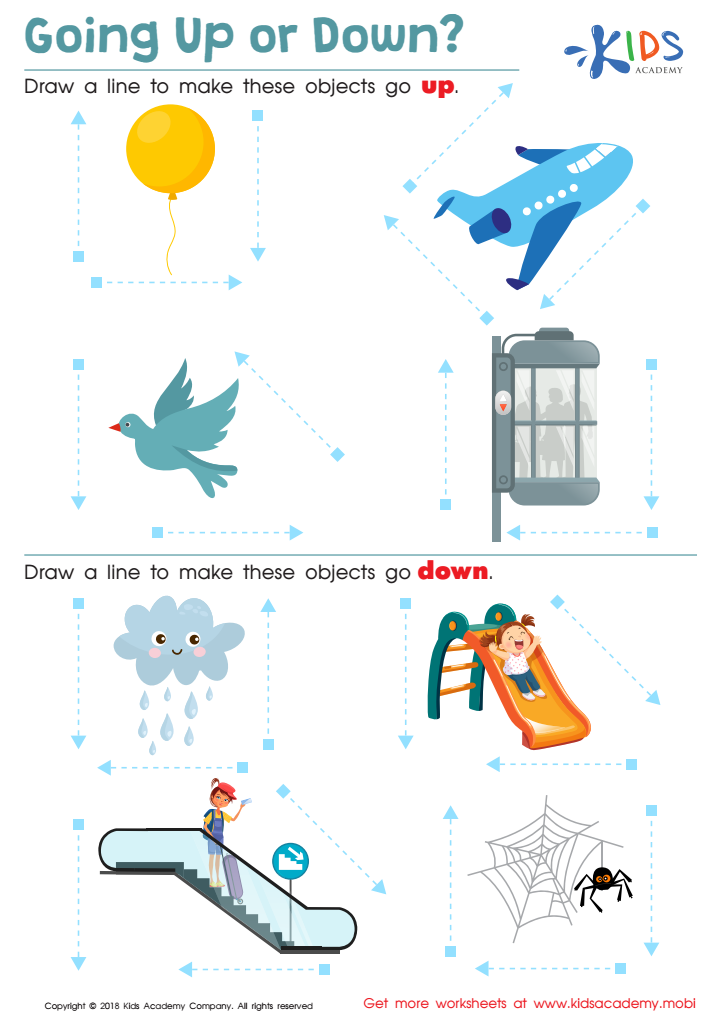
Going up or Down? Worksheet
 Assign to My Students
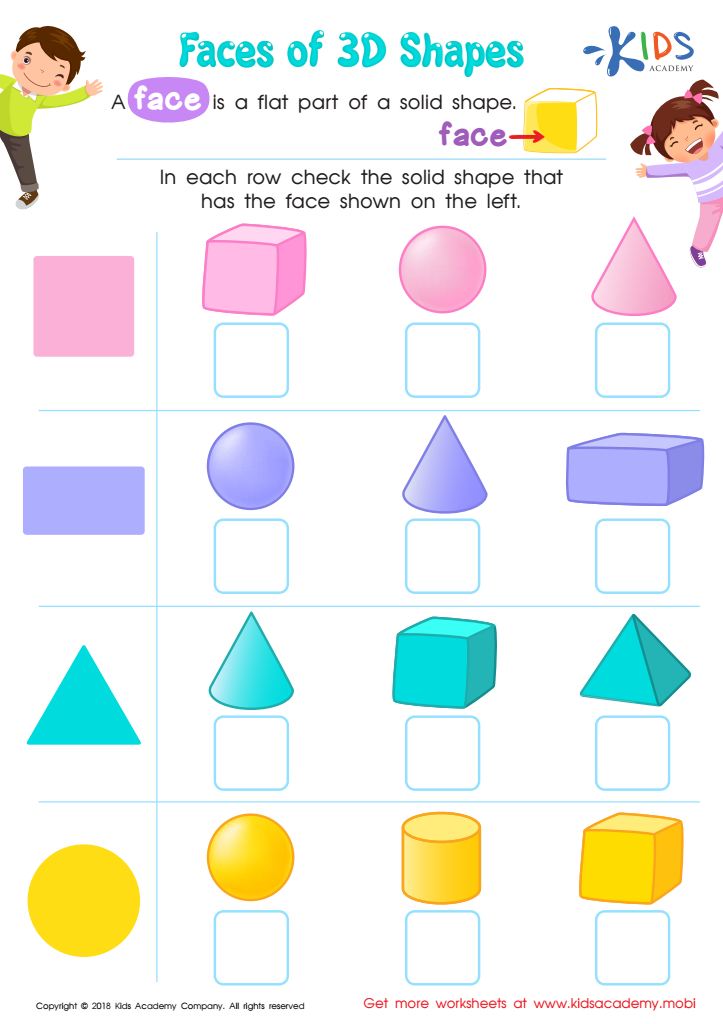
Faces of 3D Shapes Worksheet
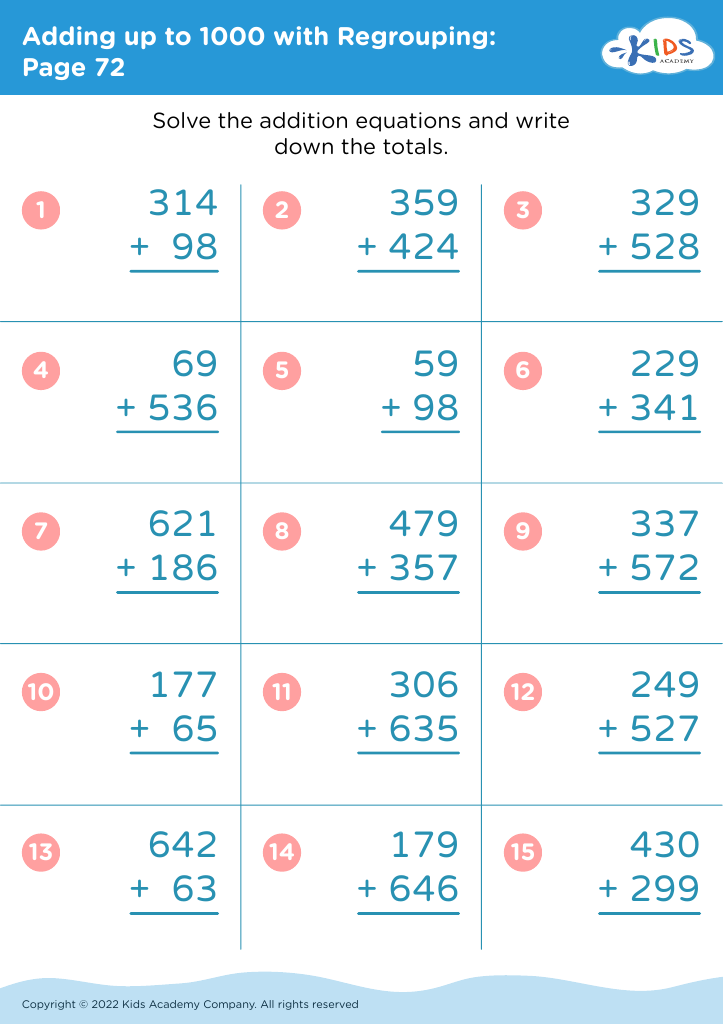
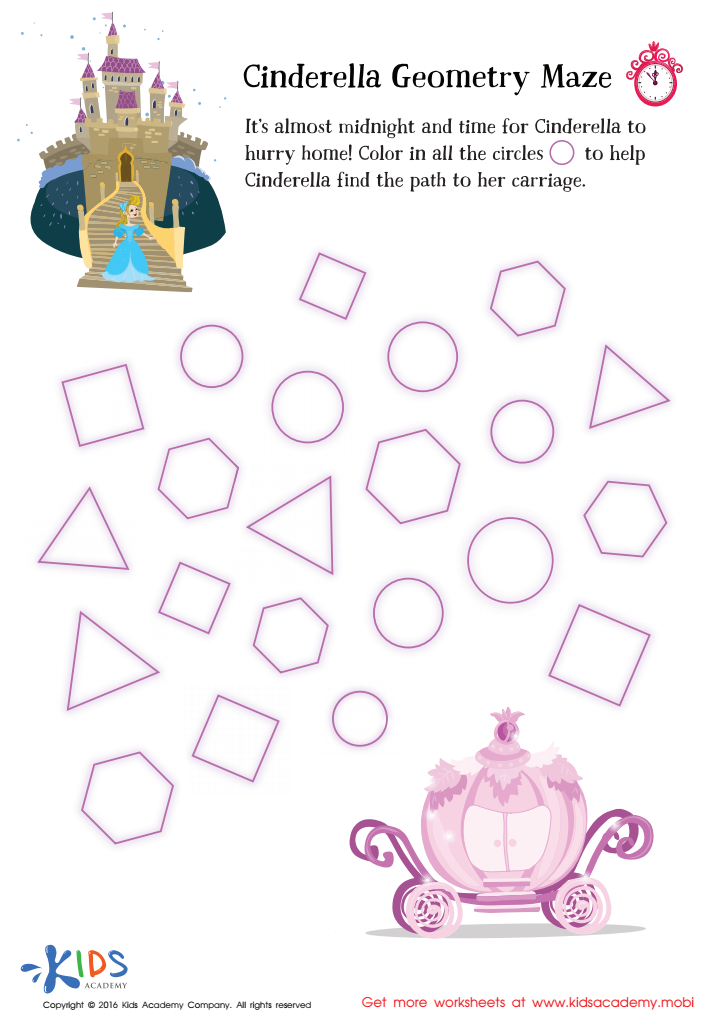
Cinderella Geometry Maze Worksheet





Spatial orientation in mathematics refers to the ability to understand and navigate the space around us, including concepts like direction, distance, and location. For children aged 6 to 7, developing strong spatial orientation skills is crucial for several reasons.
Firstly, these skills form the foundation for learning geometry, a key component of math. Understanding shapes, their properties, and how they fit together relies heavily on spatial orientation.
Secondly, spatial orientation enhances problem-solving abilities. When children grasp spatial concepts, they can better visualize problems and solutions, which is essential not only in math but in everyday tasks. For example, organizing a toy chest or understanding maps requires spatial skills.
Thirdly, it promotes cognitive development. Engaging in activities that develop spatial awareness, like playing with building blocks or puzzles, stimulates brain areas linked to memory and reasoning.
Last but not least, spatial skills are linked to success in STEM (Science, Technology, Engineering, and Mathematics) fields. Encouraging these skills early prepares students for more advanced concepts in math and science later on.
Thus, by fostering spatial orientation skills, parents and teachers equip children with essential tools for academic success and practical life skills, building a strong foundation for future learning and development.








