Spelling practice Math Worksheets for Ages 6-7
8 filtered results
-
From - To
Enhance your child's spelling skills with our engaging Spelling Practice Math Worksheets designed specifically for ages 6-7. These worksheets offer a fun blend of math and language learning, helping young learners sharpen their spelling abilities while developing essential math concepts. Each worksheet features colorful and interactive activities that keep children motivated and excited about learning. Perfect for classroom use or at-home practice, our resources cater to various learning styles, ensuring every child can thrive. Explore our collection today and watch your child gain confidence as they master spelling and math in an enjoyable and entertaining way!
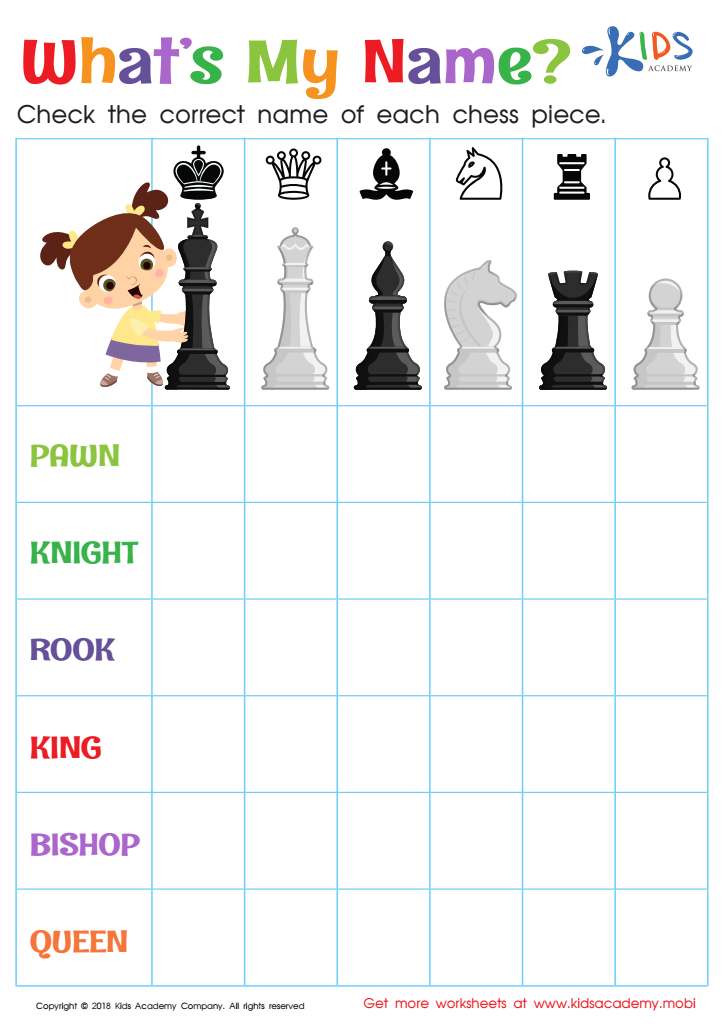
What's My Name? Worksheet
 Assign to My Students
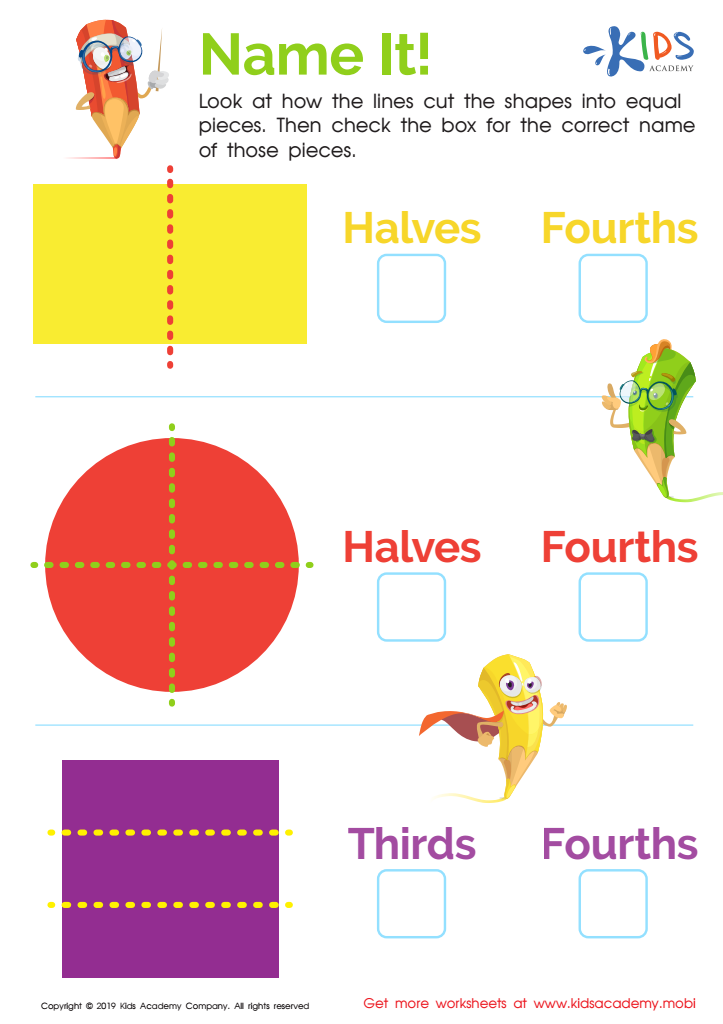
Name It! Worksheet
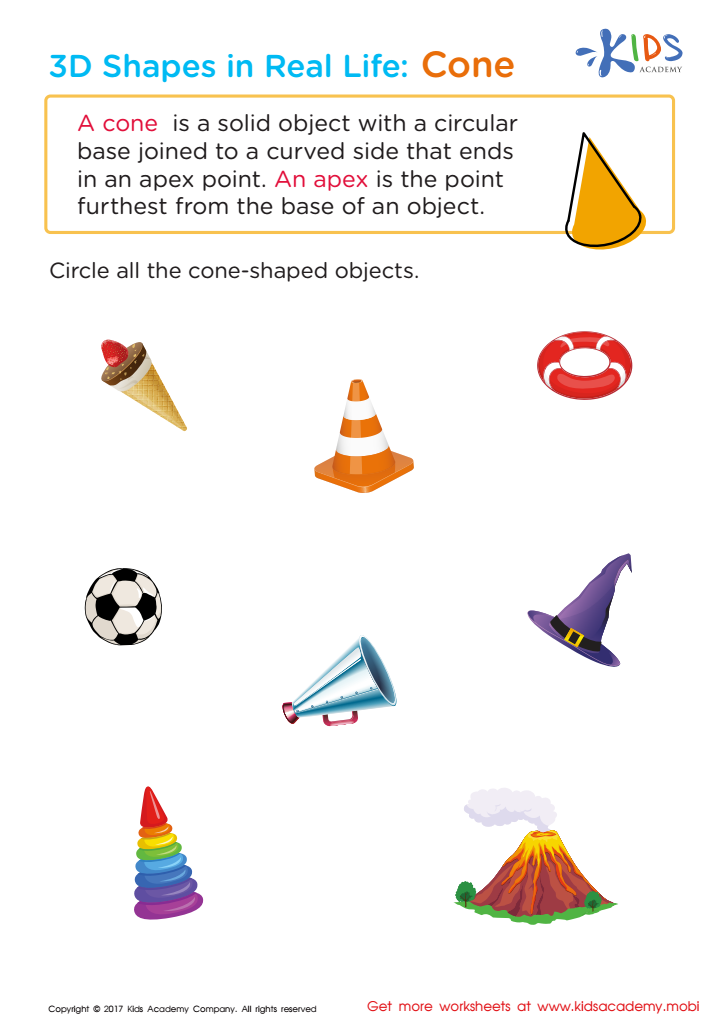
Shapes in Real Life: Cone Worksheet
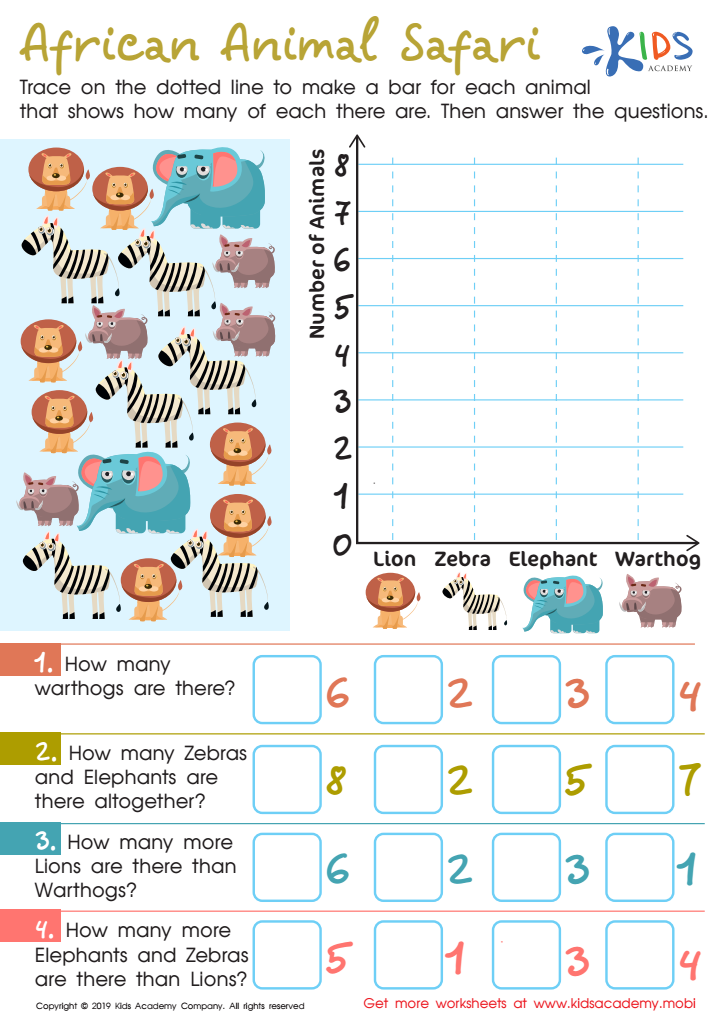
African Animal Safari Worksheet








Spelling practice in math for ages 6-7 is essential for developing foundational skills that are critical for both literacy and numeracy. At this age, children are not only learning mathematical concepts but also how to express these ideas through language. Incorporating spelling practice into math helps children become familiar with mathematical vocabulary, enabling them to articulate their thoughts and understand instructions better.
Moreover, effective communication is a crucial part of reasoning and problem-solving in math. When children spell out words like “addition,” “subtraction,” and “equals,” they reinforce their understanding of these concepts. This interlinking of spelling and math enhances cognitive connections, promoting better retention of mathematical terms and concepts.
Additionally, as children practice spelling in the context of math, they foster confidence in both their linguistic and numerical abilities. Enhanced spelling skills can improve overall reading comprehension, which is essential as they encounter more complex problems in the future.
Therefore, parents and teachers should prioritize spelling practice in math to cultivate well-rounded learners. This integrated approach not only supports academic development but also equips children with essential skills that will benefit them in all areas of learning.








