Telling time Math Worksheets for Ages 6-7
4 filtered results
-
From - To
Introducing our "Telling Time Math Worksheets for Ages 6-7," designed to make learning time fun and engaging for first graders. These printable worksheets enhance young learners’ ability to read both analog and digital clocks, bridging the gap between hours and minutes with colorful, interactive exercises. Tailored to meet educational standards, these worksheets help kids grasp the concept of time while strengthening their math skills. Perfect for classroom use or homeschooling, our resources support children in mastering telling time through practice and repetition, laying a solid foundation for future math success. Start their journey to confidence and proficiency in telling time today!
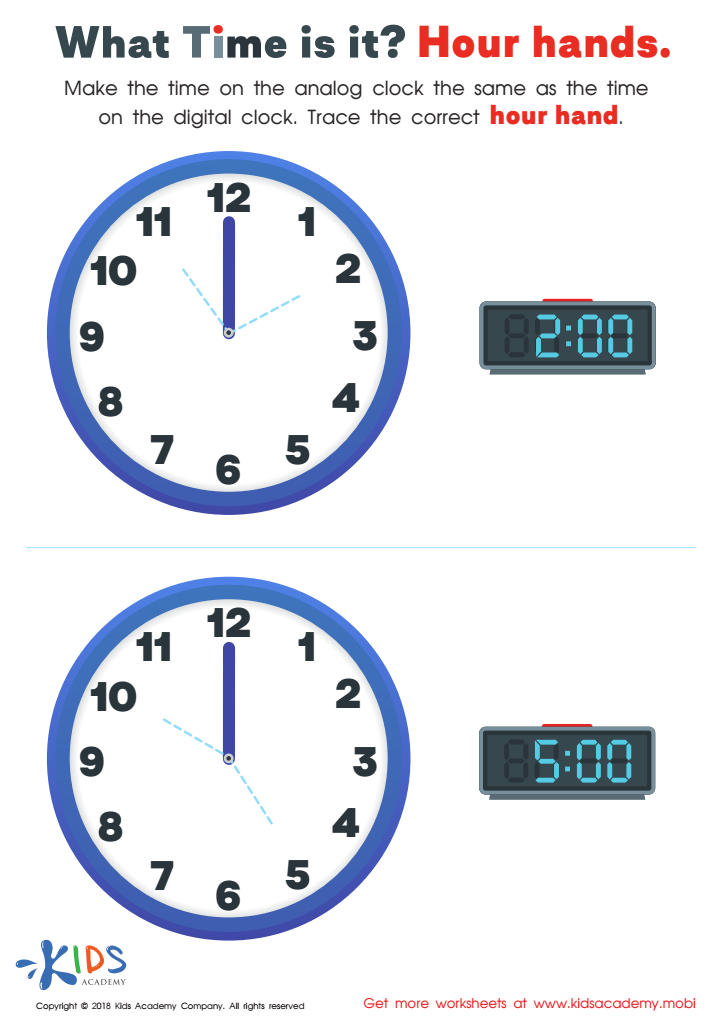
What Time Is it? Hour Hands Worksheet
 Assign to My Students



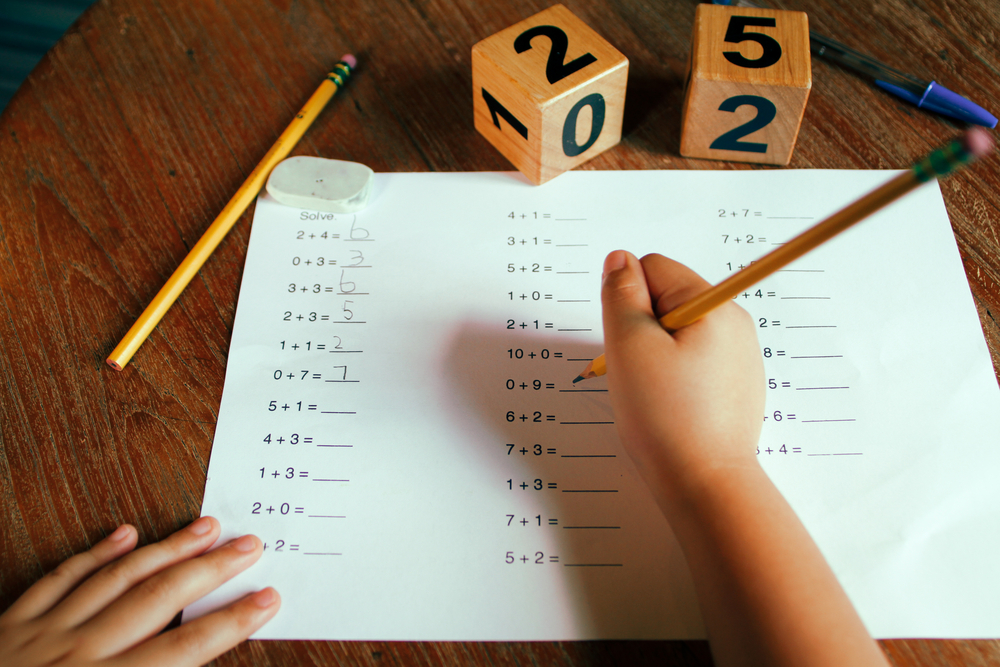



Understanding how to tell time is a fundamental skill that opens doors to various aspects of daily life and learning for children aged 6-7. At this developmental stage, learning to read clocks is crucial because it fosters a sense of routine and time management. As children begin their educational journey, knowing the time helps them grasp the concept of duration, aiding in structuring their day efficiently. This is particularly important for managing school activities, homework, tasks, and playtime, thereby instilling discipline and organizational skills early on.
Moreover, telling time intersects with essential math skills. It introduces children to basic arithmetic operations like addition and subtraction through calculating intervals. For instance, understanding that you have 30 minutes until the next class develops their ability to work with numbers contextually. Teachers also use the concept of time to enrich vocabulary and enhance cognitive skills by prompting discussions about daily schedules, sequencing events, and setting future goals.
In social contexts, knowing how to tell time promotes responsibility and independence. Children are more capable of meeting deadlines, making appointments, and becoming reliable young individuals. Intervention at this sensitive learning stage allows parents and teachers to scaffold life skills integral for holistic development, preparing children to navigate and understand the world better as they grow.








