Understanding equations Math Worksheets for Ages 6-7
7 filtered results
-
From - To
Unlock your child's mathematical potential with our Understanding Equations Math Worksheets, designed specifically for ages 6-7. These engaging worksheets help young learners grasp the fundamentals of equations through fun and interactive activities. Kids will explore basic addition and subtraction equations, develop problem-solving skills, and enhance their number sense in a playful manner. Each worksheet is crafted to reinforce learning and spark curiosity about mathematics. With vibrant visuals and age-appropriate challenges, your child will build a solid foundation for future math success. Conquer equations with confidence and enjoyment—download our worksheets today to start this exciting math adventure!
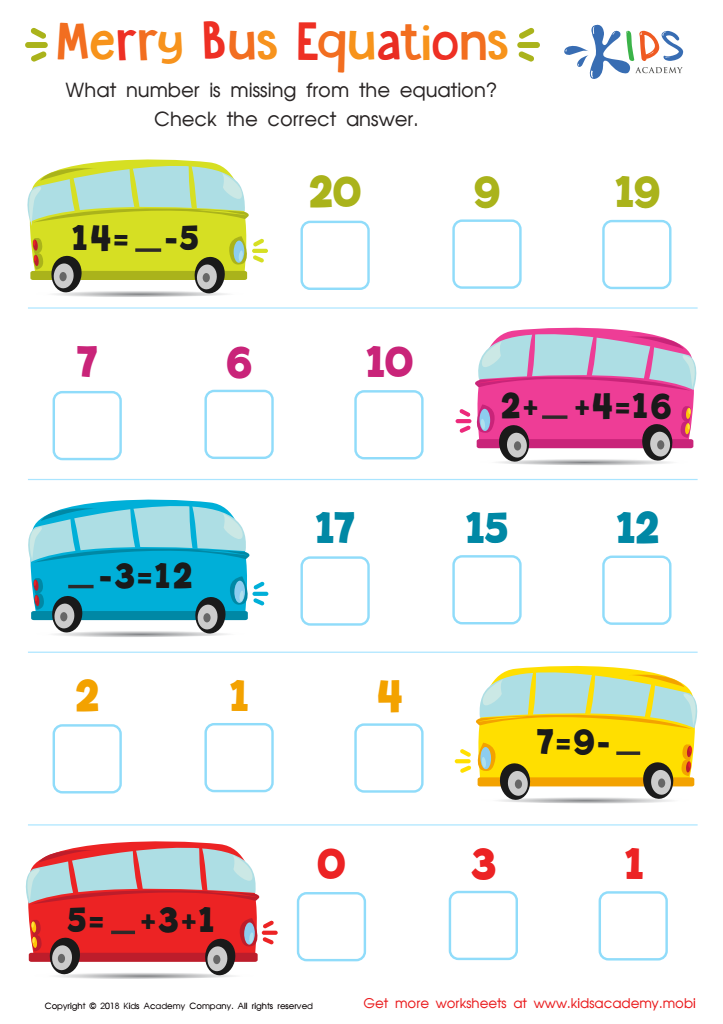
Merry Bus Equations Worksheet
 Assign to My Students
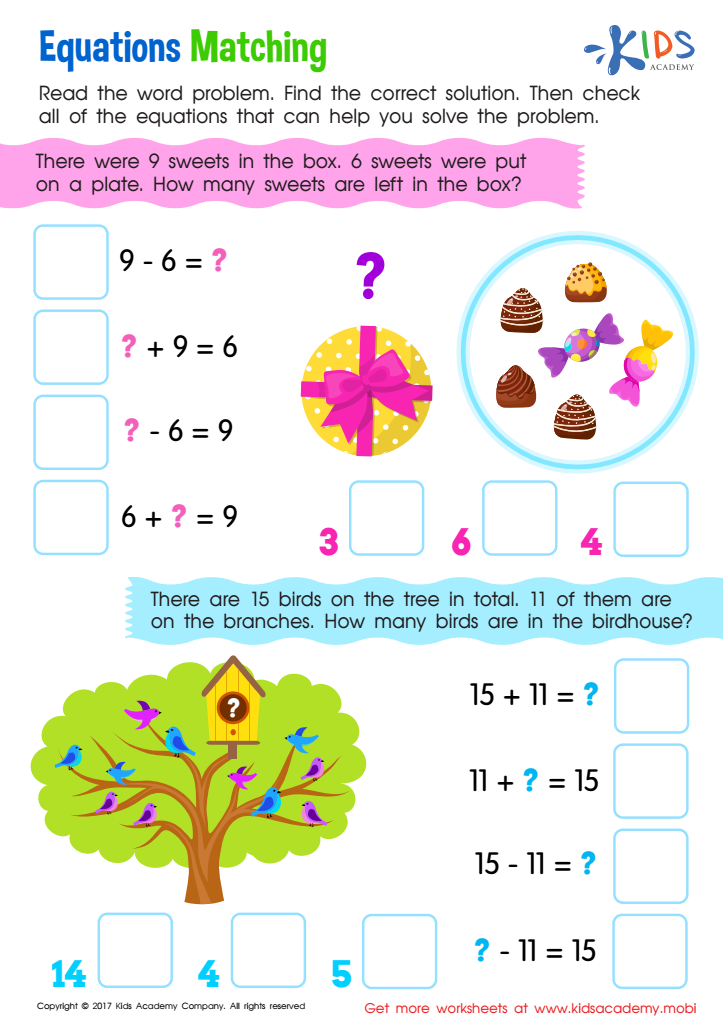
Equations Matching Word Problems Worksheet
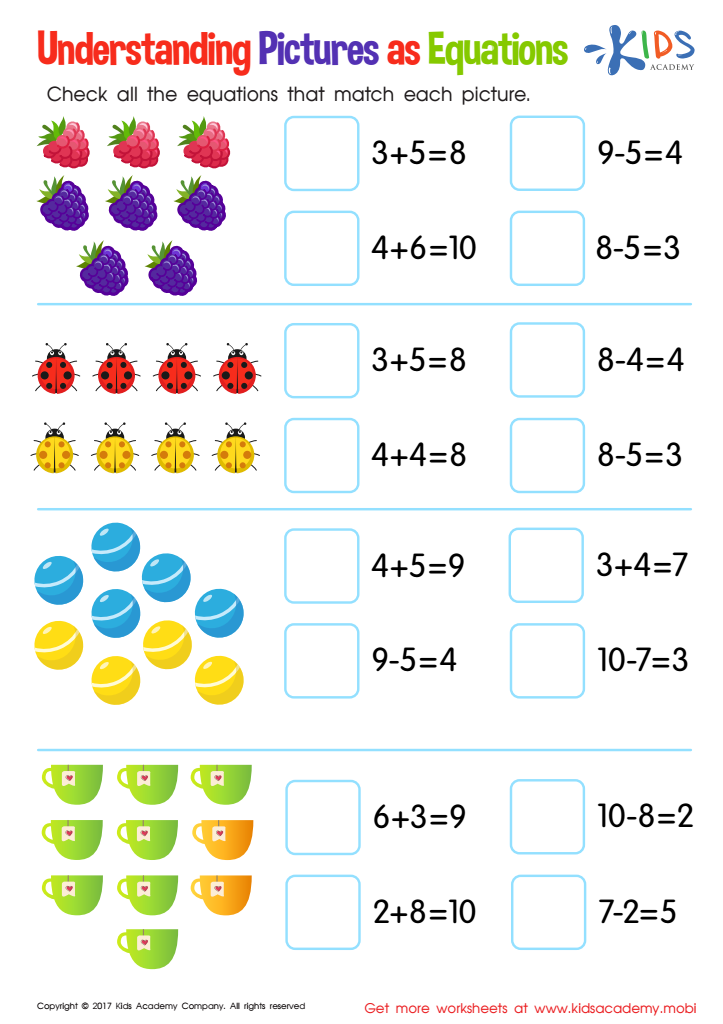
Understanding Pictures as Equations Worksheet
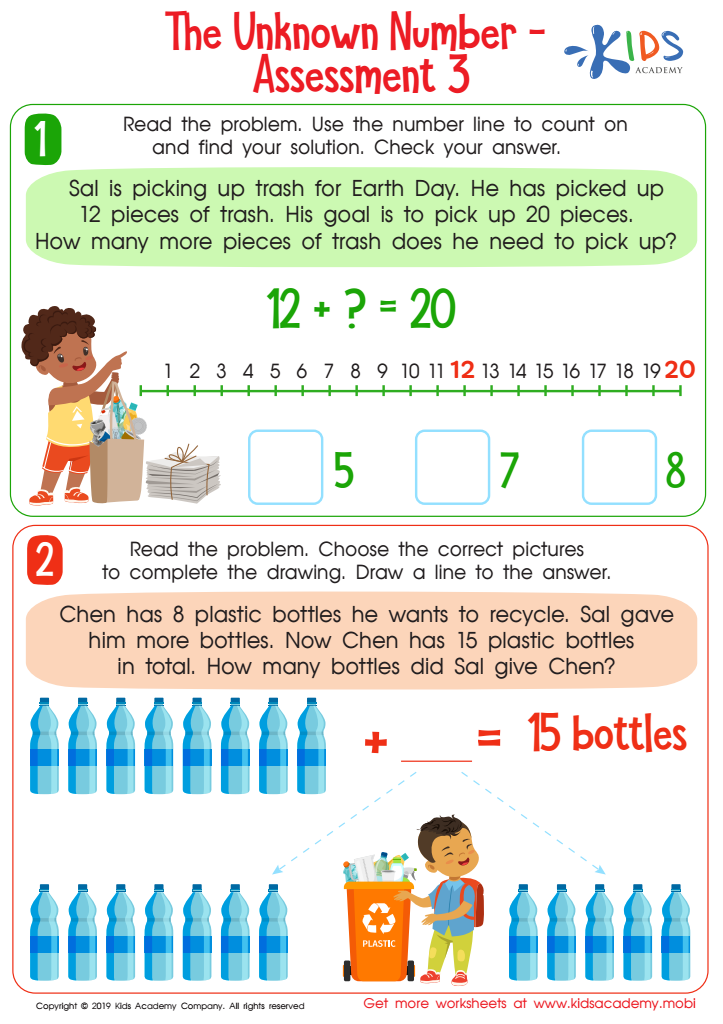
The Unknown Number - Assessment 3 Worksheet
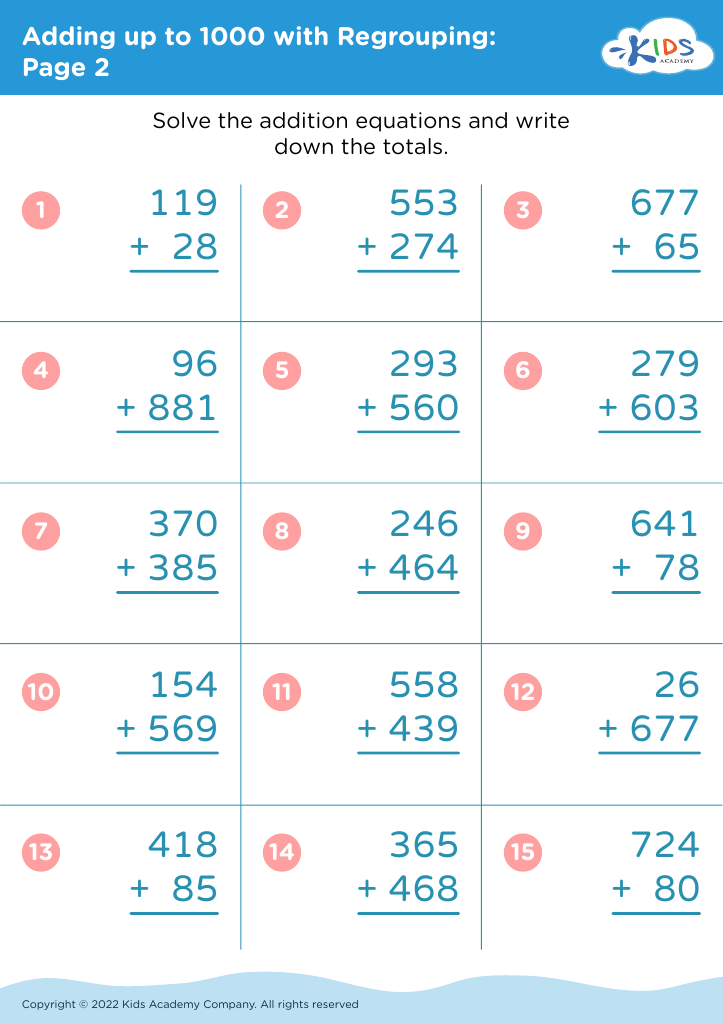
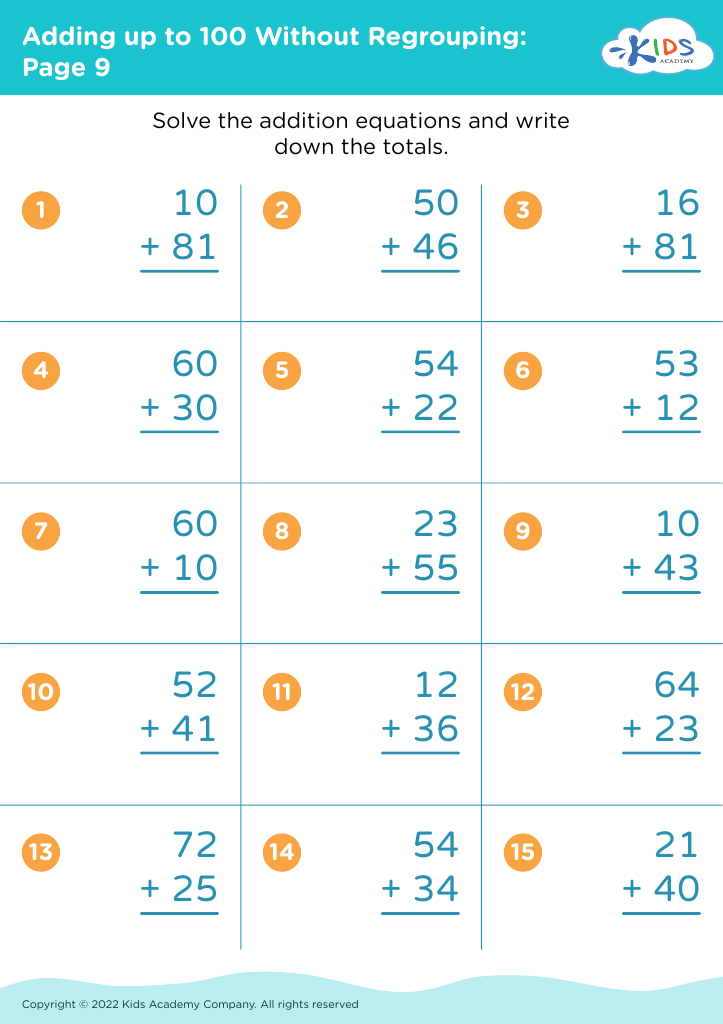








Understanding equations in math is foundational for children aged 6-7, as it sets the stage for their future mathematical learning and problem-solving skills. At this age, children are starting to comprehend the concept of relationships between numbers, which is essential for developing logical reasoning. Engaging with equations helps children understand how to manipulate numbers to solve problems, fostering critical thinking abilities.
Furthermore, a solid grasp of equations can enhance a child's confidence in math, breaking down any fears or anxieties they may have about the subject. When parents and teachers encourage this understanding, they not only promote academic skills but also help cultivate persistence and resilience in facing challenges.
By introducing simple equations in relatable contexts—like using everyday scenarios—children see the practical applications of math in real life, making it much more engaging and relevant. This early exposure prepares them for more advanced mathematical concepts later in their education, ensuring a smooth transition into more complex topics. Ultimately, understanding equations empowers children, equipping them with skills necessary for academic achievement and everyday problem solving. Encouraging this competence can reduce math-related anxiety and promote a positive attitude toward learning mathematics throughout their lives.








