Understanding number relationships Math Worksheets for Ages 6-7
6 filtered results
-
From - To
Enhance your child's mathematical ability with our Understanding Number Relationships Math Worksheets designed for ages 6-7! These engaging resources focus on core concepts such as addition, subtraction, and number patterns, providing a solid foundation for future math skills. Featuring vibrant illustrations and interactive exercises, our worksheets aim to make learning enjoyable while helping children grasp the essential relationships between numbers. Perfect for home or classroom use, these worksheets encourage critical thinking and problem-solving. Support your child’s educational journey and foster a love for math with our comprehensive, skill-building worksheets today! Explore the world of numbers with confidence and creativity.
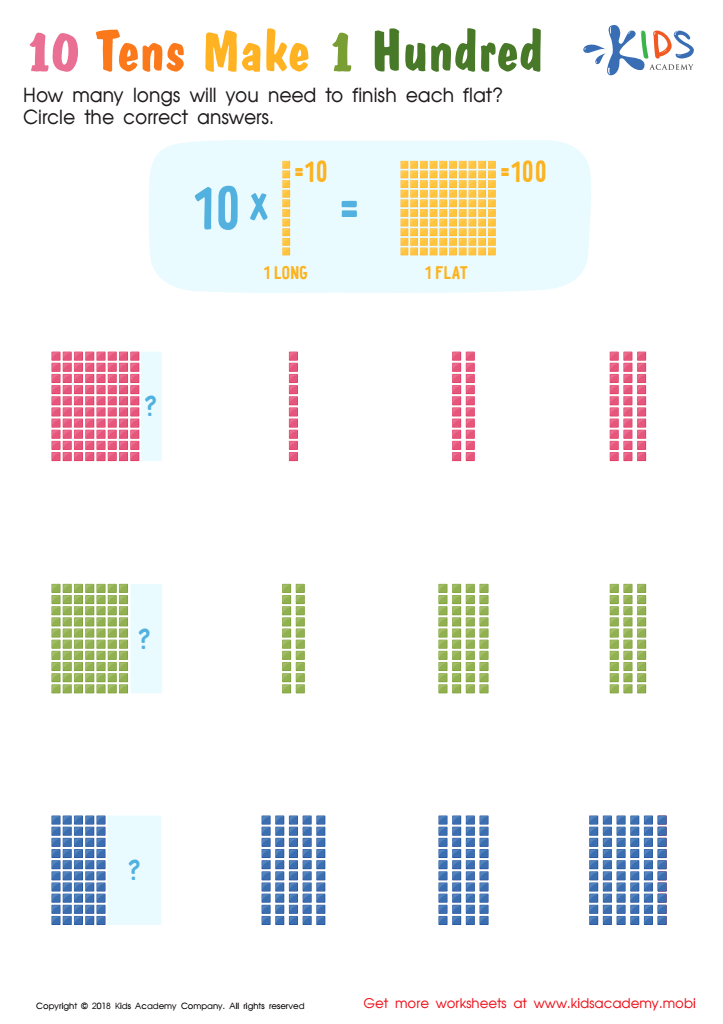
10 Tens Make 1 Hundred Worksheet
 Assign to My Students
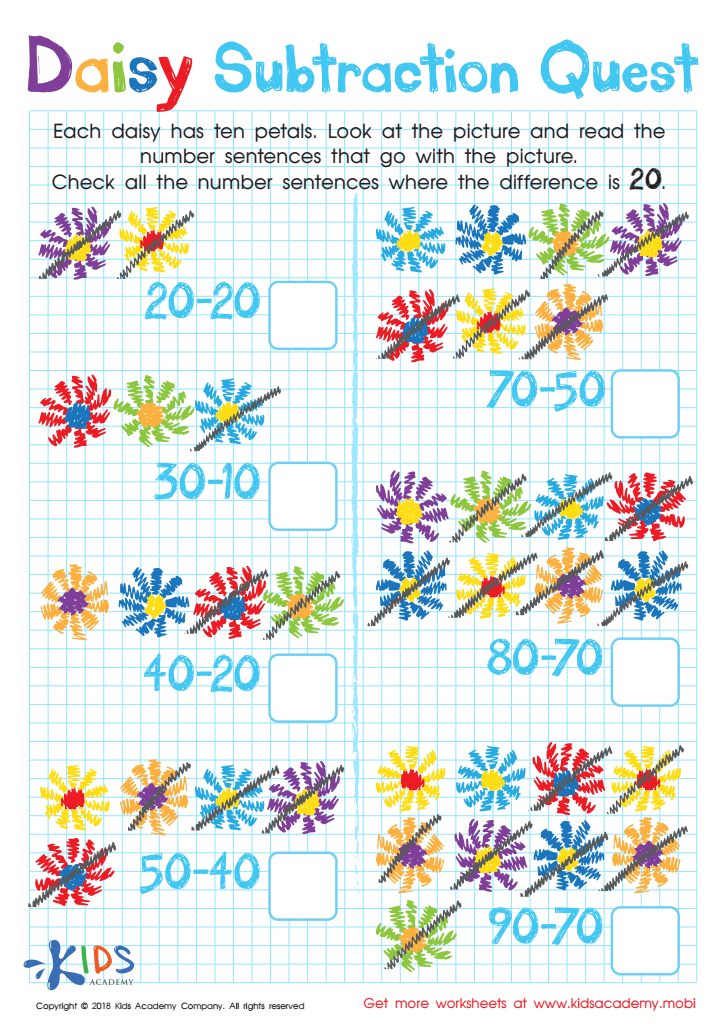
Daisy Subtraction Quest Worksheet
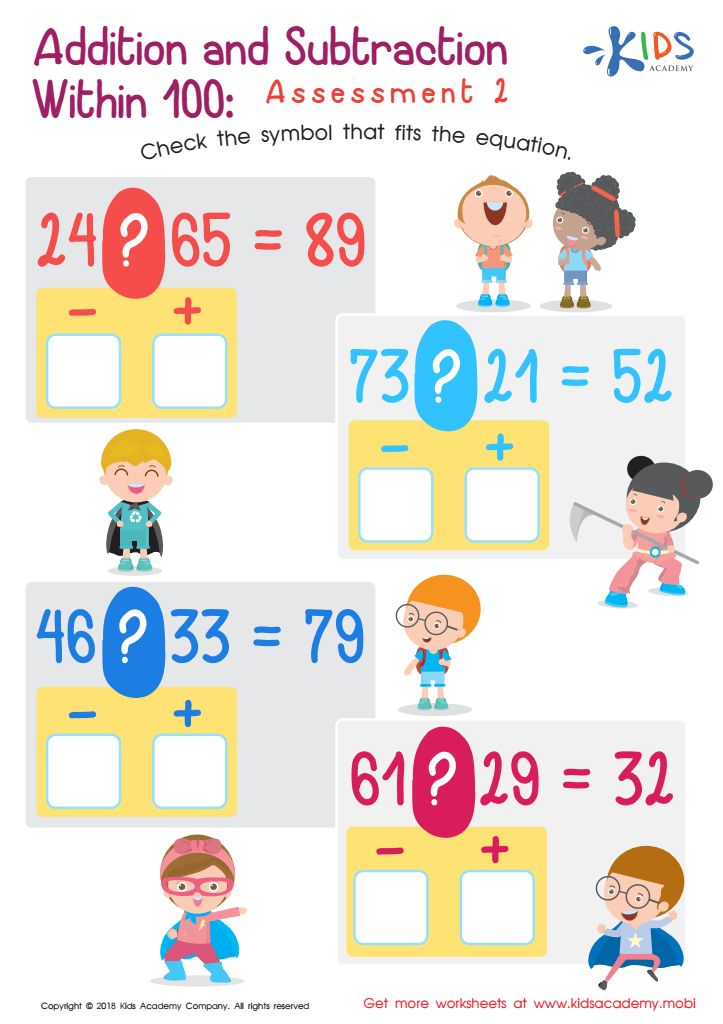
Addition and Subtraction Within 1: Assessment 2 Worksheet
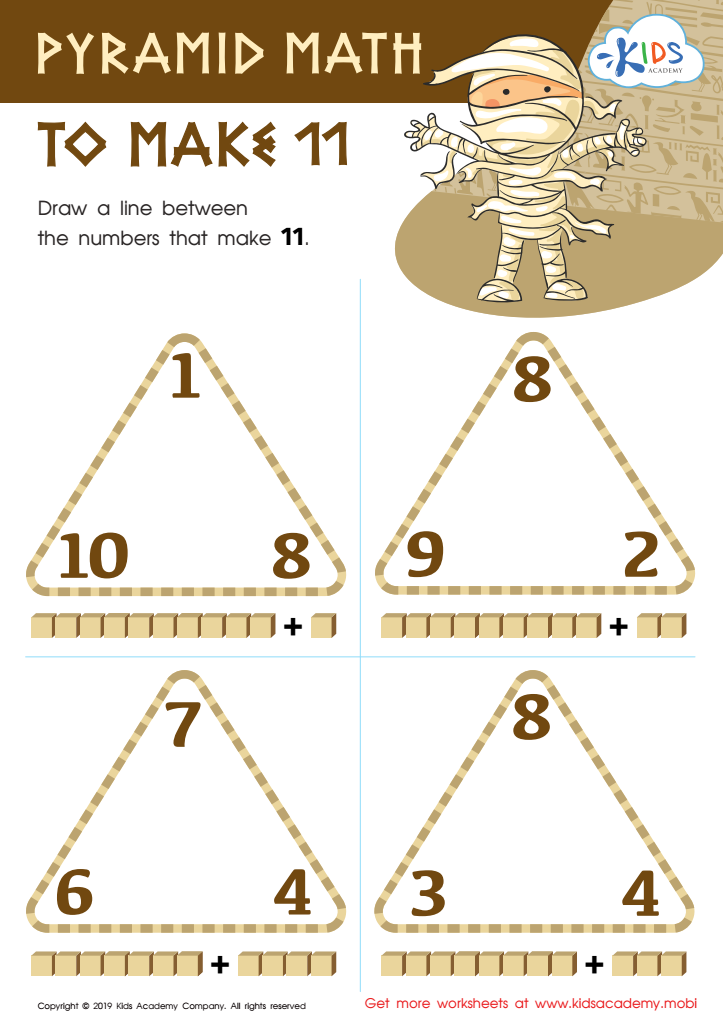
Pyramid Math to Make 11 Worksheet
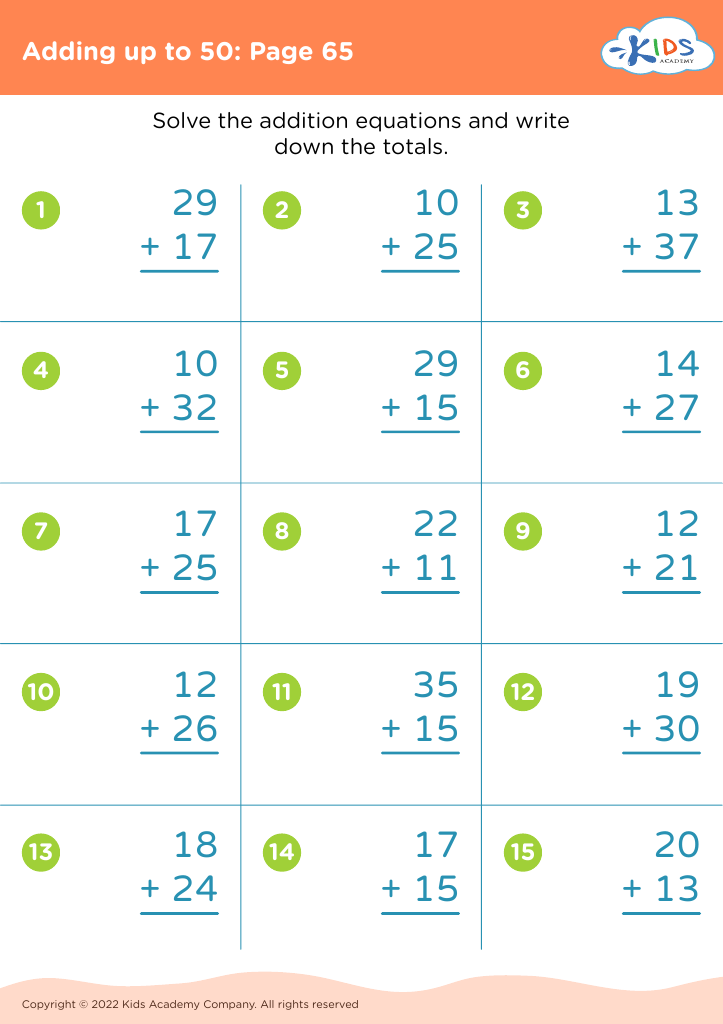








Understanding number relationships is crucial for children aged 6-7, as it forms the foundation for their mathematical journey. At this age, children are beginning to grasp basic math concepts, and a solid understanding of number relationships helps them make connections between numbers and operations. This foundation fosters critical thinking and problem-solving skills.
Parents and teachers should prioritize number relationships because they enable children to comprehend not just how to perform calculations, but also why those calculations work. Recognizing patterns, understanding place value, and grasping concepts like more/less or odd/even are key components that enhance mathematical reasoning. When children learn to see numbers not merely as isolated entities but as parts of a whole, they develop a stronger intuition for addition, subtraction, and later, multiplication and division.
Moreover, an early emphasis on number relationships can reduce math anxiety. Positive foundational experiences build confidence, leading to a more positive attitude towards math in the future. For long-term academic success, ensuring children appreciate and understand number relationships will set the stage for more advanced concepts, thereby underpinning their overall cognitive development and academic achievement. Ultimately, fostering a strong number relationship will benefit children in math and in everyday life.








