Understanding number sequences Math Worksheets for Ages 6-7
7 filtered results
-
From - To
Unlock the world of number sequences with our engaging math worksheets designed specifically for children ages 6-7! These activities aim to reinforce essential math skills such as recognizing patterns, identifying missing numbers, and understanding the order of sequences. Perfect for early learners, our worksheets provide a fun and interactive way to explore counting and enhance critical thinking skills. Each worksheet is carefully crafted to capture children's interest while promoting numeracy. Ideal for classroom use or at-home practice, these resources will help your child build a strong foundation in math through exploration and hands-on learning. Start your journey into number sequences today!
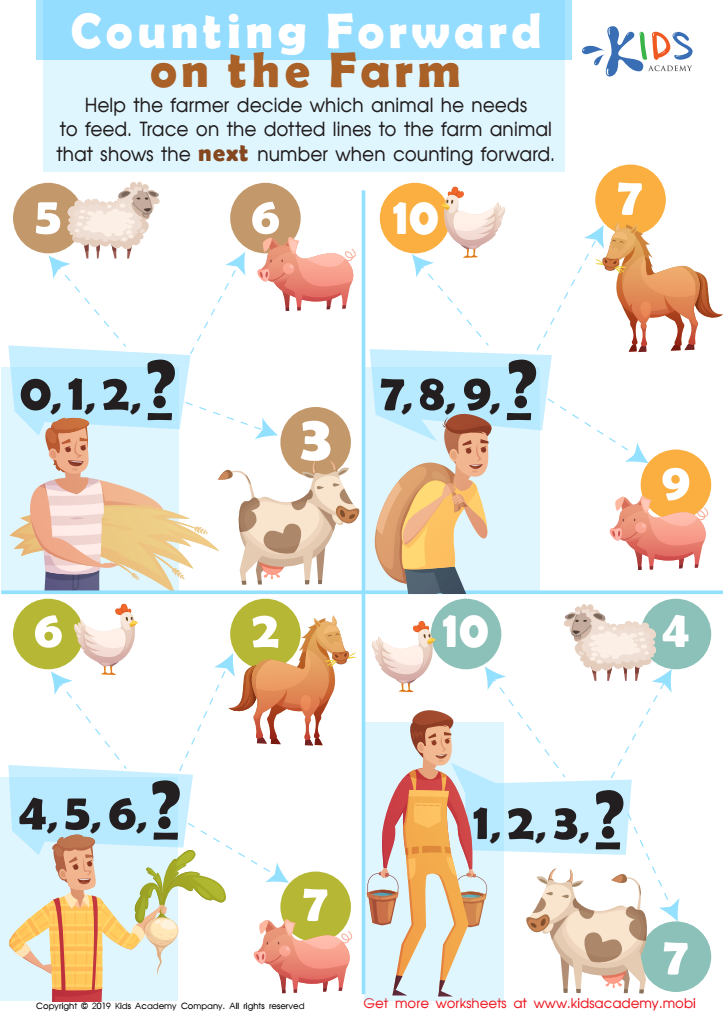
Counting Forward On the Farm Worksheet
 Assign to My Students
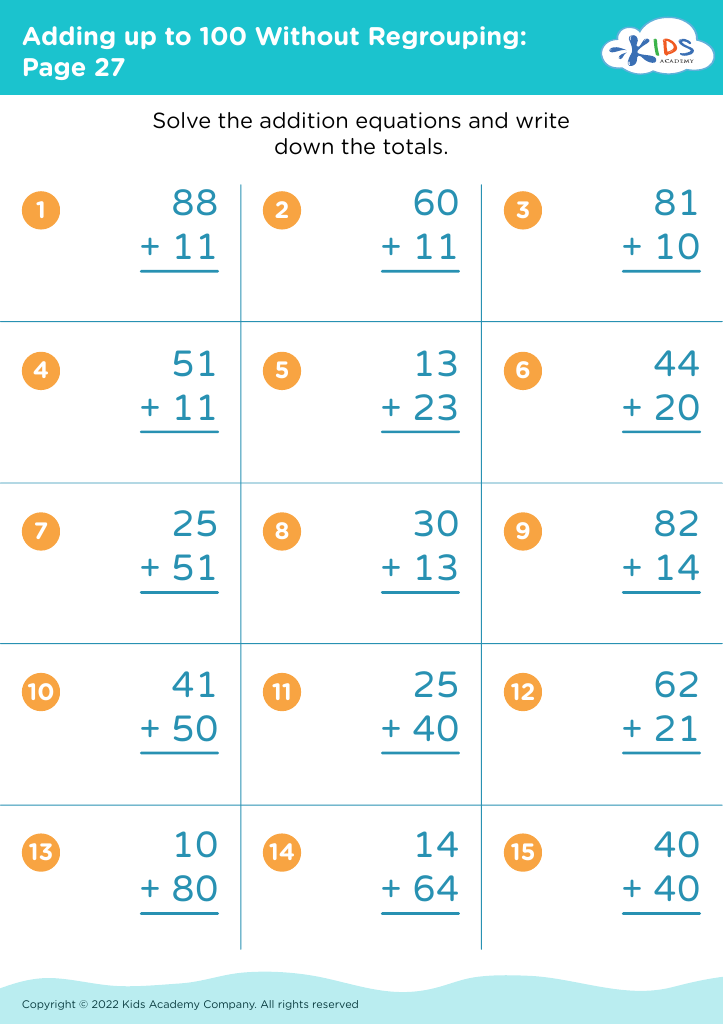
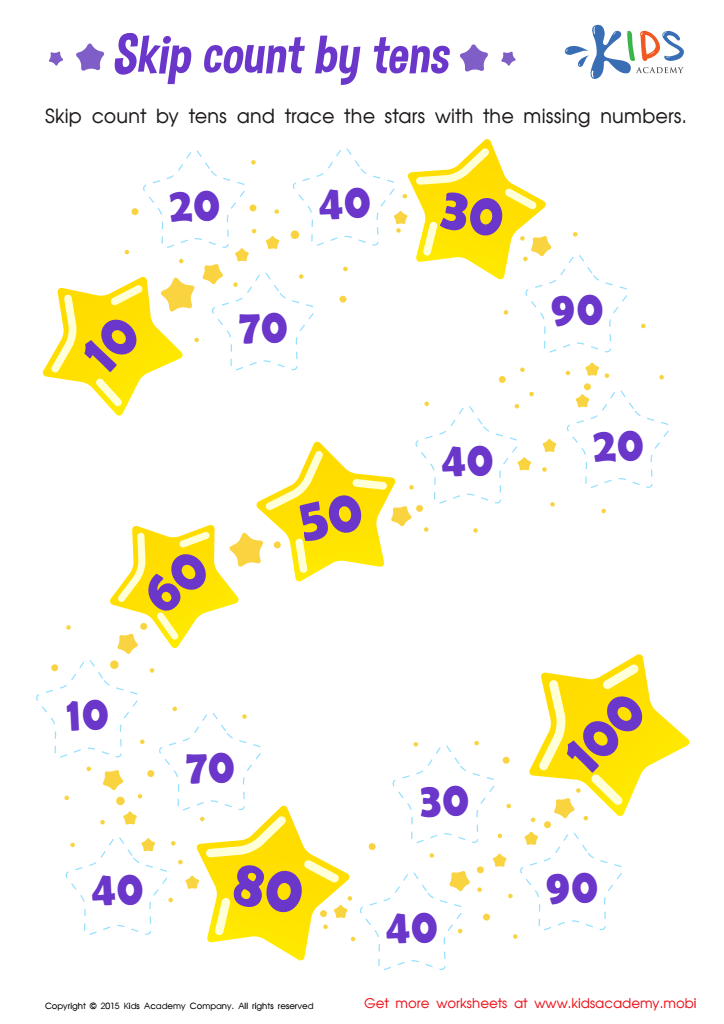
Learn dozens: Skip Count by Tens Printable
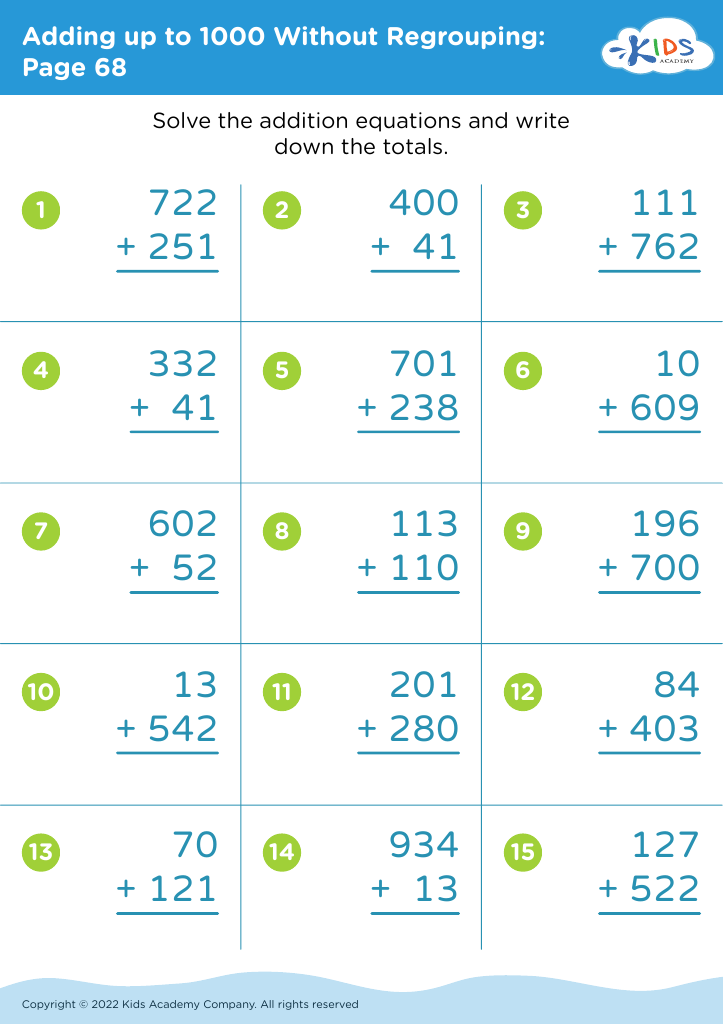
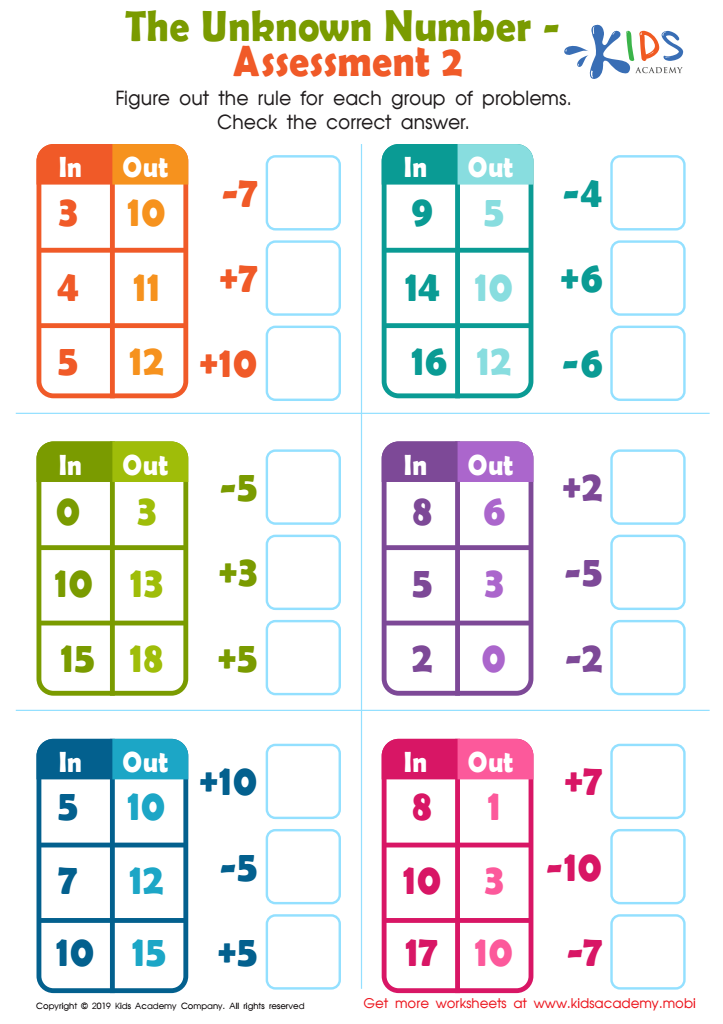
The Unknown Number - Assessment 2 Worksheet
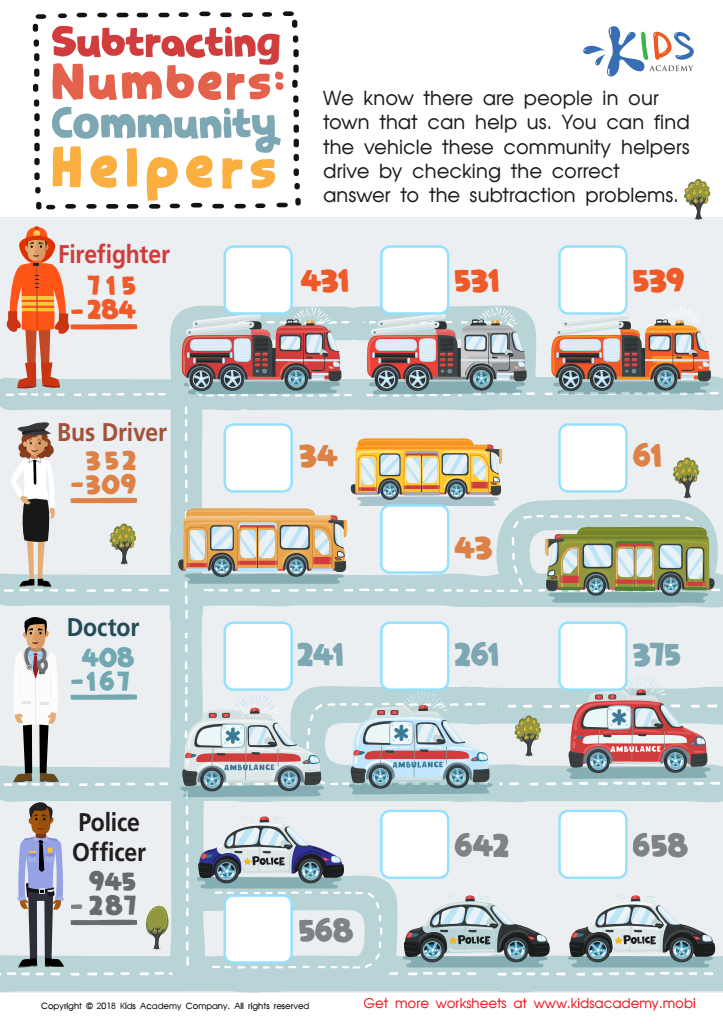
Subtracting Numbers: Community Helpers Worksheet








Understanding number sequences is crucial for children ages 6-7, as it lays the foundation for future mathematical learning and problem-solving skills. At this stage, students begin to explore patterns, develop logical thinking, and enhance their ability to reason quantitatively. Number sequences enable children to grasp the concept of counting forwards and backwards, which aids in their understanding of addition and subtraction.
Parents and teachers should care about this aspect of math education because fostering strong sequential thinking can boost children’s confidence in their mathematical abilities. Recognizing and predicting patterns helps develop critical thinking skills that apply not only in mathematics but across various subjects and real-life situations. Moreover, when children gain proficiency in number sequences, they enhance their ability to tackle more advanced concepts, such as multiplication, division, and eventually algebra.
Additionally, introducing engaging activities around number sequences can make learning more enjoyable, fostering a positive attitude toward mathematics. This early engagement can prevent math anxiety and encourage a lifelong love for learning. Thus, by supporting their understanding of number sequences, parents and teachers play an essential role in setting children on a successful educational path.








