Check out this FREE Trial Lesson on Math for age 6-7!

Properties of Addition - Part 1

Favorites
With answer key
Interactive
  • 6-7
  • Understanding patterns
  • Math
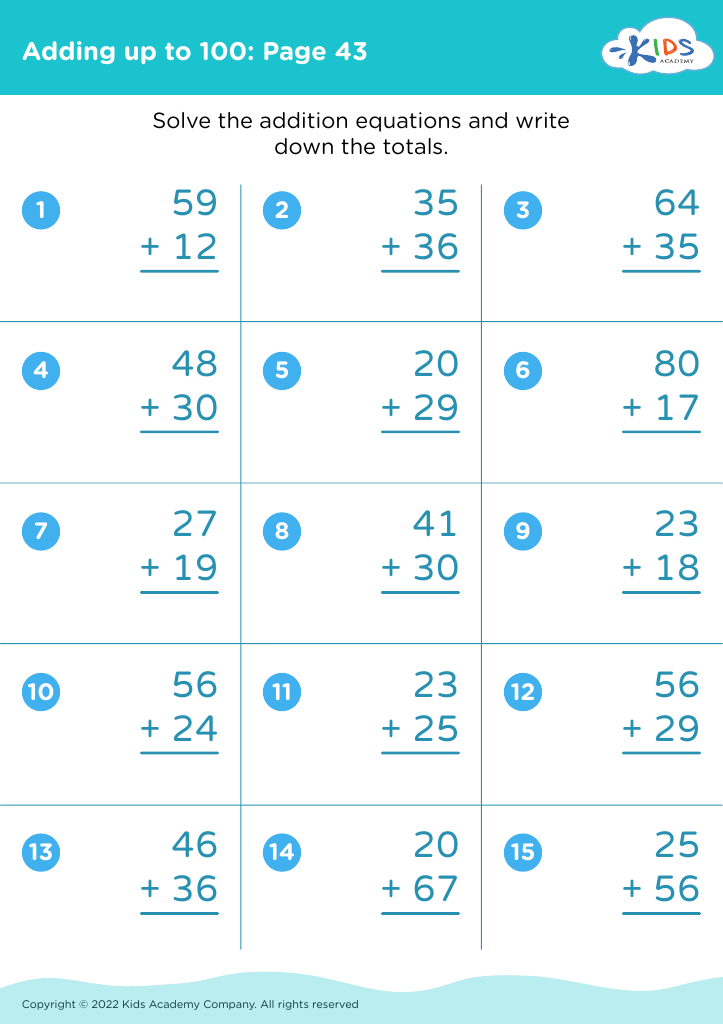
Adding up to 100: Page 43

Adding up to 100: Page 43

Adding up to 100: Page 43
Worksheet
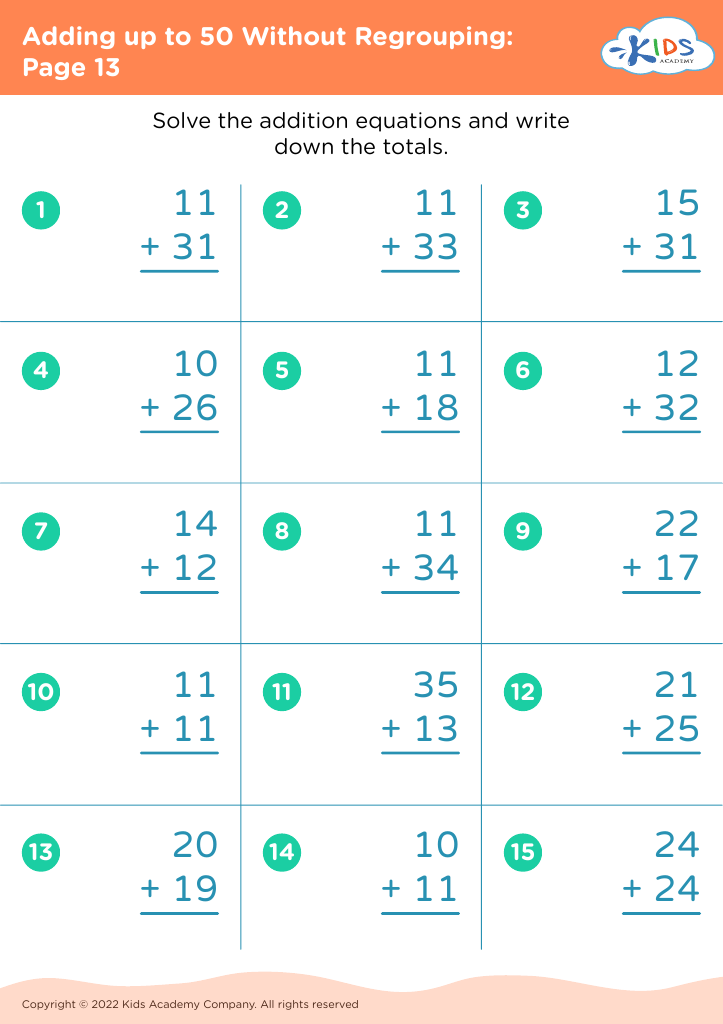
Adding up to 50 Without Regrouping: Page 13
Worksheet
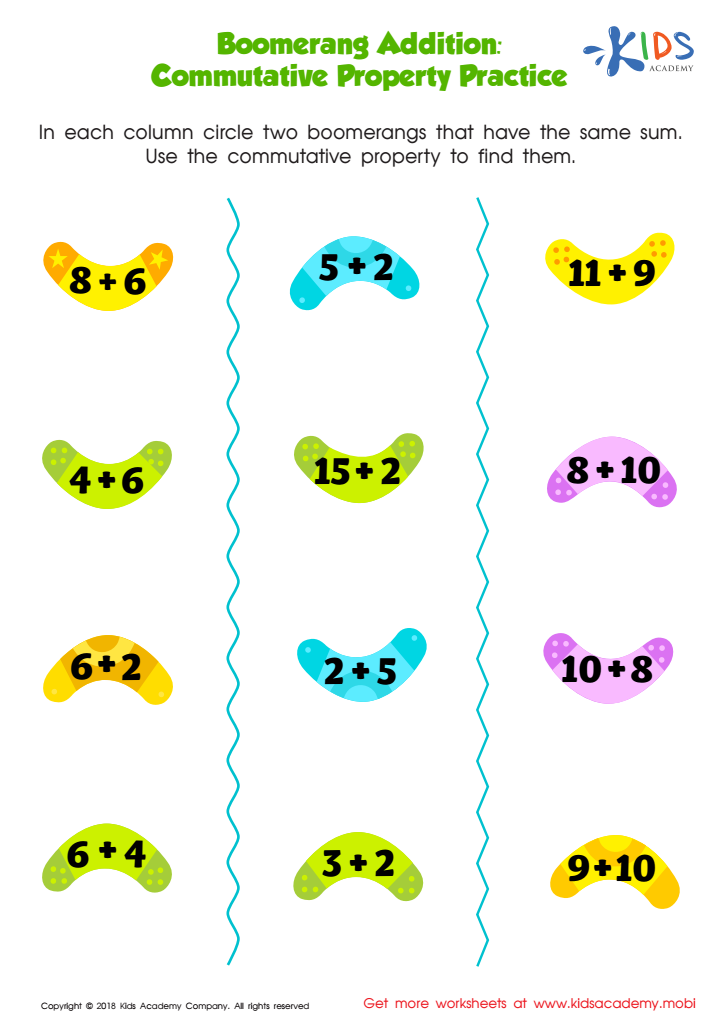
Boomerang Addition Worksheet

Boomerang Addition Worksheet

Kids know that when a boomerang is thrown, it reverses its path back. The same goes for addition: numbers can be rearranged and the sum will remain the same. Use this worksheet to find matching pairs of colorful boomerangs and equations. Look through each column and use the commutative property to find the pairs with the same sum.
Boomerang Addition Worksheet
Worksheet
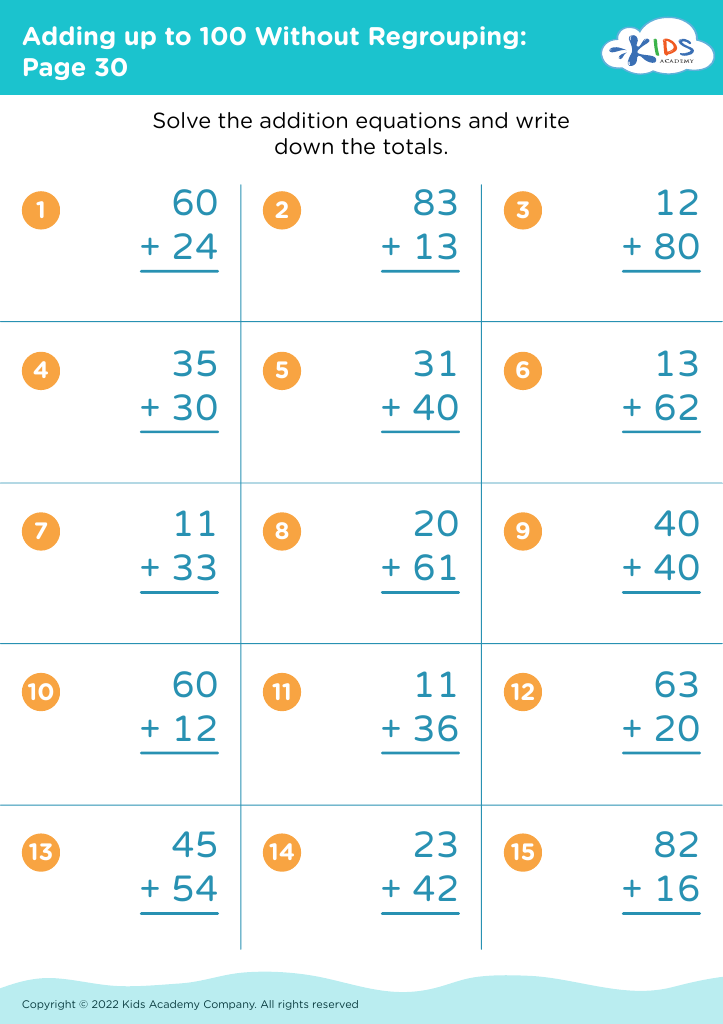
Adding up to 100 Without Regrouping: Page 30
Worksheet
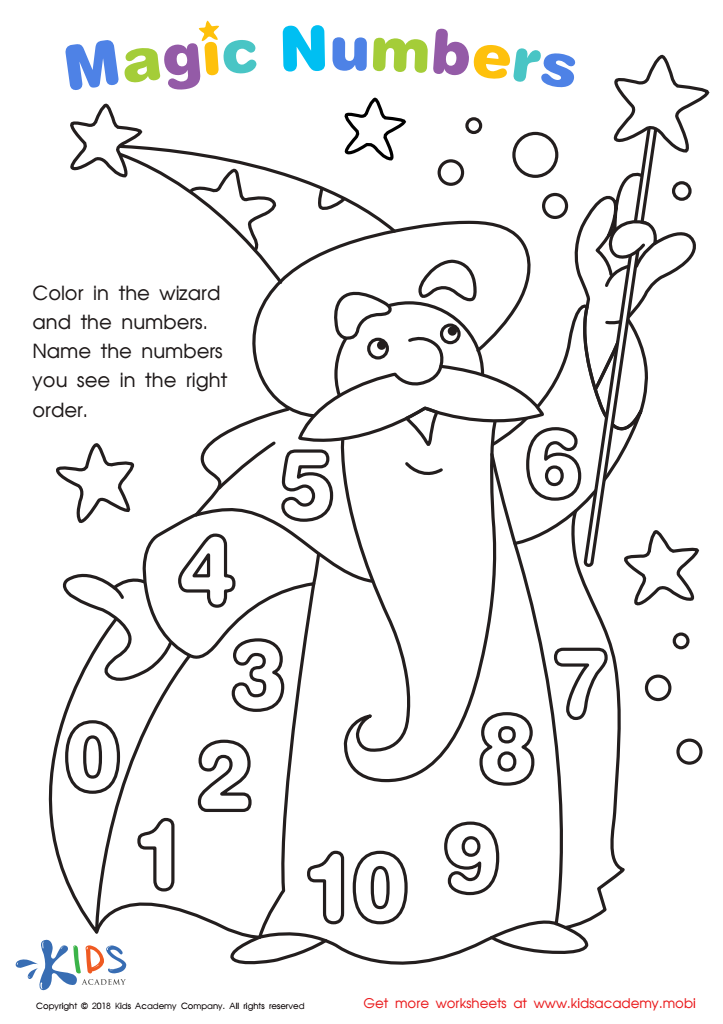
Magic Numbers Worksheet

Magic Numbers Worksheet

Does your child have an interest in magic? Here's something they'll love - a coloring sheet featuring a wizard! Ask them to name the numbers from smallest to highest, then let them pick colors to color in the wizard and the numbers. It's sure to excite them!
Download (PDF)
Assign to My Students
Magic Numbers Worksheet
Worksheet
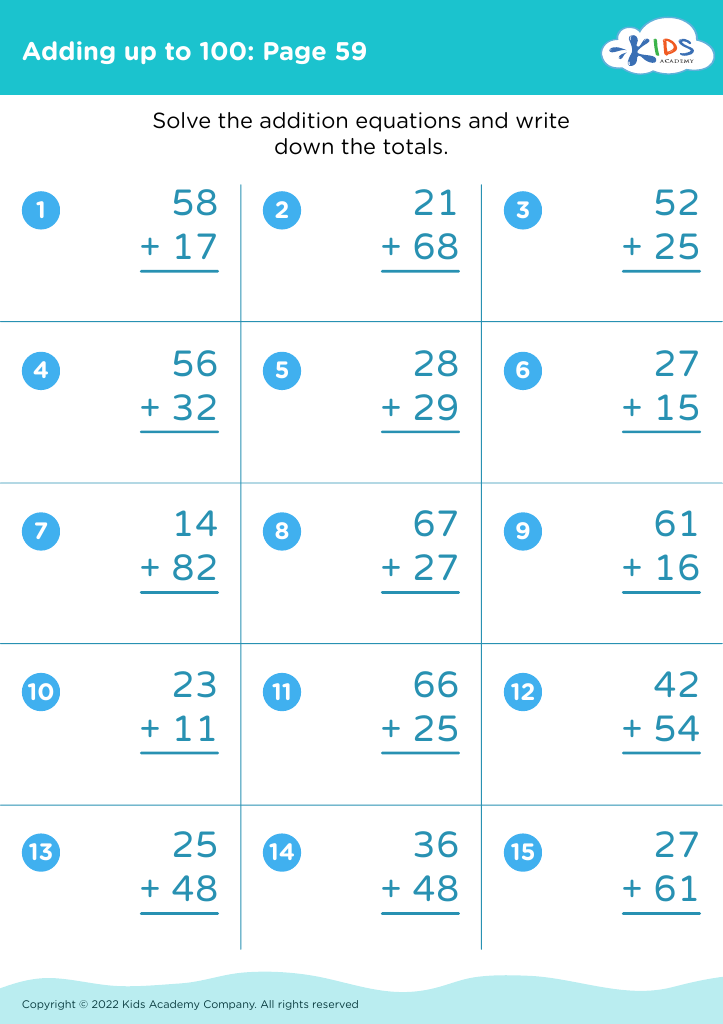
Adding up to 100: Page 59

Adding up to 100: Page 59

Adding up to 100: Page 59
Worksheet
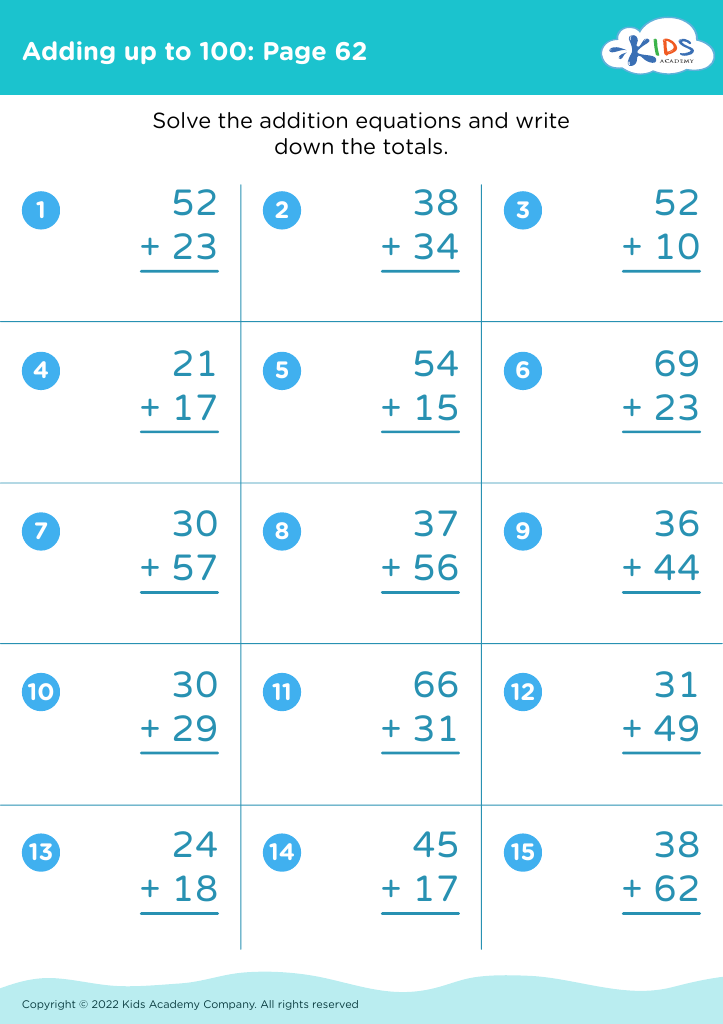
Adding up to 100: Page 62

Adding up to 100: Page 62

Adding up to 100: Page 62
Worksheet
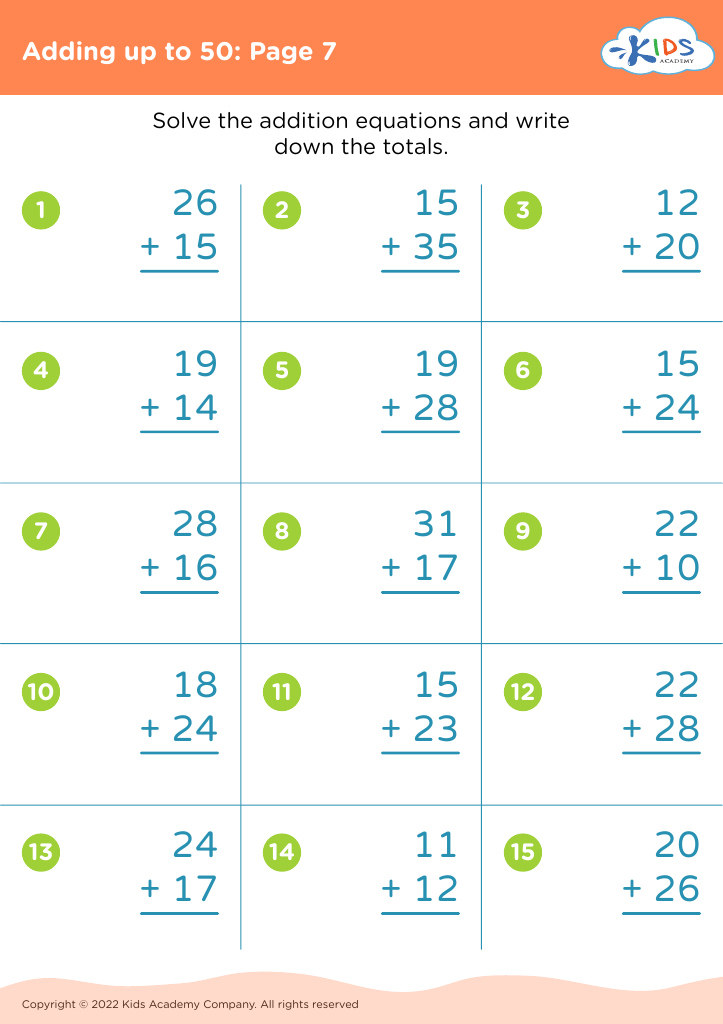
Adding up to 50: Page 7

Adding up to 50: Page 7

Adding up to 50: Page 7
Worksheet
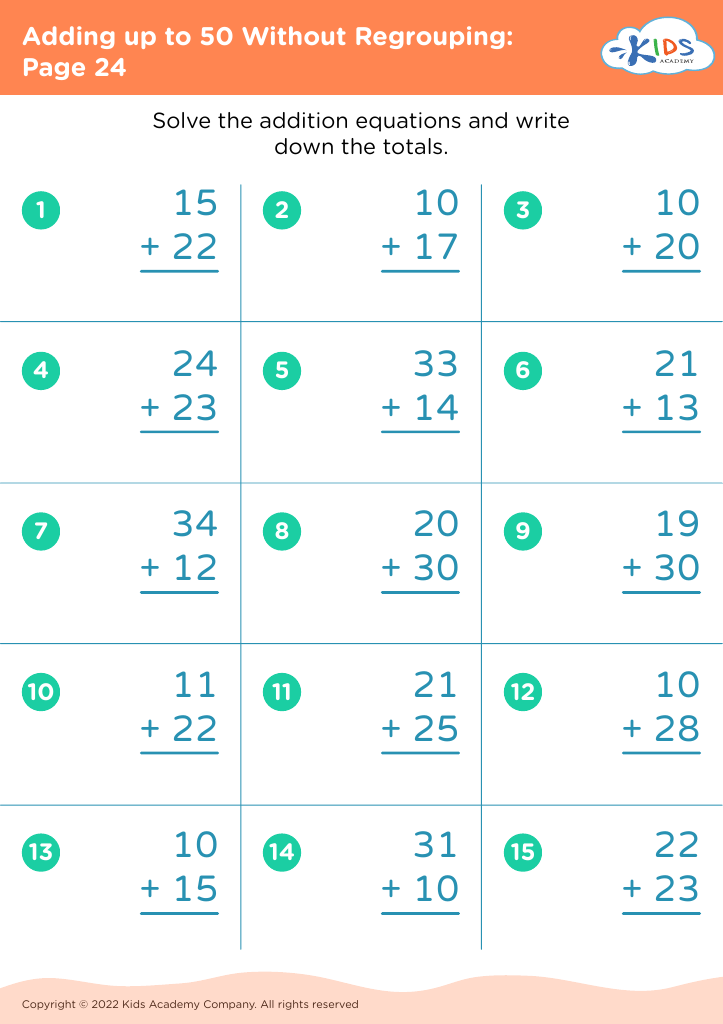
Adding up to 50 Without Regrouping: Page 24
Worksheet
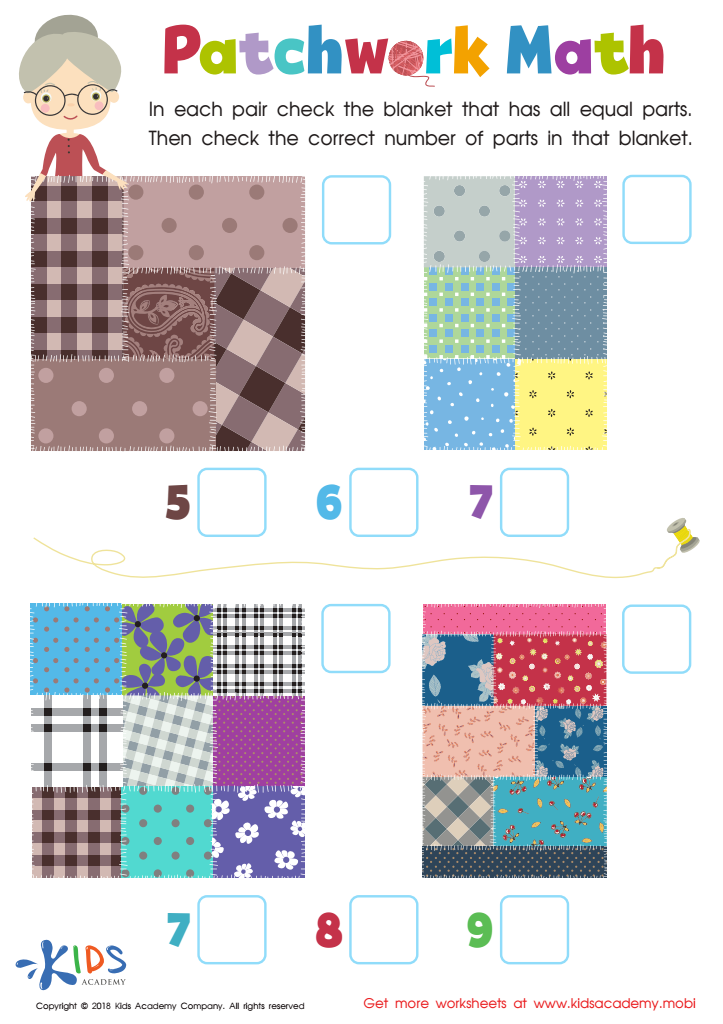
Patchwork Math Worksheet

Patchwork Math Worksheet

Test your children's knowledge with this colorful worksheet. They'll need to identify which of the blanket pairs have been cut in equal parts and count the number of parts. Check the provided options to ensure the correct answer.
Patchwork Math Worksheet
Worksheet
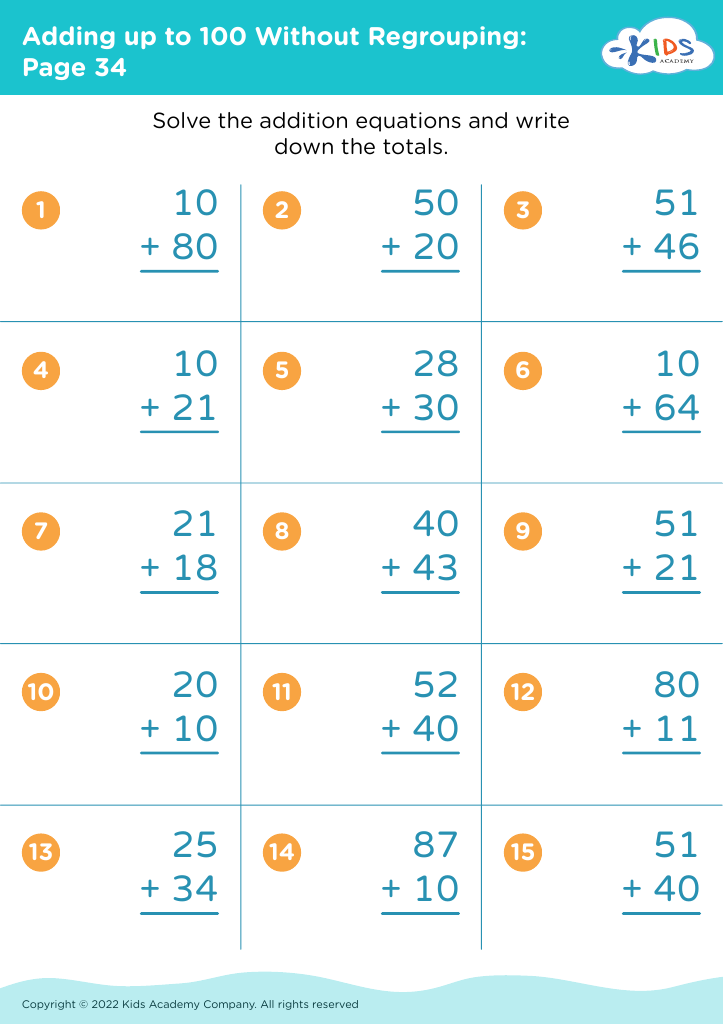
Adding up to 100 Without Regrouping: Page 34
Worksheet
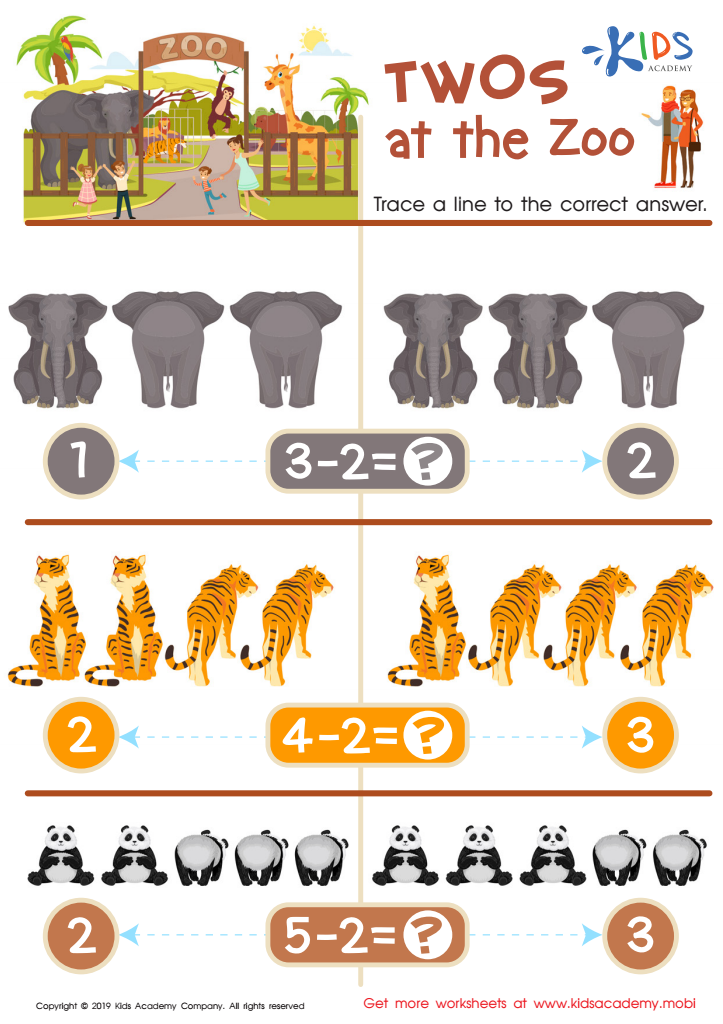
Twos at the Zoo Worksheet
Twos at the Zoo Worksheet

At the zoo, your kids can have fun with animals. Ask them to name their favorite ones and identify them in the printout. Count animals in each group together, then help your kids solve the equations and trace a line to the answer. It's an enjoyable way to combine learning and exploration!
Twos at the Zoo Worksheet
Worksheet
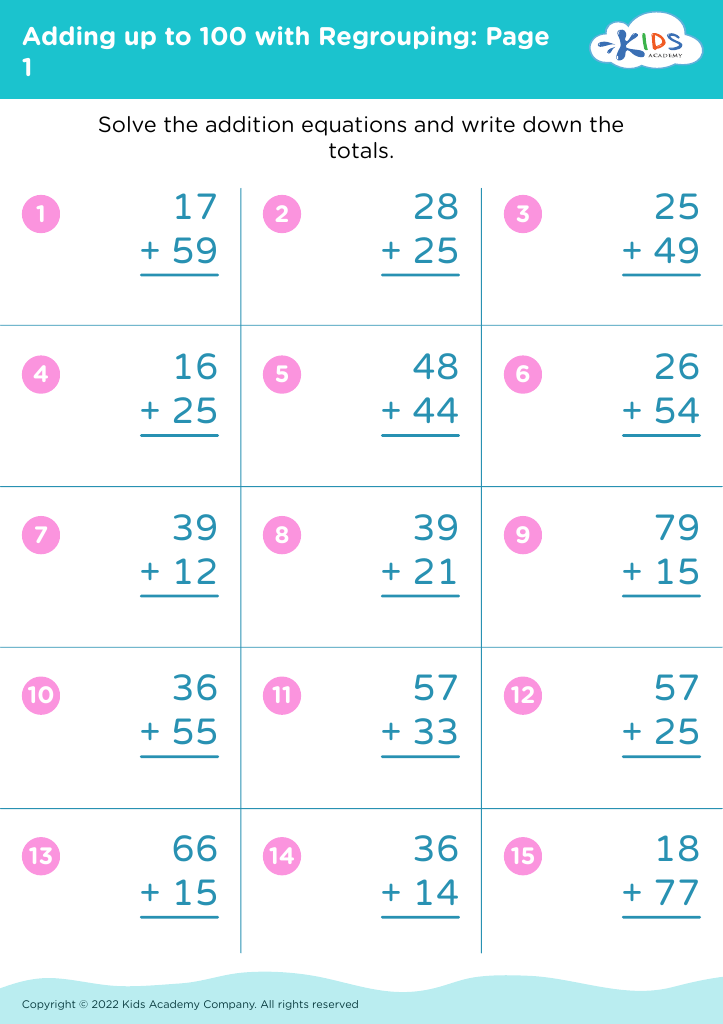
Adding up to 100 with Regrouping: Page 1
Worksheet
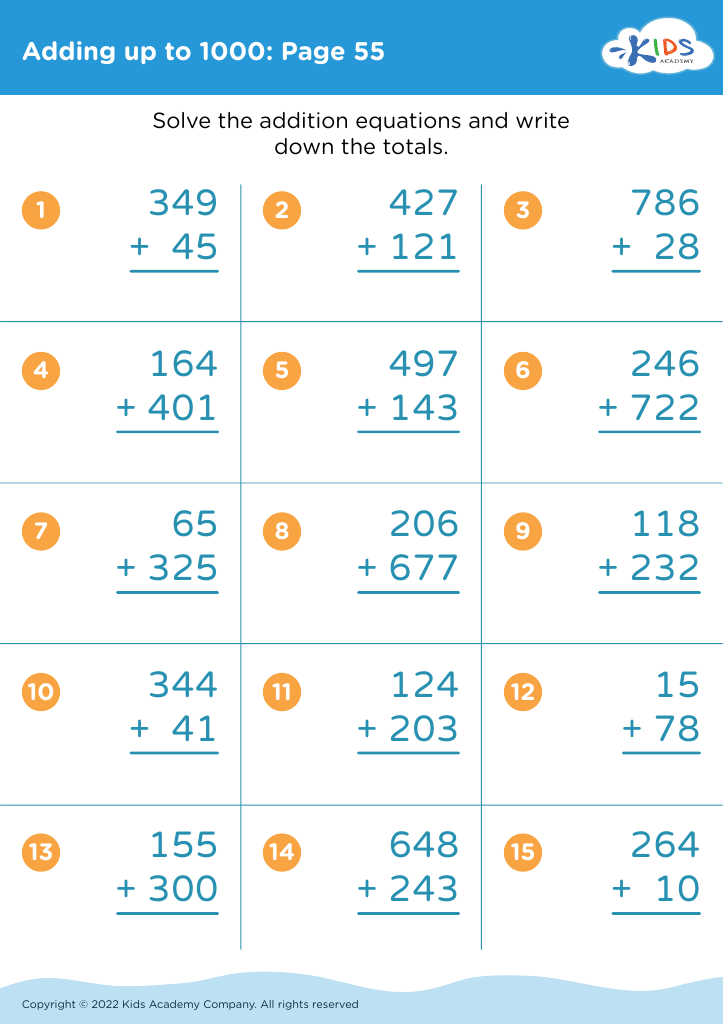
Adding up to 1000: Page 55

Adding up to 1000: Page 55

Adding up to 1000: Page 55
Worksheet
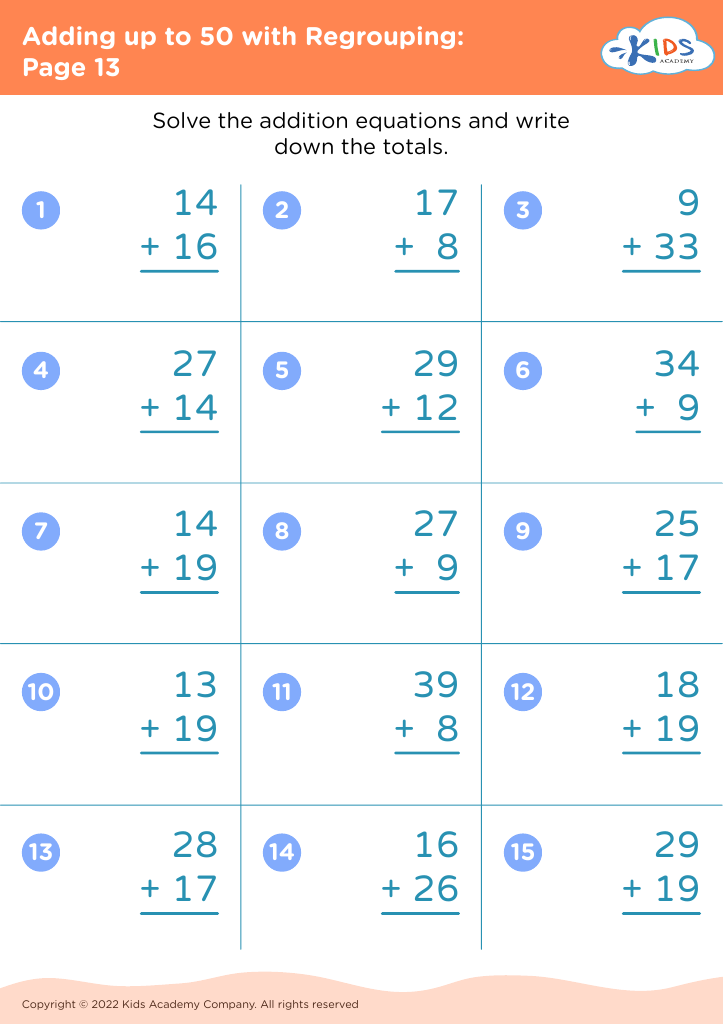
Adding up to 50 with Regrouping: Page 13
Worksheet


Understanding patterns in math is fundamental for children aged 6-7 as it lays the groundwork for various cognitive and academic skills. At this developmental stage, recognizing and creating patterns enhances logical thinking and problem-solving abilities. For parents and teachers, nurturing this skill is important because patterns are the building blocks of more complex mathematical concepts, such as addition, subtraction, multiplication, and division.

Patterns also promote critical thinking by encouraging children to make predictions and identify relationships. This analytical way of thinking extends beyond math, fostering skills useful in reading, writing, and everyday decision-making. Engaging with patterns helps children develop fine motor skills and visual perception, as they often manipulate objects physically to form sequences.

Moreover, grasping patterns reinforces a sense of order and predictability, essential for developing organizing skills and time management. Activities like sorting, sequencing, and categorizing can make learning fun and interactive, reinforcing a positive attitude toward math and making abstract concepts concrete.

Both parents and teachers should prioritize understanding patterns because it helps create a strong mathematical foundation, ensuring that children are well-equipped for future academic challenges. Establishing these foundational skills early contributes significantly to a child's overall intellectual growth and confidence in their abilities.