Understanding sequence Math Worksheets for Ages 6-7
6 filtered results
-
From - To
Discover a fun and engaging way to help your child grasp the concept of sequences with our Understanding Sequence Math Worksheets for ages 6-7. These worksheets are designed to strengthen your child's foundational math skills by introducing them to learning sequences through colorful visuals and interactive activities. With a variety of exercises focusing on patterns and the order of objects, children will develop critical thinking and problem-solving skills. Perfect for homeschooling or supplementary practice, these worksheets provide a playful yet educational approach to mastering sequences, ensuring that learning is both enjoyable and effective. Download yours today to enhance your child's math journey!
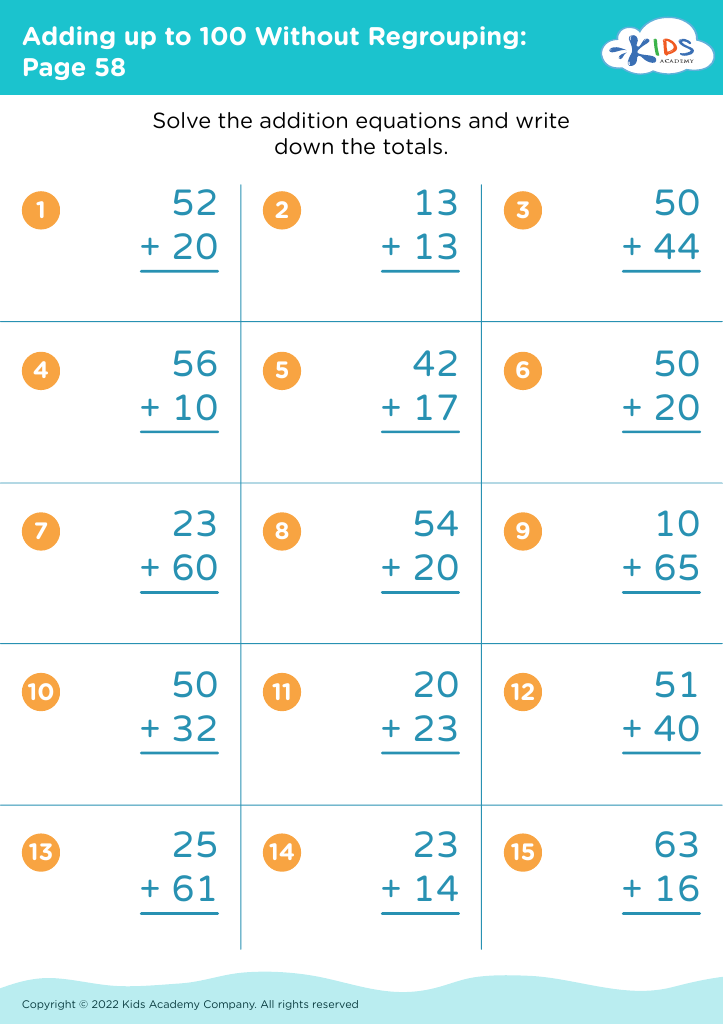
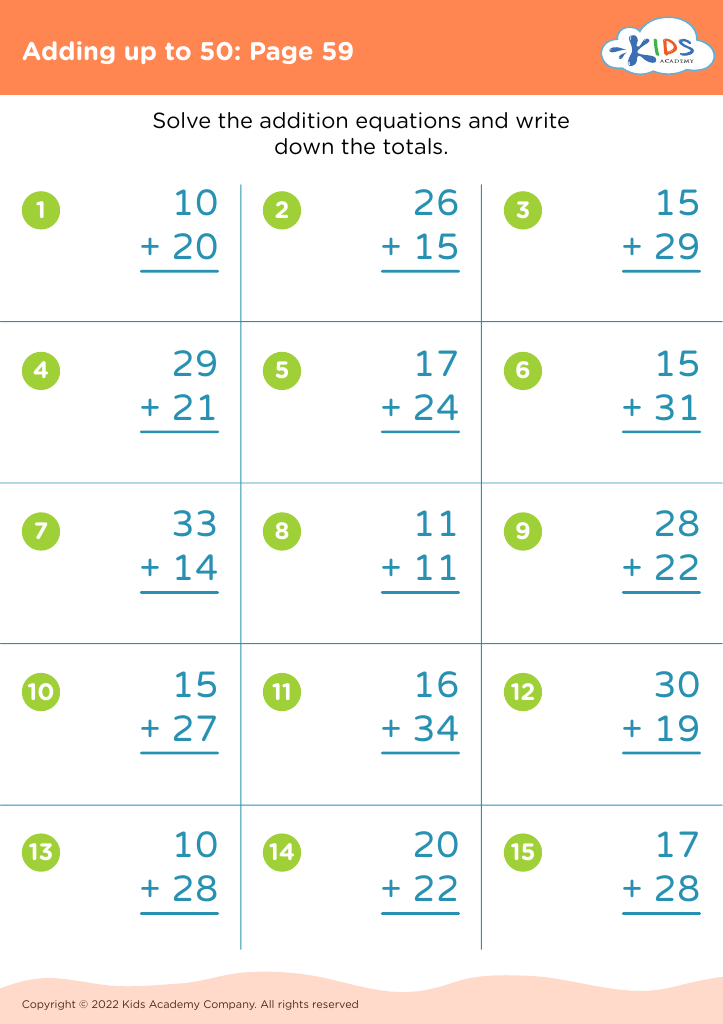
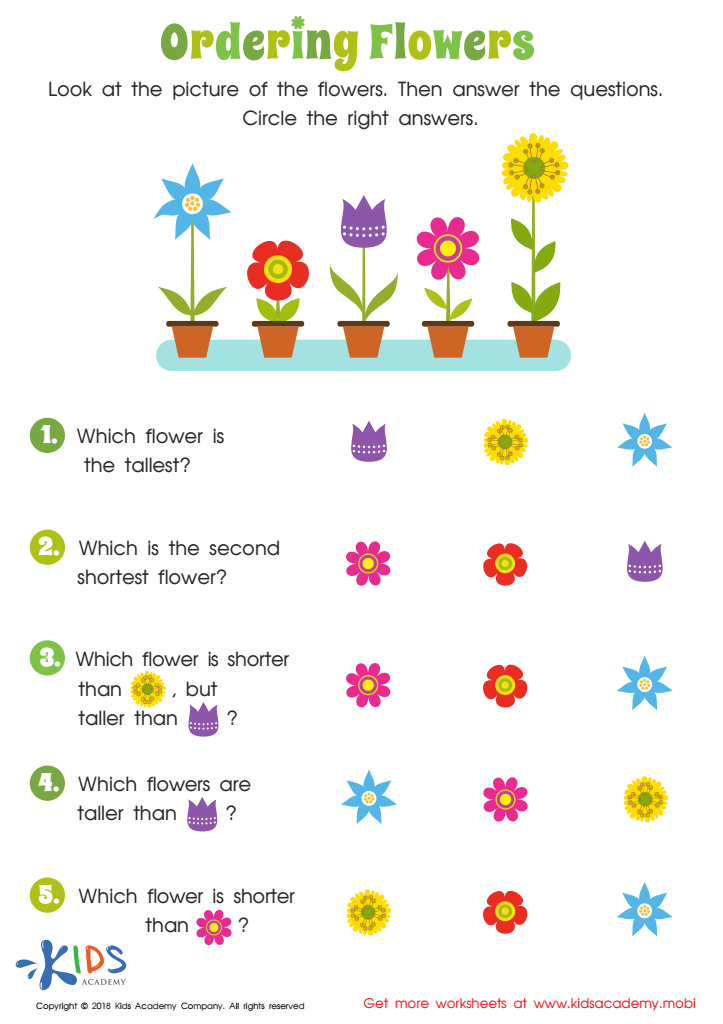
Ordering Flowers Worksheet
 Assign to My Students
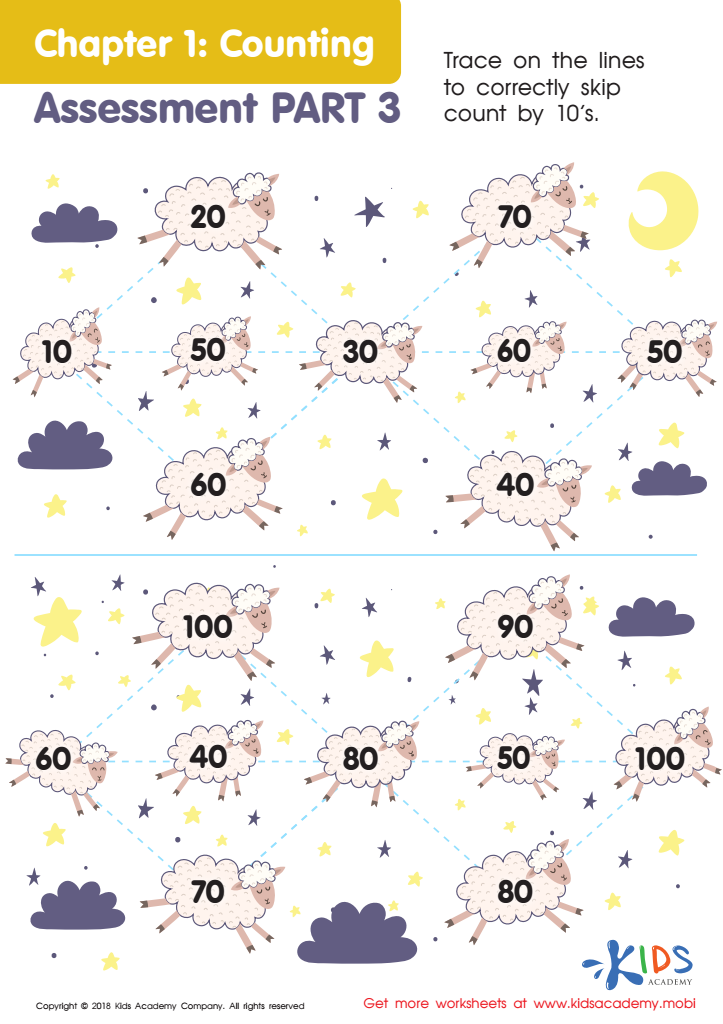
Counting: Assessment 3 Worksheet








Understanding sequences in math is vital for children aged 6-7 as it lays a foundational skill for various math concepts. At this developmental stage, children begin to recognize and create patterns, which enhances their problem-solving abilities. Grasping sequences helps young learners understand the principles behind numerical order, both in counting and in arithmetic operations.
When children learn about sequences, they develop critical thinking skills. For example, identifying patterns helps them anticipate the next number, which boosts their ability to make predictions and enhances their cognitive flexibility. This skill is transferable to many areas of life and learning, promoting analytical thinking.
Moreover, sequences are pivotal when introducing more complex mathematical concepts such as addition, subtraction, and later, multiplication and division. Mastery in recognizing and creating sequences prepares children for upcoming curriculum changes as they progress in their education.
For parents and teachers, understanding sequences offers a way to engage with children in an enjoyable and educational manner, illustrating real-world applications—like schedules, lists, and even nature's patterns. By fostering early sequence skills, adults can significantly contribute to a child’s educational journey, ultimately ensuring they have the necessary strategies for future academic challenges.








