
Visual learning reinforcement Math Worksheets for Ages 6-7
5 filtered results
Difficulty Level
Grade
Age
-
From - To
Subject
Activity
Standards
Discover our engaging Visual Learning Reinforcement Math Worksheets designed specifically for children aged 6-7! These worksheets enhance mathematical understanding through vibrant visuals and interactive activities, making learning fun and effective. Ideal for reinforcing concepts like addition, subtraction, and shape recognition, our resources cater to varied learning styles. Each worksheet encourages critical thinking and boosts confidence in young learners, providing essential practice that aligns with their developmental milestones. Perfect for classroom use or at-home learning, these worksheets are an excellent tool for reinforcing math skills while fostering a love for learning. Explore our collection and help your child thrive in math today!
Favorites
With answer key
Interactive
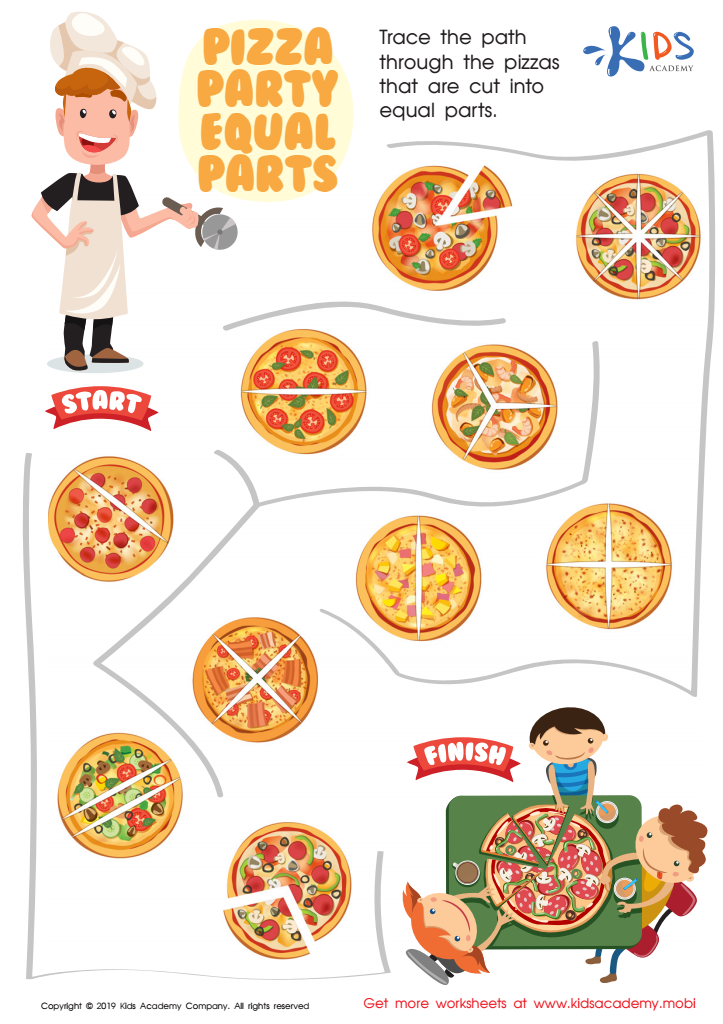
Pizza Party Equal Parts Worksheet
Love pizza? This printout is a great way to help kids learn about equal parts! Kids must identify pizzas cut into equal parts, then trace the path through the pizzas. It's an exciting maze - and a great way to help kids learn! Get the traceable pdf today and let the fun begin!
 Assign to My Students
Pizza Party Equal Parts Worksheet
Worksheet
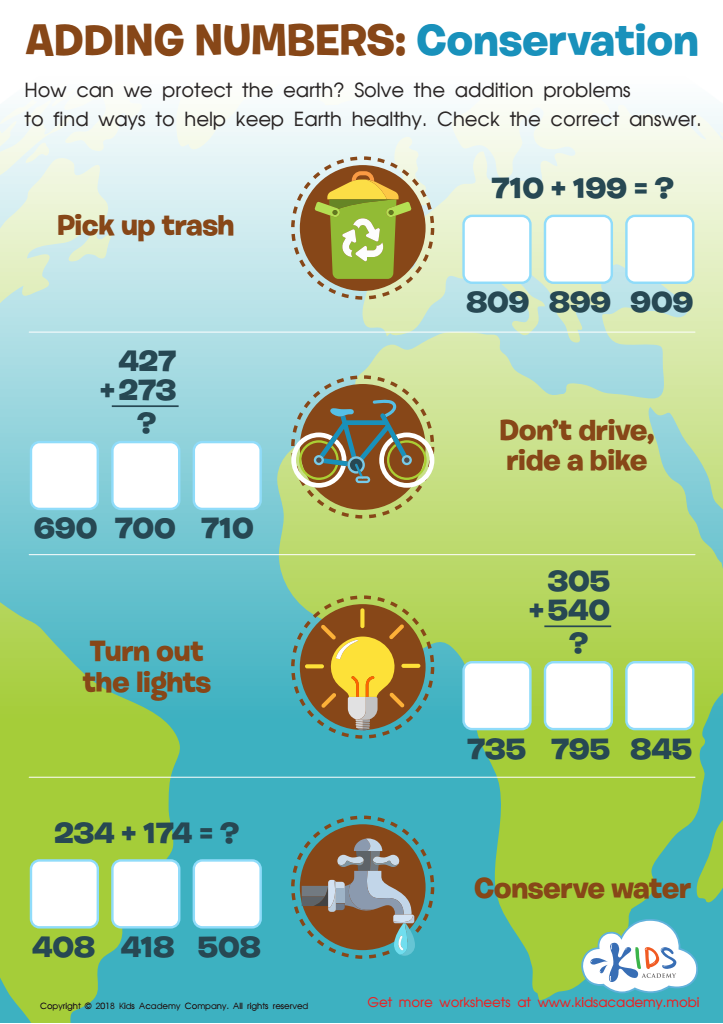
Adding Numbers: Conservation Worksheet
We all live on the Earth, which provides us with the vital necessities for survival. Unfortunately, we too often take advantage of this, causing pollution, water wastage and global warming. Help teach your kids how we can protect our planet - ask them to come up with good ideas and work together to find solutions. Challenge them to solve the subtraction problems to see what they can do to help keep the Earth healthy.
Adding Numbers: Conservation Worksheet
Worksheet
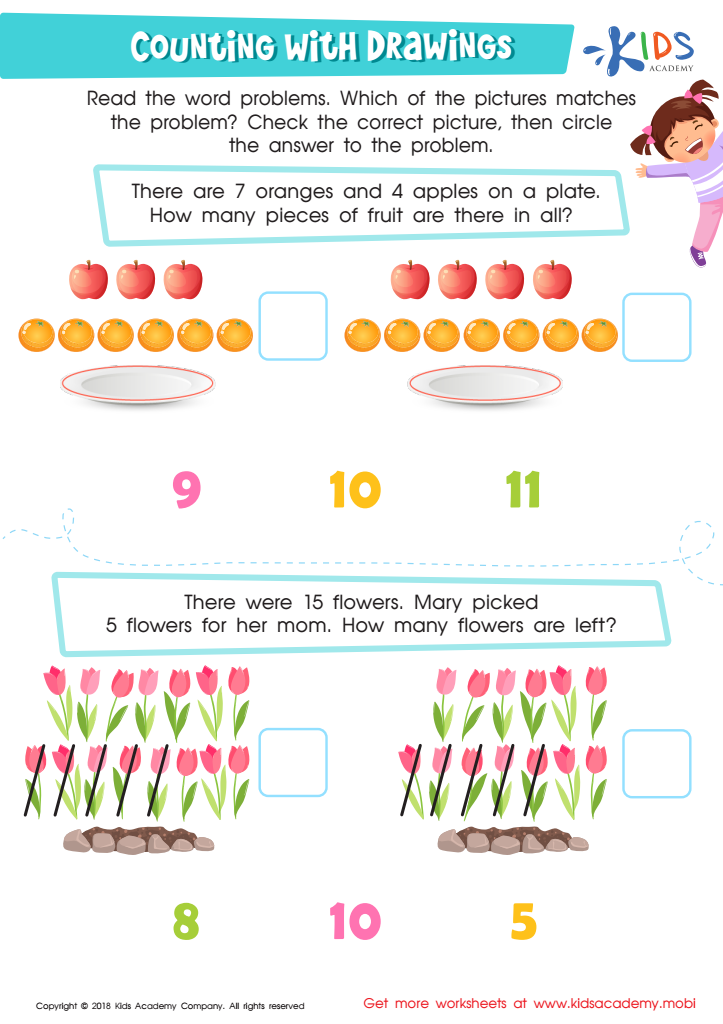
Counting with Drawings: Fruits & Chocolates Worksheet
Learning basic addition and subtraction has never been easier with this free worksheet! Young mathematicians can sort & count to get the right sum or difference for each problem. Plus, they'll practice fine motor skills by circling the correct answer. An ideal way to help kids build important visual recognition and discernment skills.
Counting with Drawings: Fruits & Chocolates Worksheet
Worksheet
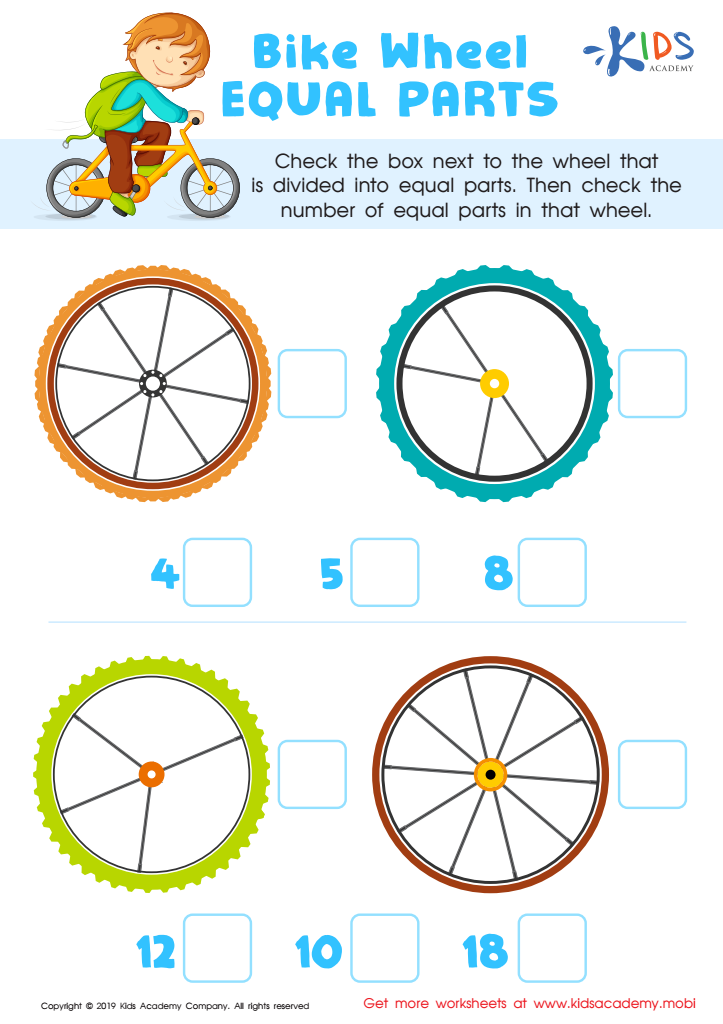
Bike Wheel Equal Parts Worksheet
Help your kids have fun while they learn! Ask them to identify the object in the picture with four wheels. Guide them to count the spokes, then check the box on the wheel with equal parts. Lastly, check how many equal parts the wheel is divided into.
Bike Wheel Equal Parts Worksheet
Worksheet
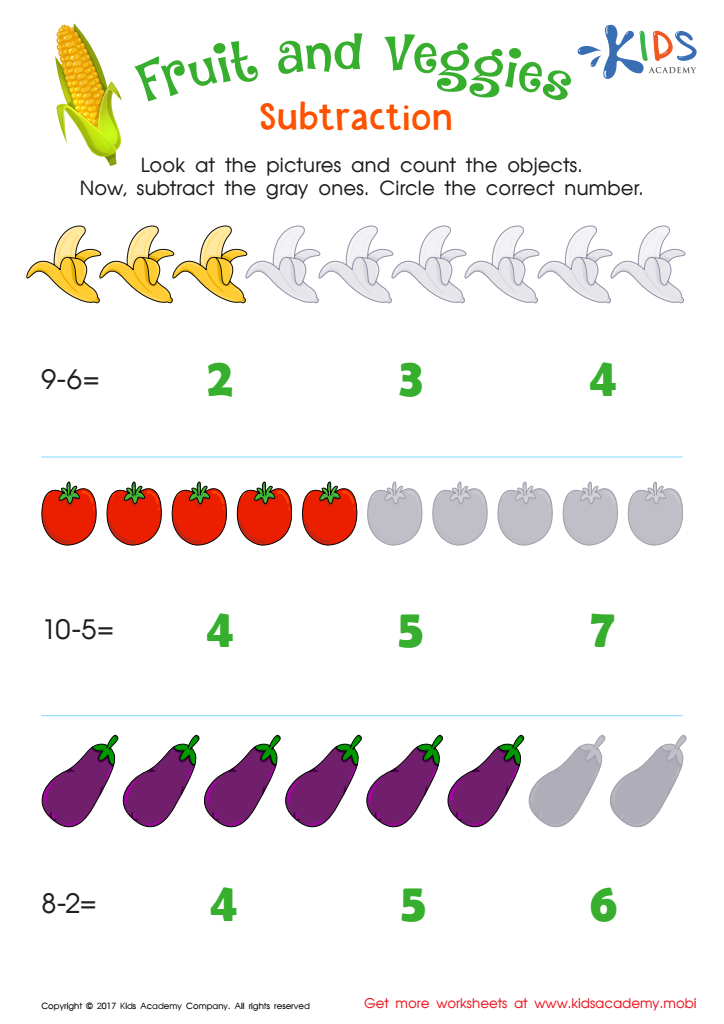
Fruit and Veggies Subtraction Worksheet
Kids learn subtraction with this fun worksheet: fruits and veggies! Kids use pictures to count or take away to get the right answer, aiding in understanding subtraction better.
Fruit and Veggies Subtraction Worksheet
Worksheet
Join Kids Academy for Free
Who is primarily going to use this learning content?





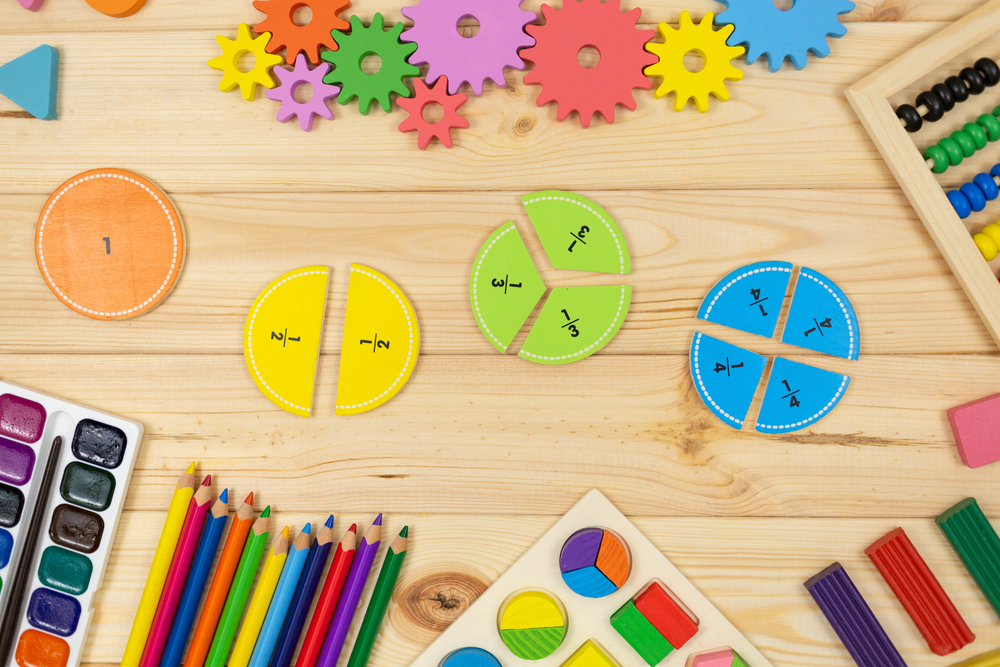

Visual learning reinforcement in math for children aged 6-7 is crucial due to the developmental characteristics of this age group. At this stage, children are beginning to grasp fundamental math concepts such as addition, subtraction, and basic geometry. Visual aids—such as charts, diagrams, manipulatives, or videos—can significantly enhance their understanding and retention of these concepts.
First, visual learning caters to varying learning styles. Many young learners are visual-spatial learners who absorb information better through images and physical representations. By utilizing visual tools, parents and teachers can make abstract concepts more tangible and relatable.
Moreover, visual reinforcement helps in reducing math anxiety. When children see math problems illustrated through engaging visuals, they may feel more confident and motivated to solve them. This positive reinforcement fosters a love for math and builds a strong foundation for more complex mathematical reasoning in the future.
Finally, incorporating visual learning strategies supports cognitive development by stimulating critical thinking and problem-solving skills. Overall, prioritizing visual learning in math education not only supports academic growth but also nurtures a child's enthusiasm and confidence in their mathematical abilities, setting them up for future success.








