Comparing numbers Measurement Worksheets for Ages 6-7
3 filtered results
-
From - To
Discover our engaging "Comparing Numbers Measurement Worksheets" designed specifically for ages 6-7. These printable worksheets help young learners grasp essential math concepts, including comparing lengths, weights, and volumes. With fun, age-appropriate activities, students develop critical thinking skills while enhancing their understanding of measurements. Our worksheets feature colorful visuals and interactive tasks that make learning enjoyable and effective. Perfect for both classroom and home use, they support the development of foundational math skills, setting the stage for future success. Help your child master comparing numbers and measurements with our expertly crafted resources. Explore, learn, and grow with Kids Academy today.
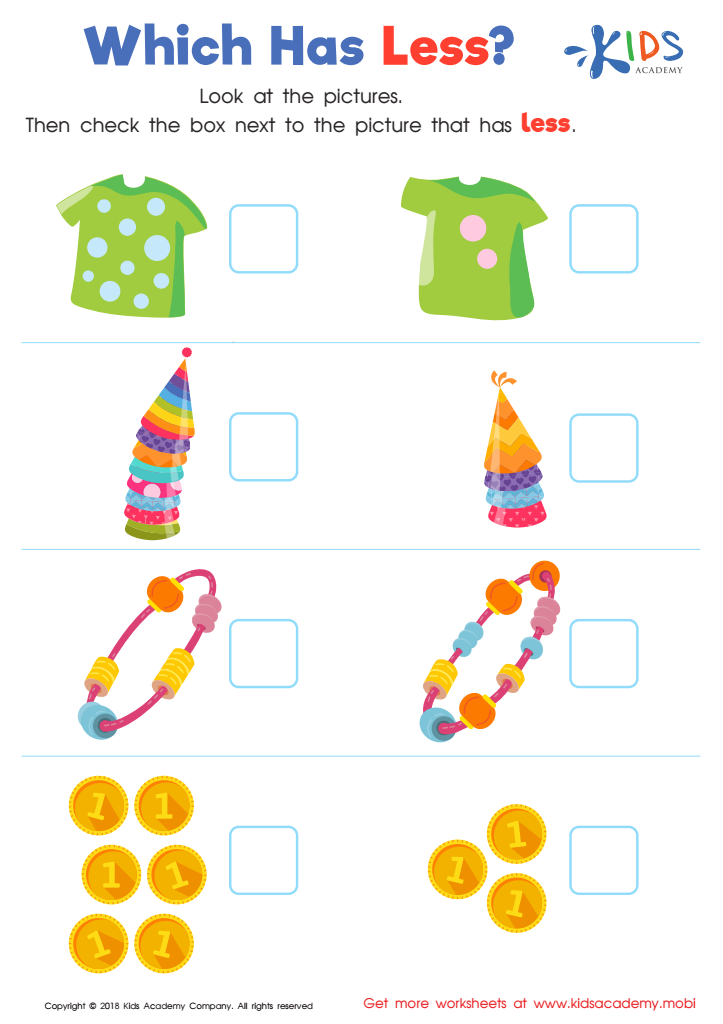
Which Has Less? Worksheet
 Assign to My Students
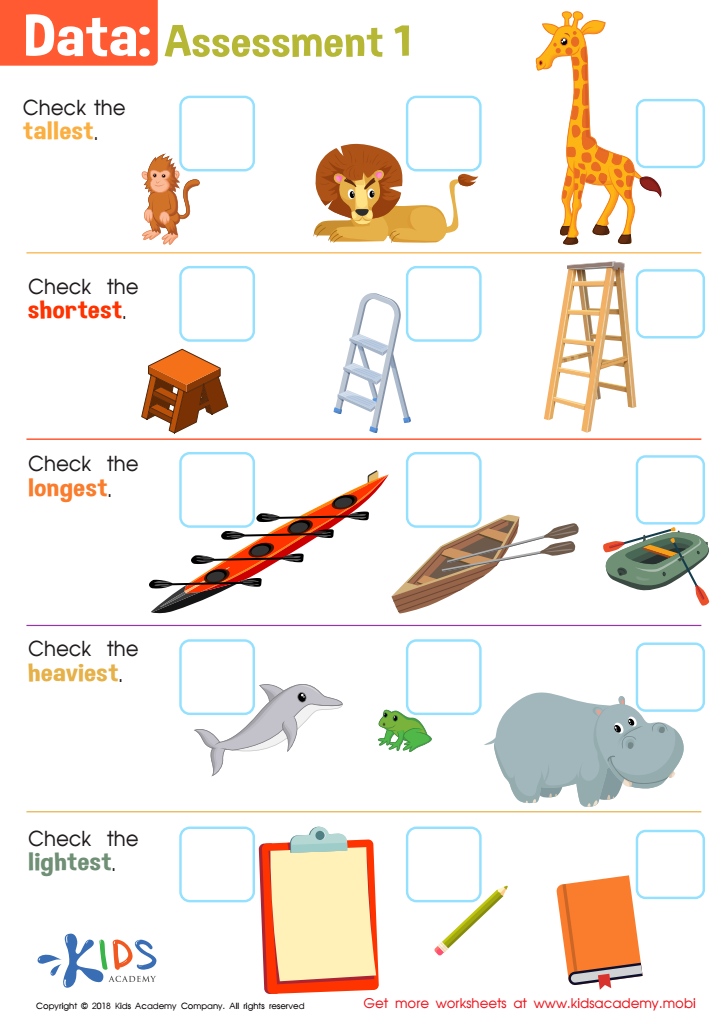
Data: Assessment 1 Worksheet
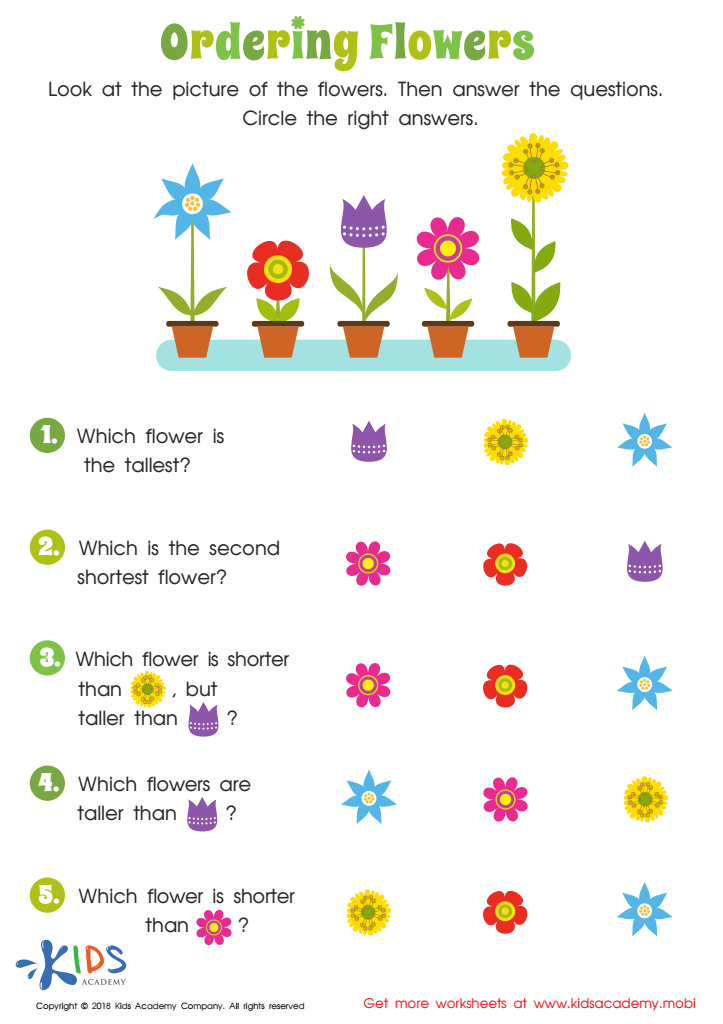
Ordering Flowers Worksheet








Comparing numbers and understanding measurement for children aged 6-7 play a critical role in developing foundational math skills, which are essential for their overall cognitive development. This early exposure helps them comprehend the world around them quantitatively, laying the groundwork for more complex mathematical concepts in the future.
By comparing numbers, children begin to grasp the concepts of greater than, less than, and equal to—skills that are essential for arithmetic operations. These comparisons help them make sense of numerical relationships and foster logical thinking. For instance, when a child compares the heights of two plants or the number of books, they engage in basic data analysis, crucial for problem-solving skills.
Measurement activities deepen this understanding further by introducing units and tools to quantify attributes like length, weight, and volume. This helps children relate abstract numbers to real-world objects, enhancing their spatial awareness and precision. Moreover, integrating these skills through playful, hands-on experiences makes learning engaging and meaningful, promoting active participation and retention.
Parents and teachers play a vital role here, as their guidance can encourage curiosity and enthusiasm for learning. Encouraging these foundational skills through everyday activities not only boosts academic competence but also nurtures a child's confidence and curiosity, fostering a lifelong love for learning and problem-solving.








