Mental arithmetic Subtraction Worksheets for Ages 6-7
3 filtered results
-
From - To
Explore our engaging Mental Arithmetic Subtraction Worksheets tailored for children aged 6-7. These worksheets are designed to enhance your child's subtraction skills through fun and interactive exercises that promote mental calculation. Perfect for both classroom and at-home learning, our resources encourage critical thinking and confidence in mathematics. Kids will build a strong foundation in arithmetic while enjoying colorful graphics and stimulating challenges. Each worksheet focuses on real-life scenarios, making math relatable and enjoyable. Dive into our collection today to support your child's mathematical journey and watch them excel in mental arithmetic with ease and excitement!
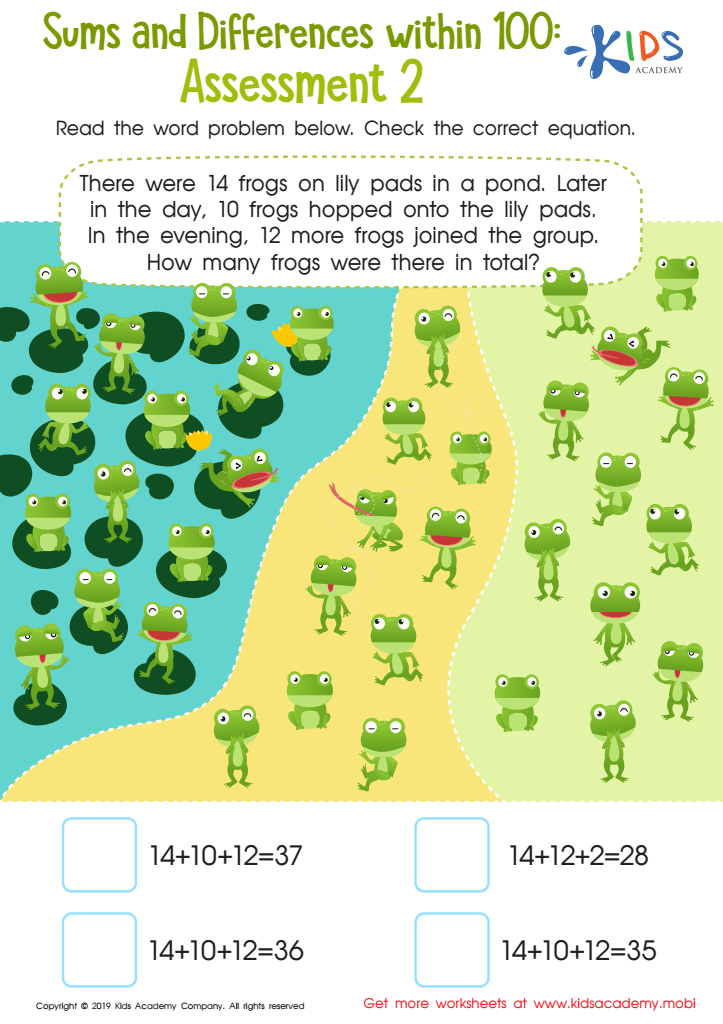
Sums and Differences Within 1 - Assessment 2 Worksheet
 Assign to My Students
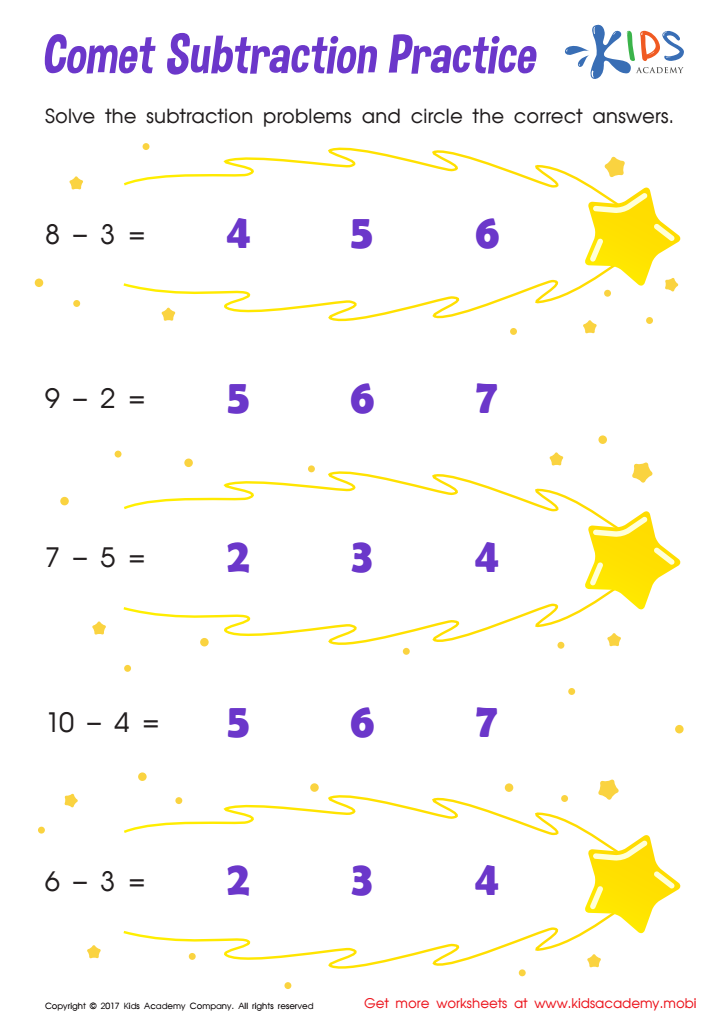
Comet Subtraction Practice Substraction Worksheet
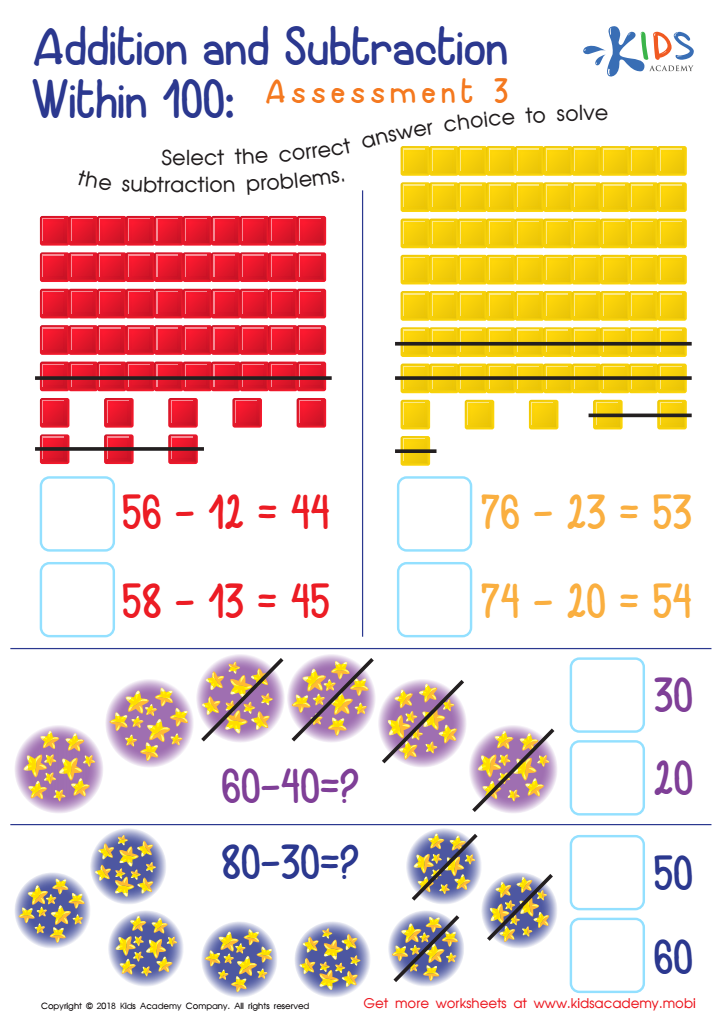
Addition and Subtraction Within 1: Assessment 3 Worksheet








Mental arithmetic, particularly subtraction for children aged 6-7, is crucial in laying a strong mathematical foundation. Mastering subtraction at this early age fosters number sense and enhances critical thinking skills. Parents and teachers should prioritize mental arithmetic because it helps children develop efficient problem-solving strategies that they can carry throughout their academic journey.
Furthermore, mental subtraction builds confidence. Children who can quickly and accurately perform calculations mentally feel empowered, which can positively impact their overall attitude toward math. It eliminates reliance on calculators or written methods, encouraging children to engage with numbers and enhance their cognitive agility.
Additionally, practicing mental subtraction improves memory and concentration. As children memorize subtraction facts, they enhance their working memory, which is beneficial across various subjects. Regular practice fosters fluency, helping children perform calculations faster, thereby enabling them to tackle more complex mathematical concepts.
Finally, mental arithmetic encourages collaboration. Opportunities for parents and teachers to engage in subtraction games or challenges can strengthen bonds and create a positive learning environment. Nurturing these skills early ensures that children are not only prepared for future math topics but also developing a lifelong appreciation for mathematics.








