Cognitive Development Word Problems Worksheets for Ages 6-7
4 filtered results
-
From - To
Enhance your child's cognitive development with our engaging Cognitive Development Word Problems Worksheets, designed specifically for ages 6-7. These worksheets are tailored to stimulate critical thinking and problem-solving skills through fun, real-life scenarios. Each worksheet presents age-appropriate challenges that encourage young learners to apply their reasoning abilities while improving their math proficiency. As children work through diverse word problems, they'll develop essential analytical skills and boost their confidence in tackling mathematical concepts. Perfect for parents and educators alike, our worksheets provide a valuable resource that combines learning and play, fostering a solid foundation for future academic success. Explore our collection today!
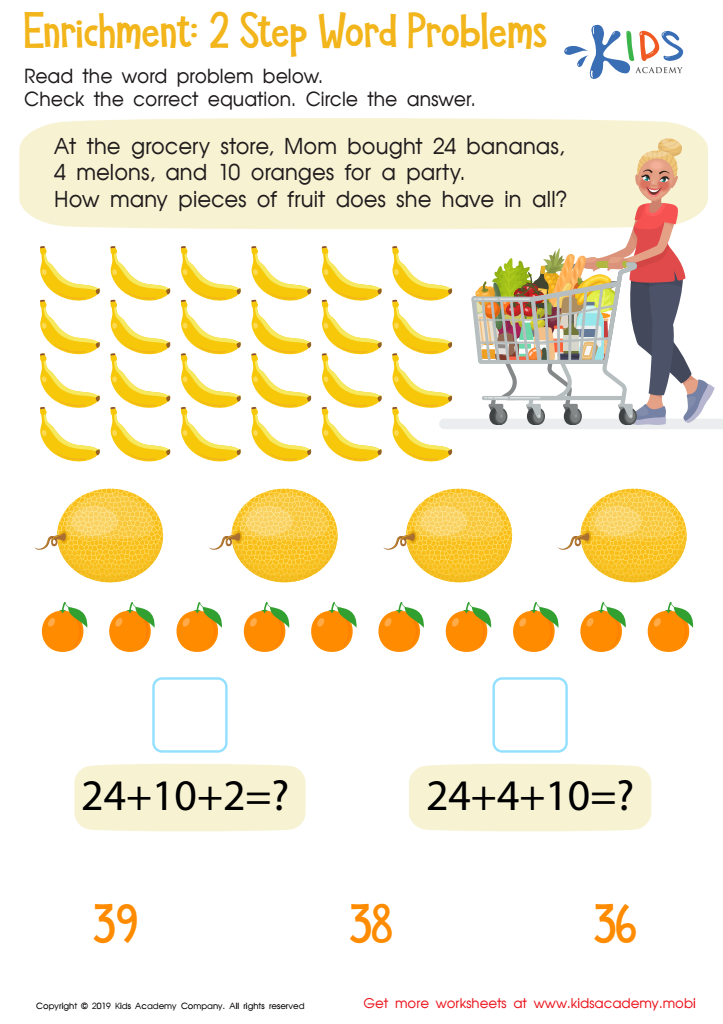
Enrichment -2 Step Word Problems Worksheet
 Assign to My Students
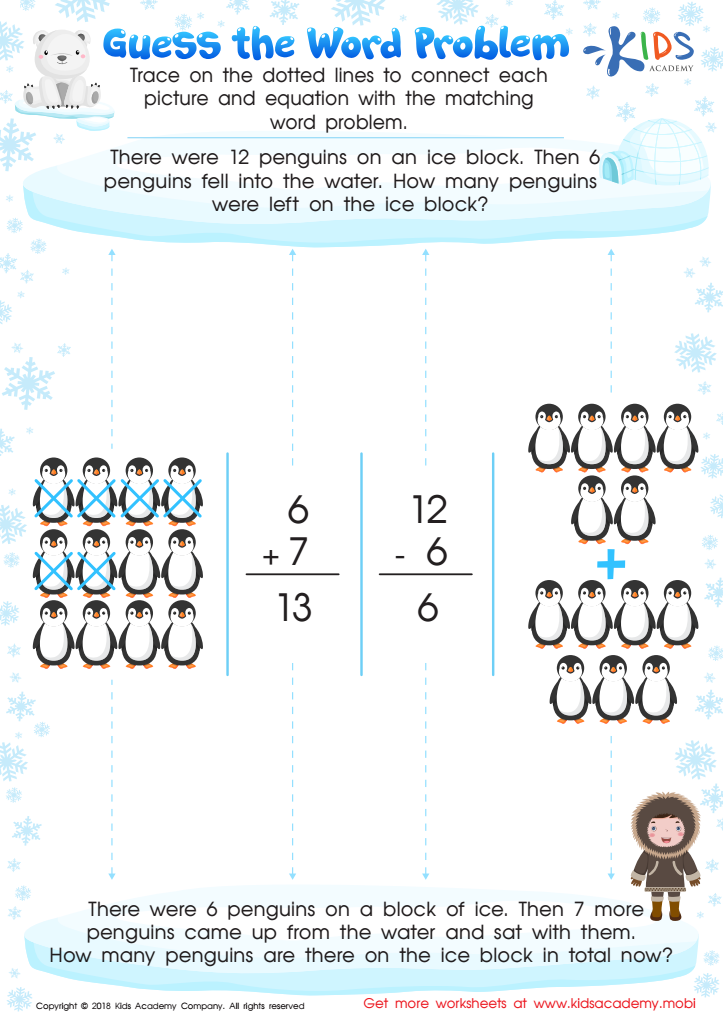
Guess the Word Problem Worksheet
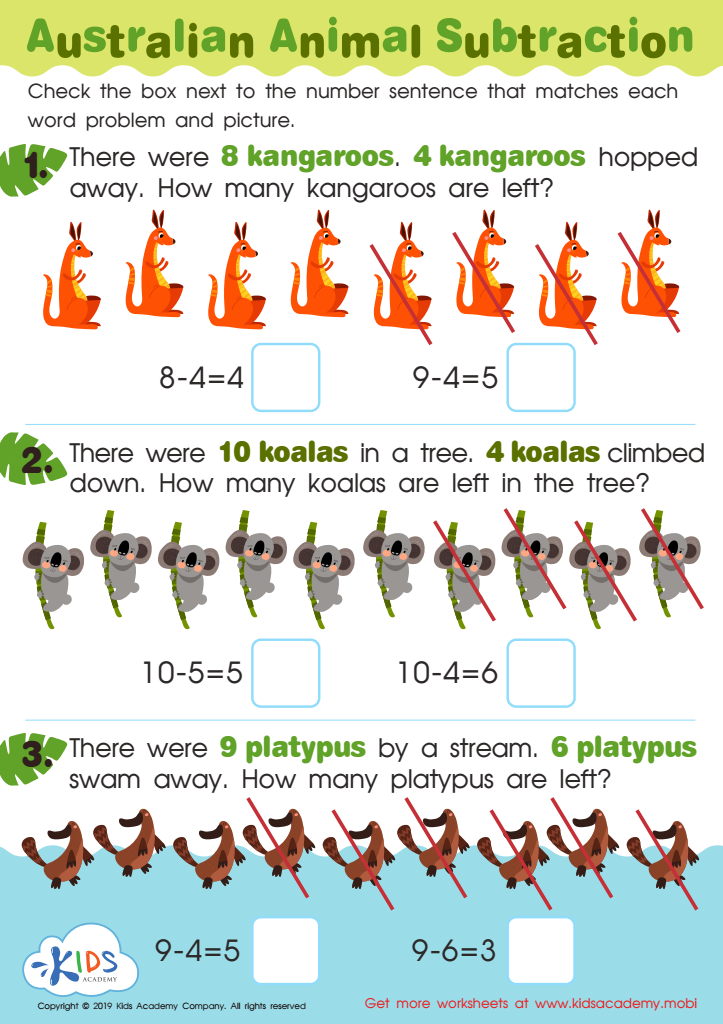
Australian Animal Subtraction Worksheet
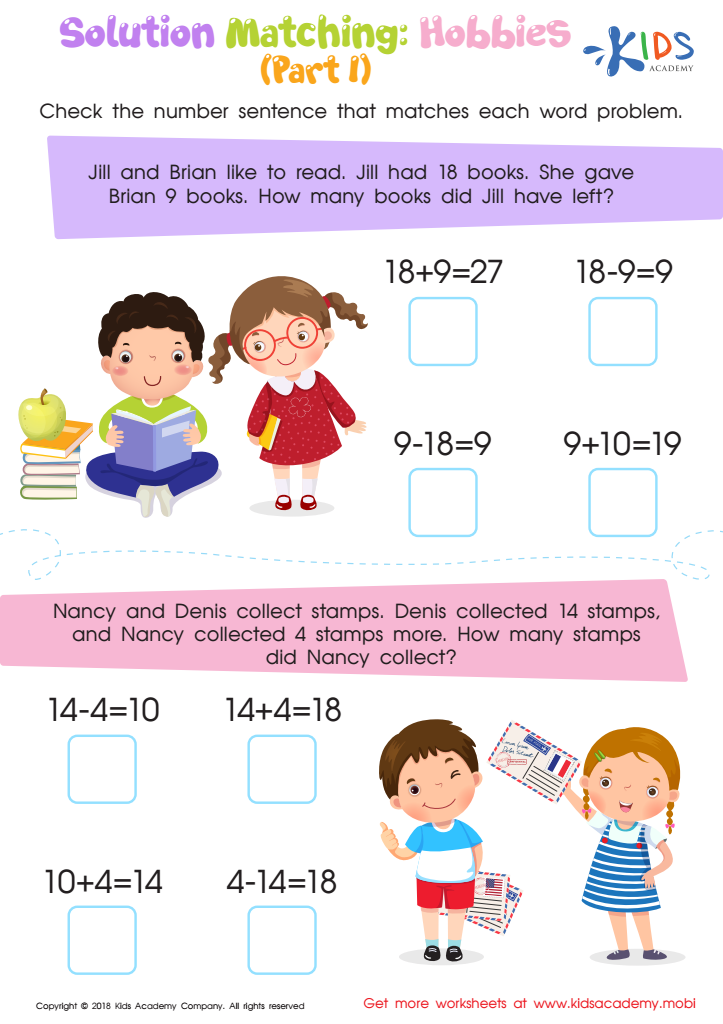
Solution Matching: Hobbies. Part 1 Worksheet








Cognitive development word problems for children ages 6-7 are crucial for several reasons. During this stage, children are transitioning into more abstract forms of thinking, and engaging with word problems nurtures critical cognitive skills such as problem-solving, logical reasoning, and comprehension. Solving these problems encourages kids to translate verbal scenarios into mathematical concepts, bolstering their understanding of math as a practical tool.
Furthermore, word problems foster analytical thinking by requiring children to dissect information, identify relevant details, and plan their approach before reaching a solution. This enhances not only their mathematical abilities but also their language skills, as they must interpret the problem's wording.
Additionally, tackling word problems builds resilience and perseverance. When children encounter challenges, they learn valuable lessons in persistence and critical thinking, equipping them to face more complex problems in the future.
By prioritizing exposure to cognitive development word problems, parents and teachers support holistic learning. This approach lays the groundwork for academic success, encouraging young learners to embrace challenges as they become more confident thinkers and problem-solvers. Ultimately, investing time in these skills now means nurturing a generation of capable, independent thinkers ready to tackle more advanced subjects.








