Hand-eye Coordination Word Problems Worksheets for Ages 6-7
3 filtered results
-
From - To
Enhance your child's hand-eye coordination with our engaging word problems worksheets designed specifically for ages 6-7! These interactive activities combine critical thinking and problem-solving skills, reinforcing math concepts while challenging students to effectively connect verbal cues with visual tasks. Each worksheet features age-appropriate scenarios that encourage kids to visualize and calculate, promoting both physical dexterity and cognitive development. Ideal for classroom settings or home practice, these resources support the integration of movement and learning. Foster your child's confidence in math and coordination while making learning fun and dynamic! Explore our collection of worksheets today and watch your child thrive!
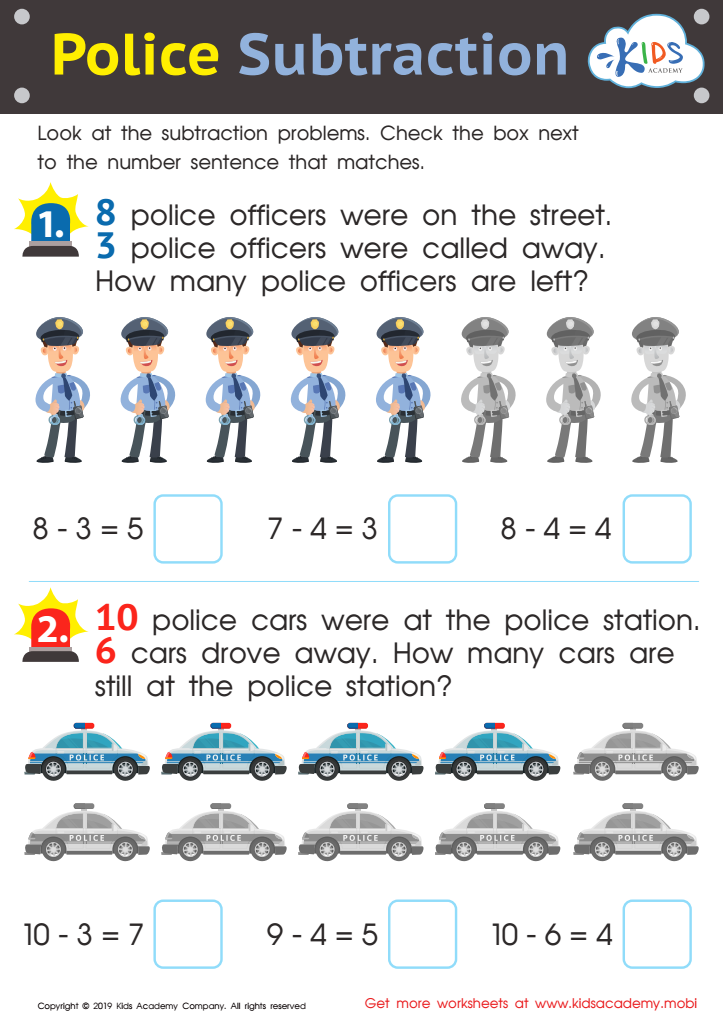
Police Subtraction Worksheet
 Assign to My Students
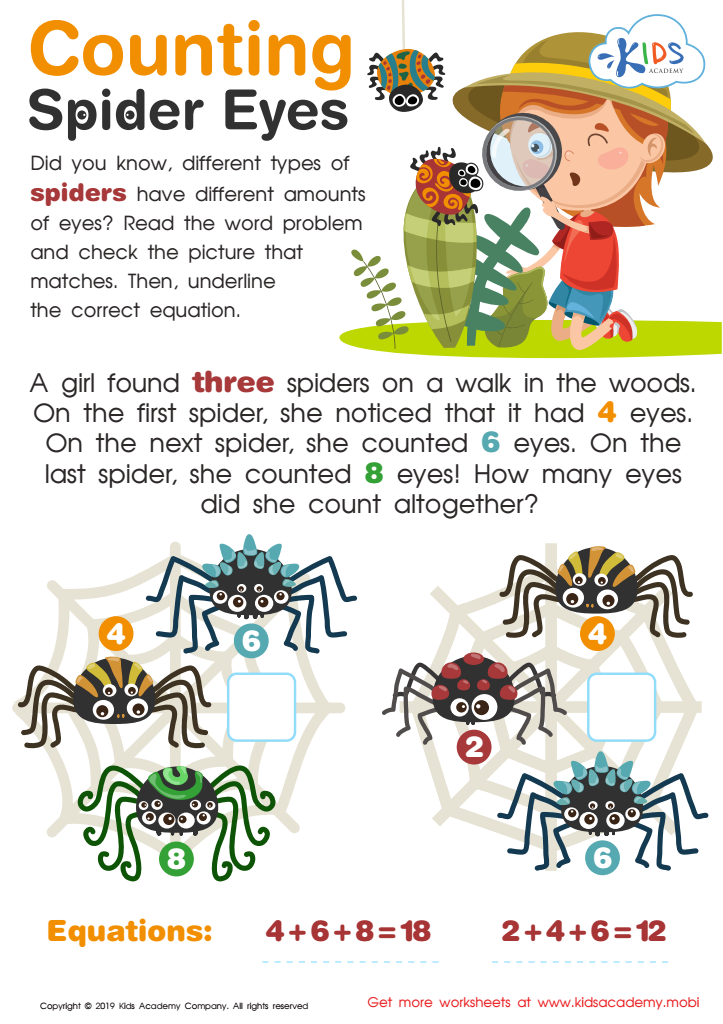
Counting Spider Eyes Worksheet
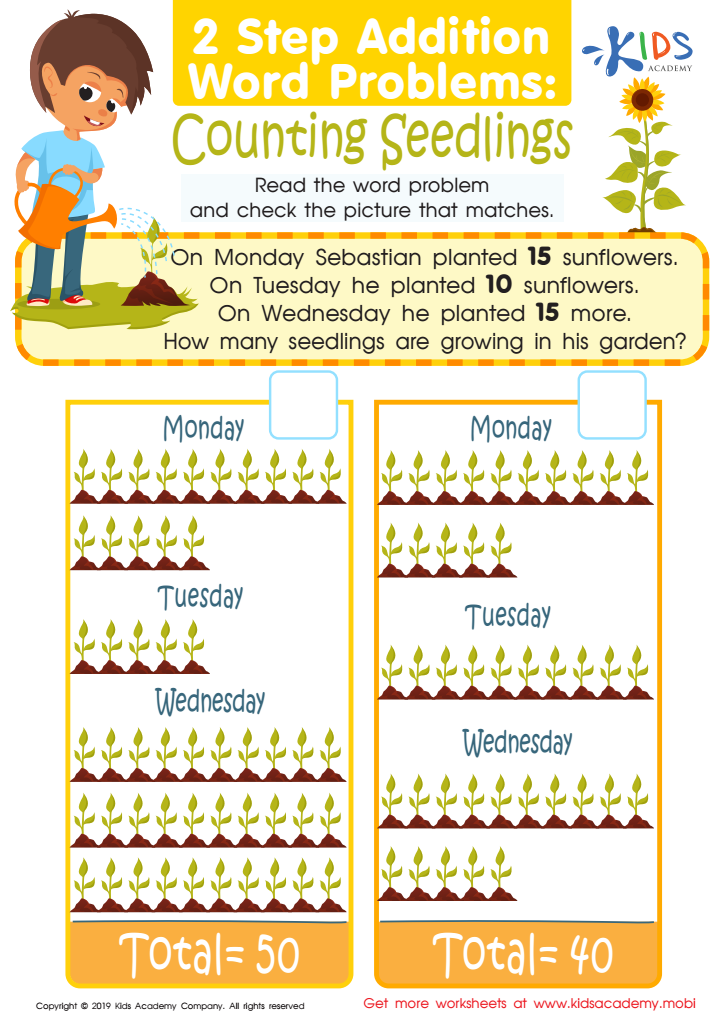
Counting Seedlings Worksheet








Hand-eye coordination is a critical skill in a child's development, particularly during ages 6-7, as it impacts various aspects of learning and everyday activities. For parents and teachers, understanding the significance of hand-eye coordination word problems can help strengthen this essential skill in children.
Firstly, hand-eye coordination is closely linked to a child's ability to perform physical activities, such as sports or arts and crafts, which are integral to the learning experience. Engaging with word problems that involve physical tasks helps children visualize concepts and promotes critical thinking. For example, solving problems that require them to imagine and coordinate their actions can enhance their cognitive development.
Secondly, encouraging participation in hand-eye coordination exercises through word problems can improve fine motor skills necessary for writing and other academic tasks. As children practice coordinating their hand movements with visual information, they also boost their confidence in classroom participation.
Moreover, these problems instill a love for problem-solving and critical thinking. By integrating hand-eye coordination challenges into learning activities, parents and teachers nurture resilience and creativity, vital attributes for future success.
Ultimately, prioritizing hand-eye coordination word problems fosters well-rounded development, ensuring that children are prepared for both academic and life challenges.








