
Number comprehension Word Problems Worksheets for Ages 6-7
6 filtered results
Difficulty Level
Grade
Age
-
From - To
Subject
Activity
Standards
Boost your child's math skills with our Number Comprehension Word Problems Worksheets tailored for ages 6-7! Designed by education experts, these engaging worksheets help young learners develop essential number comprehension through word problems. Each worksheet features fun and relatable scenarios that encourage critical thinking, problem-solving, and basic arithmetic mastery. With a variety of tasks to practice addition, subtraction, and number sequencing, our worksheets provide a solid foundation for math confidence and academic success. Ideal for home or classroom use, they make learning both enjoyable and impactful. Start your child's journey to math excellence today!
Favorites
With answer key
Interactive
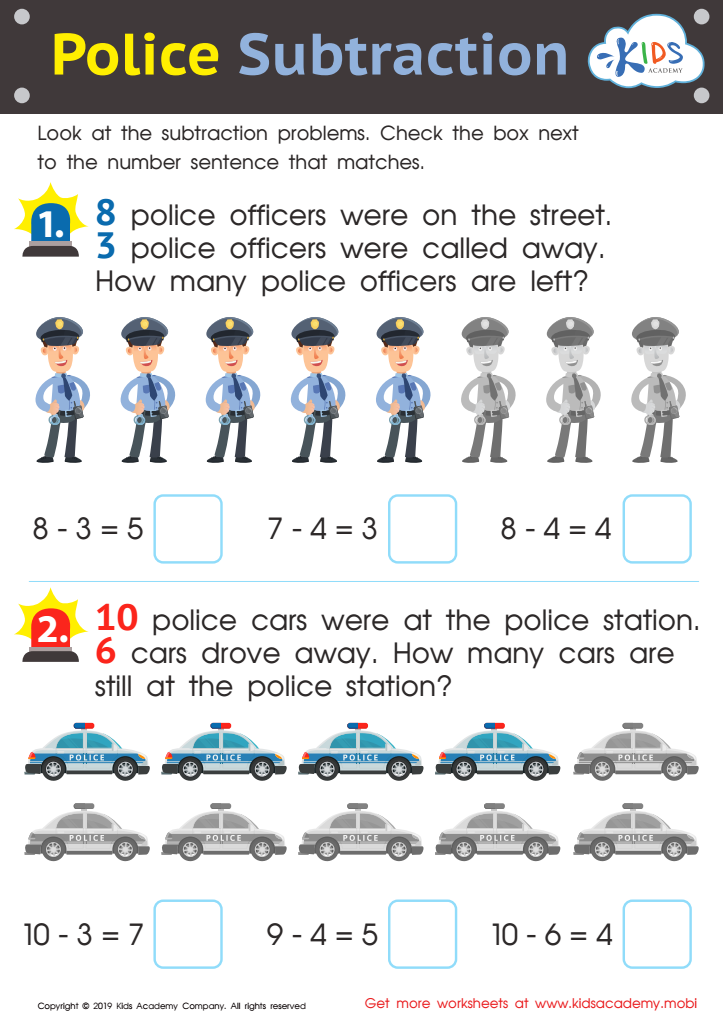
Police Subtraction Worksheet
Police protect citizens and do more in the community. Kids can learn numbers with this math worksheet: two subtraction problems in the downloadable PDF. Read the problems with your kids, then check the box next to the number sentences that are correct.
 Assign to My Students
Police Subtraction Worksheet
Worksheet
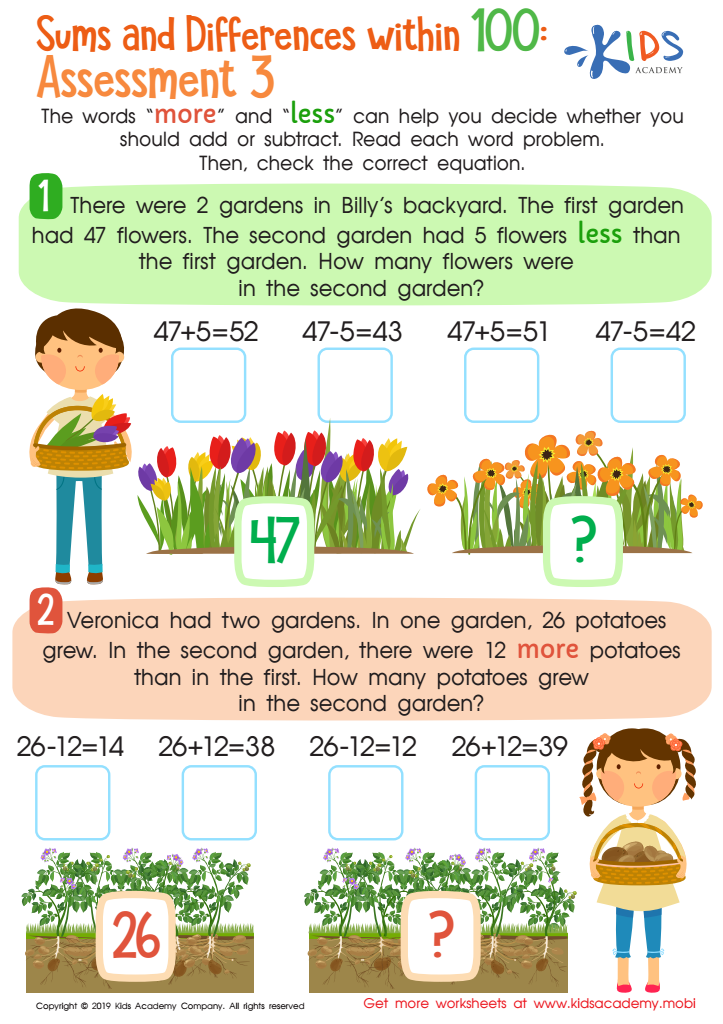
Sums and Differences Within 1 - Assessment 1 Worksheet
Help your child understand school topics better with your assistance. For math, go over their worksheet together and discuss the instructions and text. Solve the questions and check the right equation. This will take their learning to the next level.
Sums and Differences Within 1 - Assessment 1 Worksheet
Worksheet
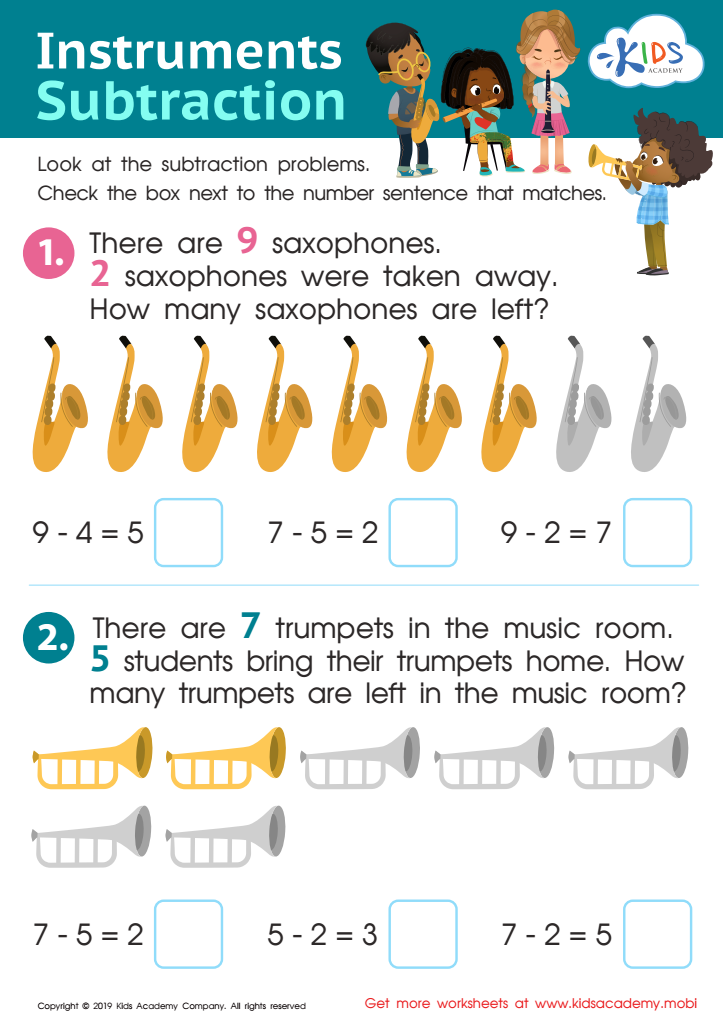
Instrument Subtraction Worksheet
Encourage kids to practice their addition and subtraction by having them identify the musical instruments on the worksheet, then read the subtraction problems and check the box with the matching number sentences.
Instrument Subtraction Worksheet
Worksheet
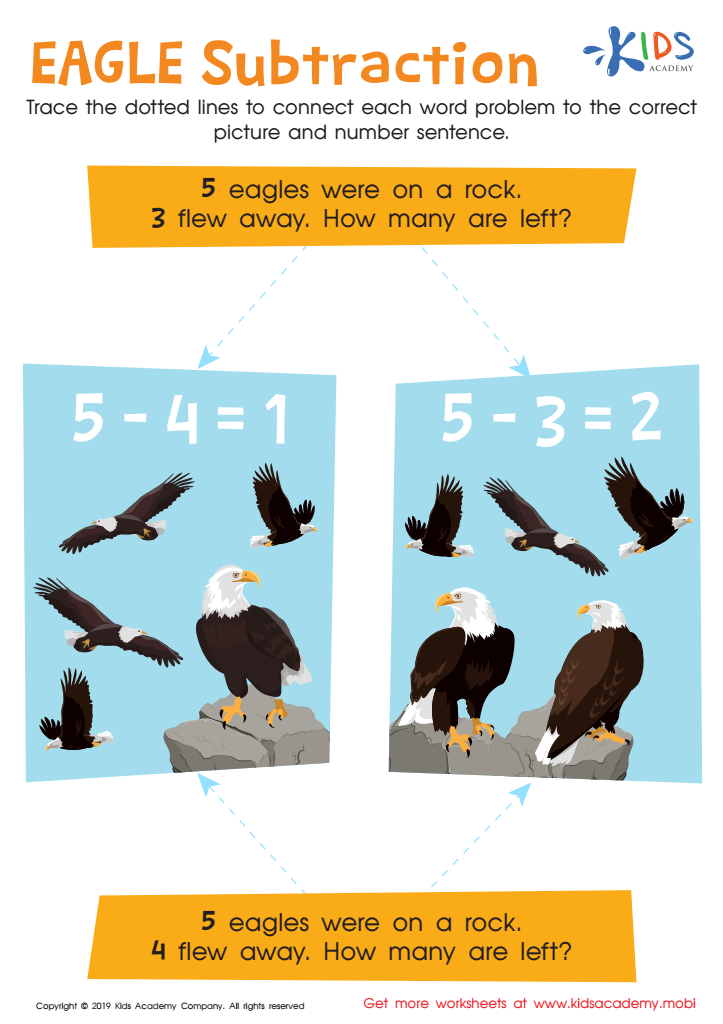
Eagle Subtraction Worksheet
Help your kids become math experts! Through practice and adult guidance, even addition and subtraction can seem simple. Show them how with this worksheet - get them to trace the dotted lines to connect each word problem to the correct picture and solve the number sentence with some eagles!
Eagle Subtraction Worksheet
Worksheet
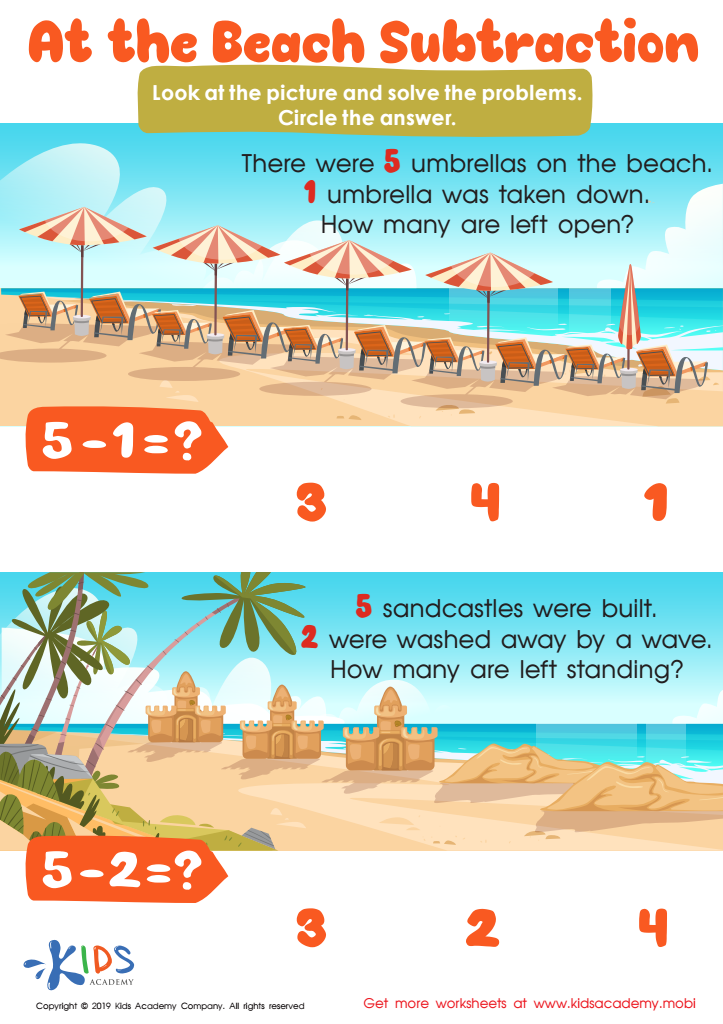
At the Beach Subtraction Worksheet
Take your kids to the beach and show them that math can be fun! Look at the picture on the worksheet, then help them solve the addition and subtraction problems. Check the answers together and enjoy a day of learning and fun!
At the Beach Subtraction Worksheet
Worksheet
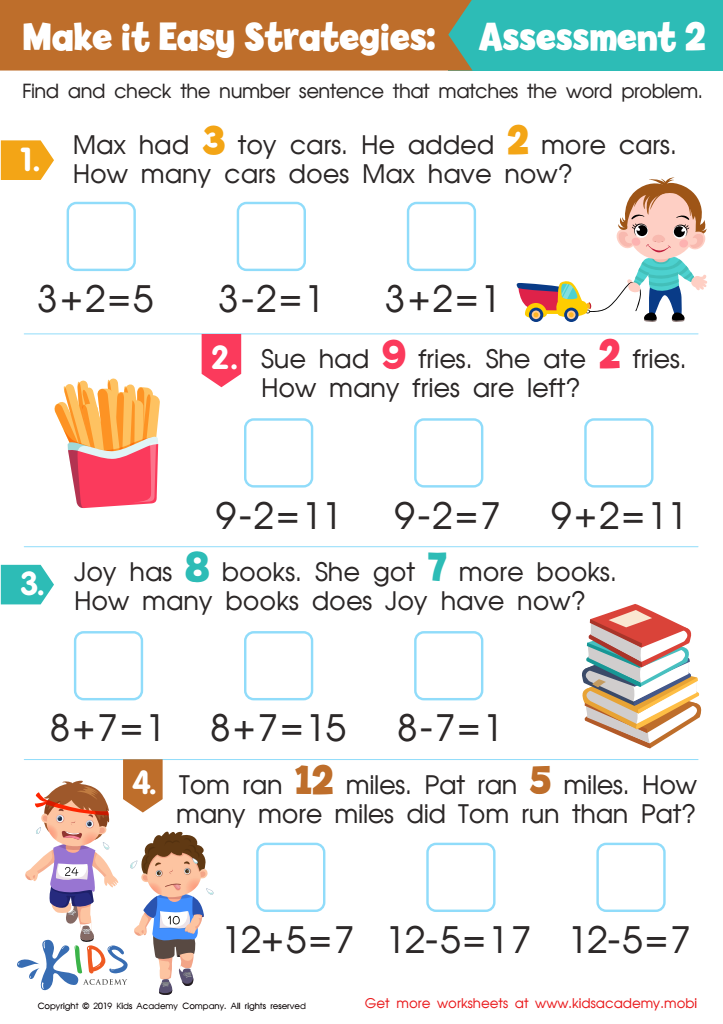
Make it Easy Strategies: Assessment 2 Worksheet
Utilize images and objects your students know to facilitate learning. Simple math problems should be a cinch for kindergartners who can count to 30. Ask them to identify the picture's subject. Then read word problems and help them find the right number sentences to match.
Make it Easy Strategies: Assessment 2 Worksheet
Worksheet
Join Kids Academy for Free
Who is primarily going to use this learning content?








Number comprehension word problems are fundamental for children aged 6-7 as they establish crucial mathematical and cognitive skills. At this developmental stage, children are beginning to solidify their understanding of numbers and how they relate to the world around them. Word problems offer a practical context for these abstract concepts, helping kids to see the relevance of math in everyday life.
Firstly, solving word problems enhances critical thinking skills. Children must not only perform arithmetic operations but also understand and dissect the problem's language and context. By engaging in these processes, they learn to approach problems logically and systematically.
Secondly, word problems help in developing reading comprehension. As children interpret the written problems, they practice extracting key information and essentials from texts, which bolsters their literacy and comprehension capabilities.
Furthermore, number comprehension via word problems improves problem-solving skills. It encourages students to experiment with different strategies and sometimes work backwards to find solutions, thus broadening their mathematical toolset.
Lastly, early exposure to word problems builds confidence in tackling more complex math tasks in the future. When children repeatedly succeed in this area, they gain a positive attitude towards math that can influence their long-term academic performance.
Parents and teachers who prioritize these skills are essentially equipping children with the foundational tools needed for diverse aspects of learning and everyday decision-making.








