Phonics practice Building Vocabulary Worksheets for Ages 6-7
5 filtered results
-
From - To
Introduce your child to the world of words with our "Phonics Practice Building Vocabulary Worksheets" designed for ages 6-7 at Kids Academy. Our engaging and educational worksheets aim to strengthen phonics skills while expanding vocabulary. With fun activities covering letter sounds, blends, and word recognition, children will eagerly enhance their reading proficiency. Perfect for at-home practice or classroom use, these worksheets make learning a joyous adventure. Watch as your child builds a strong foundation for literacy, equipping them with the skills needed for fluent reading. Explore our collection and make phonics practice an exciting part of your child’s daily routine!
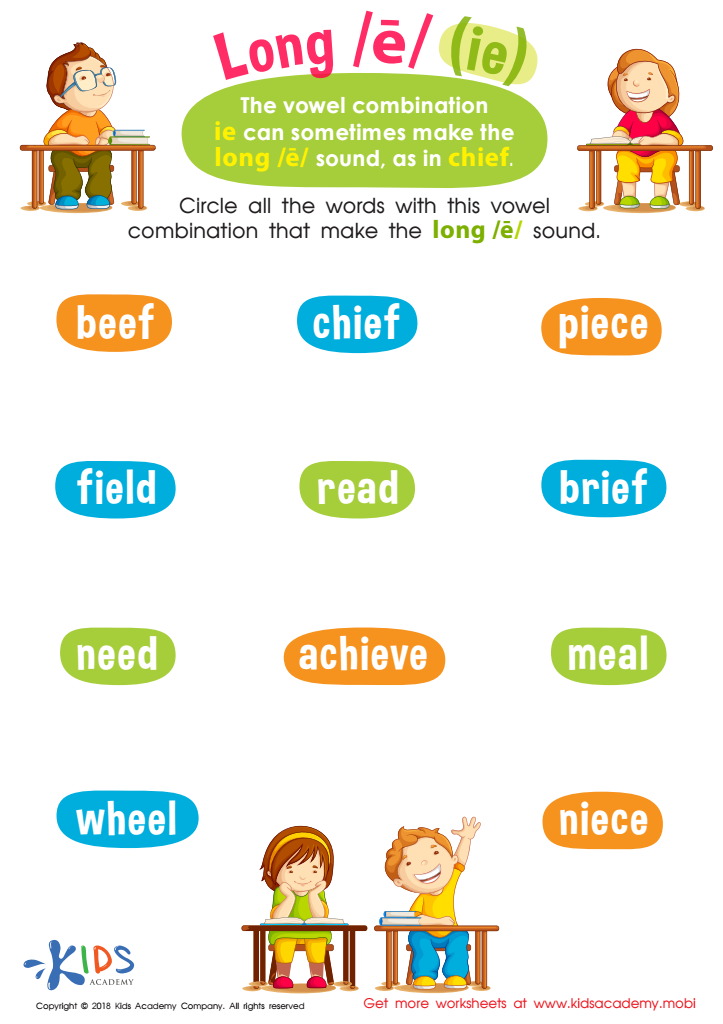
Reading: Long E and IE Worksheet
 Assign to My Students











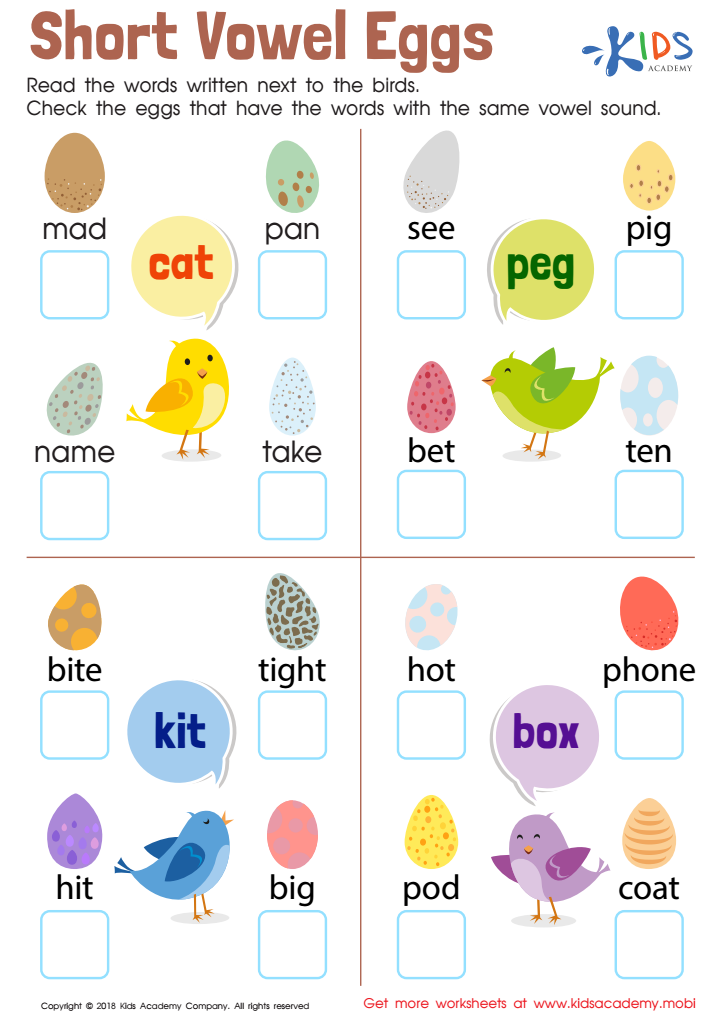
Short Vowel Eggs Worksheet
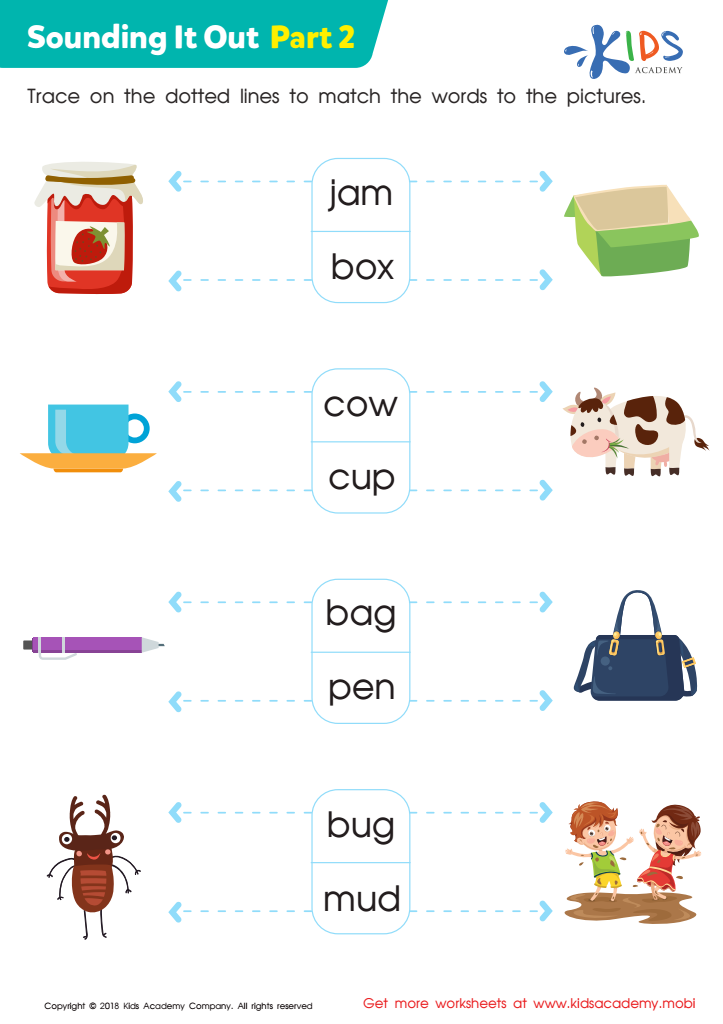
Sounding it Out: Part 2 Worksheet
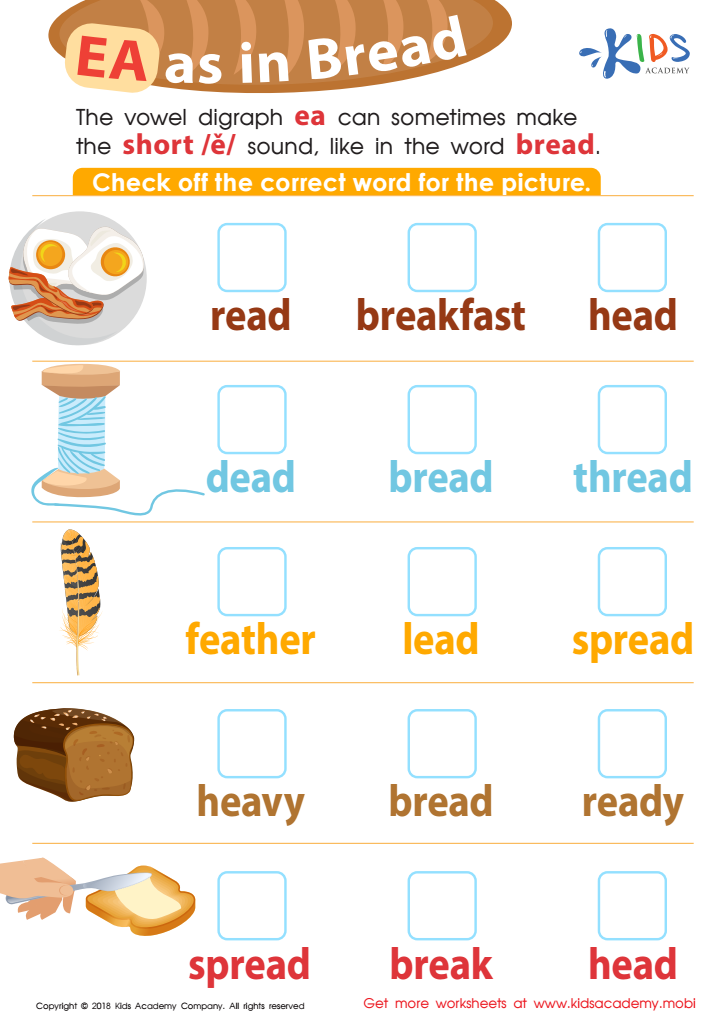
Reading: EA as in Bread Worksheet
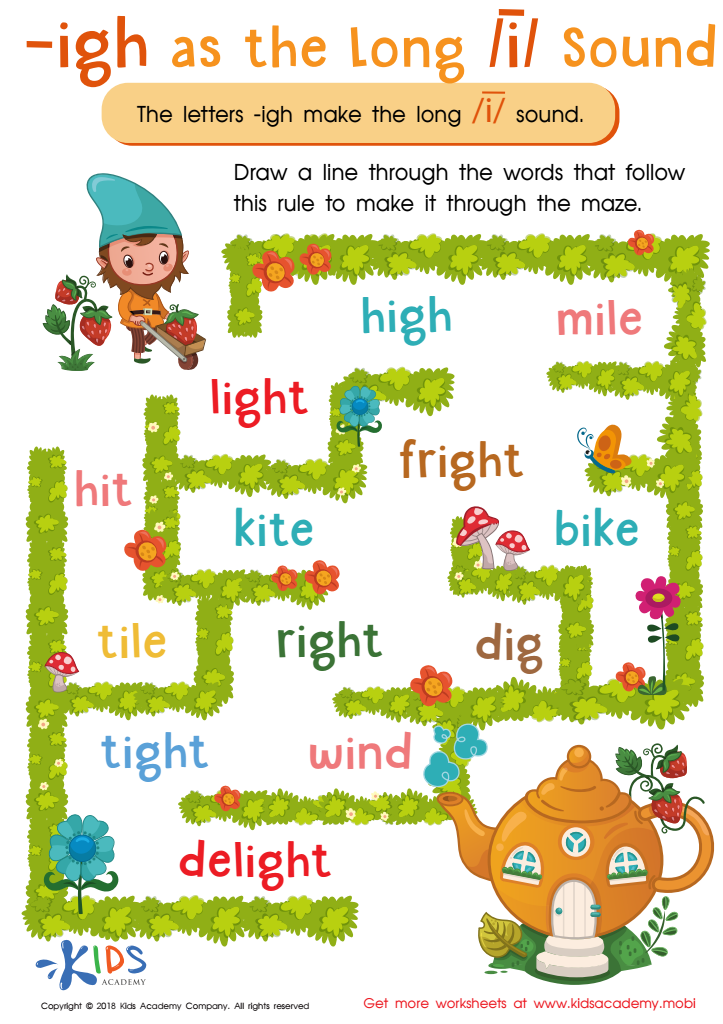
Reading: IGH as Long I Worksheet








Parents and teachers should care deeply about phonics practice for children aged 6-7 as it's a critical period for language development. Phonics is the foundation of reading, the skill of understanding how sounds correspond to letters and patterns in words. By mastering phonics, children develop strong reading abilities which underpin academic success.
Phonics practice enhances decoding skills, allowing young learners to read unfamiliar words by sounding them out. This bridges the gap between written and spoken language, making new vocabulary more accessible. As children encounter and practice new words, their vocabulary expands naturally, promoting better comprehension and expression.
Building vocabulary at this age is crucial because it influences not only reading proficiency but also listening, speaking, and writing skills. A richer vocabulary enables children to articulate thoughts clearly, enhances their understanding of complex texts, and fosters a lifelong love of learning. Moreover, a solid vocabulary is linked to improved cognitive and social skills, equipping children for future educational and personal interactions.
Early phonics practice and vocabulary building thus lay the groundwork for all subsequent learning, shaping confident, curious, and competent readers. Parents and teachers, by prioritizing these fundamental skills, set children on a path toward educational achievement and a well-rounded verbal repertoire.








