Detail identification Reading Worksheets for Ages 6-7
3 filtered results
-
From - To
Our Detail Identification Reading Worksheets for ages 6-7 help young readers develop crucial comprehension skills. Carefully crafted to engage early learners, these printable activities focus on identifying and understanding key details within a text. By practicing with these worksheets, children will enhance their ability to recall information, make inferences, and comprehend stories more deeply. Perfect for reinforcing classroom learning or supplementing at-home reading practice, our worksheets are designed to make learning both effective and enjoyable. Equip your child with the tools to become a confident reader with our thoughtfully created resource. Download now and start fostering essential reading skills!
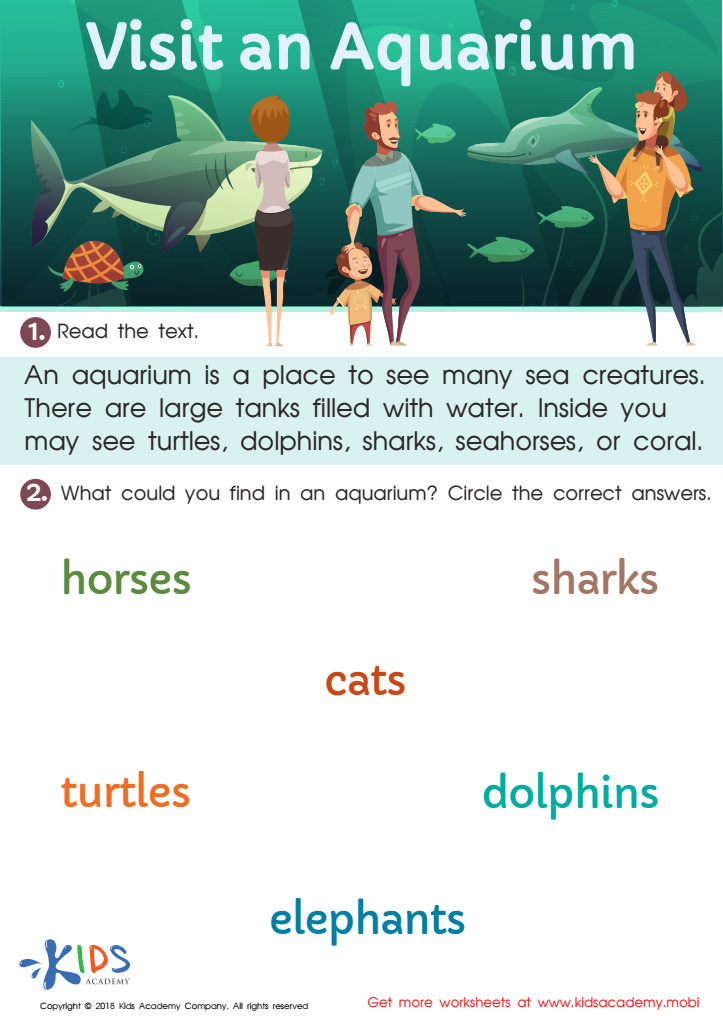
Visit an Aquarium Worksheet
 Assign to My Students
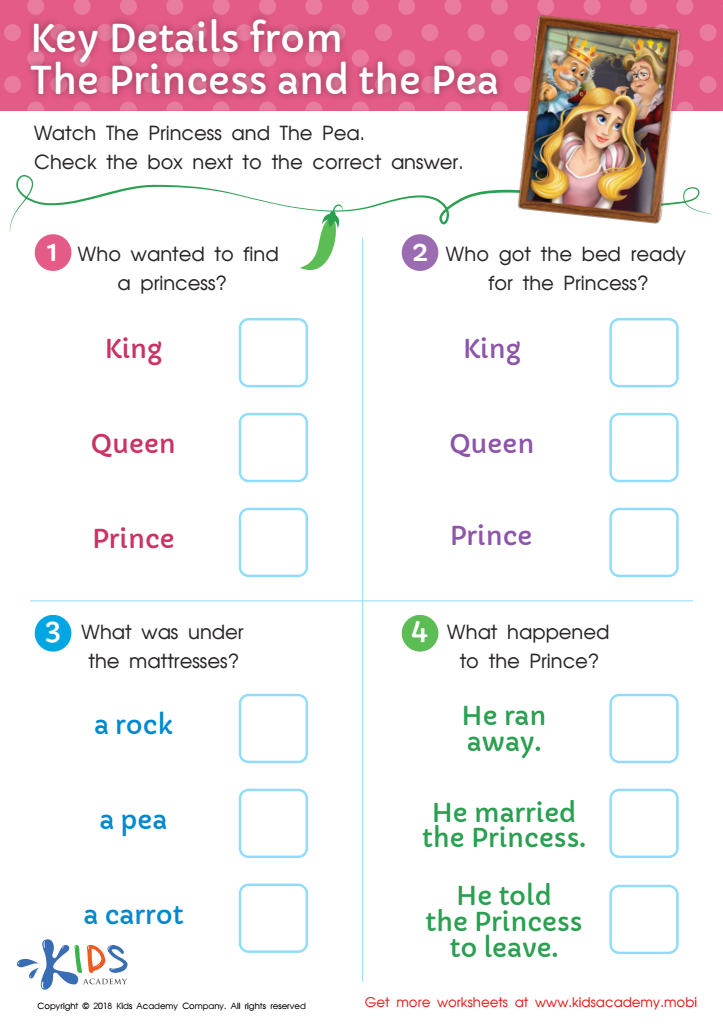
Key Details from the Princess and the Pea Worksheet
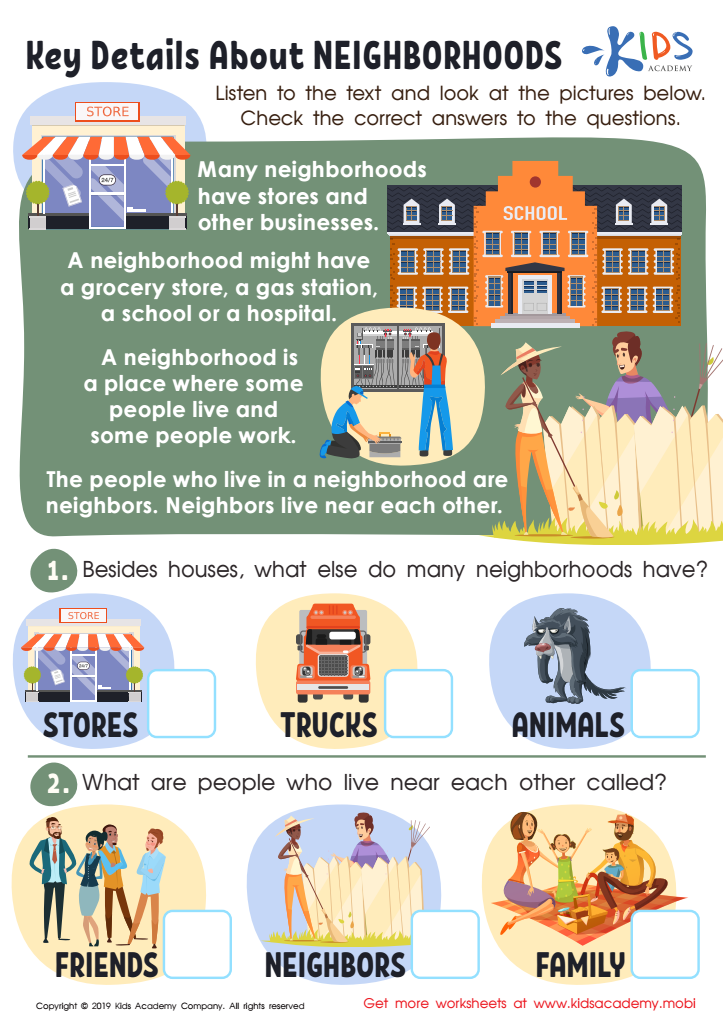
Key Details Neighborhoods Worksheet








Parents and teachers should emphasize detail identification reading for ages 6-7 because it forms the foundation of strong reading comprehension skills. At this stage, children are shifting from learning to read to reading to learn. Detail identification helps young readers pick up key information, comprehend the text, and connect ideas, which are crucial for both academic success and daily life.
First, it enhances comprehension by enabling children to extract who, what, where, when, why, and how from a story. Identifying these details fosters a deeper understanding and retention of what they read. Second, it critiques critical thinking skills as children learn to sift through texts to discern the most pertinent points. It encourages curiosity and inquiry, promoting active rather than passive reading.
Moreover, detail identification is essential for developing other literacy skills such as summarizing, making inferences, and understanding main ideas. It's also valuable in cross-curricular contexts; for instance, interpreting word problems in math or understanding instructions in science activities.
Encouraging detailed reading early on creates a habit of attentive reading, which benefits children throughout their academic journey and into adulthood. By fostering these skills early, parents and teachers can help children become more confident, competent, and enthusiastic readers.








