Historical Knowledge Reading Worksheets for Ages 6-7
5 filtered results
-
From - To
Explore our engaging Historical Knowledge Reading Worksheets designed specifically for children ages 6-7! These worksheets encourage young learners to delve into fascinating historical facts and stories while enhancing their reading skills. Each worksheet combines fun activities with age-appropriate content, making history accessible and exciting. Kids will enjoy reading about important historical figures, events, and cultures as they complete interactive exercises that promote comprehension and critical thinking. Perfect for classroom use or at-home learning, these worksheets help spark curiosity about the past, ensuring children build a solid foundation in both literacy and historical knowledge. Dive into history today and inspire young minds!
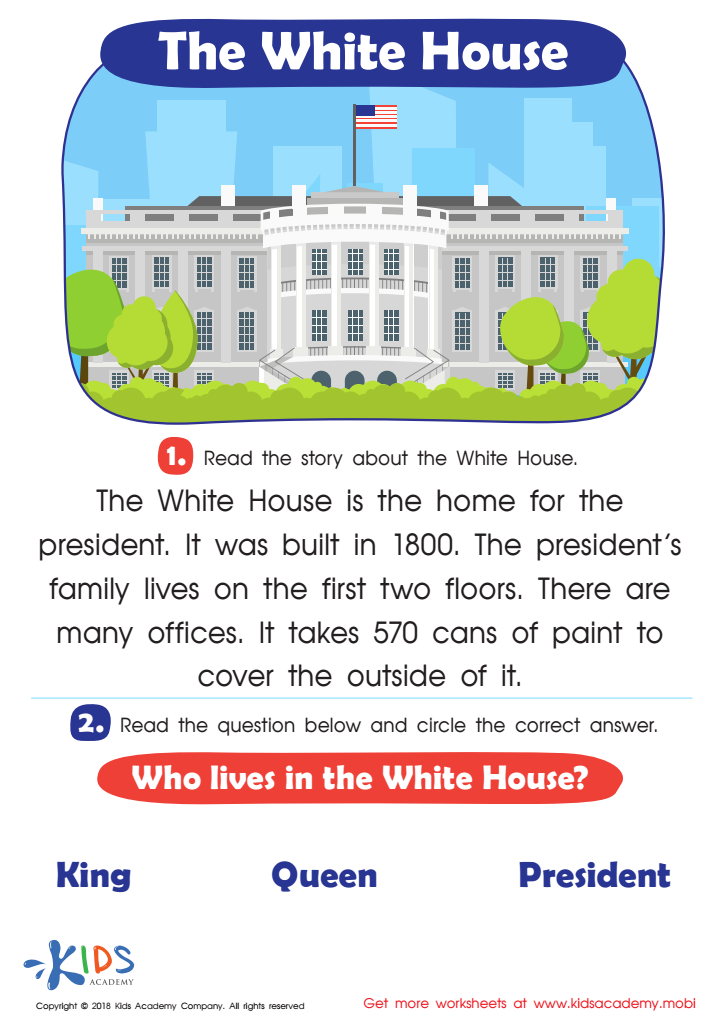
White House Worksheet
 Assign to My Students
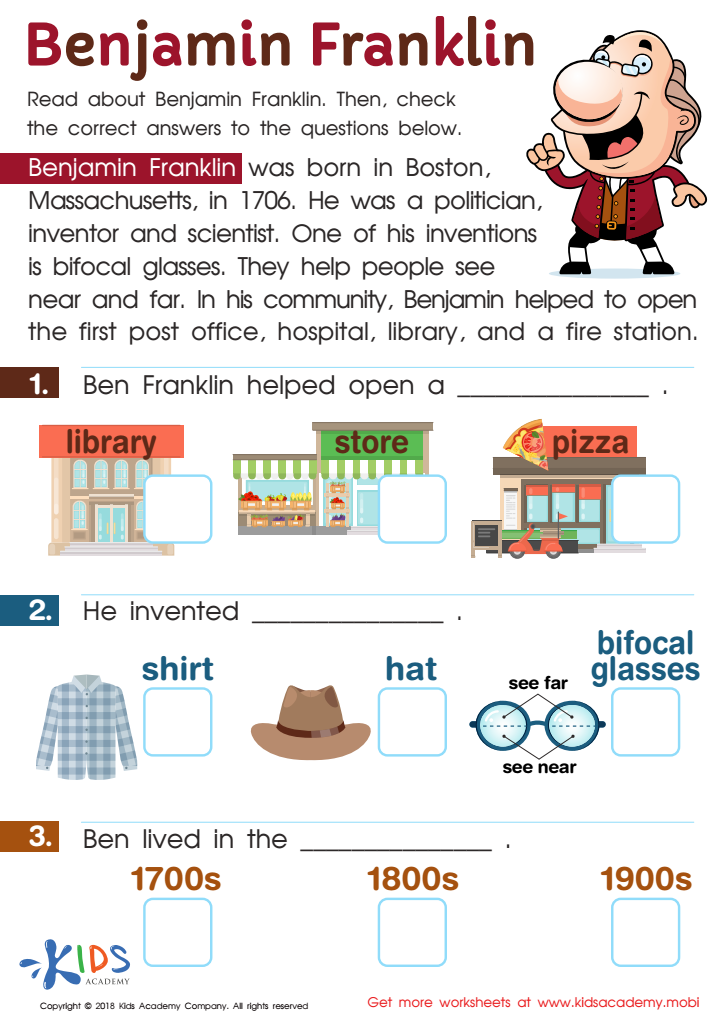
Benjamin Franklin Worksheet
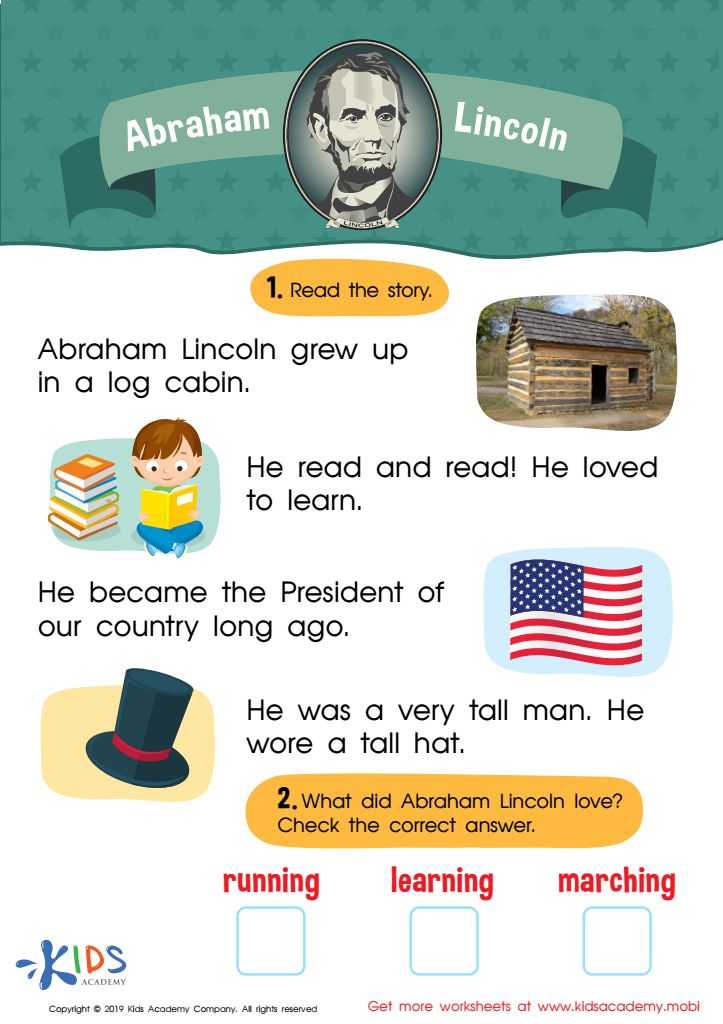
Abraham Lincoln Worksheet
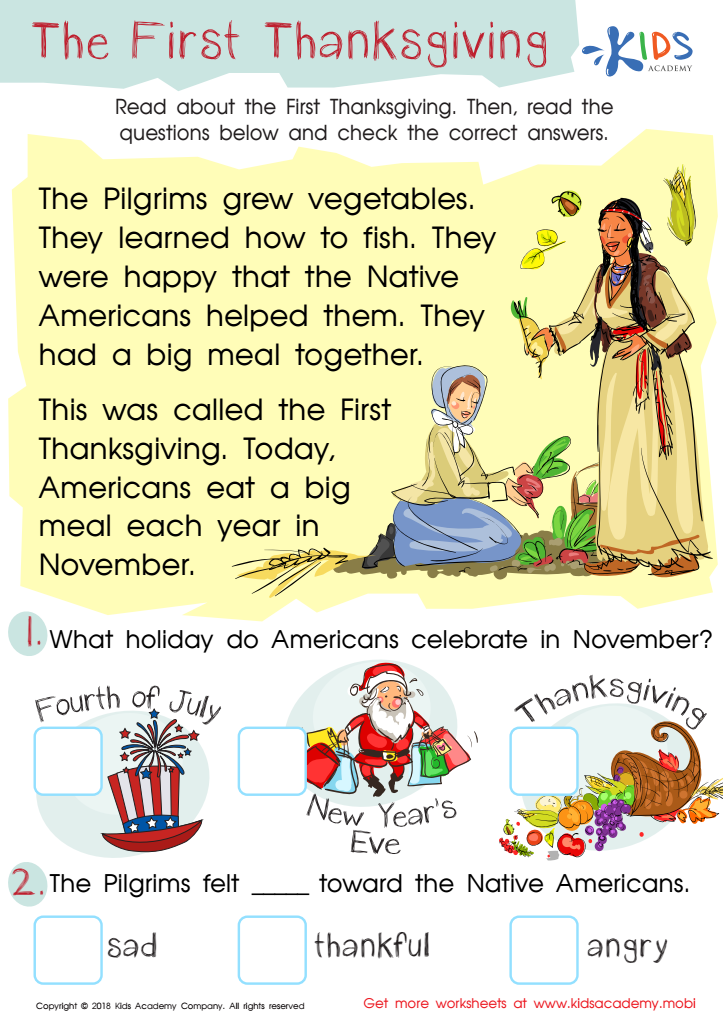
Assessment: First Thanksgiving Worksheet
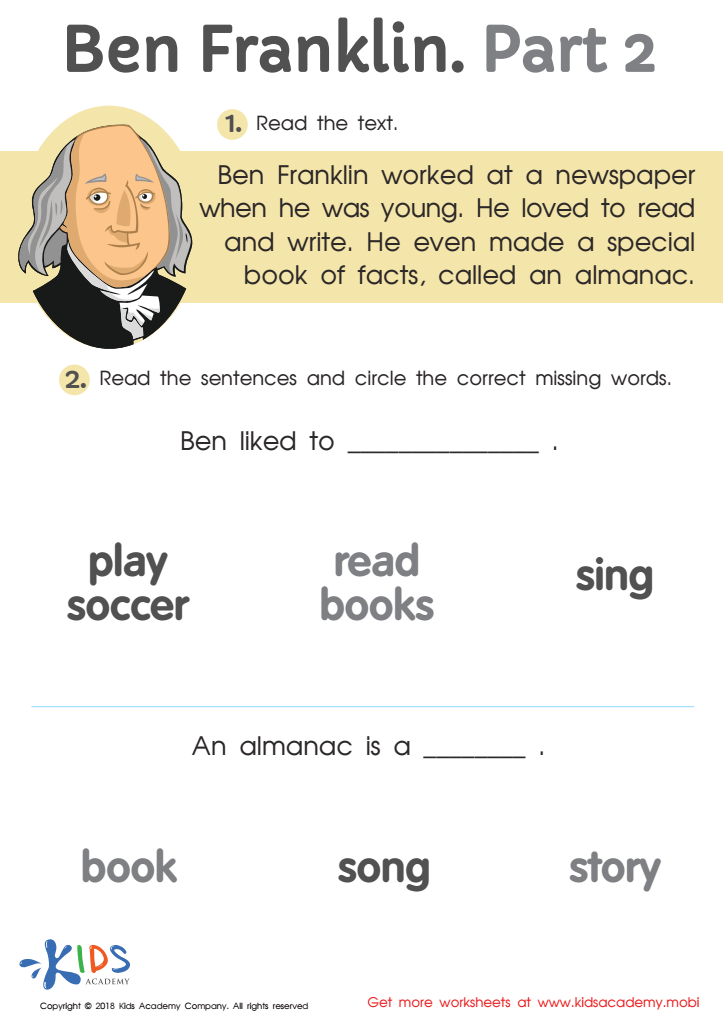
Ben Franklin Part 2 Worksheet







Parents and teachers should prioritize Historical Knowledge Reading for children aged 6-7 because it lays the foundation for critical thinking and understanding of the world. At this age, children are naturally curious and actively engage with stories, making historical narratives both captivating and essential for their cognitive development. By introducing historical reading, educators can help children contextualize their environment, understand community heritage, and appreciate diversity.
This early exposure encourages empathy as children learn about different cultures, struggles, and triumphs throughout history. Understanding such contexts nurtures social awareness and helps children develop a sense of identity and belonging. Moreover, historical reading enhances vocabulary and literacy skills, as children encounter new terms and narrative structures. These skills are crucial as they transition into more complex reading materials.
Moreover, stories from history can inspire resilience, kindness, and the importance of making informed choices, fostering moral development. In a societal landscape that values scientifically informed citizens and compassionate communities, early historical knowledge instills a drive toward inquiry and activism.
Ultimately, making historical knowledge engaging and accessible at a young age promotes well-rounded, informed individuals who are equipped to navigate the complexities of society while fostering a love for learning.








