Shape Recognition Reading Comprehension Worksheets for Ages 6-7
4 filtered results
-
From - To
Explore our engaging "Shape Recognition Reading Comprehension Worksheets" designed specifically for children aged 6-7. These interactive worksheets combine the joys of reading with essential shape identification skills. Each worksheet encourages young learners to enhance their comprehension abilities by connecting shapes with descriptive texts, fostering both critical thinking and creativity. As kids read carefully crafted stories and complete related activities, they will reinforce their understanding of various geometric shapes while improving their vocabulary and pronunciation. Perfect for classroom use or at-home practice, our worksheets support foundational skills necessary for future learning adventures. Start your child on the path to academic success today!
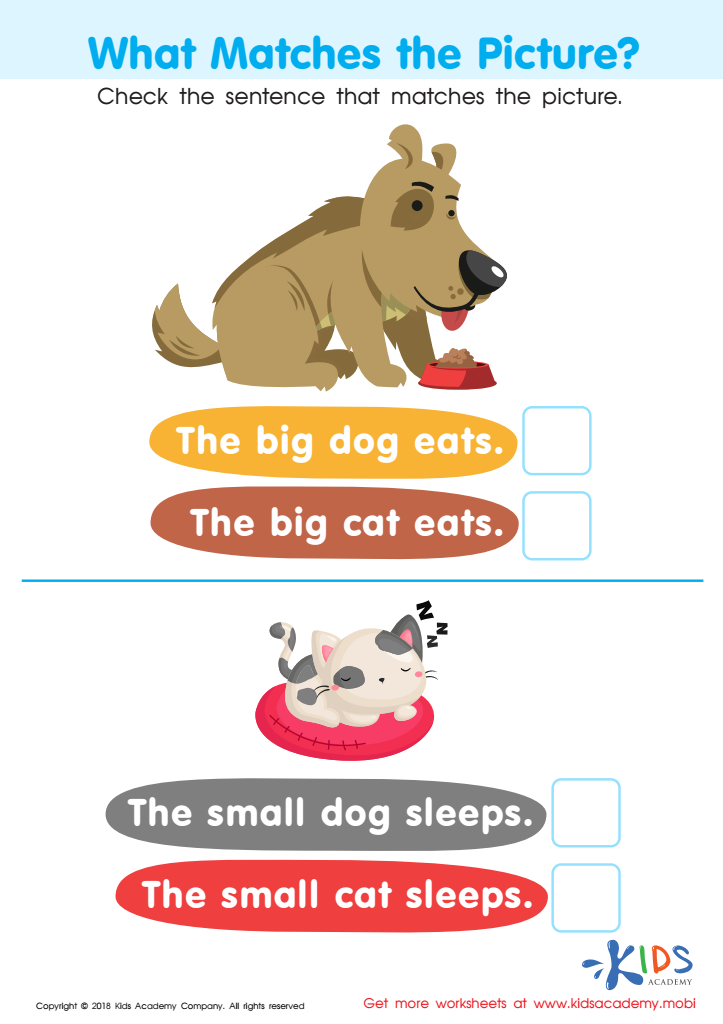
What Matches the Picture? Worksheet
 Assign to My Students
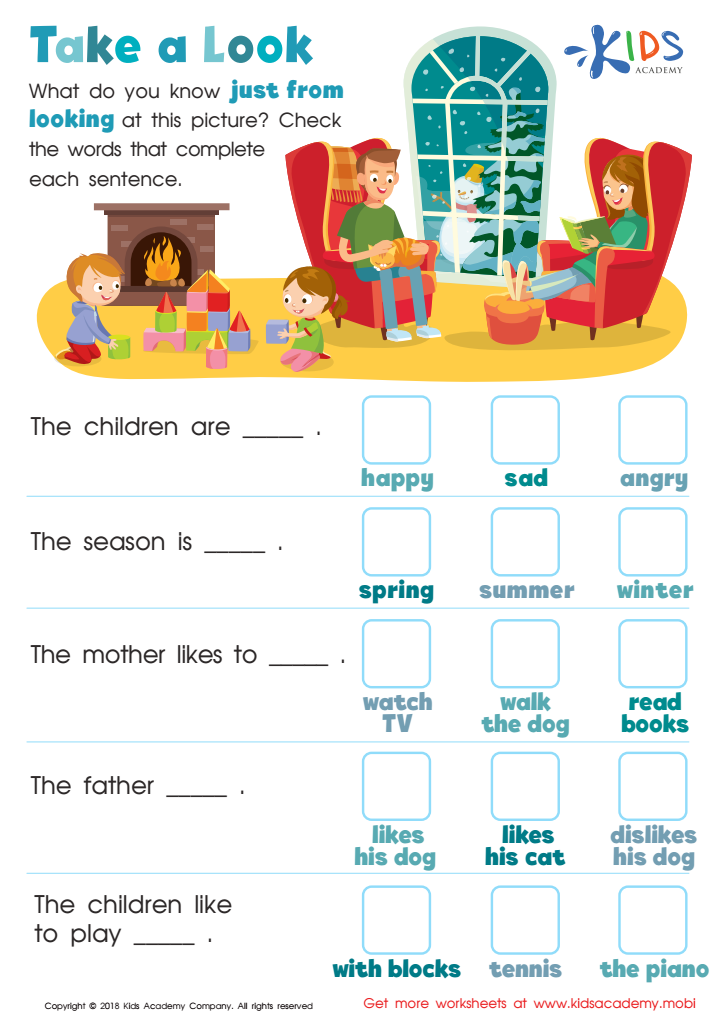
Take a Look - Part 1 Worksheet
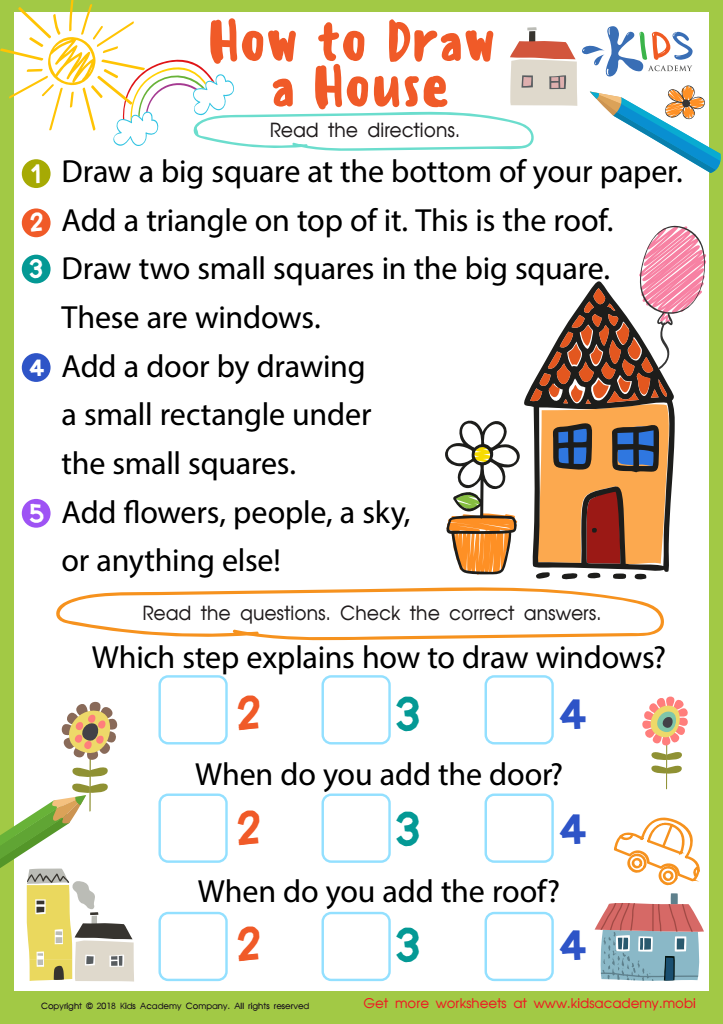
How to Draw House Worksheet
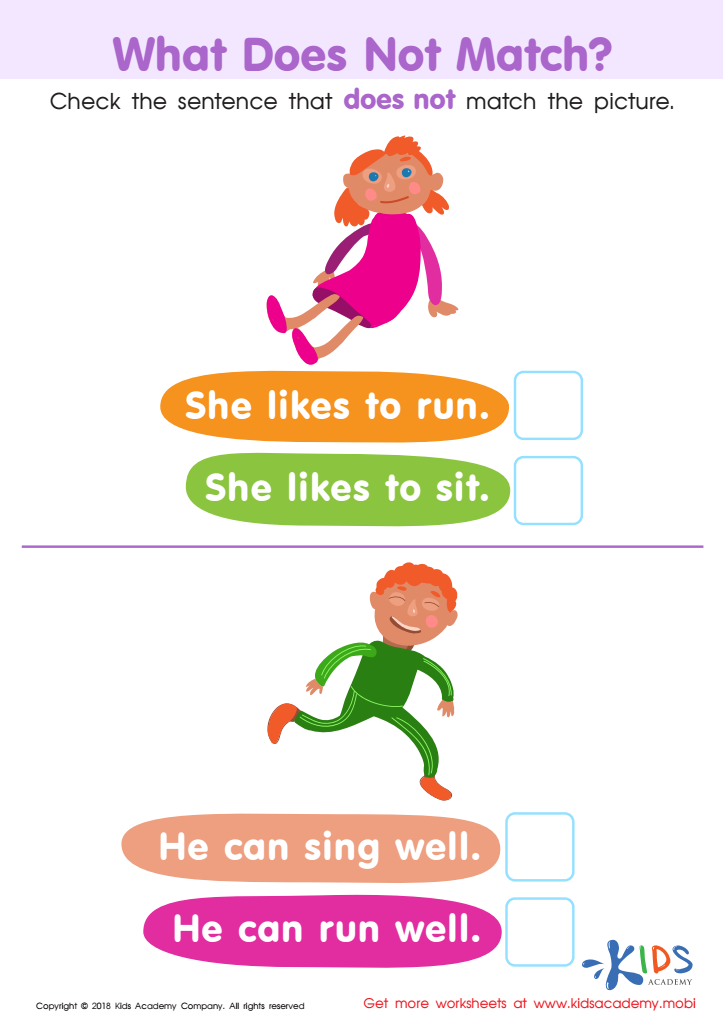
What Does Not Match? Worksheet








Shape recognition plays a crucial role in the reading comprehension of children aged 6-7. At this developmental stage, children are actively engaging with letters and words, which also share visual characteristics with shapes. Understanding shapes not only helps in the recognition of letters and figures, but also enhances spatial awareness, critical for decoding and constructing meaning from text.
When children learn to identify different shapes, they develop foundational skills in categorization and pattern recognition, which contribute to stronger reading abilities. These skills help them make connections between visual stimuli and written language, leading to improved comprehension.
Moreover, shape recognition fosters cognitive skills such as analytical thinking and problem-solving. These abilities are vital for understanding the context and meaning behind texts, preparing children for more complex readings in the future.
Encouraging shape recognition through engaging activities and interactive learning can create a solid foundation for a child’s literacy journey. Parents and teachers should prioritize integrating shape-related concepts into everyday learning, facilitating smoother transitions into more advanced reading comprehension skills. By doing so, they lay the groundwork for lifelong literacy skills, shaping children into confident, capable readers.








