Color recognition Reading Fiction Worksheets for Ages 6-7
5 filtered results
-
From - To
Enhance your child's learning journey with our Color Recognition Reading Fiction Worksheets designed for ages 6-7. These fun and educational printables, available on Kids Academy, creatively combine reading practice with color identification exercises. Engaging stories captivate young readers while seamlessly integrating activities that reinforce color recognition. Developed by educational experts, these worksheets support cognitive development, improve focus, and build essential reading skills. Perfect for both classroom and at-home use, they ensure an enjoyable learning experience. Explore a world of colors while strengthening your child's early reading abilities. Visit Kids Academy today and watch your child’s skills flourish!
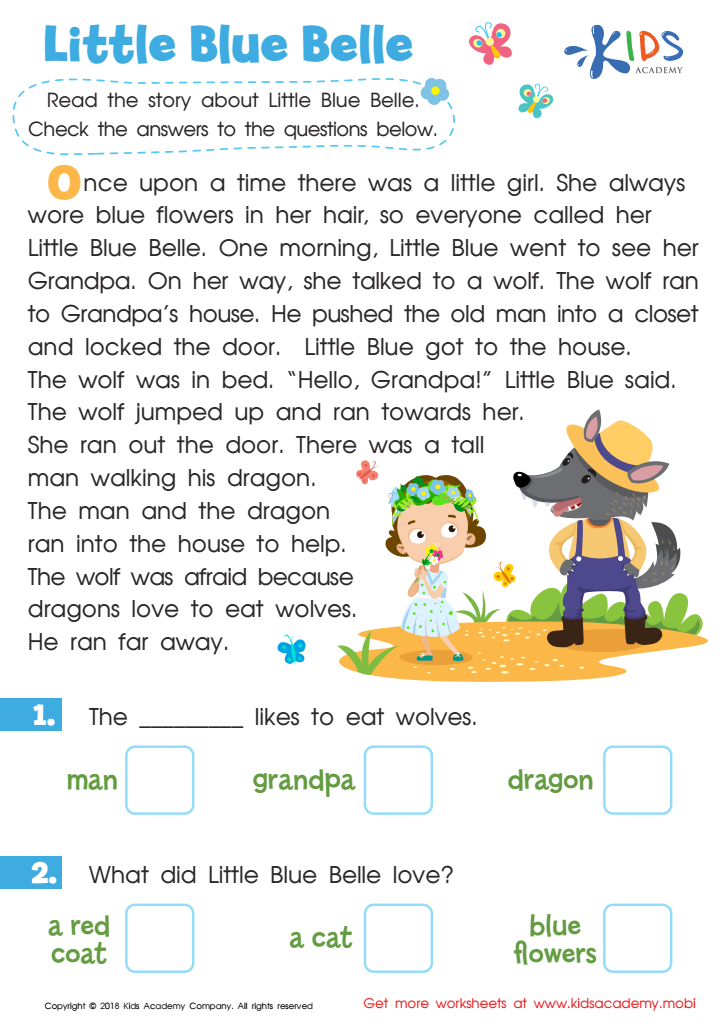
Little Blue Belle Worksheet
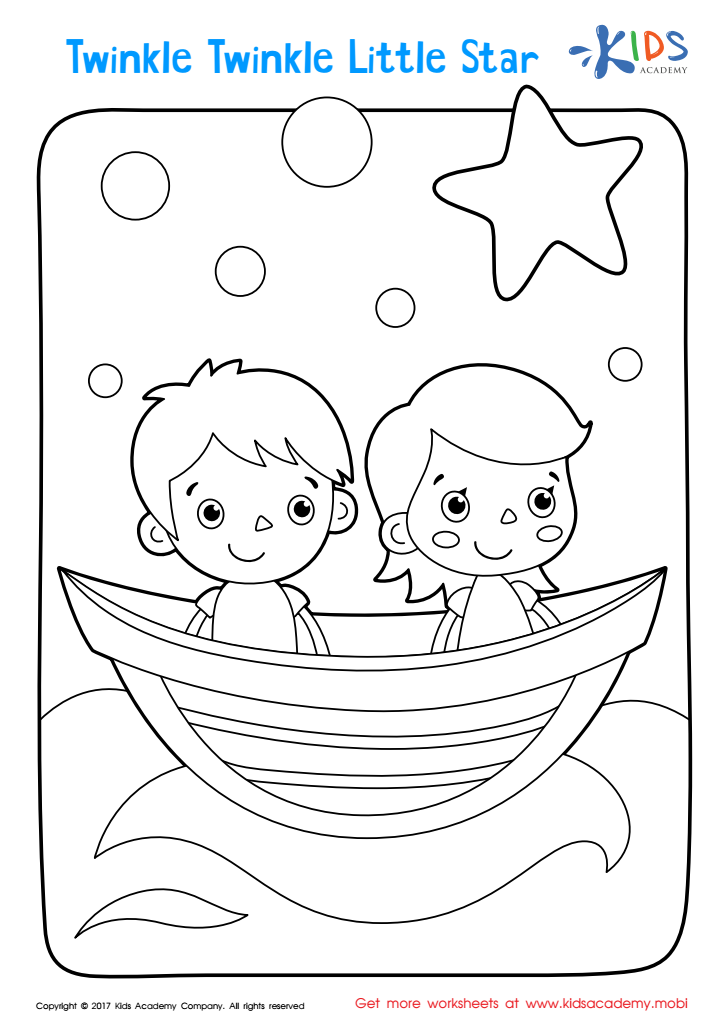
Twinkle Twinkle Little Star Coloring Page
 Assign to My Students
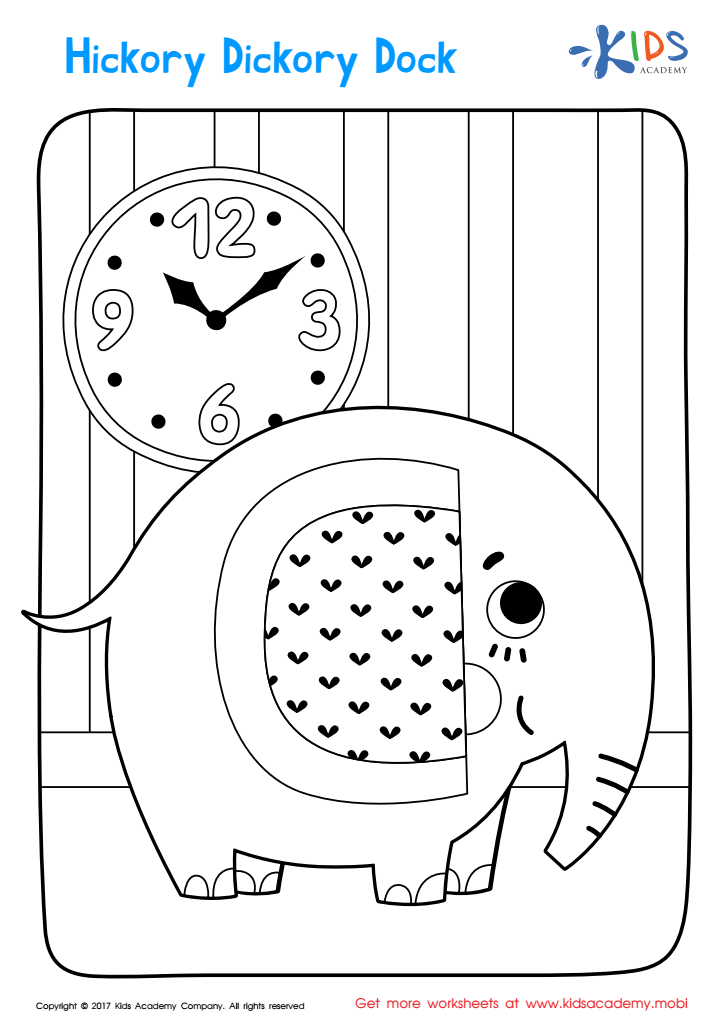
Hickory Dickory Dock Coloring Page
Assign to My Students
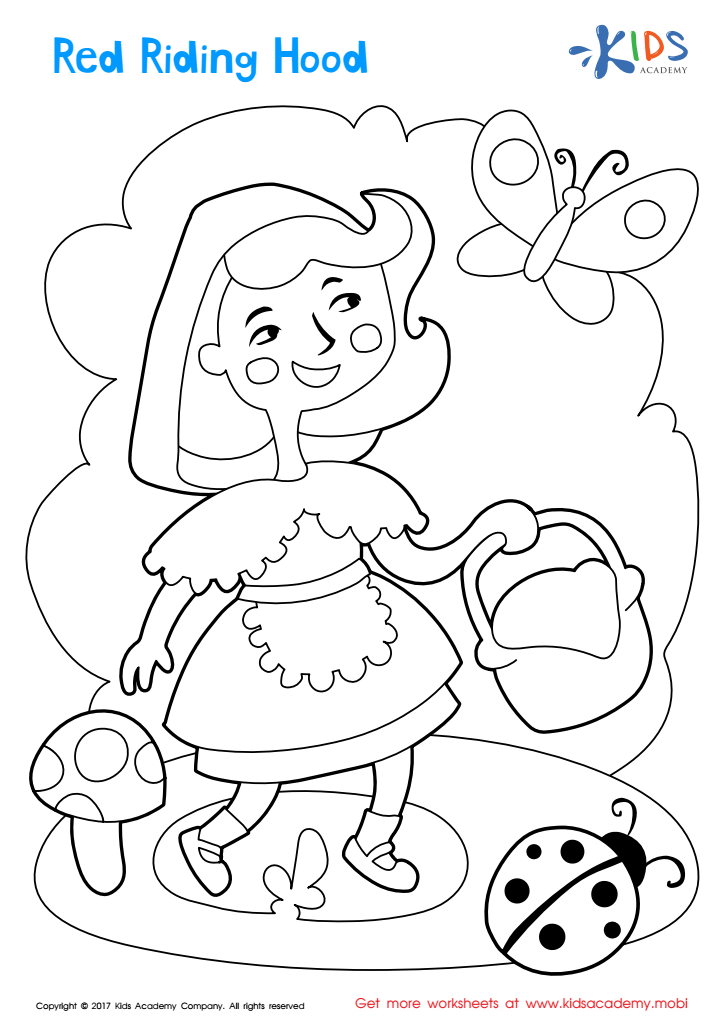
Red Riding Hood Coloring Page
Assign to My Students
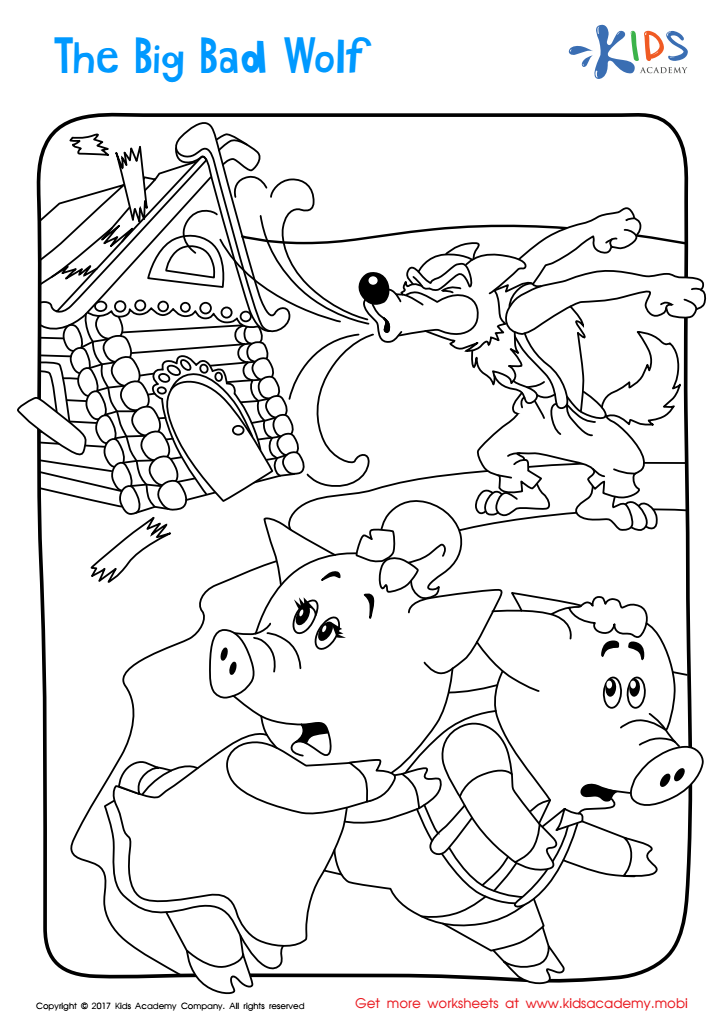
Big Bad Wolf Printable Coloring Page
Assign to My Students



.jpg)




Color recognition and reading fiction for children aged 6-7 play a crucial role in early childhood development, providing a foundation for future academic and social success. At this age, children are in the "concrete operational" stage of cognitive development, as identified by Jean Piaget. They are beginning to understand and apply various concepts learned.
Color recognition is important because it not only helps children differentiate objects in their environment but also enhances their learning experiences. Recognizing and naming colors fosters descriptive language skills and aids in the development of observational and categorization skills. Children use these skills across different subject areas, making color recognition a vital educational cornerstone.
Reading fiction, on the other hand, ignites imagination and creativity. Fictional stories introduce children to new worlds, cultures, and ideas, broadening their understanding and empathy. They promote literacy skills by enhancing vocabulary, comprehension, and critical thinking. Listening to or reading stories helps improve attention span and listening skills.
When teachers and parents emphasize both color recognition and reading fiction, they are encouraging a balanced development of cognitive, language, and social-emotional skills. Such enrichment leads to well-rounded individuals who are not only academically prepared but also equipped with imaginative and empathetic abilities crucial for lifelong learning and social interaction.








