Fine Motor Skills Reading Fiction Worksheets for Ages 6-7
6 filtered results
-
From - To
Unlock your child's potential with our Fine Motor Skills Reading Fiction Worksheets for Ages 6-7, designed to simultaneously improve reading and fine motor abilities. These engaging activities focus on enhancing finger dexterity through coloring, tracing, cutting, and pasting, all while diving into captivating fictional stories. Perfect for young readers, these worksheets build hand-eye coordination and pencil control, crucial for handwriting and everyday tasks. Developed by educational experts, they're ideal for home or classroom use. Make learning fun and multidimensional—boost your child's motor skills and love for reading with our expertly crafted worksheets today!
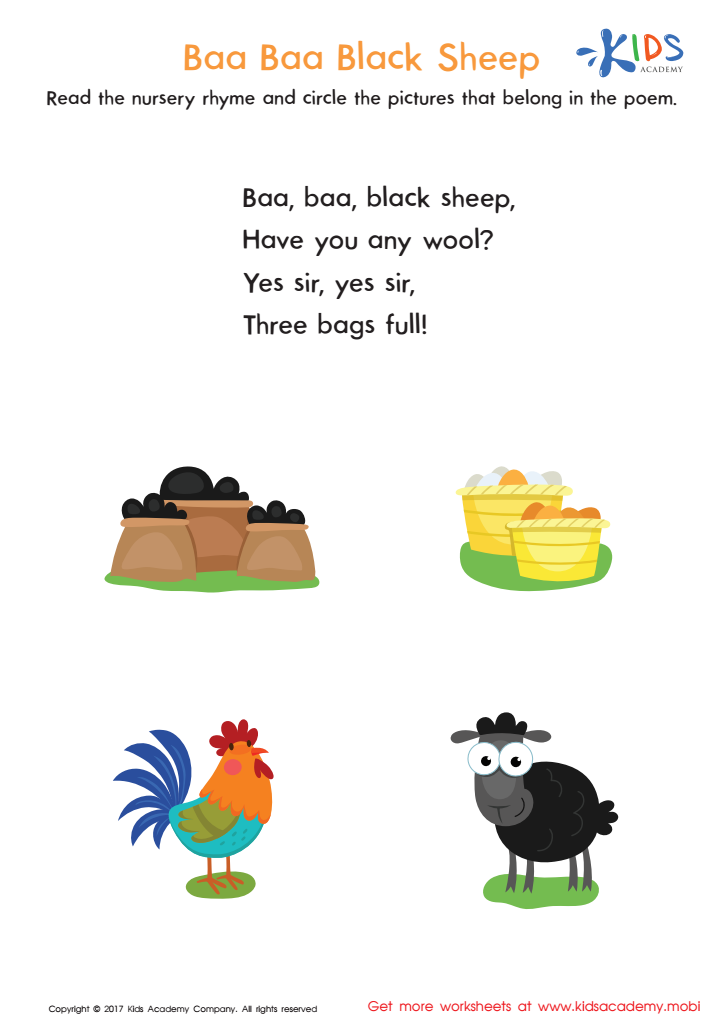
Baa Baa Black Sheep Printable
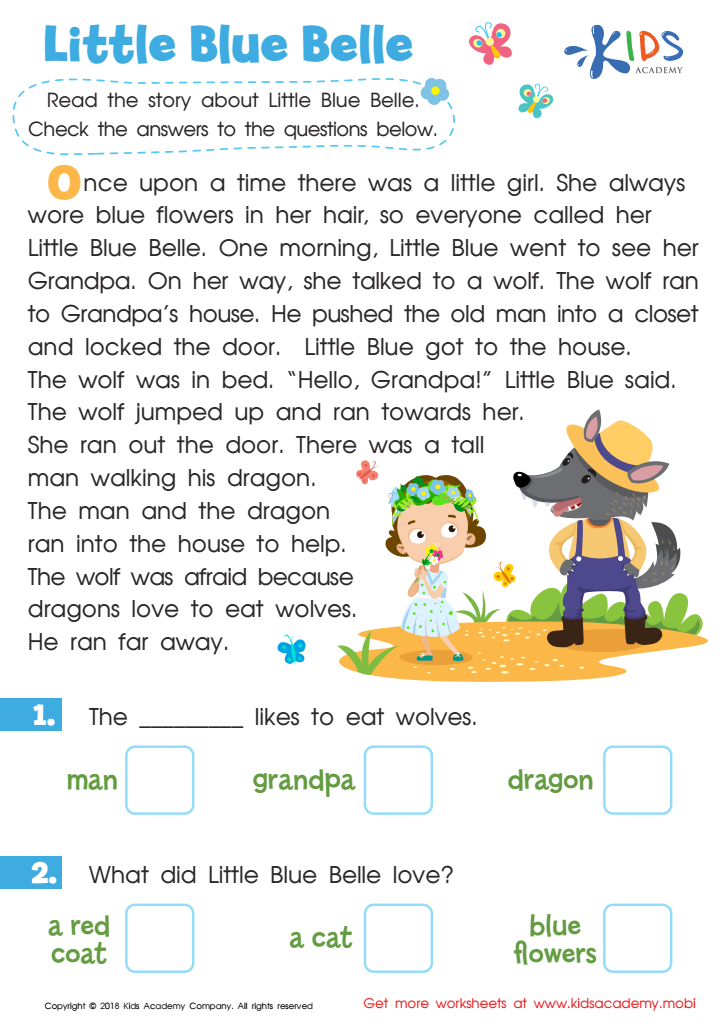
Little Blue Belle Worksheet

Twinkle Twinkle Little Star Coloring Page
 Assign to My Students
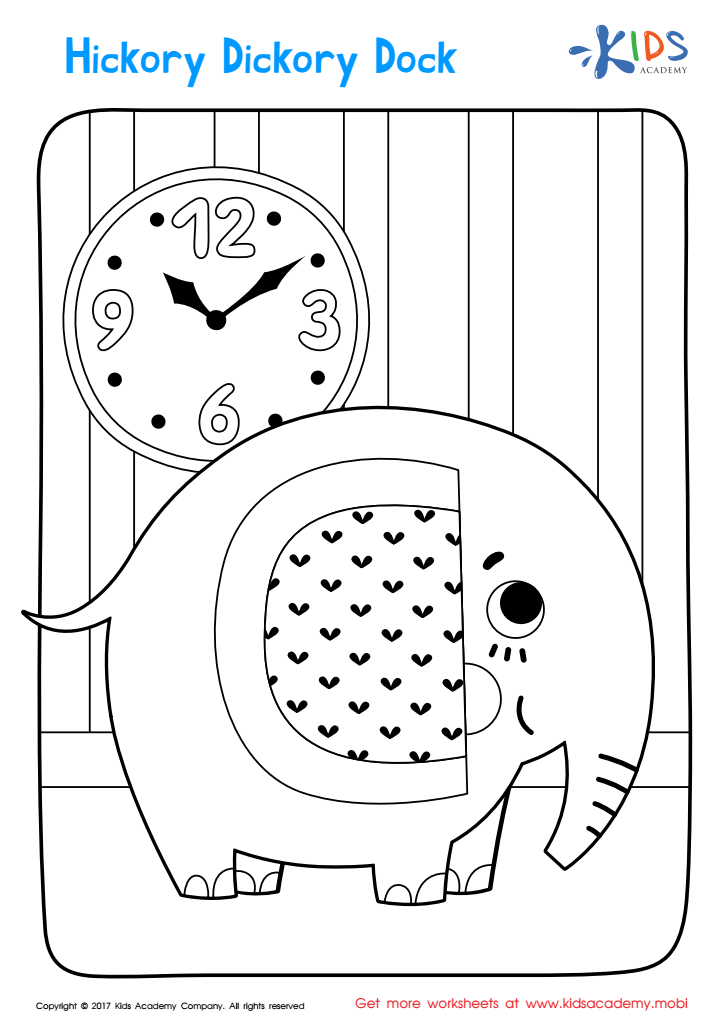
Hickory Dickory Dock Coloring Page
Assign to My Students
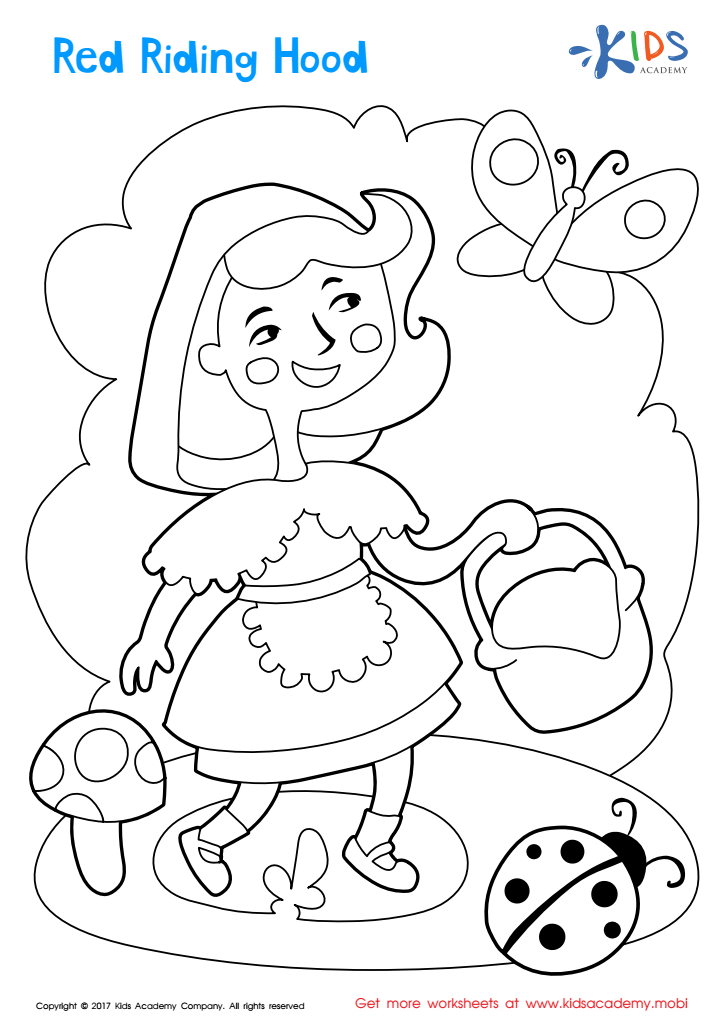
Red Riding Hood Coloring Page
Assign to My Students
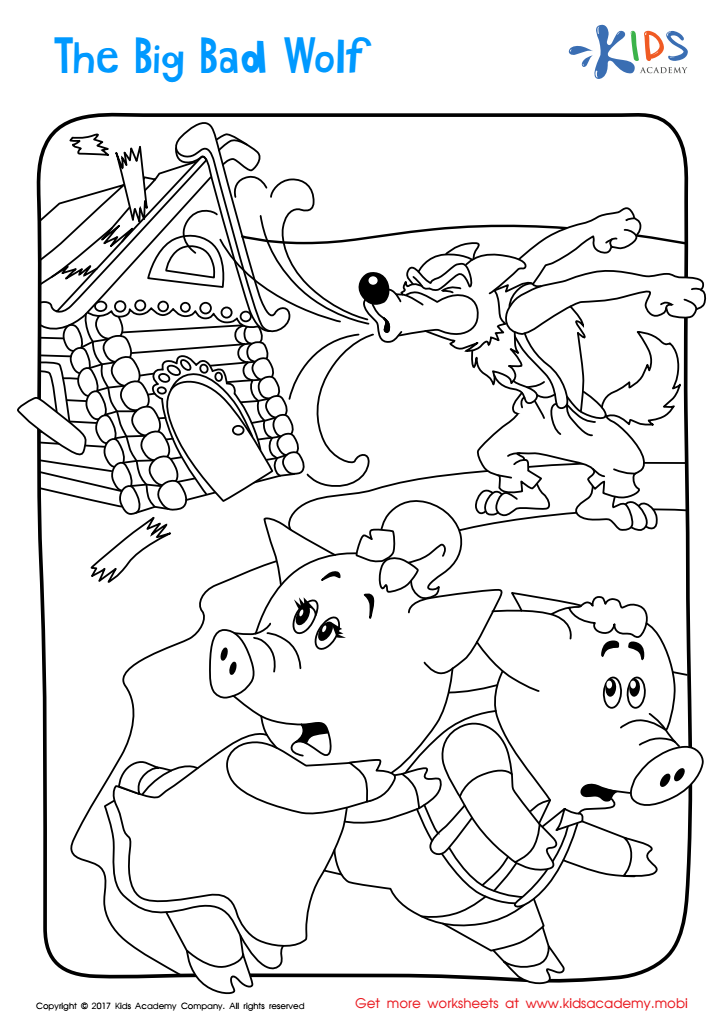
Big Bad Wolf Printable Coloring Page
Assign to My Students








Fine motor skills and reading fiction are crucial developmental areas for children aged 6-7, and both warrant significant attention from parents and teachers. Fine motor skills refer to the coordination of small muscles, particularly in the hands and fingers, which are essential for tasks such as writing, buttoning clothes, and using utensils. At ages 6-7, children are increasingly expected to perform these tasks independently, and proficiency in fine motor skills can greatly impact their academic performance and self-esteem. Activities such as playing with building blocks, drawing, or cutting with scissors can enhance fine motor development and prepare children for the complexities of writing and other classroom tasks.
Reading fiction, on the other hand, plays a pivotal role in cognitive and emotional development. Fiction nurtures imagination and fosters empathy by allowing children to experience diverse perspectives and emotions through characters and stories. It also enhances vocabulary, comprehension, and critical thinking skills. By engaging with fiction, children can improve their ability to understand and predict outcomes, grasp complex narrative structures, and develop a lifelong love for reading.
Both fine motor skills and the habit of reading fiction are foundational. Together, they build a well-rounded skill set in young learners, enabling them to navigate both academic challenges and social interactions with greater confidence and competence. Therefore, parents and teachers should proactively support and encourage activities that develop these skills.








