Shape Recognition Reading Fiction Worksheets for Ages 6-7
3 filtered results
-
From - To
Our "Shape Recognition Reading Fiction Worksheets for Ages 6-7" are expertly designed to enhance your child's reading skills and shape recognition simultaneously. Combining engaging fictional stories with interactive shape identification tasks, these worksheets capture young learners' imaginations and strengthen early literacy and math skills. Children will delight in following captivating tales while pinpointing various geometric shapes throughout the narratives. Perfect for at-home practice or classroom activities, these printable worksheets are a fun and educational tool to foster cognitive development, visual discrimination, and reading comprehension. Give your child the advantage of learning through enjoyable reading experiences!
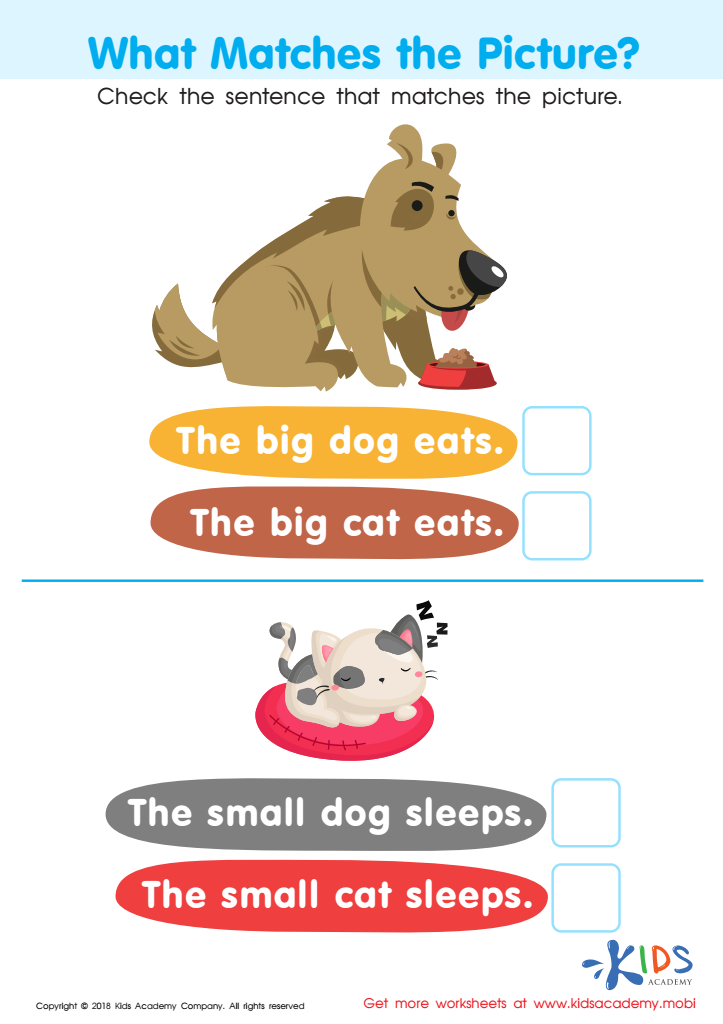
What Matches the Picture? Worksheet
 Assign to My Students
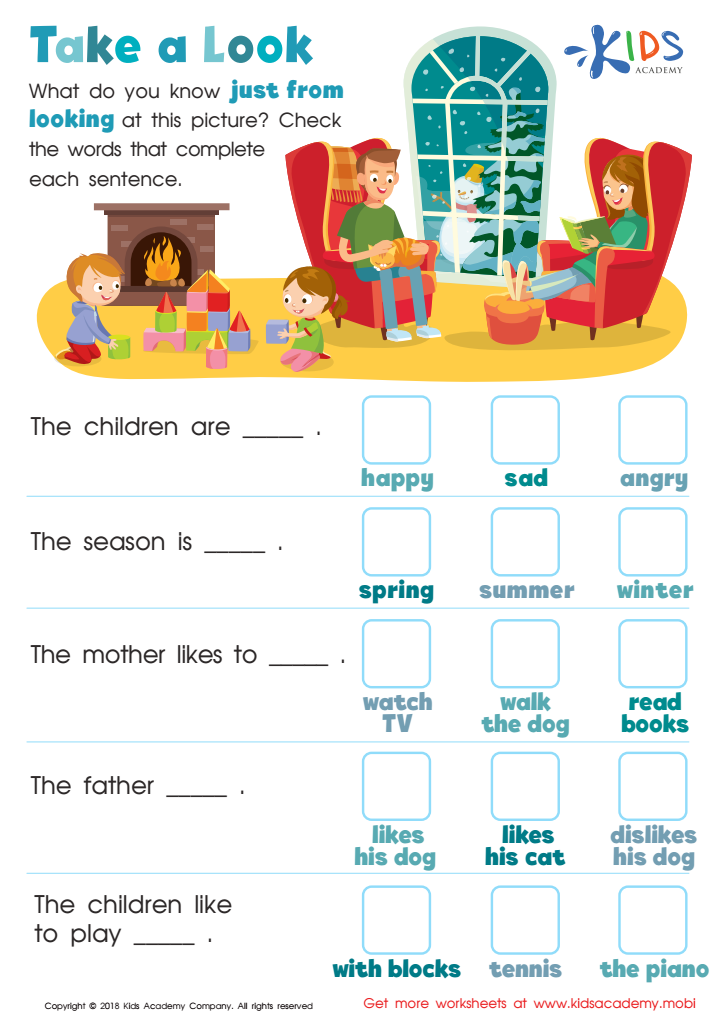
Take a Look - Part 1 Worksheet
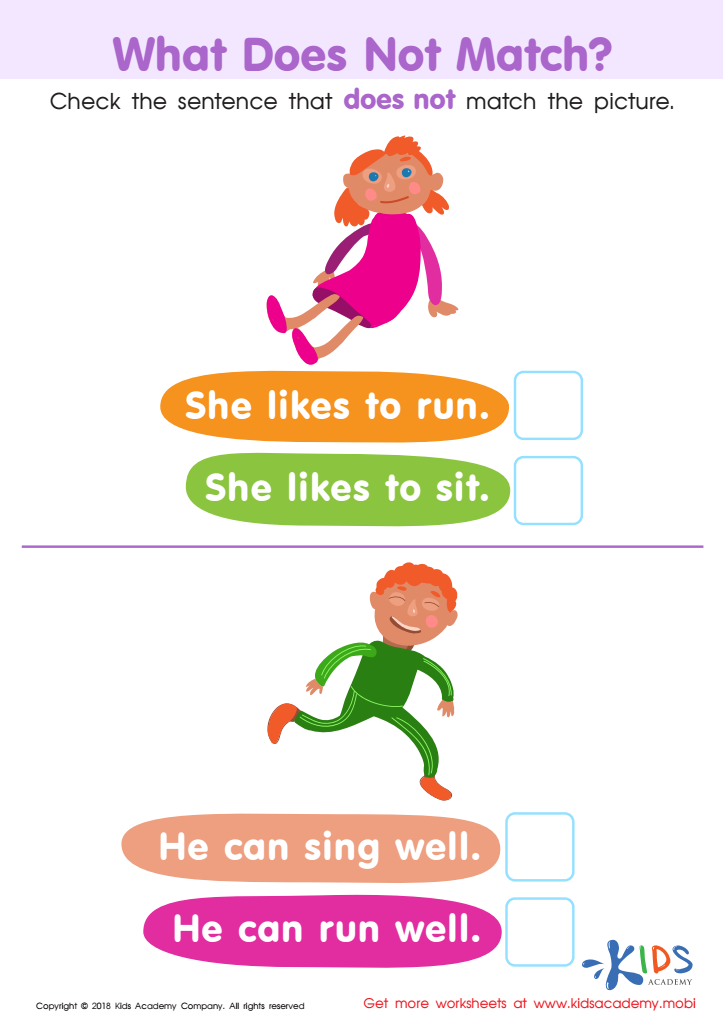
What Does Not Match? Worksheet








Shape recognition and reading fiction are foundational skills for children aged 6-7, and their importance cannot be overstated. Understanding shapes lays the groundwork for geometry, math, and spatial awareness, enhancing cognitive development and problem-solving abilities. When children can identify, describe, and work with shapes, they are better equipped for various real-world tasks and advanced mathematical concepts they will encounter later in school.
Reading fiction, on the other hand, nurtures a love for reading and imagination. Stories captivate young minds, encouraging empathy, creativity, and critical thinking. Through fictional characters and plots, children explore different worlds, perspectives, and challenges, aiding in their emotional and social development. Narratives also introduce new vocabulary and language structures in an engaging way, enhancing literacy skills.
For parents and teachers, emphasizing these areas means investing in a holistic, balanced education. Shape recognition enhances logical and analytical skills, while fiction reading promotes emotional intelligence and verbal aptitude. Together, they create a rich learning environment that drives academic success and personal growth. Encouraging activities that involve both elements ensures children are developing the broad spectrum of skills necessary for versatile, creative, and effective learning.








