Filters

8 filtered results

Clear all filters
Favorites
With answer key
Interactive

8 filtered results

Difficulty Level

Grade


Enhance your child's vocabulary with our engaging Vocabulary Building Reading Fiction Worksheets, designed specifically for ages 6-7. These fun and interactive worksheets help young readers expand their word bank while enjoying captivating stories. Each activity focuses on key vocabulary elements, encouraging comprehension and retention through exercises like matching words to pictures, fill-in-the-blanks, and word scrambles. With a variety of entertaining themes, children will develop their reading skills and language proficiency in an enjoyable way. Perfect for home or classroom use, these worksheets set the foundation for a lifelong love of reading and learning! Explore the fun with Kids Academy today!

Check out this FREE Trial Lesson on Reading Fiction for age 6-7!

Mystery and Fantasy Stories

Favorites
With answer key
Interactive
  • 6-7
  • Vocabulary Building
  • Reading Fiction
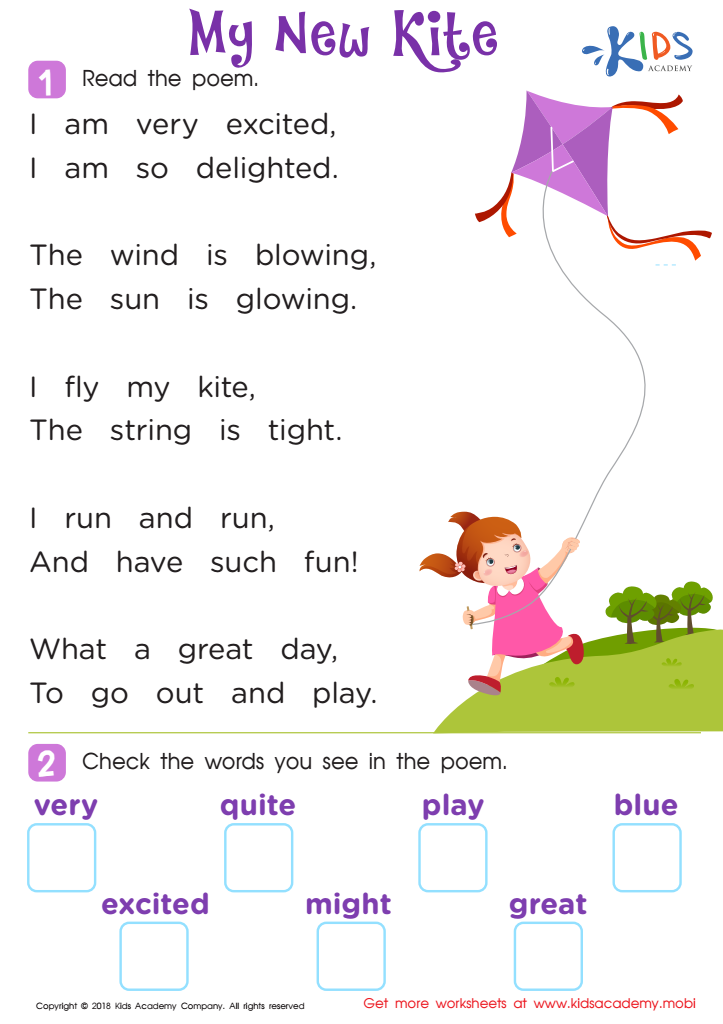
Poem: My New Kite Worksheet

Poem: My New Kite Worksheet

Read a cheerful poem with your child and have them check the boxes next to the words that appear. Then, ask them to identify rhyming words, noting that these won't appear at the bottom of the page. This is a delightful reading activity to help your child remember what they read.
Poem: My New Kite Worksheet
Worksheet
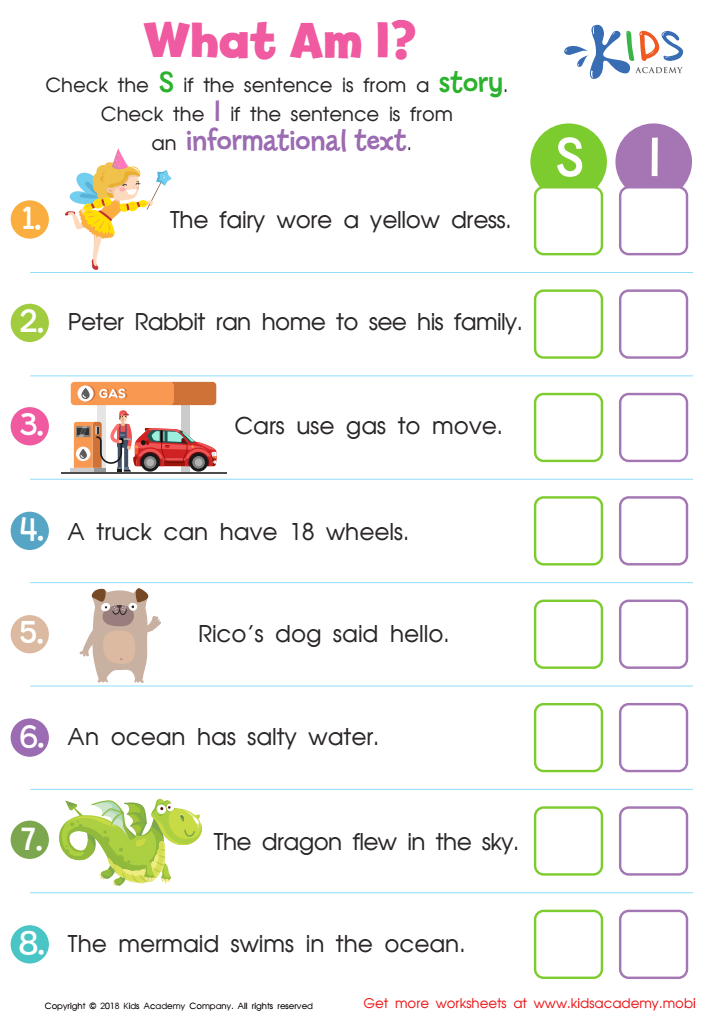
What Am I? Worksheet

What Am I? Worksheet

This worksheet assesses students' ability to differentiate between stories and texts they read for facts. Students learn to distinguish between reading for pleasure and reading for information. It includes statements from both a story and an informational text, and students must decide what type of text it is.
What Am I? Worksheet
Worksheet
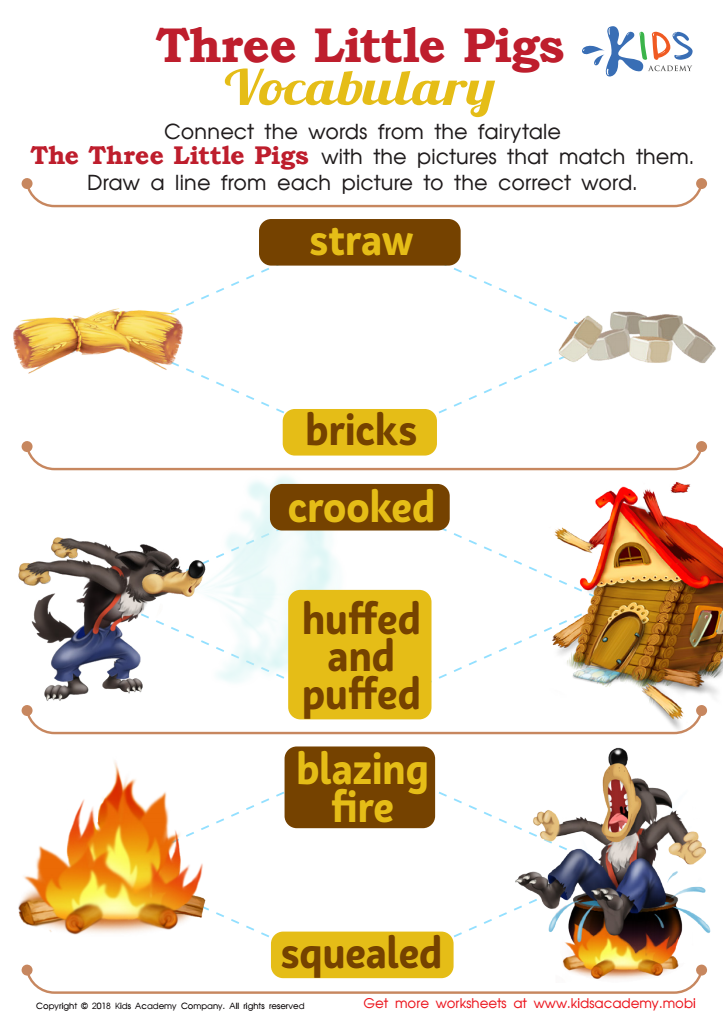
Three Little Pigs Vocabulary Worksheet

Three Little Pigs Vocabulary Worksheet

Read the Three Little Pigs to your children. Have them use the tracing sheet to connect the story words with the pictures. This is a fun and educational way to help them build their vocabulary.
Three Little Pigs Vocabulary Worksheet
Worksheet
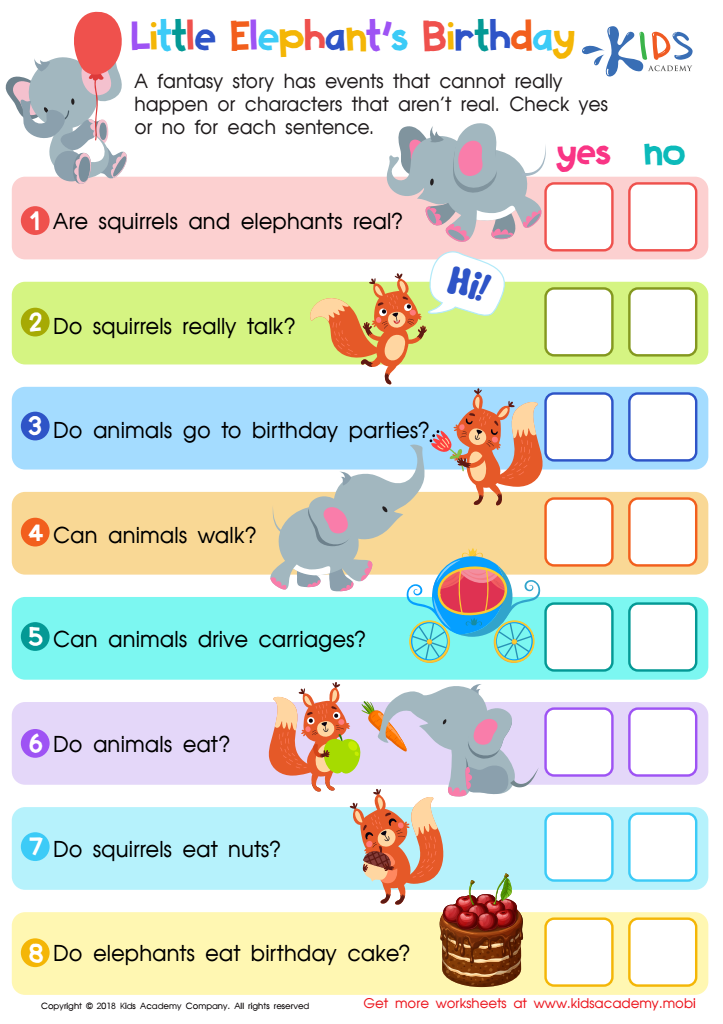
Little Elephant's Birthday Worksheet

Little Elephant's Birthday Worksheet

It's Little Elephant's birthday! Help your students celebrate with this fun worksheet full of colors and pictures. Deciding which questions are facts and which are fiction will help them differentiate between fantasy stories and reality. Let them have fun learning why certain elements of fantasy can't be true!
Little Elephant's Birthday Worksheet
Worksheet
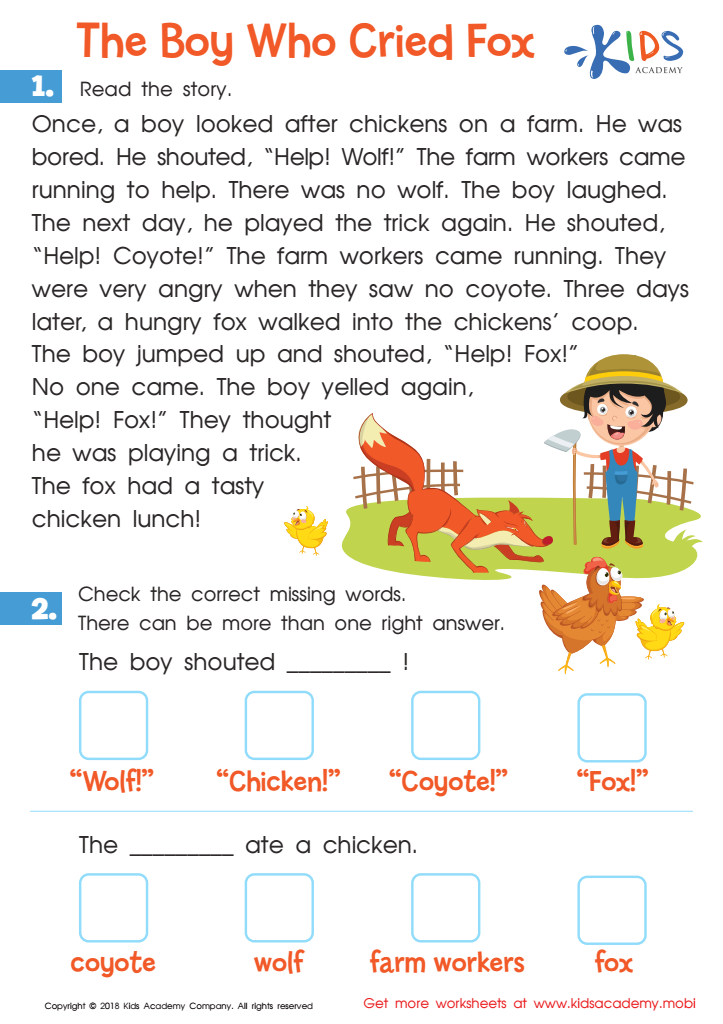
The Boy Who Cried Fox Worksheet

The Boy Who Cried Fox Worksheet

This worksheet encourages students to recall details from a story and answer questions to test their comprehension. Perfect for reading lessons, enrichment, or extra help.
The Boy Who Cried Fox Worksheet
Worksheet
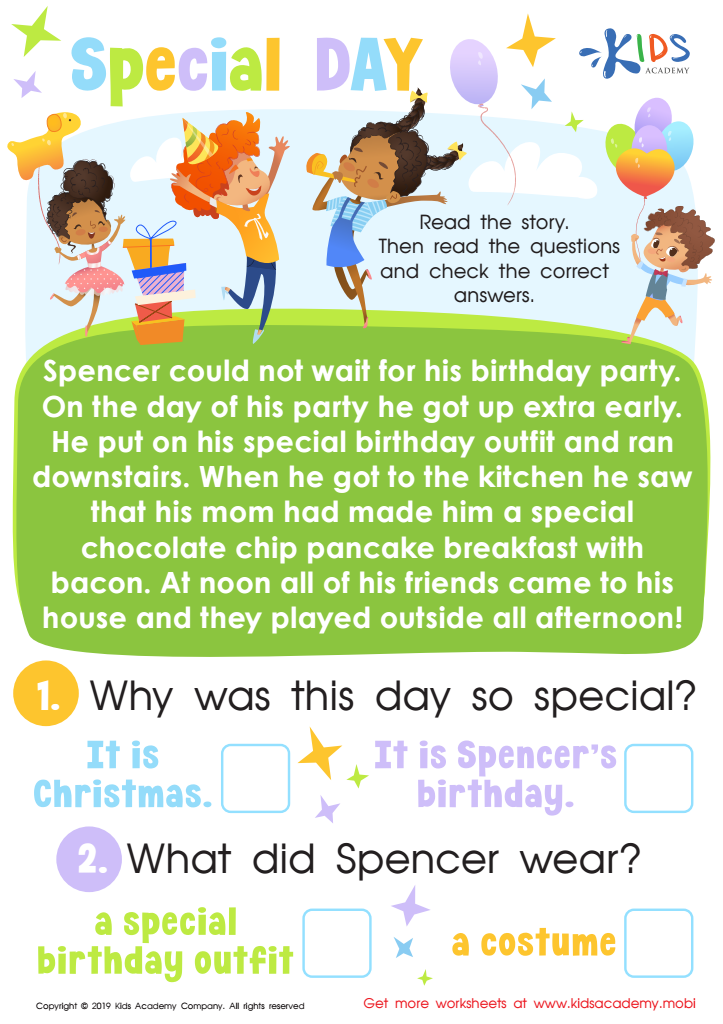
Special Day Worksheet

Special Day Worksheet

What's your child's favorite day? Let them tell you what makes it special and what they enjoy most. With the worksheet, show them the picture and ask them to identify the day. Read the story aloud, and help them answer the questions and check the right responses.
Special Day Worksheet
Worksheet
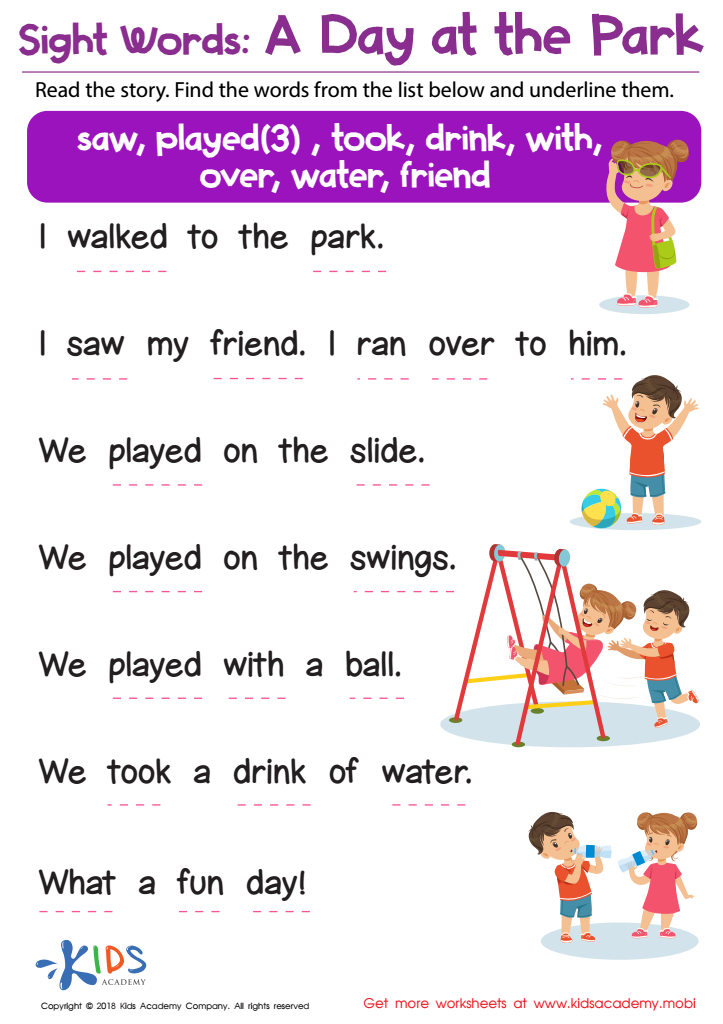
Sight Words: A Day at the Park Worksheet

Sight Words: A Day at the Park Worksheet

This worksheet offers kids practice reading sight words in a story. With picture clues and repetitive wording, they'll work with words that can't be sounded out to reinforce their learning. This is an important step in the reading process that helps kids become more confident readers.
Sight Words: A Day at the Park Worksheet
Worksheet
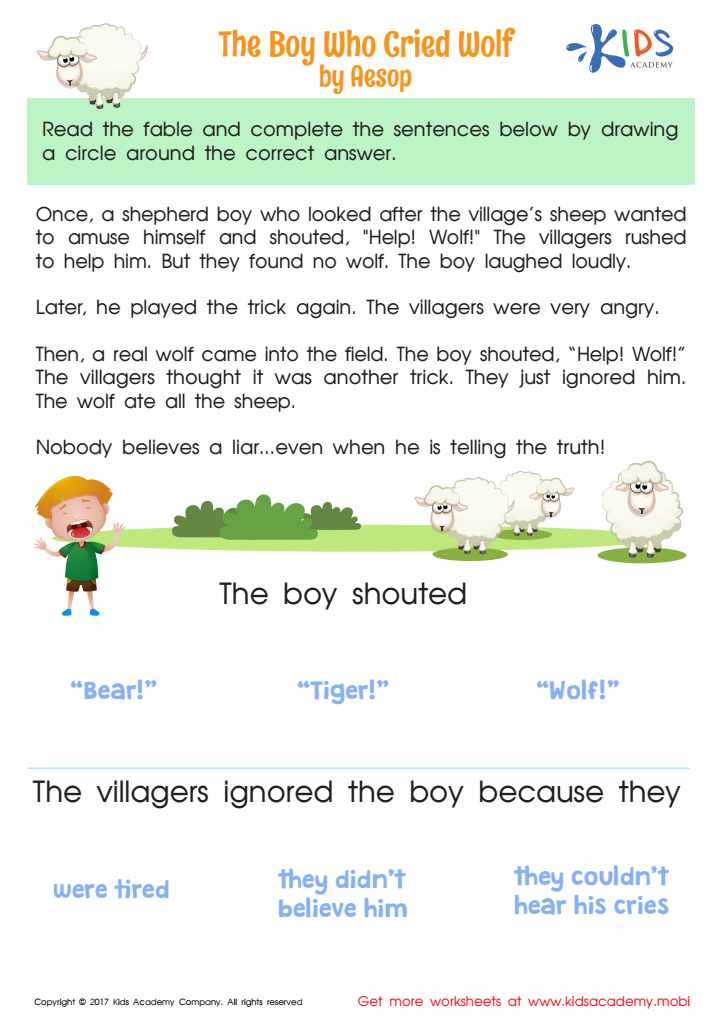
Worksheet: The Boy Who Cried Wolf

The Boy Who Cried Wolf Worksheet

Test your child's reading comprehension with The Boy Who Cried Wolf worksheet. Read the fable, then answer the questions. Use the text to help your child check their answers are correct. Boost reading skills in a fun, interactive way!
The Boy Who Cried Wolf Worksheet
Worksheet


Vocabulary building through reading fiction for ages 6-7 is essential for several reasons. At this developmental stage, children are rapidly expanding their language skills, and exposure to diverse vocabulary enhances their ability to express thoughts, feelings, and ideas. Engaging with fiction encourages imagination and creativity, allowing children to explore new worlds and concepts while simultaneously learning new words in context. This helps them understand nuances and idiomatic expressions, providing a richer linguistic foundation.

Reading fictional stories also supports comprehension skills, enabling children to grasp story structures, character development, and themes. As they encounter unfamiliar words while immersed in narratives, they learn to infer meaning and use context clues, which are vital strategies for lifelong learning.

Additionally, reading together fosters strong parent-child or teacher-student relationships. It creates a shared bonding experience that makes learning enjoyable, encouraging a positive attitude towards reading. When children see adults valuing reading, they are more likely to develop a passion for literature themselves.

Finally, a strong vocabulary contributes to academic success, equipping children with the language skills necessary for effective communication across various subjects. Thus, prioritizing vocabulary building through fiction is a crucial investment in a child's future literacy and overall development.