
Sequencing Skills Animals Worksheets for Ages 6-7
3 filtered results
Difficulty Level
Grade
Age
-
From - To
Subject
Activity
Standards
Our Sequencing Skills Animals Worksheets for ages 6-7 are designed to enhance early learners’ ability to comprehend and organize information sequentially. These engaging, age-appropriate worksheets incorporate fascinating animal themes to stimulate young minds and improve critical thinking. By arranging events, identifying life cycles, and understanding sequences, children develop essential literacy and cognitive skills. Tailored for fun and effective learning, these printable resources support foundational educational goals, making them perfect for home or classroom use. Ignite your child's curiosity about the natural world while reinforcing their sequencing abilities with our expertly crafted worksheets.
Favorites
With answer key
Interactive
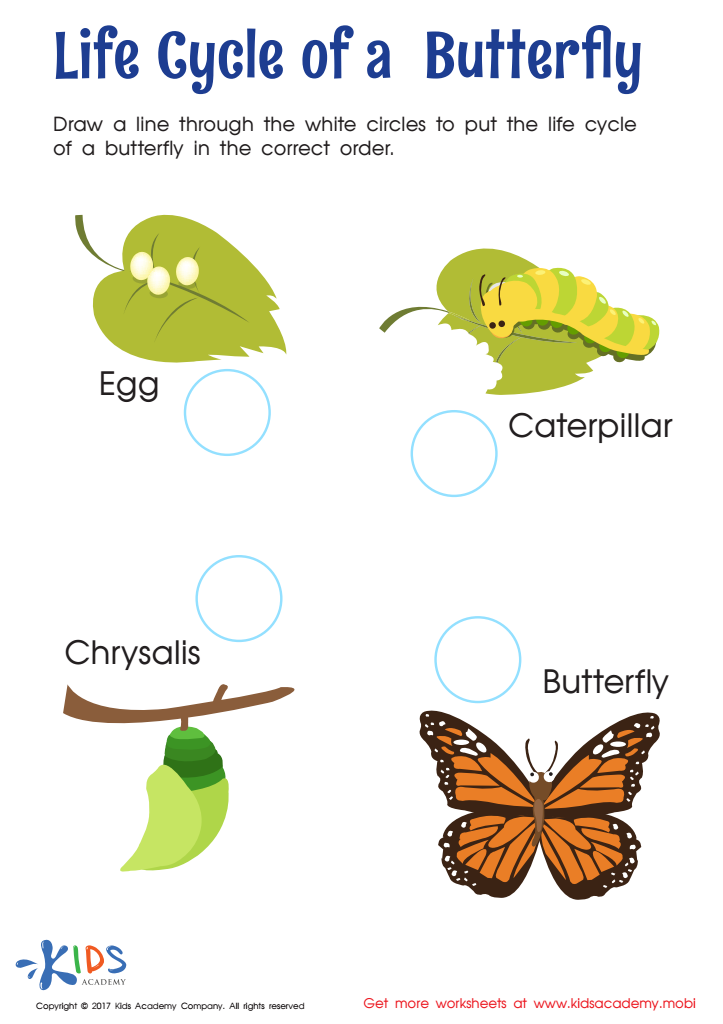
Life Cycle of Butterfly Worksheet
Kids Academy offers an exciting activity – a Life Cycle of a Butterfly Worksheet PDF. It shows four stages in the lifecycle of a butterfly with vivid pictures. Kids put the stages in the correct order to study the lifecycle.
 Assign to My Students
Life Cycle of Butterfly Worksheet
Worksheet
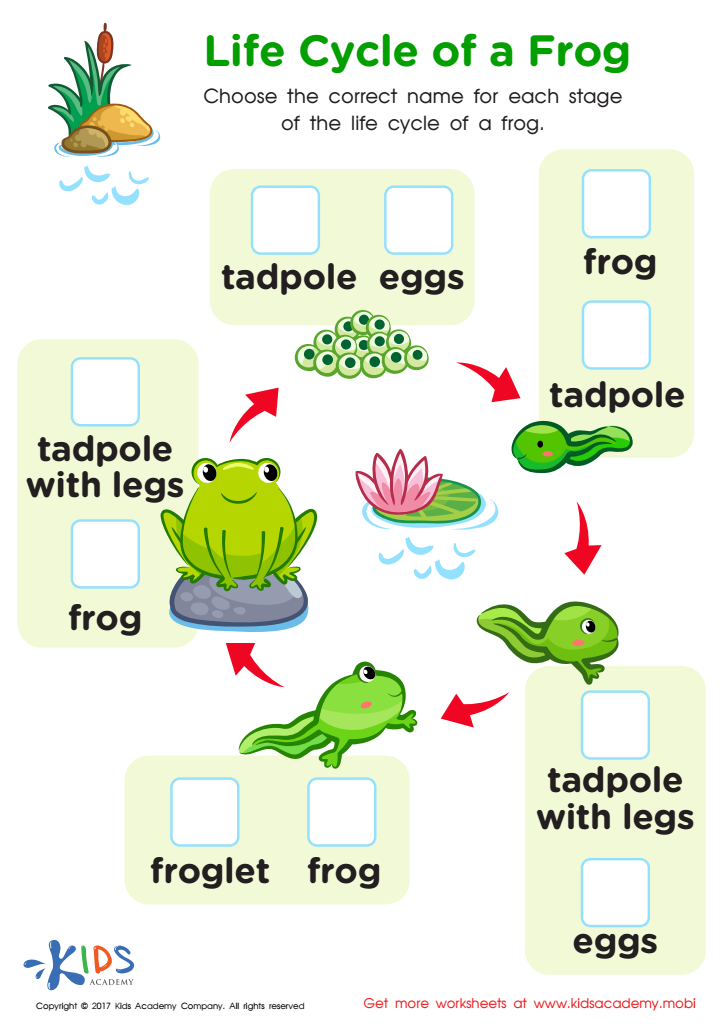
Life Cycle Frog Printable
Kids can explore the life cycle of frog with this fun worksheet! Draw lines from one stage to the next to follow the transformation from tadpole to frog and learn about the cycle of life.
Life Cycle Frog Printable
Worksheet
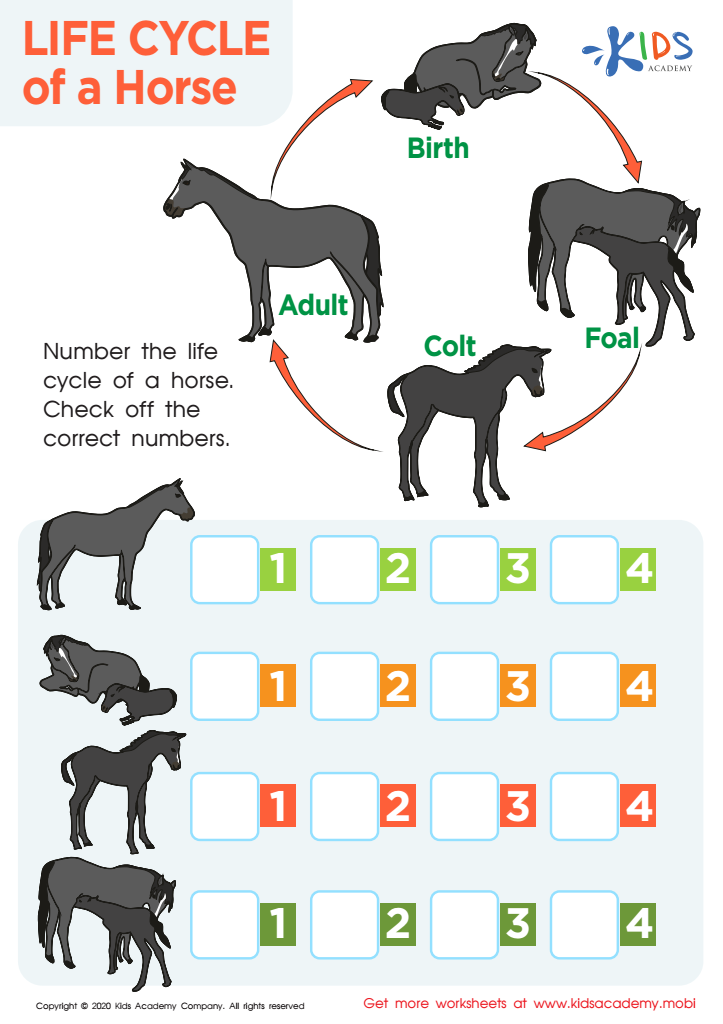
Life Cycle of a Horse Worksheet
Kids Academy's science worksheet on horses' lifecycles offers an engaging way for kids to learn! They'll study the diagram and label each stage of life, from birth to adulthood, and then number the pictures to mark the correct sequence. Fun and educational - a perfect way to get your kids learning!
Life Cycle of a Horse Worksheet
Worksheet
Join Kids Academy for Free
Who is primarily going to use this learning content?







%20(1).jpg)
Sequencing skills, the ability to understand and arrange events in logical order, are foundational for critical thinking, reading comprehension, and daily life tasks. For children ages 6-7, these skills are particularly important as they transition from learning to read to reading to learn. Utilizing tools like "Sequencing Skills Animals" can be highly engaging and educational for this age group.
Firstly, incorporating animals into sequencing activities captures children’s natural interest and curiosity, making learning enjoyable. These activities enhance their cognitive abilities by requiring them to think critically about the order of events. Understanding sequences helps children grasp narratives in stories, improving their reading comprehension and ability to predict outcomes.
Additionally, sequencing skills are vital for problem-solving and organizing thoughts logically, which are essential aspects of mathematics and science education. Practically, these skills aid in the development of routines and task management, such as following steps to get dressed or preparing their school bag.
Furthermore, involving parents in sequencing activities nurtures collaborative learning. It provides parents insights into their child's cognitive progress and areas needing support, fostering a supportive home-learning environment. Teachers benefit from these tools as they align perfectly with educational standards, offering structured yet creative ways to develop essential skills. Overall, sequencing skills are critical in nurturing well-rounded, successful learners.








