Spatial awareness Community Worksheets for Ages 6-7
3 filtered results
-
From - To
Unlock your child's spatial understanding with our engaging Community Worksheets for Ages 6-7. Specially designed to boost youngsters' ability to recognize and evaluate spatial relationships, these worksheets challenge students to navigate various scenarios within a community setting. Our carefully crafted exercises enhance map reading, directionality, and positional vocabulary, making learning intuitive and enjoyable. Perfect for building foundational skills in social studies and geography, this collection also supports cognitive and problem-solving abilities, ensuring children develop a keen sense of space and orientation. Foster your young learner's spatial awareness with activities that blend fun and education seamlessly.
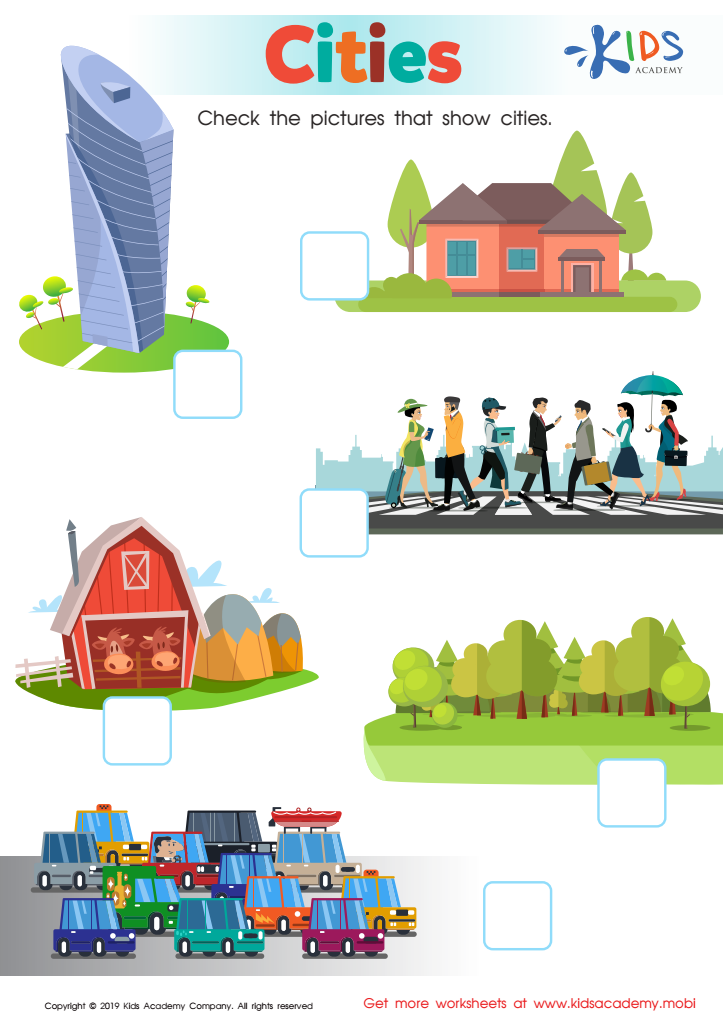
Cities Worksheet
 Assign to My Students
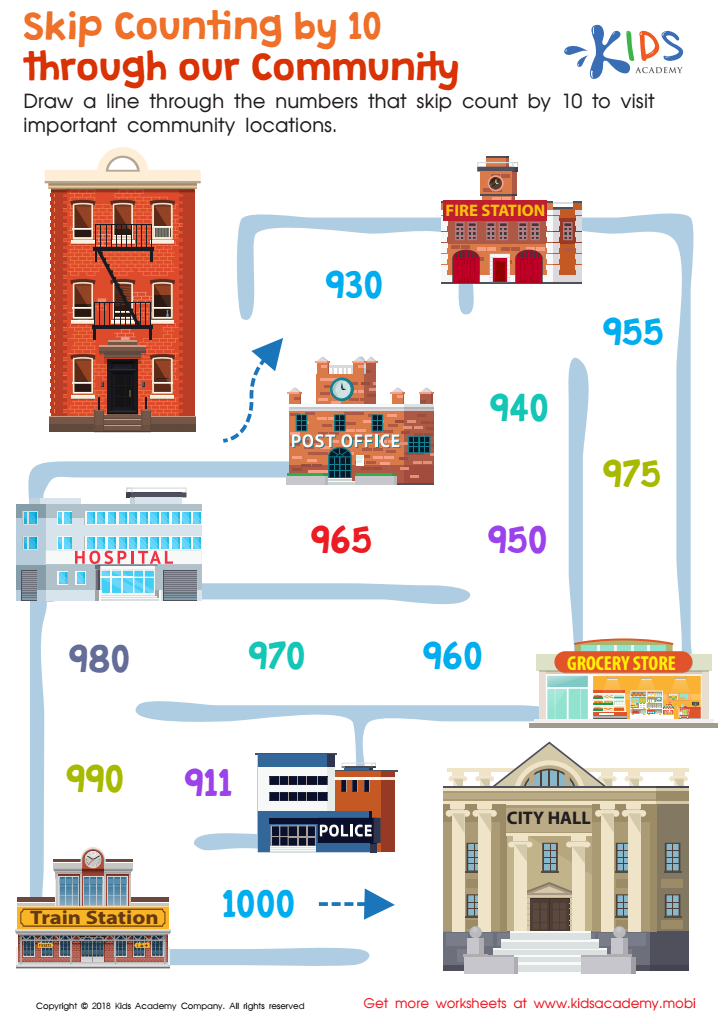
Skip Counting by 10 Through Our Community Worksheet
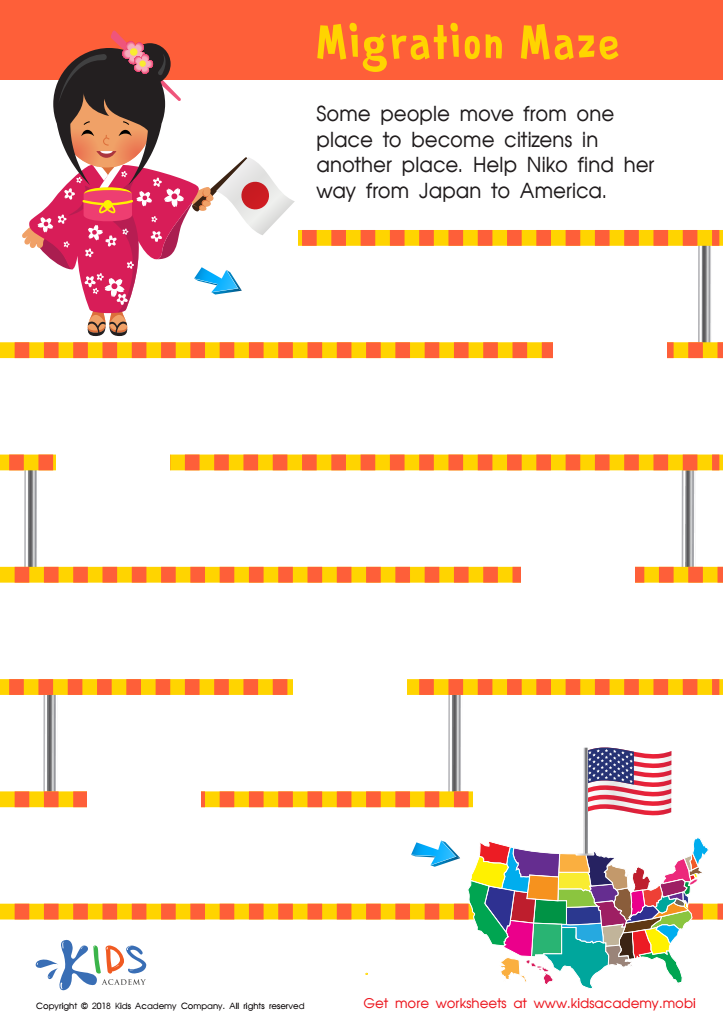
Migration Maze Worksheet







Spatial awareness is the understanding of the relationships between objects, including oneself, within a given space. For children aged 6-7, developing spatial awareness is crucial as it lays the foundation for essential cognitive, mathematical, and motor skills.
Firstly, spatial awareness helps children improve their problem-solving abilities and critical thinking. These skills are not only vital in mathematics—such as geometry, measurement, and understanding shapes—but also in interpreting graphs, maps, and diagrams, fostering a solid academic platform.
Secondly, enhanced spatial awareness boosts physical coordination and motor skills. Children learn to navigate spaces more effectively, which benefits activities like playing sports, riding a bike, and other daily tasks, ensuring they move more confidently and reduce accident risks.
Parents and teachers should also recognize the importance of spatial relationships in language development. Terms like "above," "below," and "beside" are integral to communication, so nurturing spatial awareness directly supports comprehensive language skills.
Moreover, engaging with spatial awareness communities, whether in school or extracurricular activities, encourages collaboration, cooperation, and social interaction. Children learn to work as a team, respect personal space, and develop empathy by understanding spatial boundaries and perspectives.
In summary, prioritizing spatial awareness in a child's early years equips them with critical life skills, fostering academic success, physical competence, communicative understanding, and social harmony, benefiting their overall growth and development.