Comprehension skills Writing Worksheets for Ages 6-7
4 filtered results
Difficulty Level
Grade
Age
-
From - To
Subject
Activity
Standards
Enhance your child's reading and writing abilities with our comprehensive comprehension skills writing worksheets designed for ages 6-7. These engaging resources help young learners develop essential skills such as understanding main ideas, making inferences, and summarizing texts. The colorful and interactive worksheets encourage creativity while reinforcing comprehension through fun exercises. With prompts that stimulate critical thinking, children will improve their ability to connect with stories and express their thoughts clearly. Ideal for classroom use or home learning, our worksheets provide a solid foundation for effective communication and a lifelong love for reading and writing. Explore our collection and watch your child's skills soar!
Favorites
With answer key
Interactive
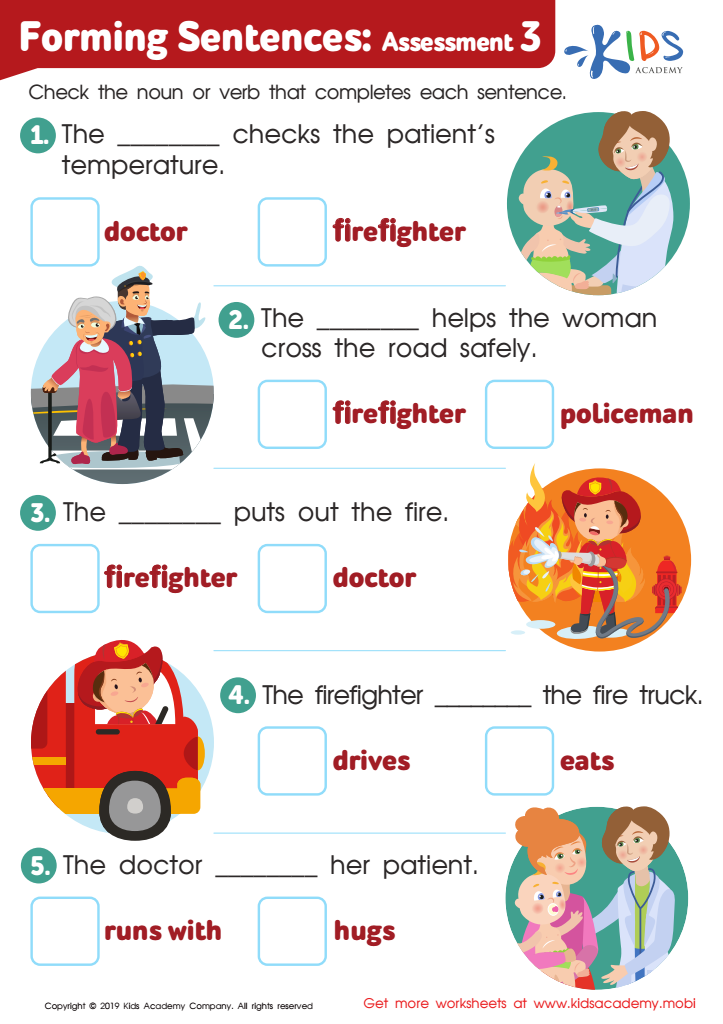
Forming Sentences: Assessment 3 Worksheet
Students must master sentence formation to be successful English learners. After grasping the ABCs and basic words, the next step is to construct sentences using those words. Worksheets like this one can help teach kids how to make sentences; they need to look at the pictures and select the correct noun or verb to complete each sentence.
 Assign to My Students
Forming Sentences: Assessment 3 Worksheet
Worksheet
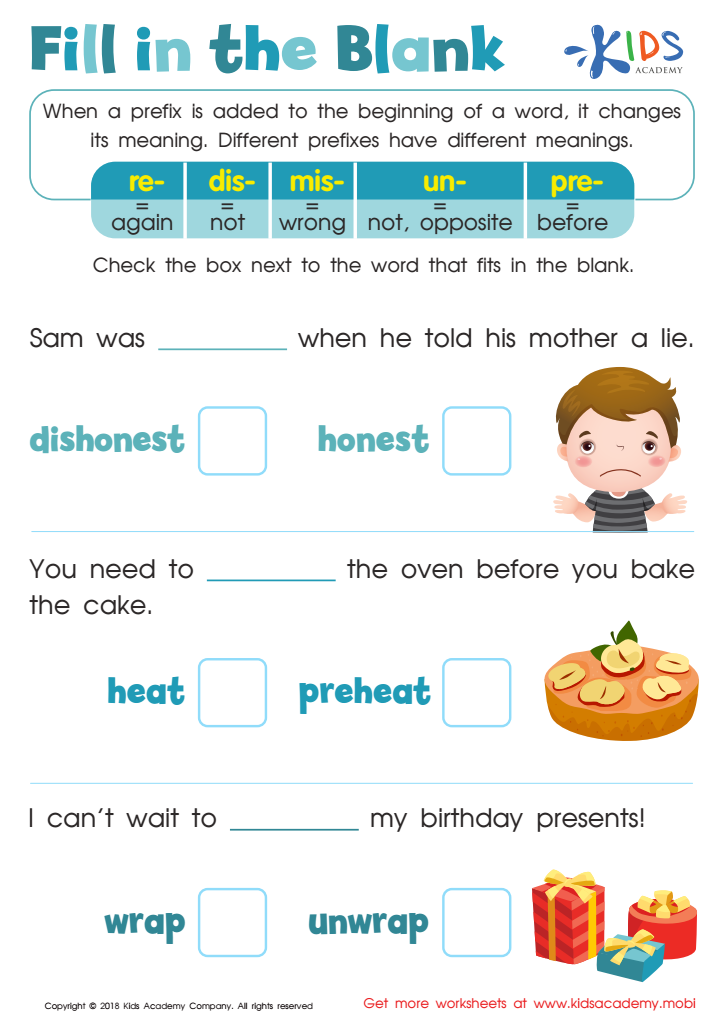
Reading: Fill in the Blank Worksheet
Students can practice understanding the meaning of common prefixes with this worksheet. They read sentences and pick the correct word with the appropriate prefix to complete it. Downloadable and a great addition to reading and vocabulary resources, this helps improve comprehension with mastery of the skill!
Reading: Fill in the Blank Worksheet
Worksheet
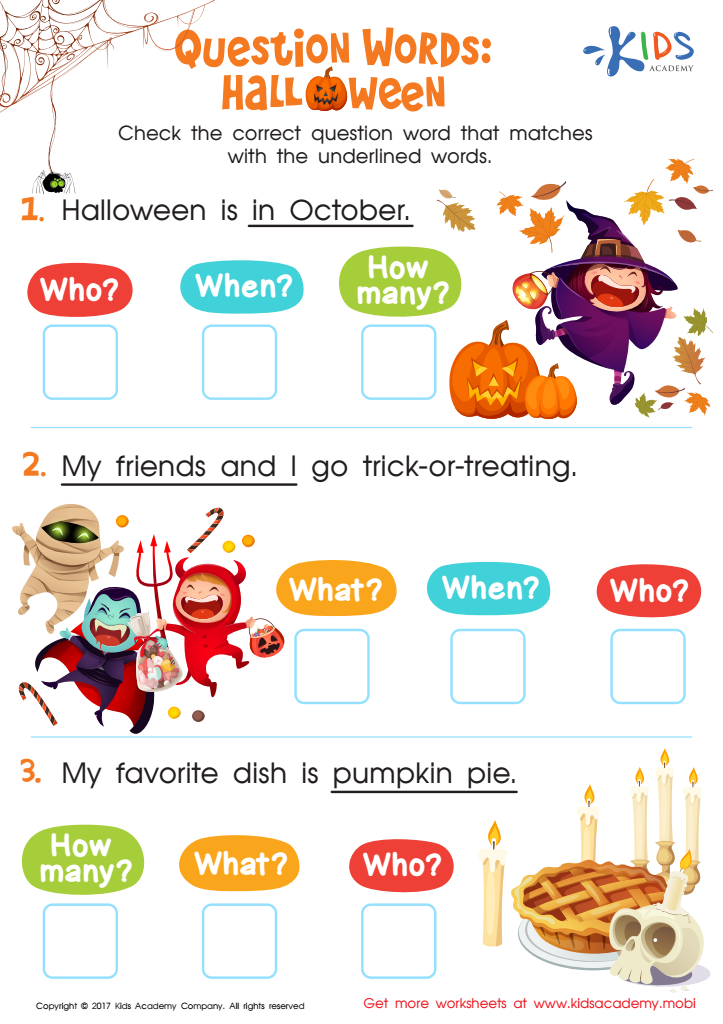
Question Words: Halloween Worksheet
Questions lead to answers, so it's important to use the right words. This Halloween-themed worksheet helps kids learn to use precise language when writing or asking a question. Just read each sentence, noting the underlined phrases, and pick the question word that fits. Have spooky fun!
Question Words: Halloween Worksheet
Worksheet
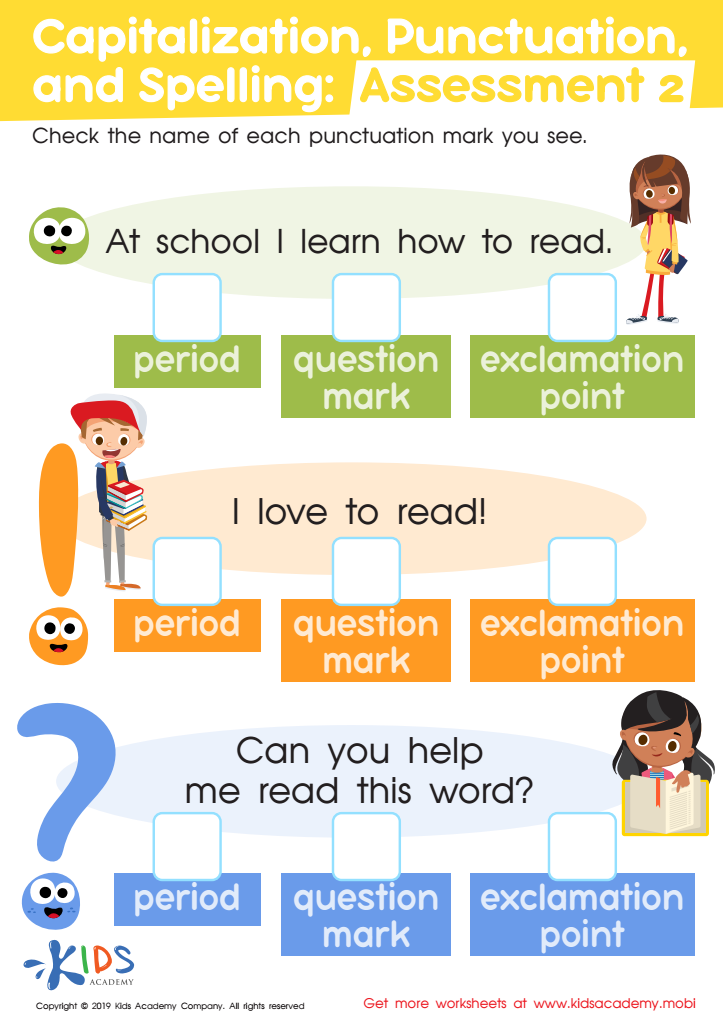
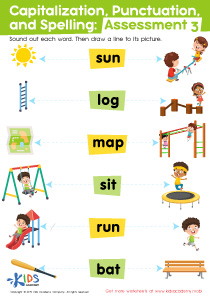
Capitalization. Punctuation. Spelling: Assessment 2 Worksheet
Teach your kids the basics of punctuation. Ask them to name the punctuation marks they know and review a worksheet together. Start with the full stop, question mark and exclamation mark. Show them examples and explain the differences between a comma and semi colon. Teaching proper use of punctuation marks is key to their development.
Capitalization. Punctuation. Spelling: Assessment 2 Worksheet
Worksheet
Join Kids Academy for Free
Who is primarily going to use this learning content?







Comprehension skills are critical for children ages 6-7 as they form the foundation for successful learning and communication. This age group is at a pivotal stage in their educational journey, transitioning from learning to read, to reading to learn. By nurturing comprehension skills, parents and teachers enable children to understand and engage with texts more effectively.
Strong comprehension skills enhance a child’s ability to process information, identify main ideas, and make inferences. This is particularly important for developing writing skills, as children who comprehend well can express their thoughts and ideas more clearly. Improved understanding leads to better organization of ideas in writing, richer vocabulary usage, and more coherent sentences.
Furthermore, a solid grasp of comprehension fosters critical thinking and creativity; children learn to analyze text and communicate their interpretations, encouraging originality in their writing. For educators and parents, promoting these skills can significantly boost a child’s confidence and enthusiasm for both reading and writing. Ultimately, investing in comprehension skills at an early age not only lays the groundwork for future academic success but also equips children with essential life skills in communication and expression, preparing them for a lifetime of learning.