Phonics Skills Tracing Words Worksheets for Ages 6-7
3 filtered results
-
From - To
Unlock your child's reading potential with our Phonics Skills Tracing Words Worksheets for Ages 6-7. Ideal for early learners, these worksheets combine fun tracing activities with essential phonics practice. Kids will develop foundational reading skills as they trace, write, and pronounce sight words. Each engaging worksheet is designed to enhance letter recognition, sound blending, and word formation techniques. Perfect for classroom use or at-home learning, our phonics tracing worksheets offer an enjoyable way for kids to build confidence and proficiency in reading. Give your child the tools they need to excel in literacy with our expertly crafted worksheets.
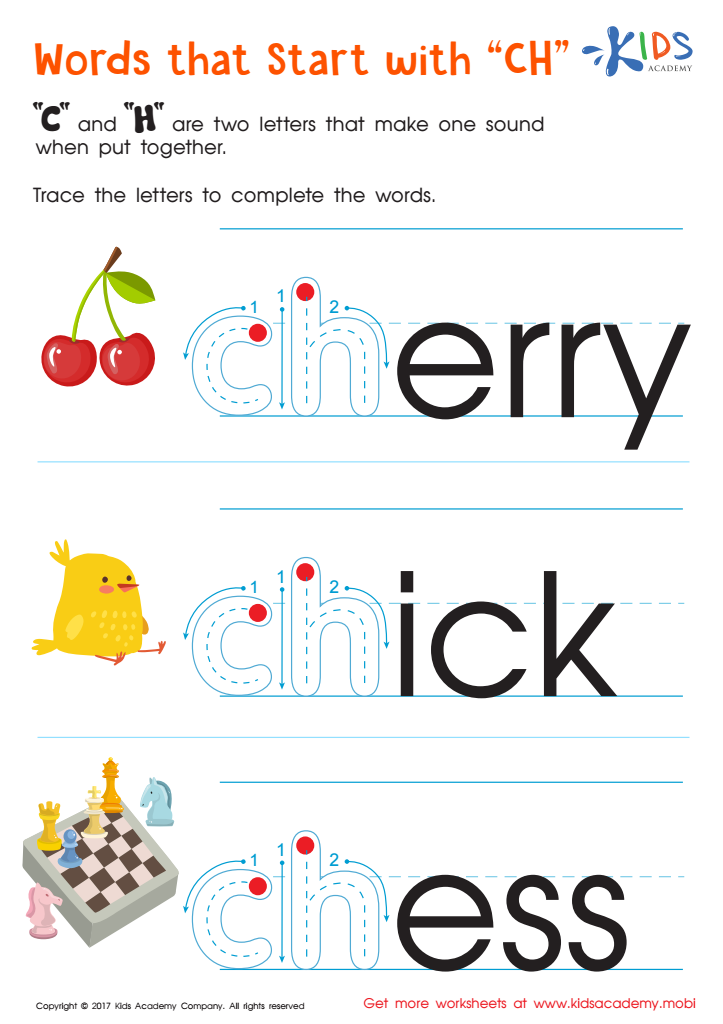
Words That Start with "ch" Spelling Worksheet
 Assign to My Students
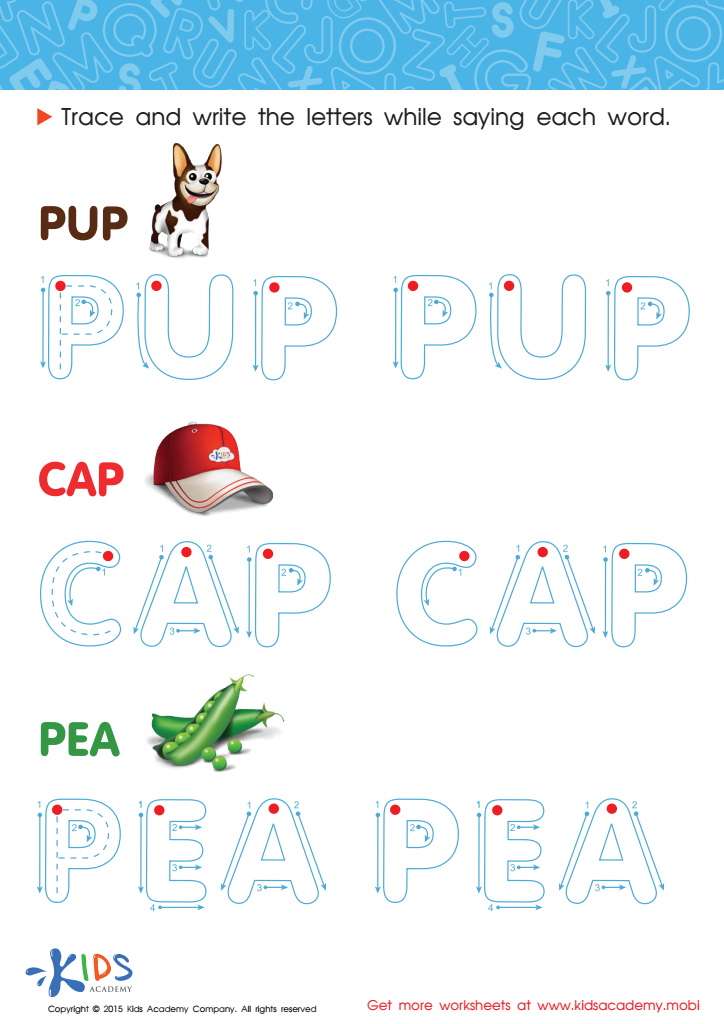
A Pup, a Cap and a Pea Spelling Worksheet
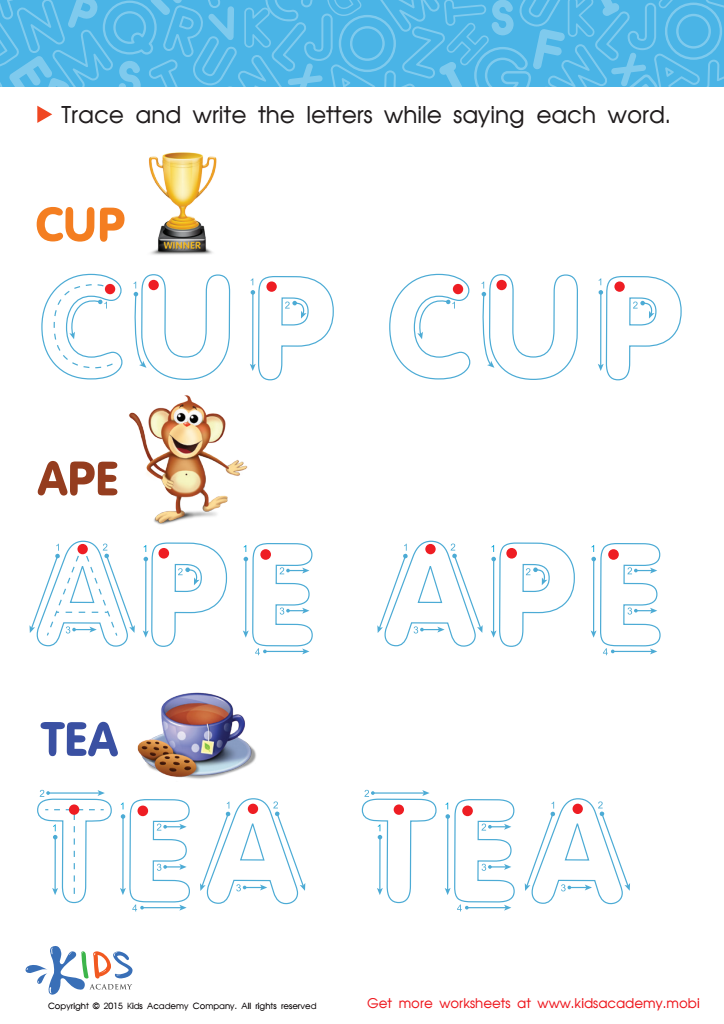
A Cup, an Ape and Tea Spelling Worksheet








Phonics skills tracing words for ages 6-7 is crucial in providing a strong foundation for reading and writing proficiency, which are essential skills in a child’s academic journey. At this age, children are typically in the first grade, a critical period for developing their ability to recognize and make connections between sounds and letters. Phonics tracing activities, which involve writing words while simultaneously pronouncing their sounds, help reinforce these connections, promoting smoother reading development.
Engaging in phonics tracing aids in improving fine motor skills through the act of writing, enhancing hand-eye coordination, and muscle memory. Additionally, it supports cognitive development by encouraging pattern recognition and sound differentiation, essential components in effective reading strategies. The repetitious nature of tracing words reinforces learning and aids in memory retention, making it easier for children to recall and apply their phonics knowledge in different contexts.
For teachers, implementing phonics tracing activities aligns with educational curriculum standards aimed at meeting milestones in literacy. For parents, it provides an opportunity to collaborate in their child’s education through interactive and supportive means. Overall, phonics skills tracing words not only foster fundamental literacy skills but also build confidence, setting the stage for future academic success.








