Sound recognition Consonants Worksheets for Ages 6-8
5 filtered results
-
From - To
Discover our engaging "Sound Recognition Consonants Worksheets" tailored for ages 6-8! These worksheets are designed to enhance children's phonemic awareness through fun and interactive activities. Young learners will explore consonant sounds, recognize them in words, and practice their pronunciation with a variety of exercises. Our resources foster essential early literacy skills, enabling kids to build a strong foundation in reading and writing. With vibrant visuals and age-appropriate challenges, these worksheets ensure a rewarding learning experience. Perfect for home or classroom use, our Consonants Sound Recognition Worksheets make learning enjoyable while helping kids gain confidence in their language abilities!
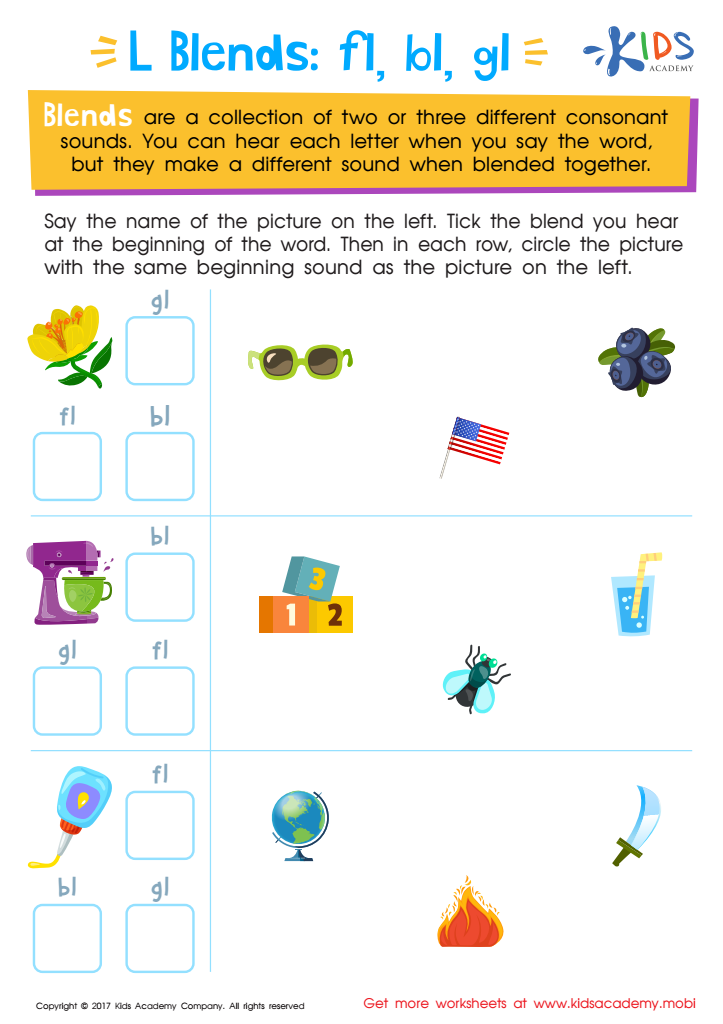
Blending Consonants: "Fl", "Bl" and "Gl" Printable
 Assign to My Students
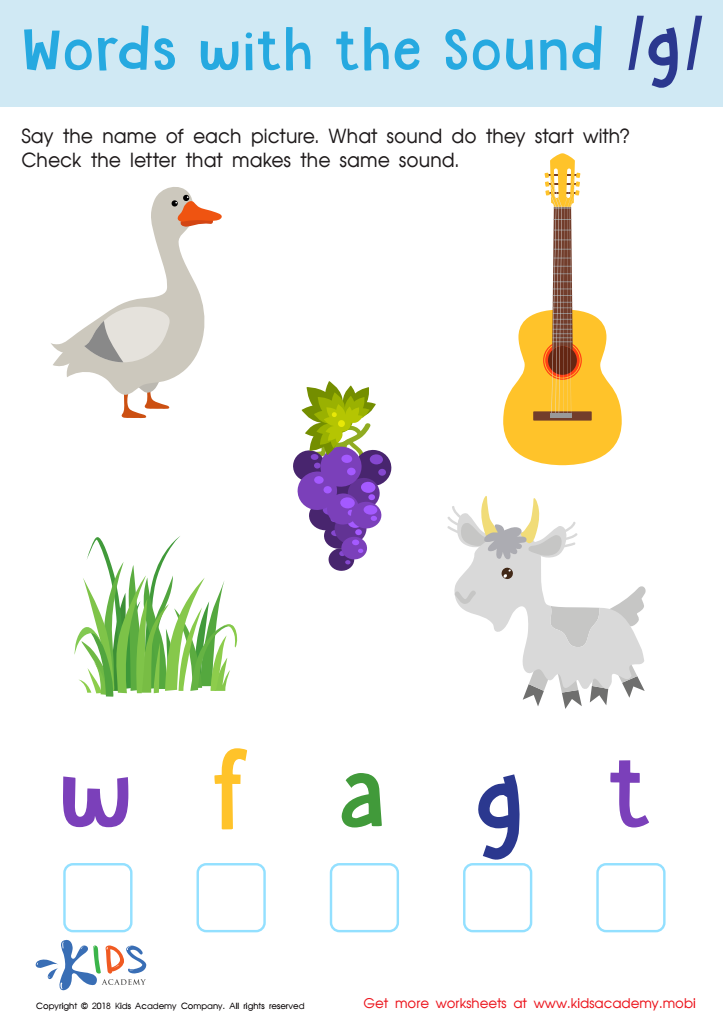
Words with sound g Reading Worksheet
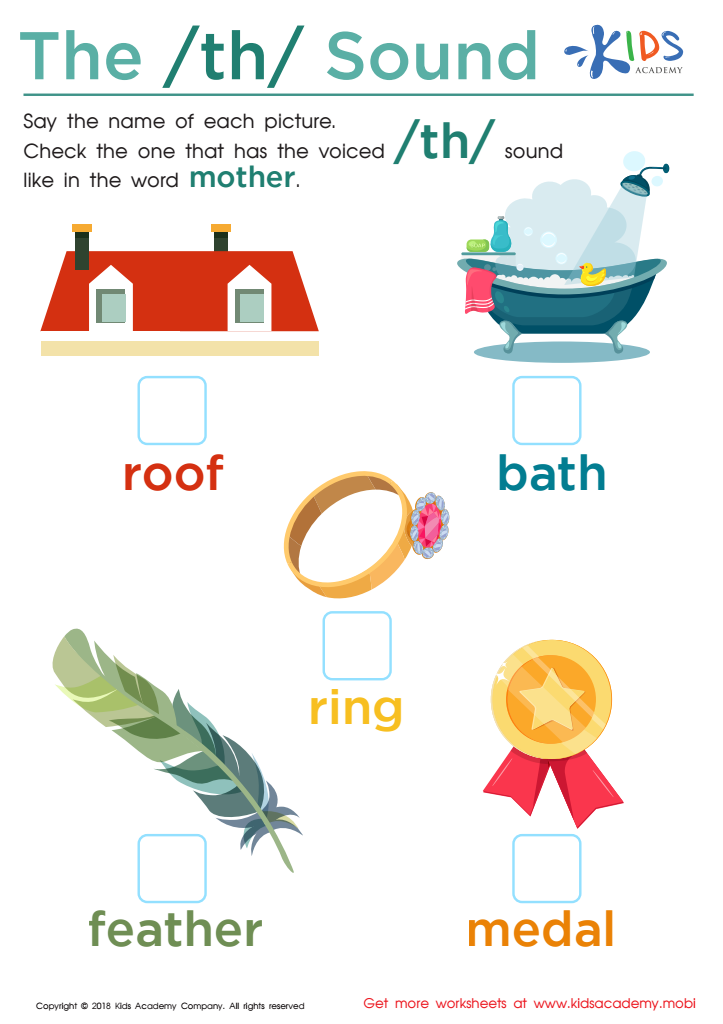
The /th/ Sound Worksheet
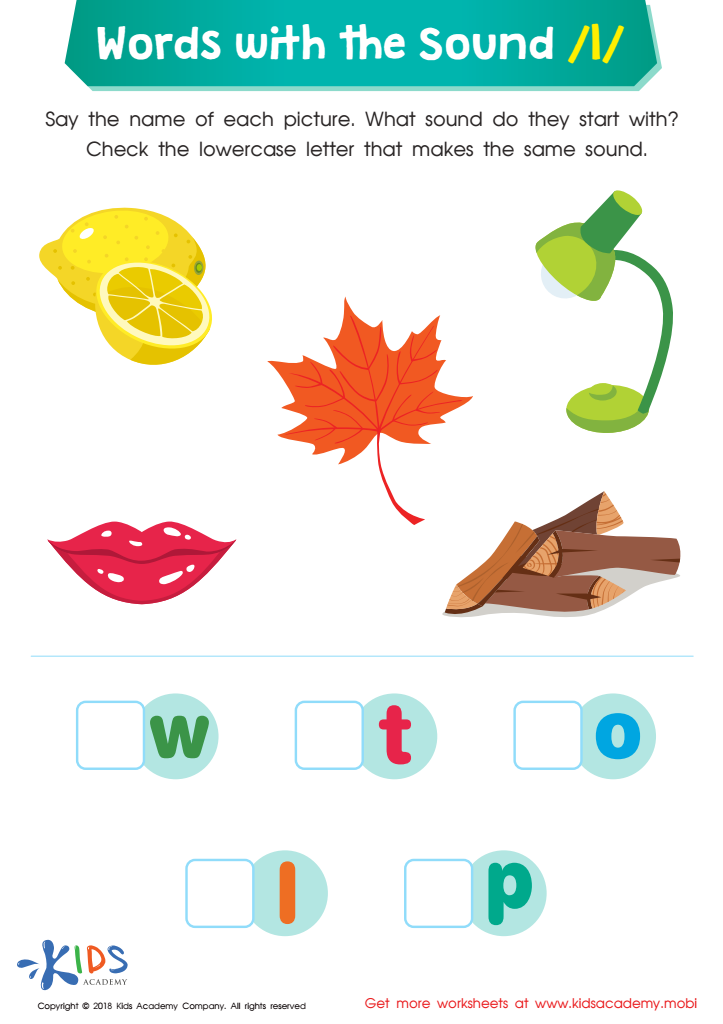
Words with Sound L Reading Worksheet
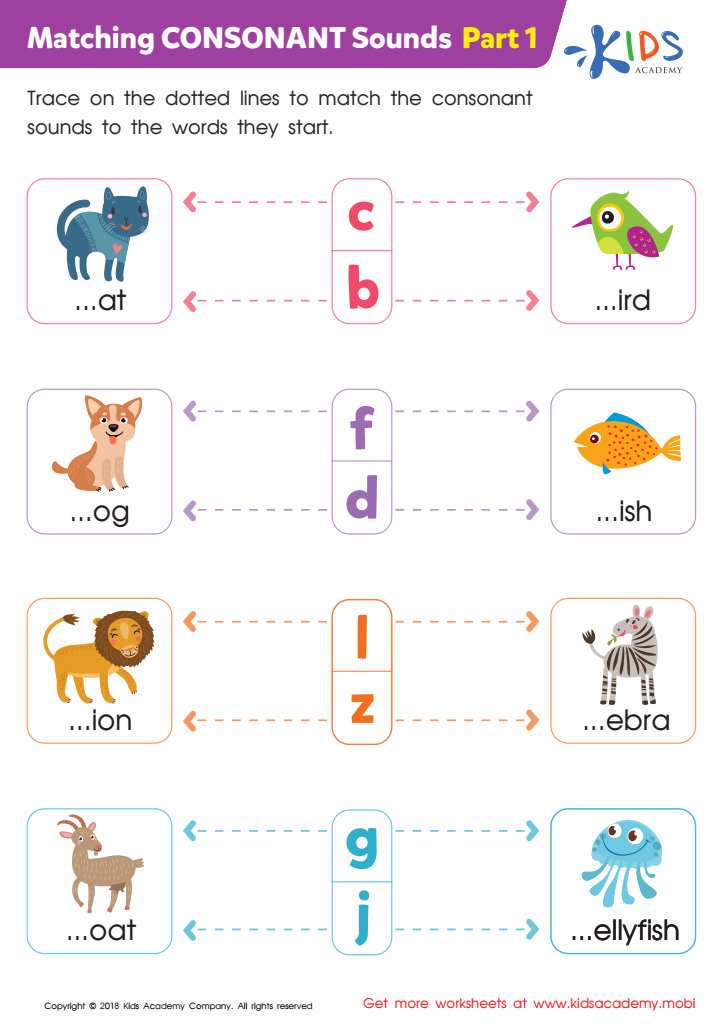
Matching Consonant Sounds: Part 1 Worksheet



Sound recognition of consonants is a critical aspect of early literacy development for children aged 6-8. At this age, children are transitioning from learning to read to reading to learn, making it vital for them to have a strong grasp of consonant sounds. These sounds form the foundation for phonemic awareness, which is essential for mastering more complex reading and writing skills.
When parents and teachers prioritize consonant sound recognition, they aid in the development of children's decoding abilities. This skill enables children to break down words into their constituent sounds, promoting better spelling and reading fluency. Recognizing consonant sounds also enhances vocabulary development, as children begin to understand how letters correlate with sounds and how to manipulate them to create different words.
Moreover, a solid understanding of consonant sounds can boost children's confidence and motivation in reading and writing. Engaging activities focusing on sound recognition can foster a positive learning environment, making reading an enjoyable experience rather than a chore. Ultimately, investing time in consonant sound recognition allows children to build the necessary skills required for academic success and lifelong literacy. Parents and teachers play a crucial role in nurturing this foundational element of reading and writing.







