Word identification Elementary Phonics Worksheets for Ages 6-8
3 filtered results
-
From - To
Our Word Identification Elementary Phonics Worksheets are specially designed for children aged 6-8, providing an engaging and effective way to enhance their reading skills. These worksheets, available at Kids Academy, focus on helping young learners identify and decode words through fun activities that build phonemic awareness, vocabulary, and fluency. Each worksheet is tailored to make learning enjoyable, featuring colorful illustrations and exercises aligned with educational standards. Ideal for both classroom use and at-home practice, our resources support early reading development and confidence in young readers. Dive into phonics fun and watch your child’s reading skills flourish!
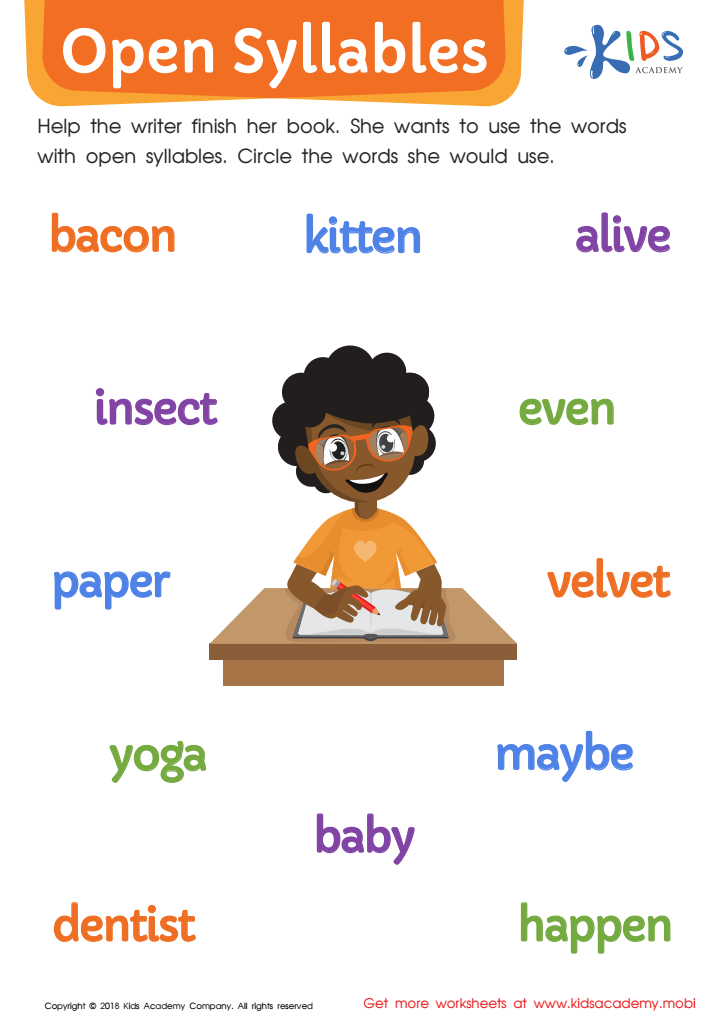
Open Syllables Worksheet
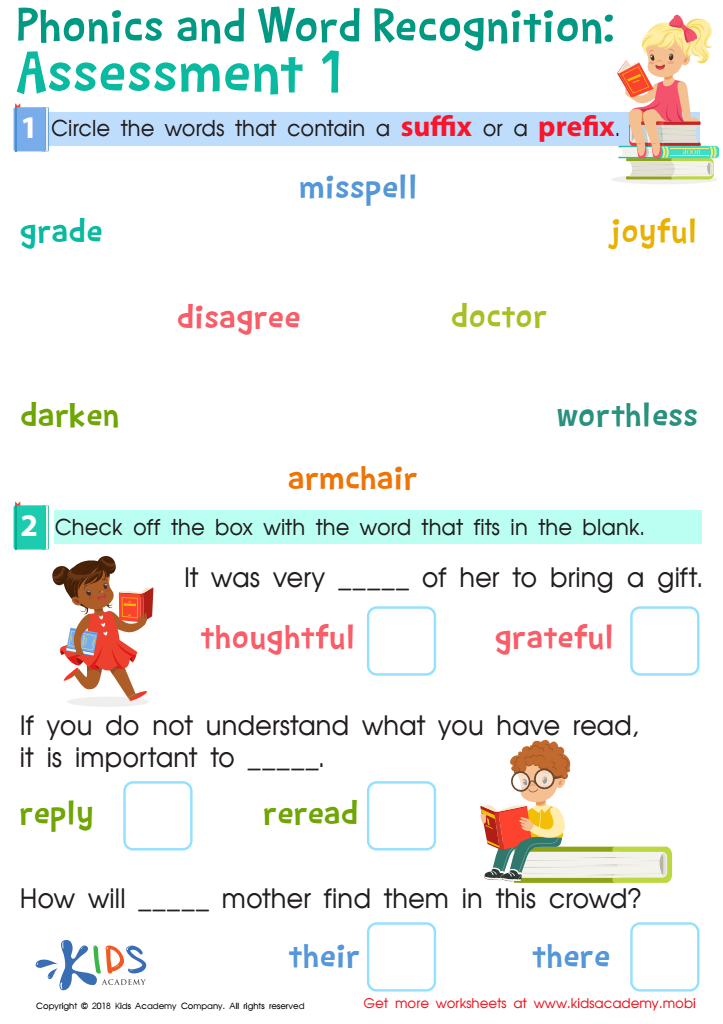
Phonics and Word Recognition: Assessment 1 Worksheet
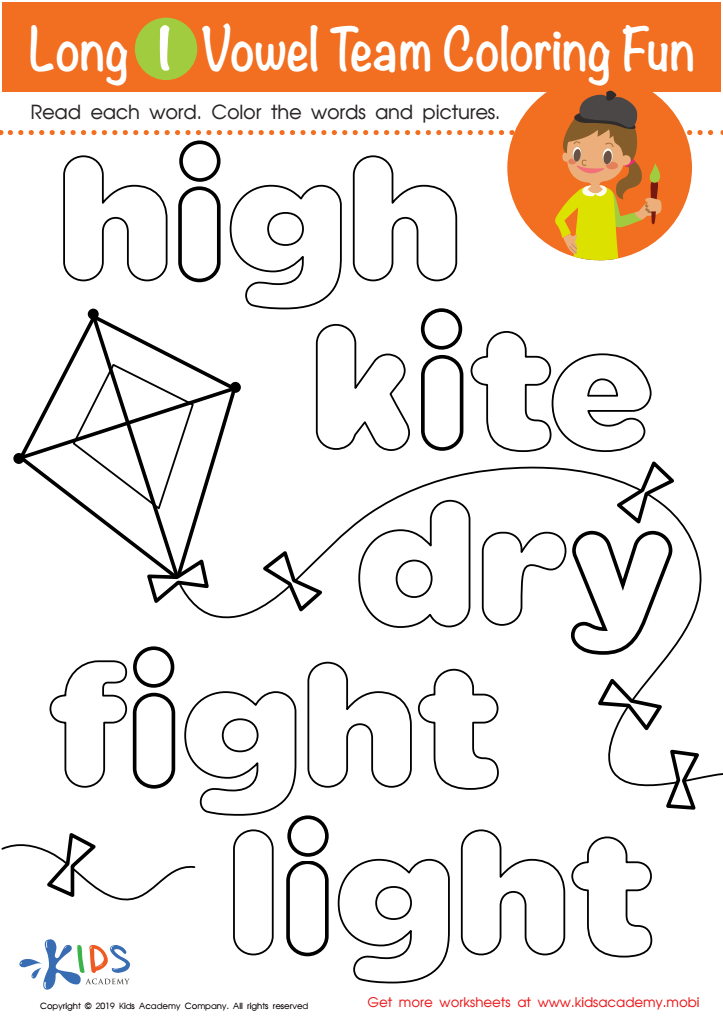
Long I Vowel Team Coloring Worksheet
 Assign to My Students




Word identification and elementary phonics skills are fundamental for children aged 6-8, forming the cornerstone of their reading and overall academic success. At this early stage, kids transition from merely recognizing letters to understanding their associated sounds, which is crucial for reading fluently. Phonics helps children decode unfamiliar words, enhancing their ability to read with accuracy and confidence. This process not only aids them in understanding text but also fosters a love for reading.
Parents and teachers should pay close attention to phonics instruction because it directly impacts vocabulary development and comprehension. When children grasp the relationship between letters and sounds, they can tackle new words independently, boosting their learning and retention. Phonics education also contributes to spelling and writing abilities, crucial skills across all academic subjects.
Additionally, investing time in phonics at a young age helps prevent future reading difficulties. Studies show that early intervention in phonics can mitigate long-term academic struggles. Teachers equipped with effective phonics strategies can cater to diverse learning needs, ensuring every child progresses.
Therefore, phonics is not just an academic requirement but a gateway to lifelong learning, self-esteem, and childhood literacy. Both in school and at home, prioritizing phonics sets up children for future success, cultivates curiosity, and instills a foundational skill they will use for a lifetime.