Letter recognition Letter Q Worksheets for Ages 6-8
3 filtered results
Difficulty Level
Grade
Age
-
From - To
Subject
Activity
Standards
Welcome to our engaging "Letter Q Worksheets" designed for children ages 6-8! These interactive resources focus on letter recognition, helping young learners identify and differentiate the letter Q in both uppercase and lowercase forms. With a variety of fun activities, including tracing, coloring, and matching exercises, these worksheets foster essential literacy skills while keeping your child excited about learning. Ideal for both classroom and home use, our Letter Q worksheets promote fine motor skills and encourage creativity. Explore our collection today and watch your child's confidence in recognizing the letter Q grow!
Favorites
With answer key
Interactive
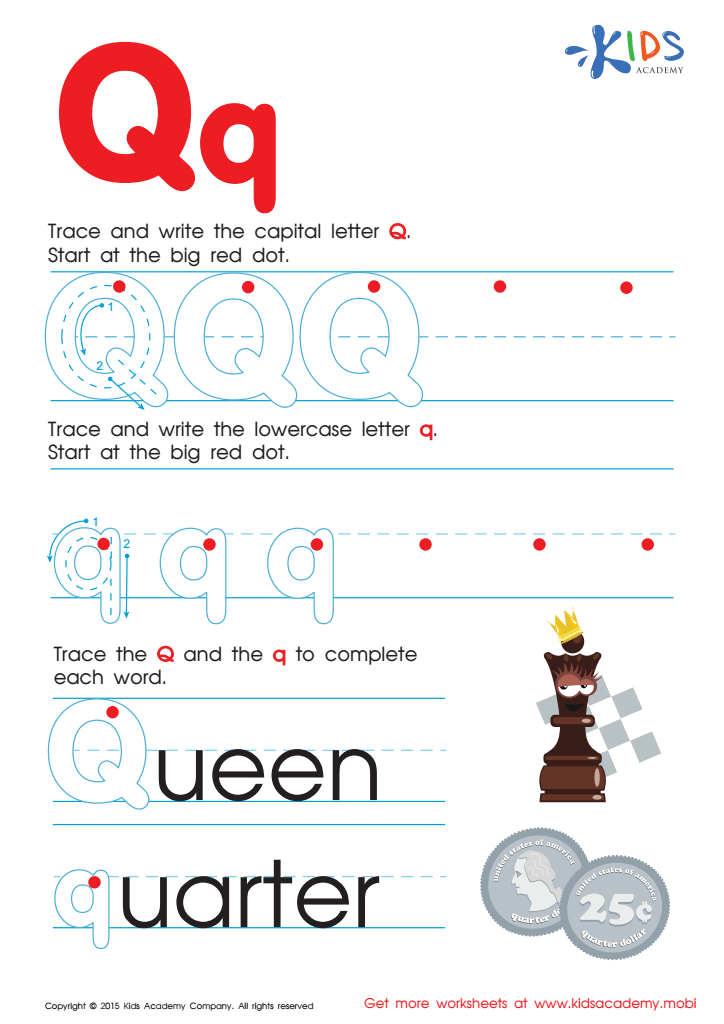
Letter Q Tracing Page
Learn the letter "Q"! Trace and write it a few times in upper and lowercase. Then help the Queen by writing her initial letter. Finally, write "quarters" and practice with more alphabet worksheets.
Letter Q Tracing Page
Worksheet
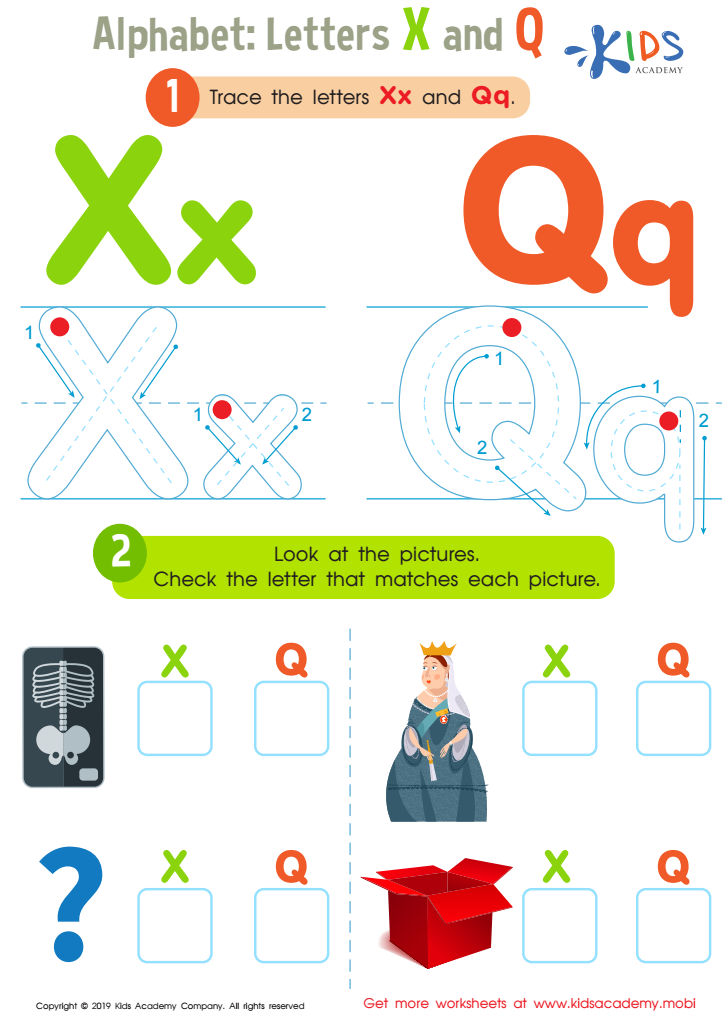
Letters X and Q Tracing Worksheet
Do you want your students to improve writing and letter recognition? This worksheet is a great place to start! Kids can trace the letters «X» and «Q» and identify pictures that match each letter. With a little encouragement, they'll do a great job!
Letters X and Q Tracing Worksheet
Worksheet
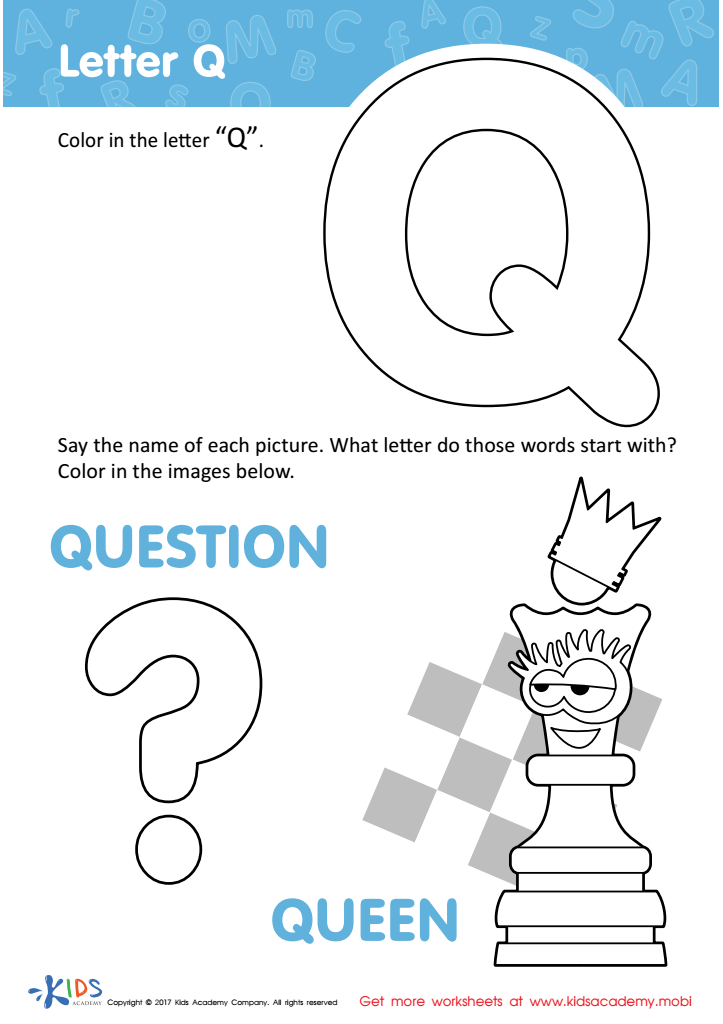
Letter Q Coloring Sheet
Kids need practice with letters not seen often. Give your child a boost with this letter "Q" coloring page! Have them color in the queen and question mark, while learning the sound "Q" makes. Fun and educational!
Download (PDF)
 Assign to My Students
Assign to My Students
Letter Q Coloring Sheet
Worksheet
Join Kids Academy for Free
Who is primarily going to use this learning content?





Letter recognition, including the letter Q, is crucial for children aged 6-8 as it lays the foundation for literacy development. Recognizing the letter Q not only helps in reading but also plays a significant role in writing and spelling. At this age, children are transitioning from learning individual letters to understanding their sounds and how they fit into words. The letter Q, often paired with U, forms a unique digraph that can help children grasp phonetic rules, enhancing their decoding skills.
Moreover, recognizing Q in both upper and lowercase forms helps to develop visual memory. This skill is vital as it assists in word recognition, allowing children to become more proficient readers. Proficiency in letter recognition bolsters confidence, encouraging them to read independently and participate in classroom activities.
Parents and teachers should also recognize cultural and contextual connections, as the letter Q often appears in engaging vocabulary, such as "queen," "quilt," and "question." Exploring these words in fun, interactive ways can make learning exciting. By emphasizing letter recognition, adults equip children with essential tools to communicate effectively, think critically, and foster a lifelong love for reading and writing.