
Alphabetical understanding Letter Recognition Worksheets for Ages 6-8
3 filtered results
Difficulty Level
Grade
Age
-
From - To
Subject
Activity
Standards
Our "Alphabetical Understanding: Letter Recognition Worksheets for Ages 6-8" are designed to bolster your child's literacy skills through engaging, educational activities. Tailored to young learners, these worksheets guide children in mastering letter height, alignment, spacing, sound identification, as well as the fundamental characteristics of evenly tailored letters, smooth curves, slope, and invisible finger space during forming each syllable. Each activity is thoughtfully crafted to foster confidence and enhance alphabetical proficiency in a step-by-step manner, making learning fun and effective. Unlock your child's potential and build a strong foundation in literacy with our comprehensive worksheets!
Favorites
With answer key
Interactive
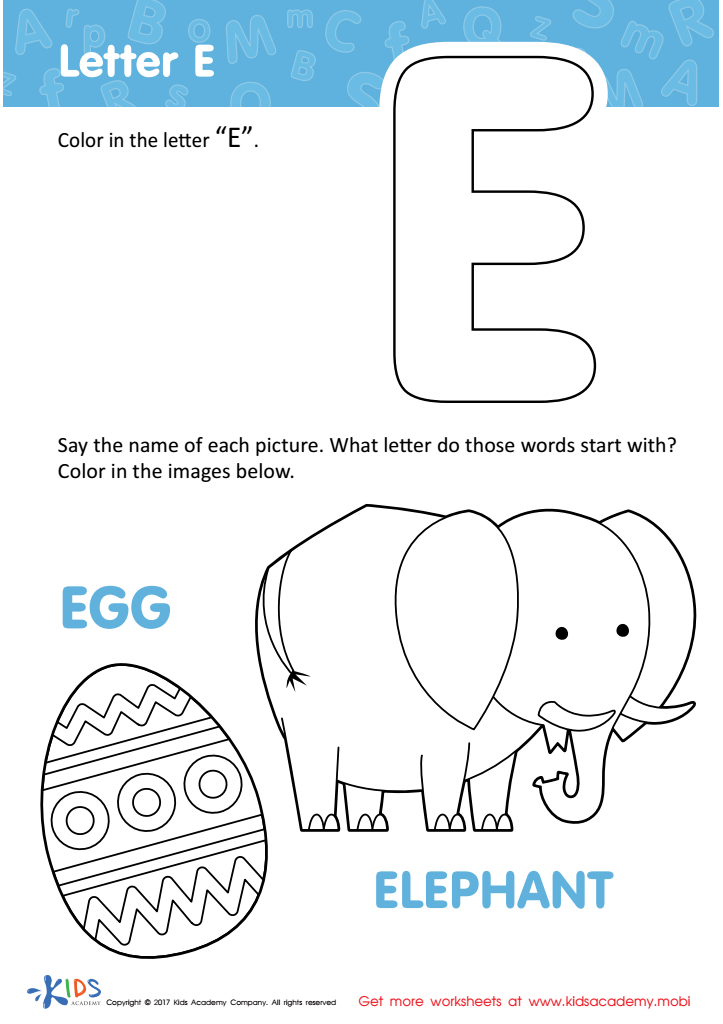
Letter E Coloring Sheet
Coloring pages are great for teaching kids the alphabet and words! This "E" page features a cute elephant and Easter egg. Kids will love it and learn the letter "E" at the same time. 80 words
Download (PDF)
 Assign to My Students
Assign to My Students
Letter E Coloring Sheet
Worksheet
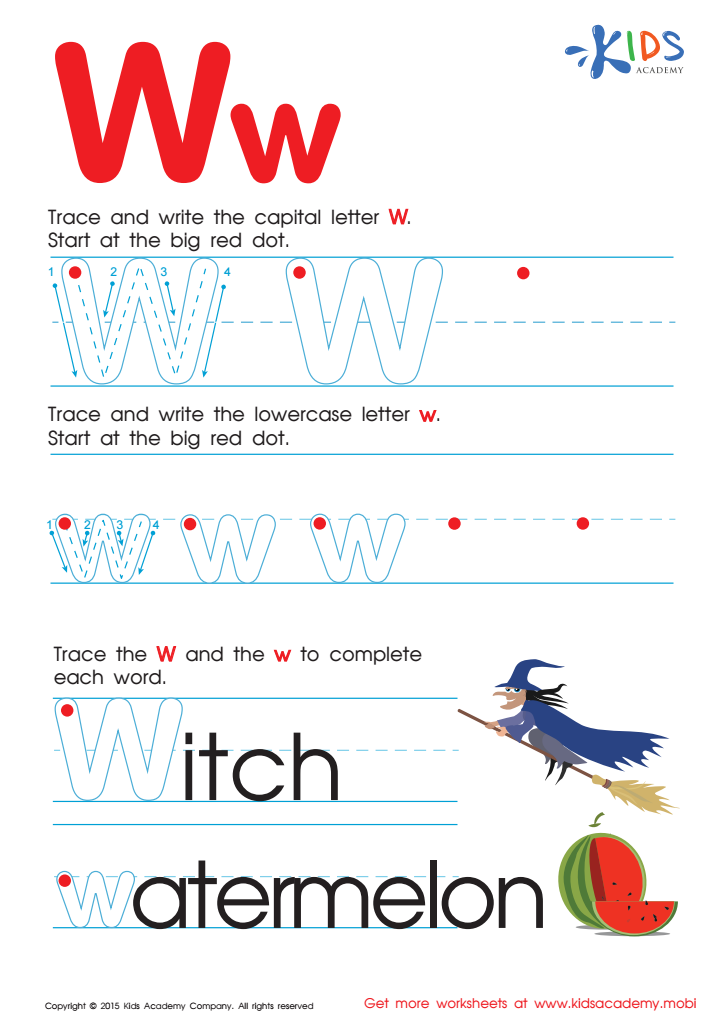
Letter W Tracing Page
Trace and write the capital and lowercase letter W with this free letter tracing worksheet by Kids Academy. Complete the words "Witch" (capital) and "watermelon" (lowercase). Check out our other kindergarten alphabet worksheets!
Letter W Tracing Page
Worksheet
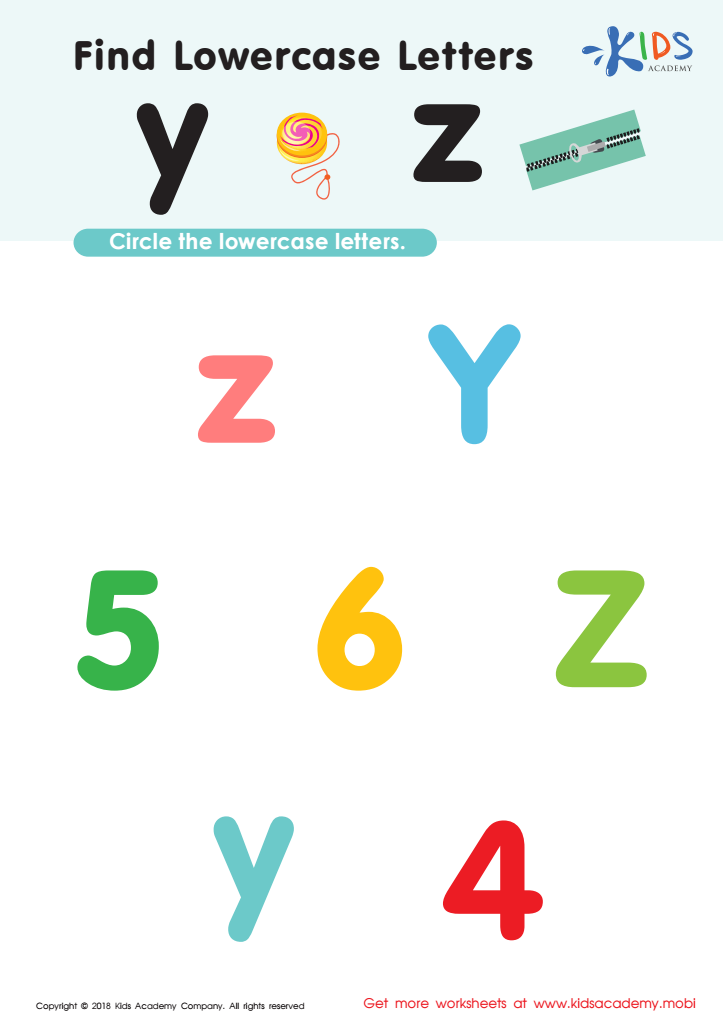
Find Lowercase Letters y z Worksheet
Help your kid learn the alphabet. Before they can move on to words and reading, they must first know the lower and uppercase letters. Show them how to find the letters y and z in this worksheet, which is filled with uppercase letters and numbers. Together, find and circle them.
Find Lowercase Letters y z Worksheet
Worksheet
Join Kids Academy for Free
Who is primarily going to use this learning content?








Alphabetical understanding and letter recognition are foundational skills critical for children aged 6-8, as they form the base for literacy development. At this age, children transition from recognizing letters visually to linking those letters with corresponding sounds, which is key for phonemic awareness. This connection is essential for decoding words during reading, allowing kids to transform written text into spoken language.
Furthermore, letter recognition enhances vocabulary acquisition. When children can identify and understand each letter, they are better equipped to discern word patterns and meanings. This skill fundamentally supports reading fluency, enabling them to read more smoothly and with greater comprehension.
For teachers, focusing on alphabetical understanding helps them implement effective reading strategies tailored to early developmental stages. For parents, investing in this foundational skill fosters a supportive home literacy environment, encourages a love for reading, and prevents potential learning struggles or delays.
Moreover, self-confidence in learning is boosted when children can competently navigate the alphabet. This confidence positively impacts overall academic performance and primes them for future learning success. In sum, robust alphabetical understanding and letter recognition serve as vital stepping stones toward lifelong literacy and effective communication.







