
Fine motor skills development Letter Recognition Worksheets for Ages 6-8
4 filtered results
Difficulty Level
Grade
Age
-
From - To
Subject
Activity
Standards
Explore our "Fine Motor Skills Development Letter Recognition Worksheets" designed for children ages 6-8! These engaging activities not only enhance letter recognition but also promote essential fine motor skills critical for early learning. Our printable worksheets are filled with fun exercises that incorporate tracing, coloring, and sorting, allowing young learners to practice letter shapes while strengthening their hand-eye coordination. With vibrant illustrations and interactive tasks, children will gain confidence as they complete each worksheet. Perfect for teachers and parents alike, these resources support a well-rounded educational experience, making learning both enjoyable and effective. Download now and watch your child thrive!
Favorites
With answer key
Interactive
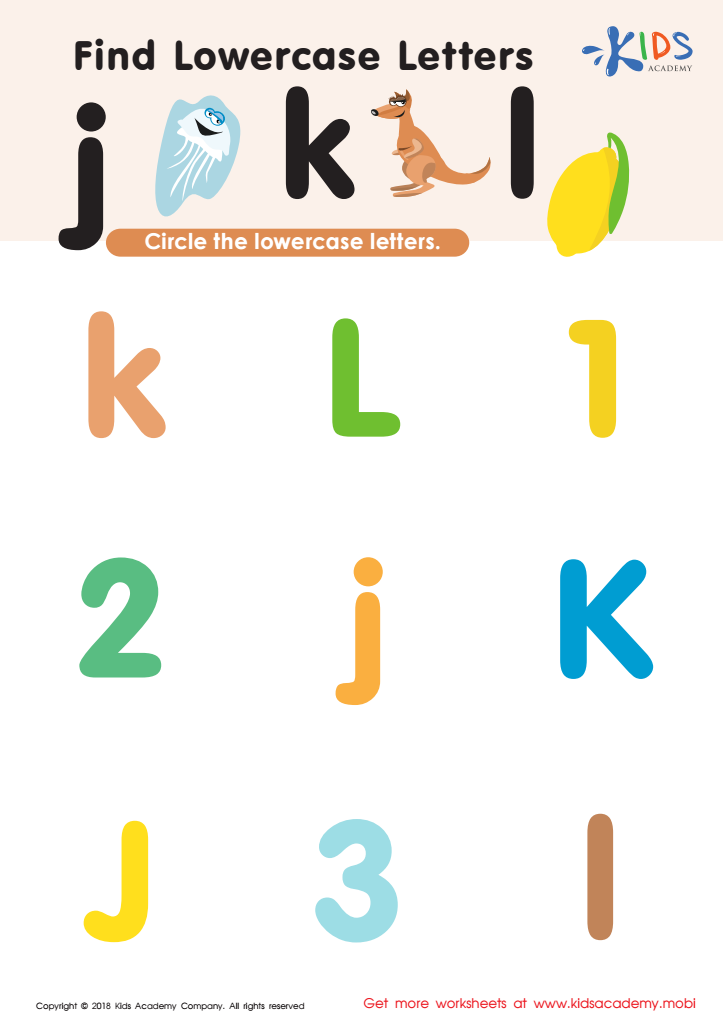
Find Lowercase Letters j k l Worksheet
Help your child's brain develop and have fun at the same time! Find and circle the lowercase letters jkl in the worksheet full of uppercase letters and numbers. Colorful drawings and bright colors make this an engaging learning activity.
Find Lowercase Letters j k l Worksheet
Worksheet
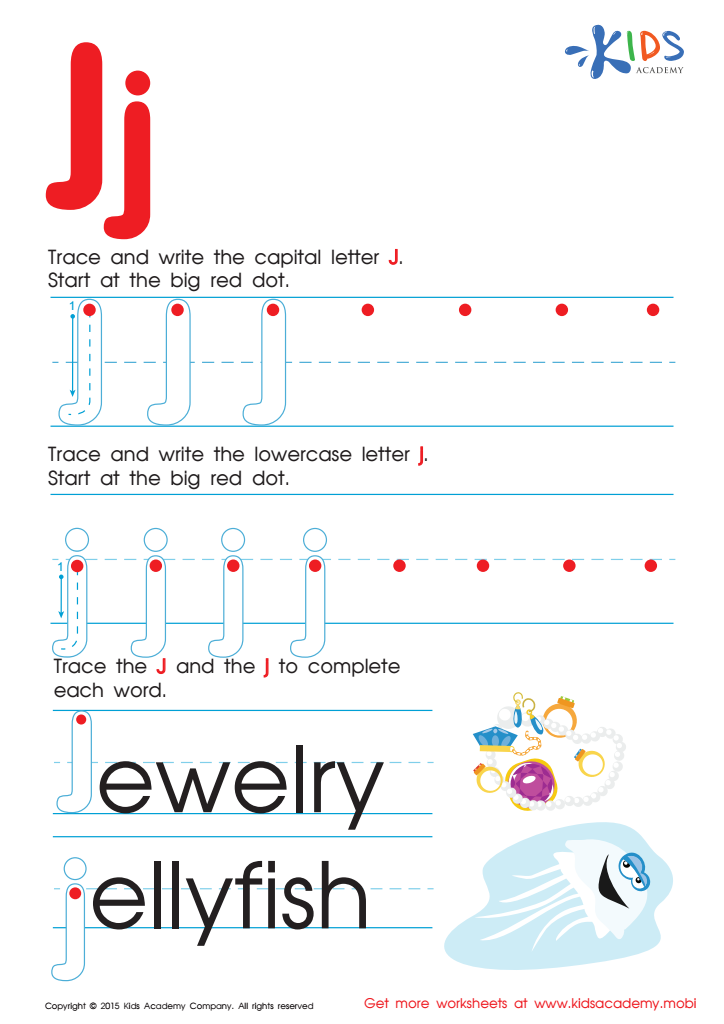
Letter J Tracing Page
Trace and write the letter "J" with our ABC worksheet - start at the big red dot! Have fun completing words like jewelry, jellyfish and more. Check out our kindergarten activities for more alphabet practice.
Letter J Tracing Page
Worksheet
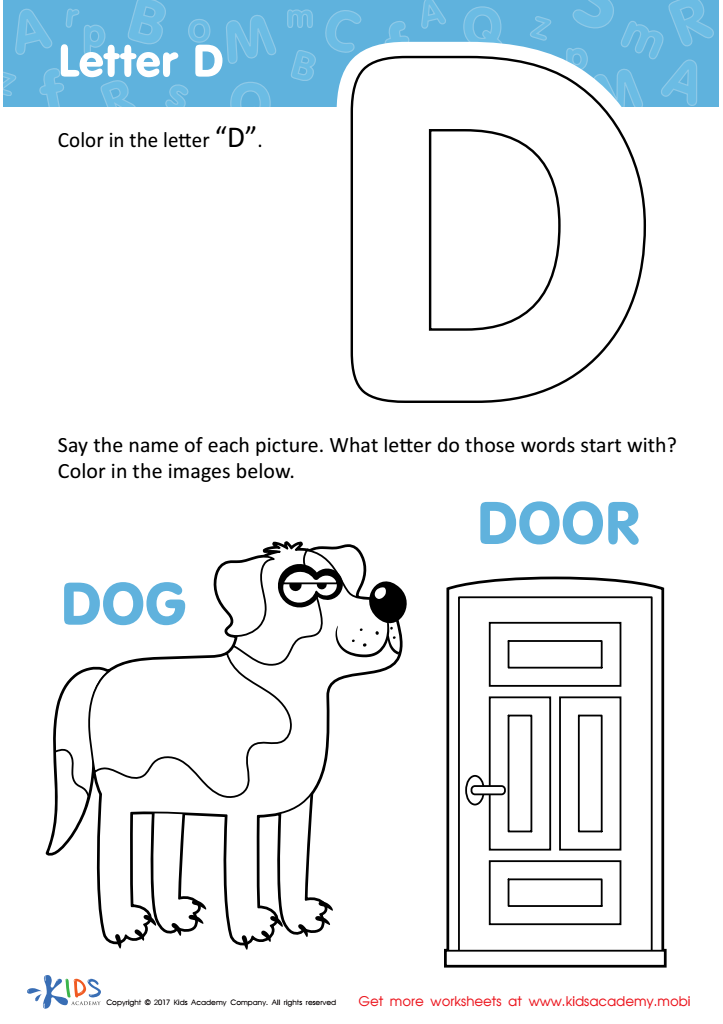
Letter D Coloring Sheet
Coloring with this letter "D" page is a great way to encourage your child's creativity while they learn the letter "D" and its sound. It's a fun activity to stimulate their imagination!
Download (PDF)
 Assign to My Students
Assign to My Students
Letter D Coloring Sheet
Worksheet
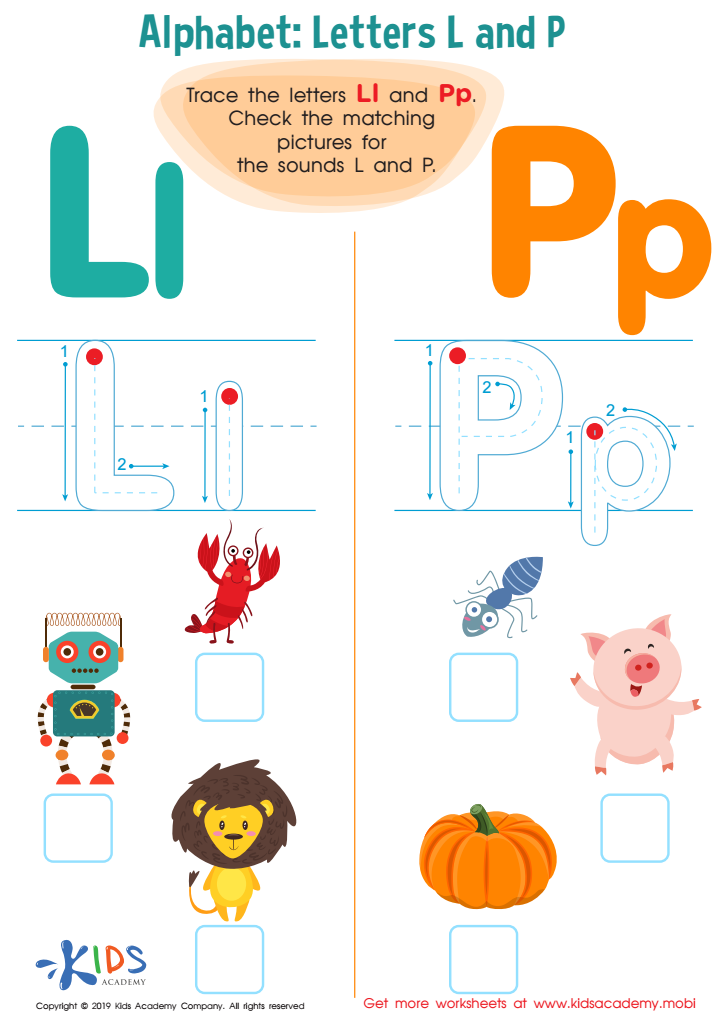
Letter L and P Tracing Worksheet
This traceable worksheet can motivate your students to learn and practice core skills. They'll trace the letters 'L' and 'P' and identify the pictures next to them. With this exercise, they'll unlock their learning abilities and excel in the subject!
Letter L and P Tracing Worksheet
Worksheet
Join Kids Academy for Free
Who is primarily going to use this learning content?








Fine motor skills development is crucial for children aged 6-8, as it greatly impacts their academic and daily life activities. As children enter this age group, they engage in more complex writing, art, and self-help tasks that require precise hand movements and coordination. By fostering fine motor skills, parents and teachers can help children develop the dexterity needed for writing letters clearly, using scissors, and manipulating small objects, thus enhancing their ability to learn effectively.
Letter recognition is equally vital during these formative years. Recognizing letters is foundational for reading, writing, and language development. As children become more adept in identifying letters, their confidence and enthusiasm for reading opportunities grow. This supportive skill set allows them to transition to more advanced literacy tasks, promoting a more profound comprehension of language.
When parents and teachers prioritize the development of fine motor skills and letter recognition, they set children up for success. Engaging children in fun, hands-on activities that encourage these skills not only fosters their cognitive development but also cultivates a love for learning. Ultimately, nurturing these abilities ensures that children acquire the necessary skills to thrive in school and beyond, making it essential for parents and teachers to take an active interest in this aspect of child development.







