Phonics practice Letter Recognition Worksheets for Ages 6-8
5 filtered results
-
From - To
Discover our Phonics Practice Letter Recognition Worksheets, specially designed for children ages 6-8. These engaging and educational worksheets help young learners recognize and master the alphabet through fun and interactive exercises. Each activity is crafted to enhance letter-sound correspondence and build strong phonics skills, providing the foundation for successful reading and writing. Perfect for classroom use or at-home learning, our worksheets make phonics practice enjoyable, boosting your child's confidence and competence. Unlock your child's potential with Kids Academy's comprehensive letter recognition resources. Visit now and start the journey toward literacy success!
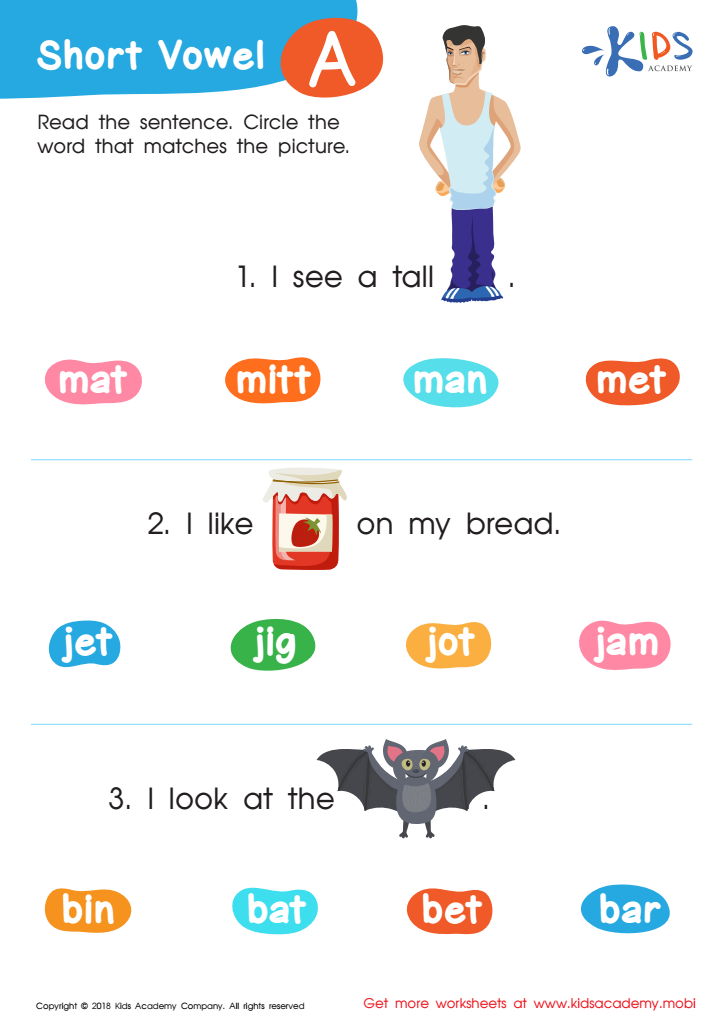
Short Vowel /a/ Worksheet
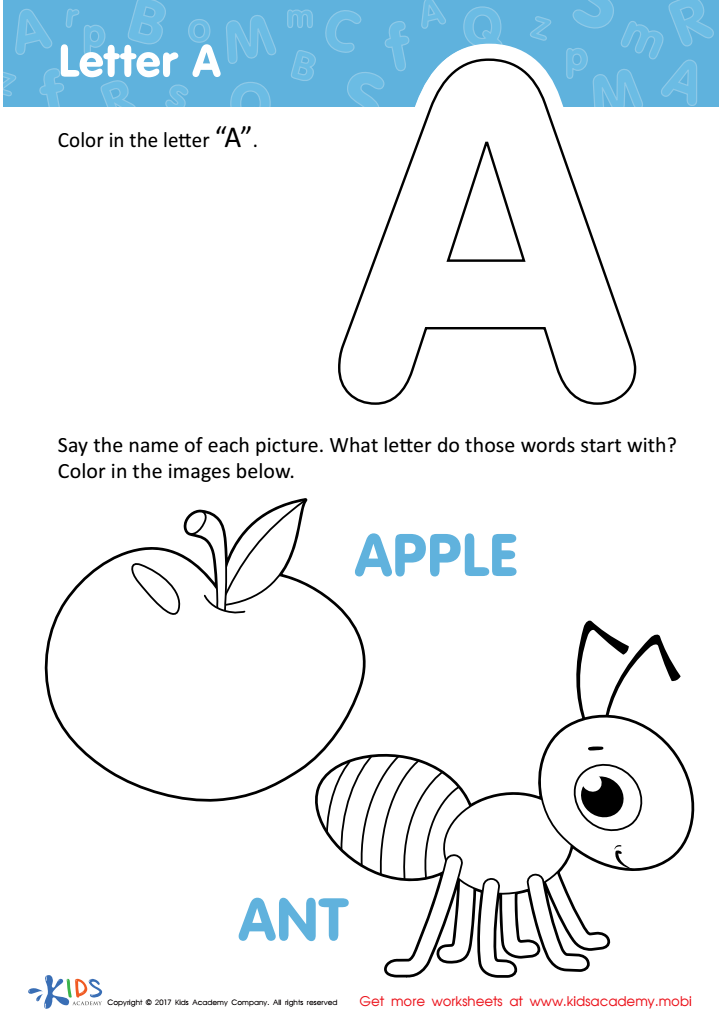
Letter A Coloring Sheet
 Assign to My Students
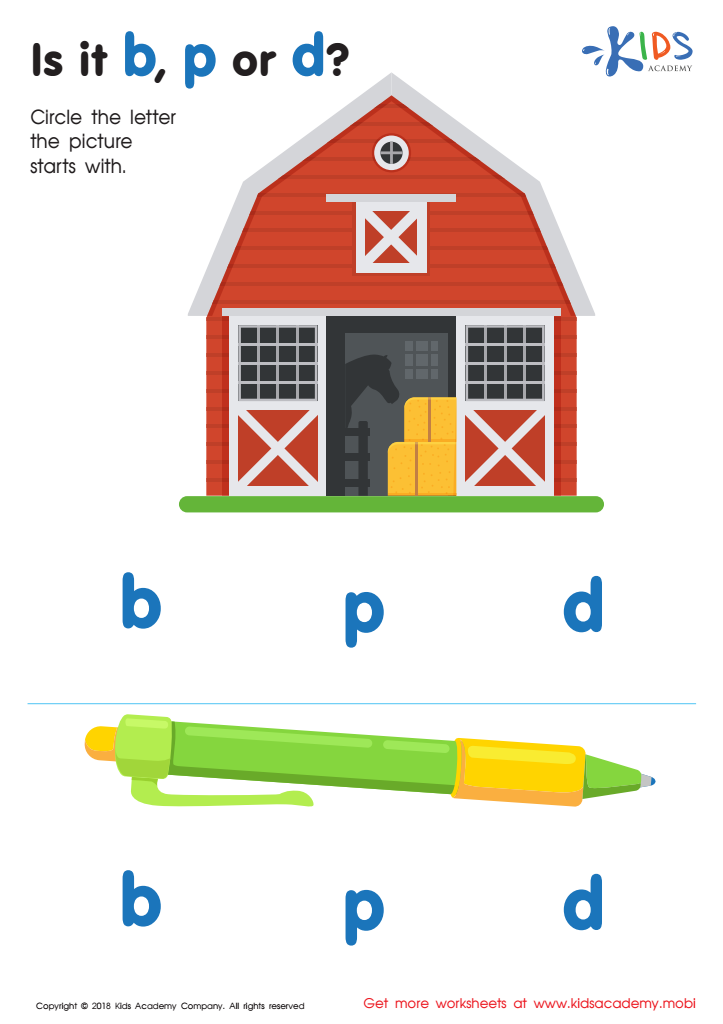
Is it b, p or d? Worksheet
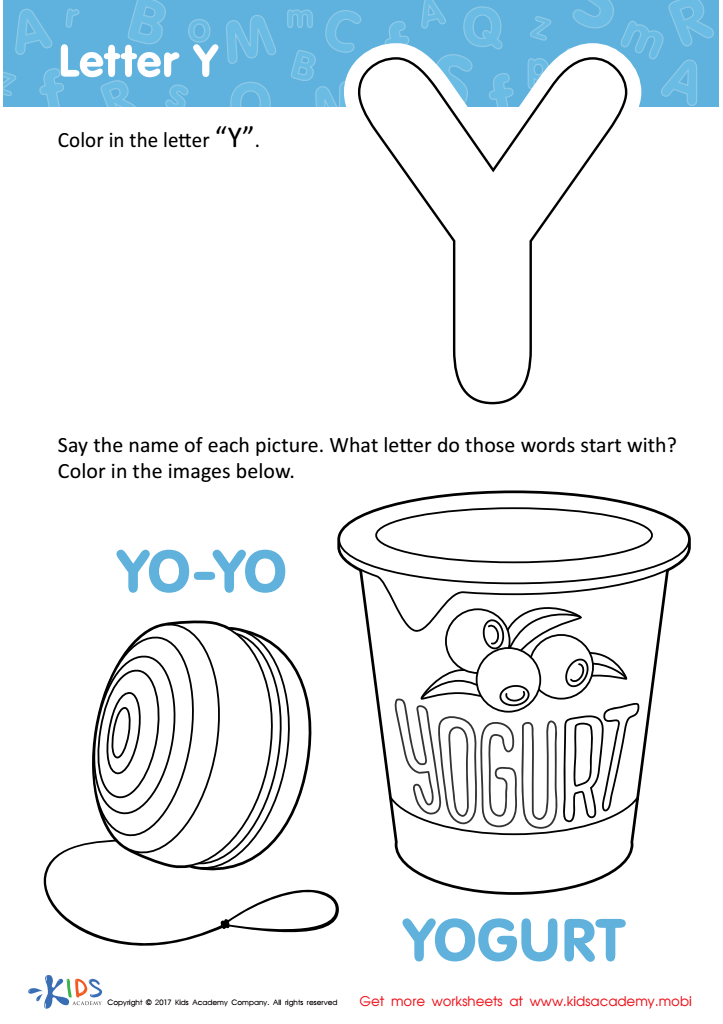
Letter Y Coloring Sheet
Assign to My Students
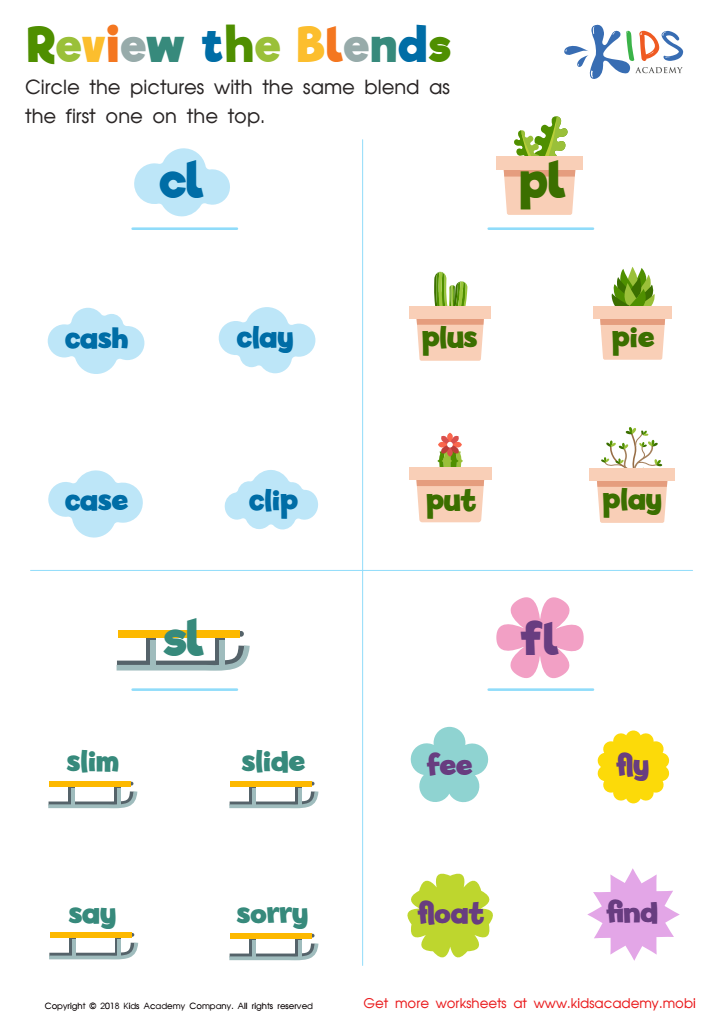
Review the Blends Worksheet








Phonics practice and letter recognition form the cornerstone of early literacy development, particularly crucial for children aged 6-8. This age is a key developmental period where young learners transition from recognizing letters to understanding their sounds and combining them to form words. Mastery in phonics and letter recognition significantly enhances a child's reading fluency and comprehension capabilities.
For parents and teachers, encouraging regular phonics practice equips children with essential decoding skills, allowing them to read unfamiliar words more easily. As children become proficient readers, their confidence and motivation to explore new reading materials increase, fostering a lifelong love for reading and learning. Additionally, strong letter recognition and phonics skills are predictive of overall academic success, as literacy underpins most subjects taught in school.
Phonics practice also supports spelling and writing skills. Understanding the relationship between sounds and letters helps children spell words correctly and compose readable sentences. In turn, these skills promote effective communication, a fundamental competence in both academic and real-world contexts.
Thus, investing time and resources in phonics practice and letter recognition for young learners establishes a solid foundation for future educational attainment, boosting not just literacy skills but overall academic performance and essential life skills.







