Filters

6 filtered results

Clear all filters
Favorites
With answer key
Interactive

6 filtered results

Difficulty Level

Grade


Enhance your child's vocabulary with our Long and Short Vowel Worksheets designed for ages 6-8. These engaging worksheets focus on recognizing, differentiating, and using long and short vowel sounds to boost reading and spelling skills. Through a variety of fun activities, children will expand their word knowledge, improve their pronunciation, and increase their fluency. Ideal for early learners, these worksheets provide an excellent foundation for language development, making learning both effective and enjoyable. Discover an exciting way to master vowels and watch your child's language skills thrive with our expertly crafted resources.

Check out this FREE Trial Lesson on Long And Short Vowel for age 6-8!

Distinguish Between Words with Long A and Short A

Favorites
With answer key
Interactive
  • 6-8
  • Vocabulary expansion
  • Long And Short Vowel
The Long I Maze Reading Worksheet

The Long I Maze Reading Worksheet

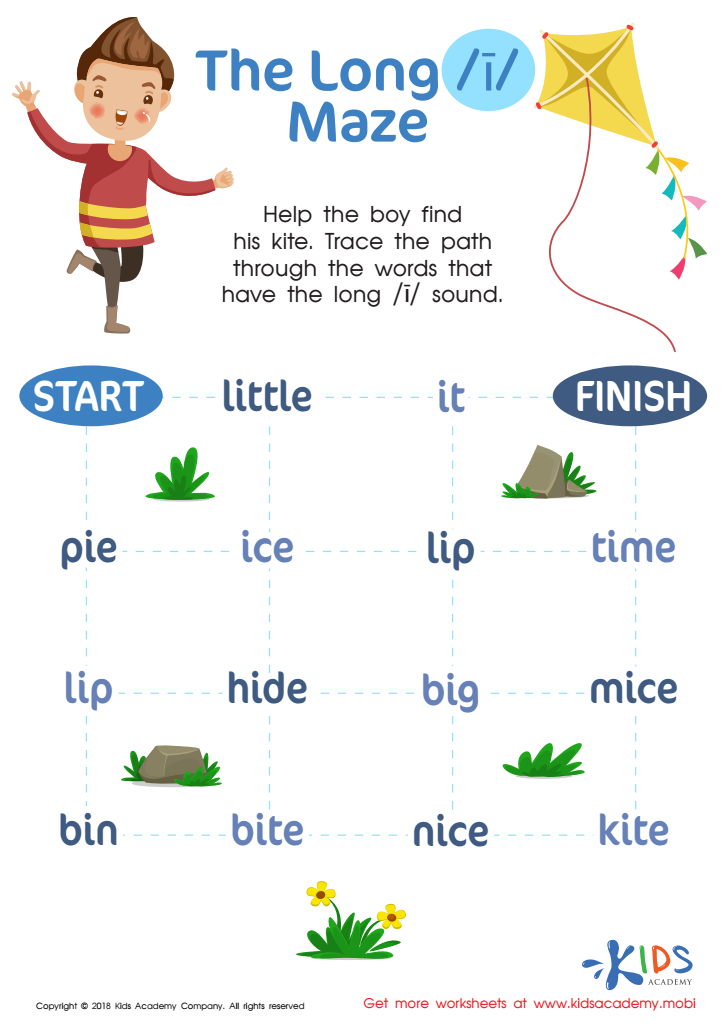
Help your child learn phonics to help them read. Show them the difference between long and short "i" sounds. Guide them as they use a pencil to trace words with the long "i:" sound in the "Help the Boy in the Picture" worksheet exercise. This will help them find the kite in the picture.
The Long I Maze Reading Worksheet
Worksheet
Reading: Long O and Short O Sounds Worksheet

Reading: Long O and Short O Sounds Worksheet

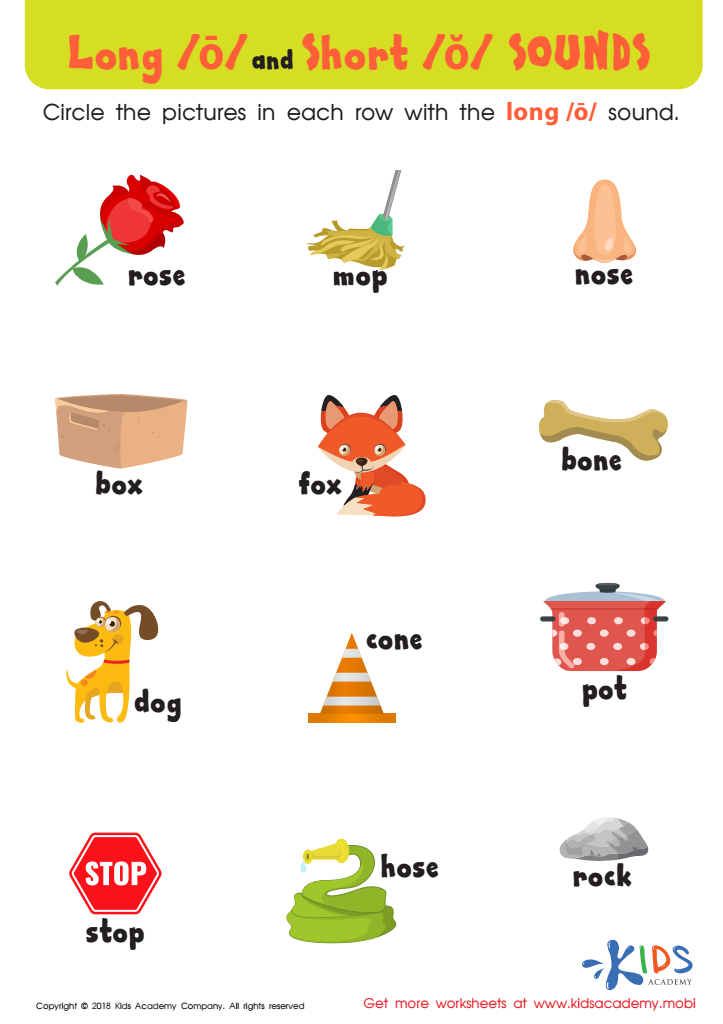
Students practice distinguishing between short and long O sounds with this reading worksheet. They sound out each word, then circle the pictures with the long O sound. Perfect for individual practice or to work with peers! Improves understanding of this skill and helps avoid confusion.
Reading: Long O and Short O Sounds Worksheet
Worksheet
Words with Long U Reading Worksheet

Words with Long U Reading Worksheet

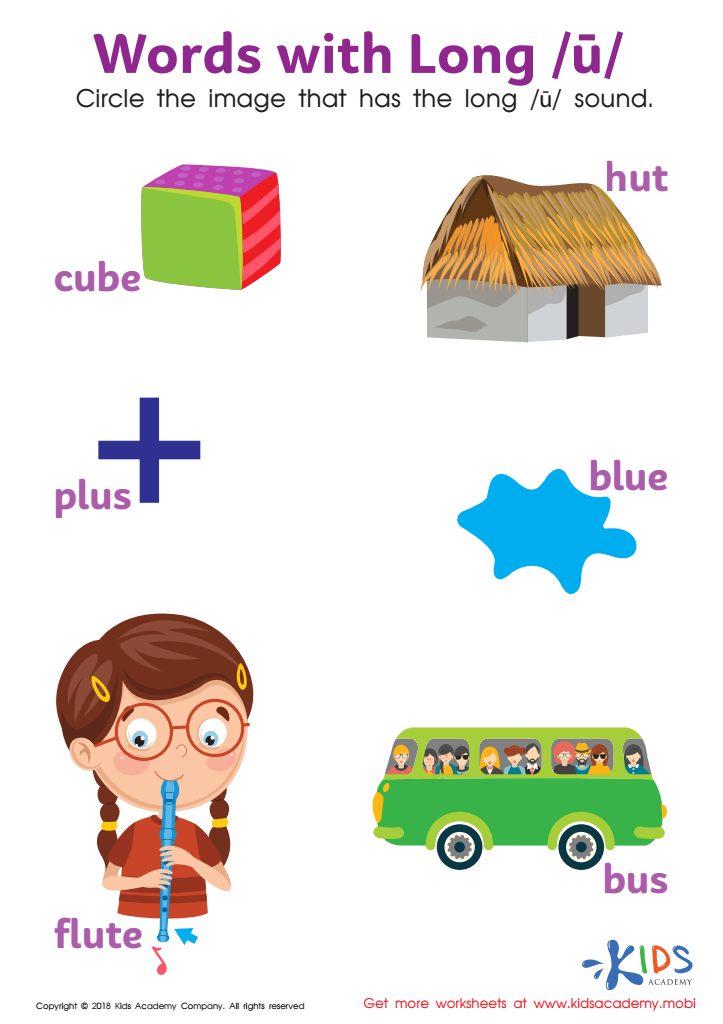
Help your new reader master vowel recognition with this fun worksheet. By using picture clues and practicing fine motor skills, they'll learn to differentiate between words with the long and short «u» sound. Your learner will also get to practice vowel discrimination in high-frequency words. It's a great way to learn the importance of vowels in reading!
Words with Long U Reading Worksheet
Worksheet
Reading: Long a and Short a Worksheet

Reading: Long a and Short a Worksheet

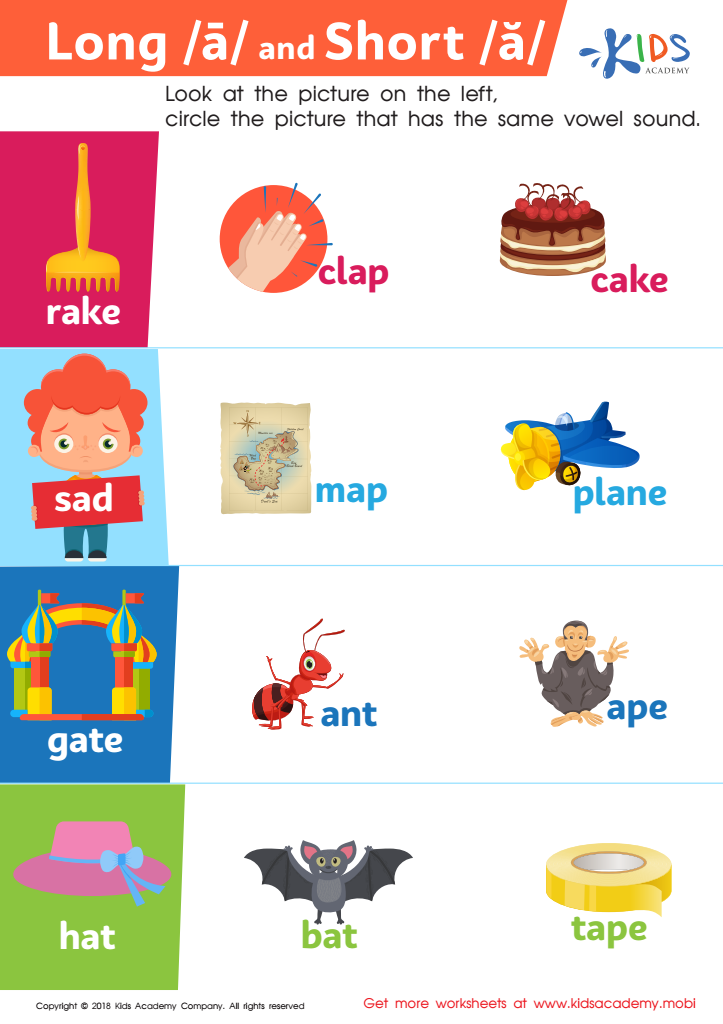
This printable helps students practice distinguishing the long and short A sound. Pictures provide clues to read each word and students identify if it has a short or long sound. By completing this worksheet, children gain mastery of the phonics skill.
Reading: Long a and Short a Worksheet
Worksheet
Two Sounds for OO Worksheet

Two Sounds for OO Worksheet

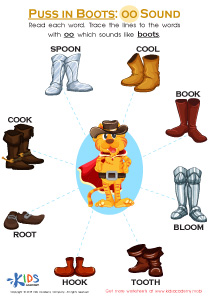
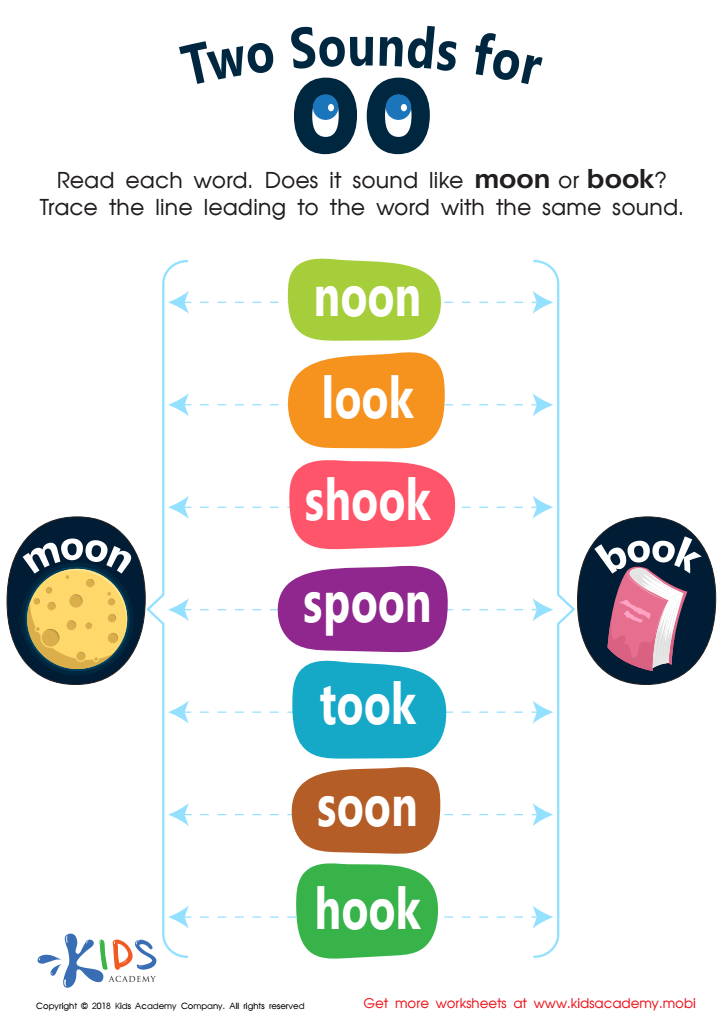
This worksheet helps kids learn the different sounds of the -oo digraph. They match words based on whether they sound like moon or book, plus practice fine motor skills tracing lines. Fun and educational!
Two Sounds for OO Worksheet
Worksheet
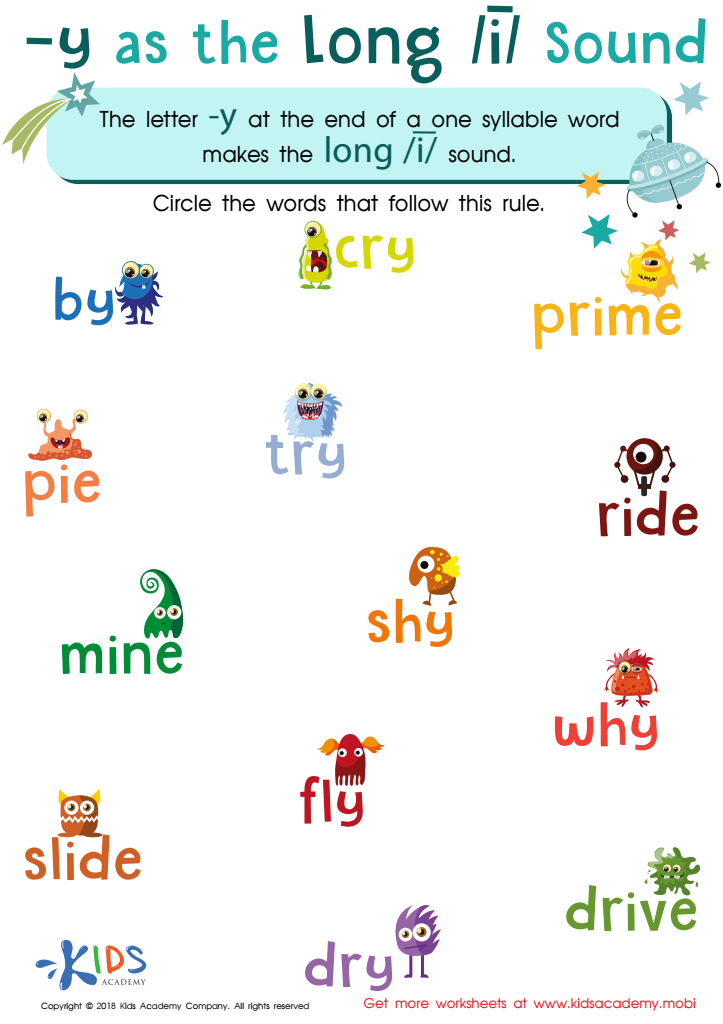
Reading: Y as Long I Worksheet


Reading: Y as Long I Worksheet

Students need practice and exposure to letters that make different sounds for decoding and reading success. This printable is a great resource for language arts classes: it explains that words ending with Y and having only one syllable make the long I sound. Students will circle all words with Y that have this sound.
Reading: Y as Long I Worksheet
Worksheet


Vocabulary expansion and understanding long and short vowel sounds are critical for children aged 6-8. During these early years, kids are in a prime stage of language acquisition, which lays the foundation for future learning. Knowing a wide range of words helps children express themselves better and understand what others are saying. It significantly enhances their communication skills.

Focusing on long and short vowels, in particular, is essential. These vowel sounds form the backbone of pronouncing numerous words correctly. When children grasp the differences between long and short vowels, they improve their reading and spelling abilities. For example, understanding that "bit" and "bite" sound different because of the vowel change helps them read words correctly and spell them more accurately, leading to overall better literacy.

Moreover, a robust vocabulary and strong phonics skills boost students' confidence. They feel more competent when engaging in classroom activities, leading to a more positive attitude towards learning. It also makes it easier for them to tackle increasingly complex subjects over time. Thus, parents and teachers investing in these aspects are setting the child up for academic success and comprehensive cognitive development.