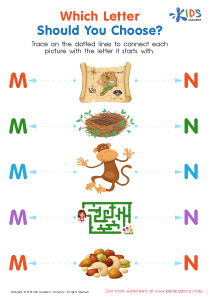
Lowercase identification Lowercase/Small Letters Worksheets for Ages 6-8
5 filtered results
-
From - To
Boost your child's literacy skills with our engaging Lowercase Identification Worksheets for ages 6-8! Perfect for early learners, these printable resources help children recognize and differentiate lowercase letters through fun and interactive activities. Our creatively designed worksheets reinforce identification, enabling students to become confident readers and writers. With a variety of exercises tailored to different learning styles, kids will enjoy practicing letter recognition through tracing, matching, and coloring. Ideal for teachers, parents, and homeschoolers, these worksheets make learning the alphabet enjoyable and effective. Start nurturing essential reading skills today with our delightful lowercase letters worksheets!
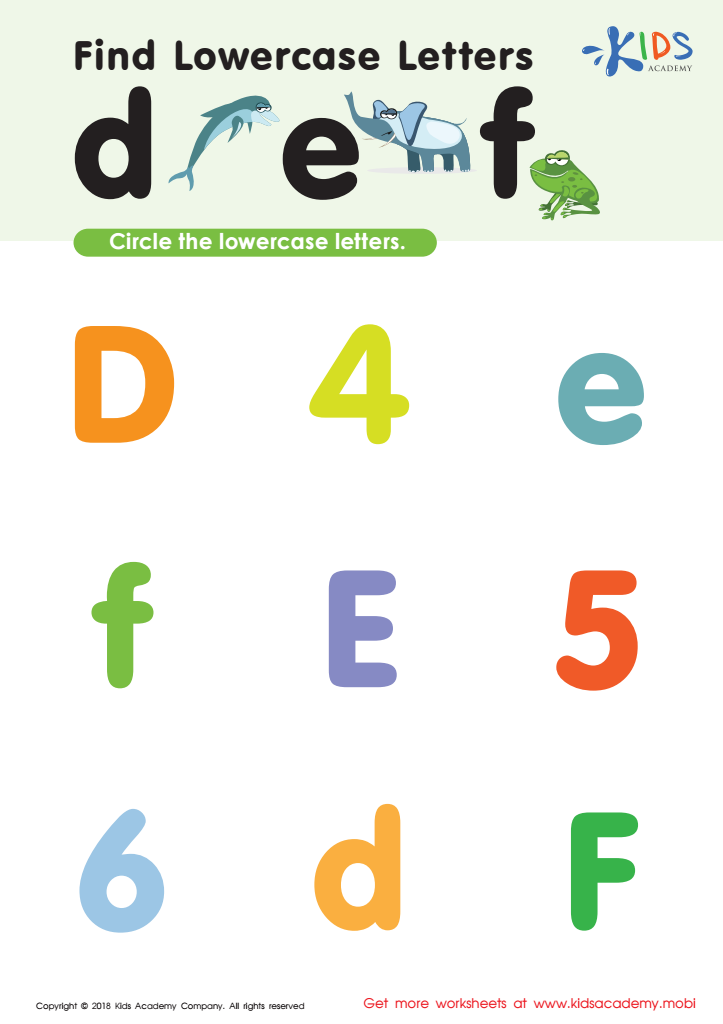
Find Lowercase Letters d e f Worksheet
 Assign to My Students
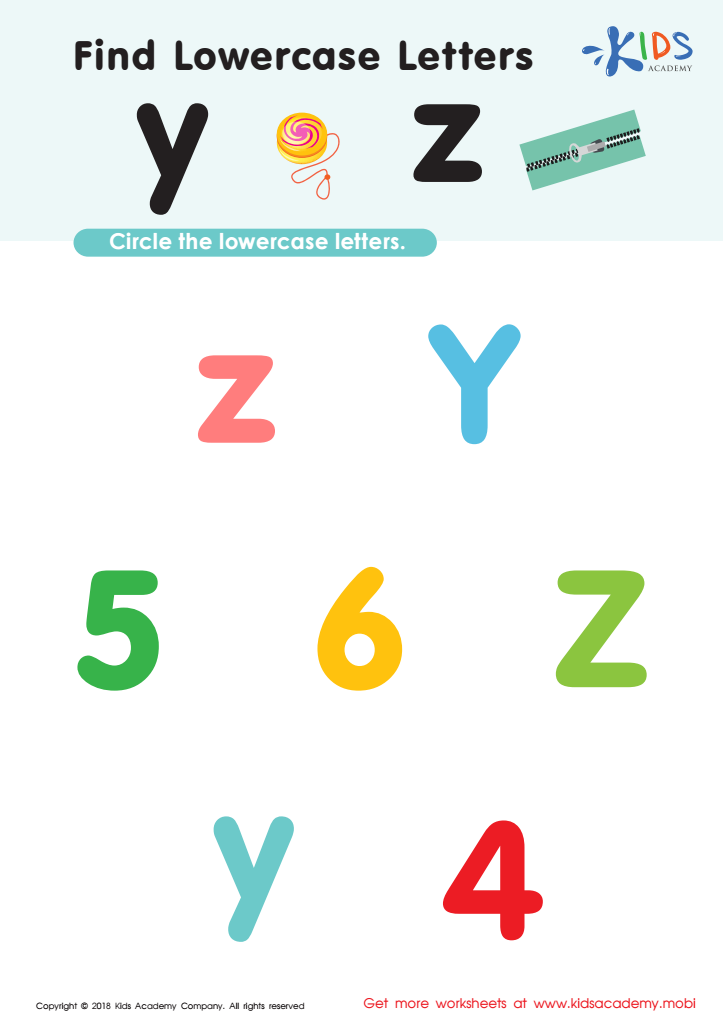
Find Lowercase Letters y z Worksheet
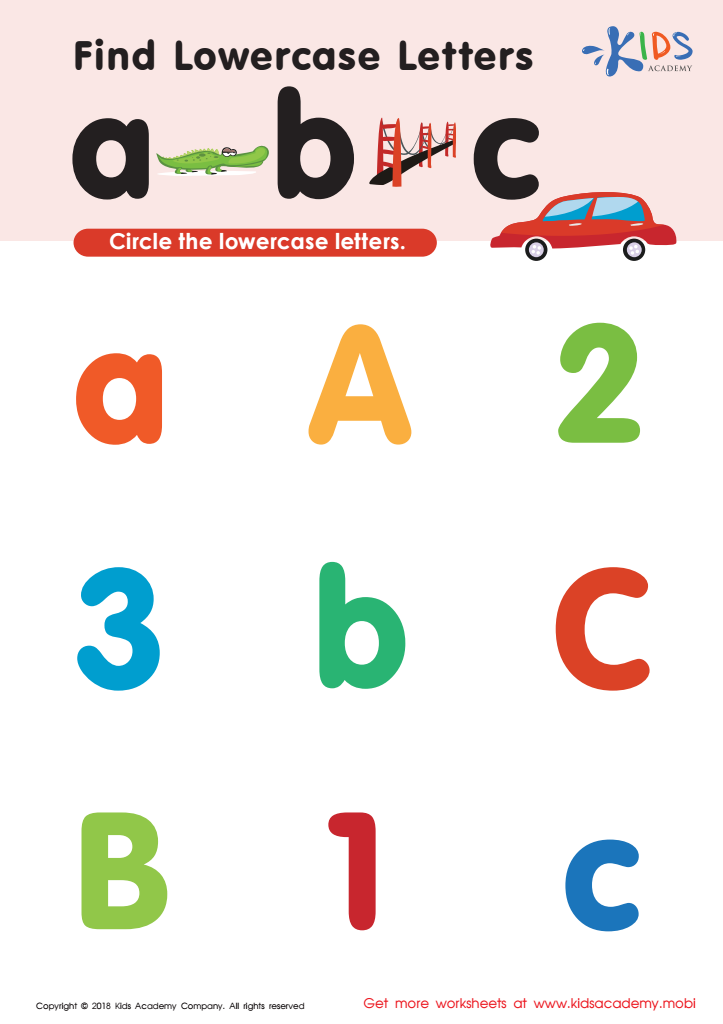
Find lowercase letters a b c Worksheet
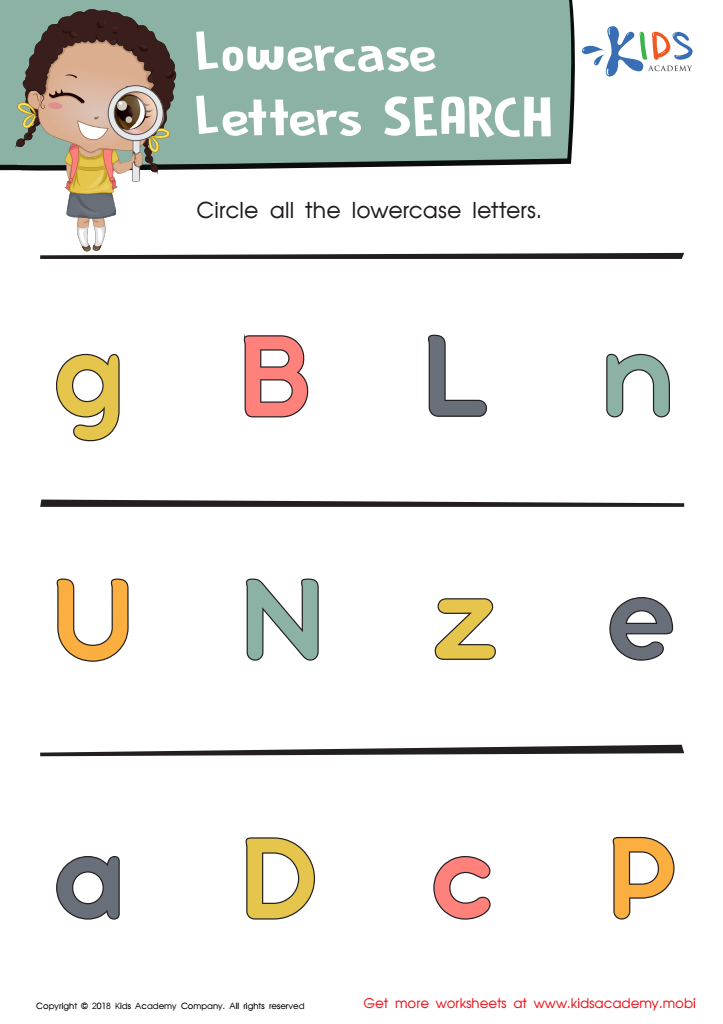
Lowercase Letters Search: Assessment Worksheet
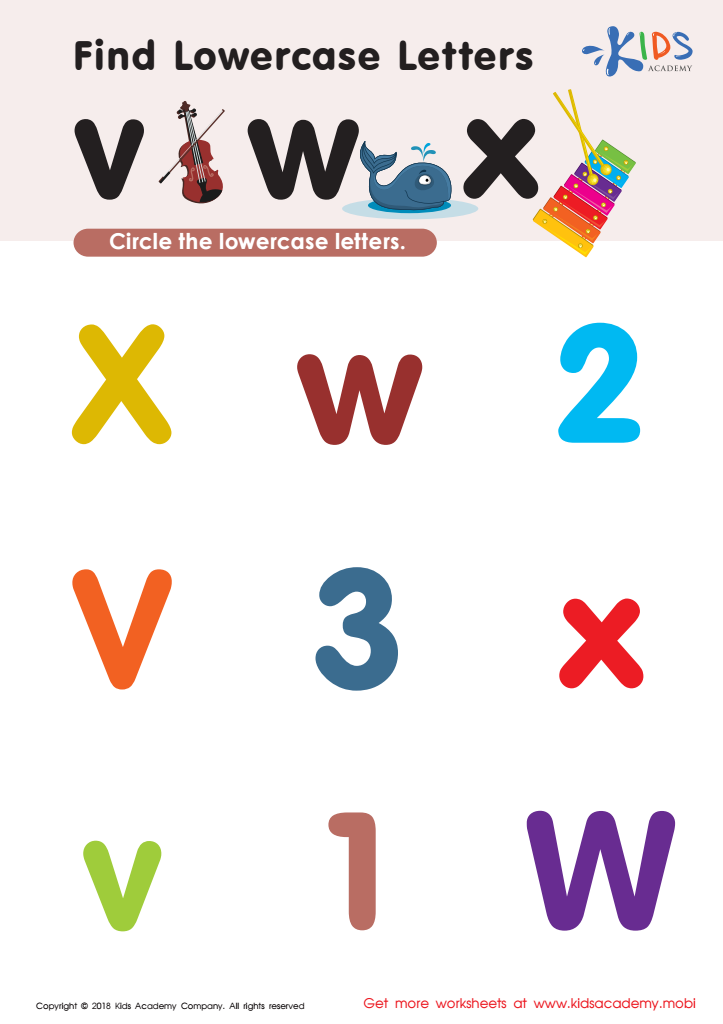
Find Lowercase Letters v w x Worksheet


Lowercase letter identification is crucial for children aged 6-8, as this stage typically involves developing foundational literacy skills. Understanding lowercase letters is essential for reading fluency and writing competence. Unlike uppercase letters, which are often used at the beginning of sentences or for proper nouns, lowercase letters dominate most of written English, making familiarity with them vital for comprehension.
As children begin to read, they encounter more lowercase letters in books and other texts. Without the ability to recognize these letters quickly, they may struggle with word identification, which can hinder overall reading development. Additionally, writing requires children to know how to form lowercase letters correctly, impacting their handwriting skills and expression.
For educators and parents, helping children identify and master lowercase letters fosters confidence and encourages a love for reading and writing. Simple activities like letter tracing, games, and interactive reading can effectively reinforce these skills. By prioritizing lowercase letter proficiency, adults can support children in achieving literacy milestones, paving the way for academic success and lifelong learning. Thus, engaging in activities that promote lowercase letter recognition at this age is an investment in children’s educational journeys.