
Sight word recognition Phonics Worksheets for Ages 6-8
5 filtered results
Difficulty Level
Grade
Age
-
From - To
Subject
Activity
Standards
Discover our engaging Sight Word Recognition Phonics Worksheets tailored specifically for children ages 6-8! These expertly designed, interactive worksheets enhance early literacy skills by reinforcing sight word recognition, helping young learners build a solid foundation for reading success. With fun exercises that include tracing, matching, and filling in gaps, children will enjoy practicing high-frequency sight words in a playful way. Our resources are suitable for both classroom settings and home learning, making reading an enjoyable journey. Empower your child to read with confidence—explore our collection today and watch their literacy skills flourish!
Favorites
With answer key
Interactive
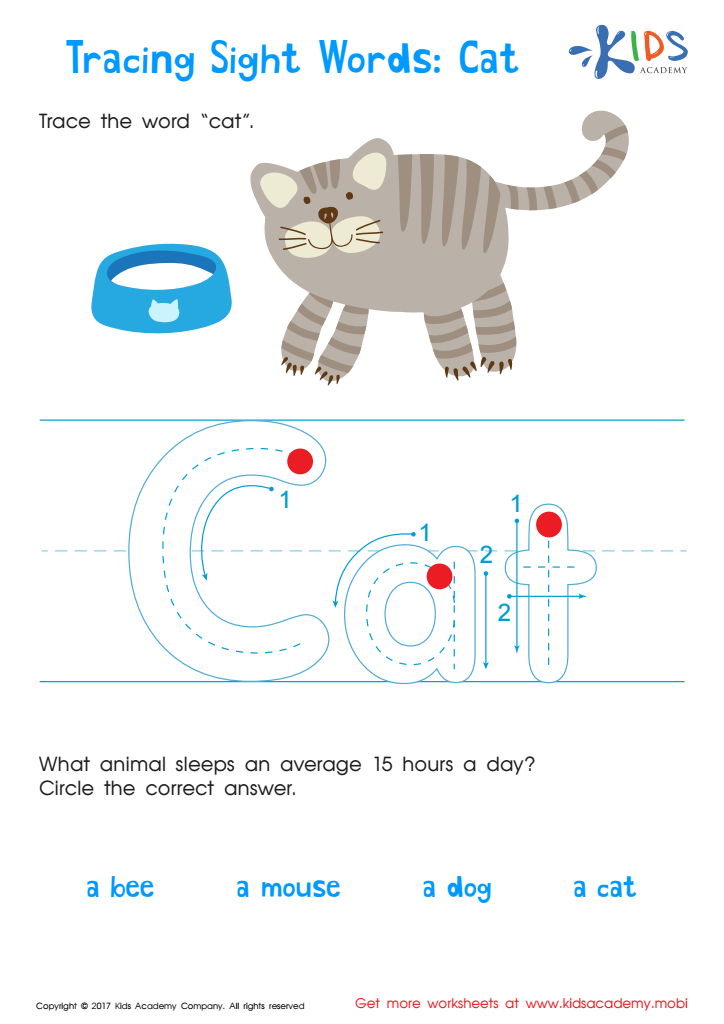
Cat Printable Sight Words Worksheet
Encourage your child's literacy with this fun sight words worksheet: cat PDF! It helps build a solid foundation for reading, featuring activities such as reading and tracing the word cat, and finding it amongst other sight words. With its cute cat, Kids Academy makes learning to read a delight!
Cat Printable Sight Words Worksheet
Worksheet
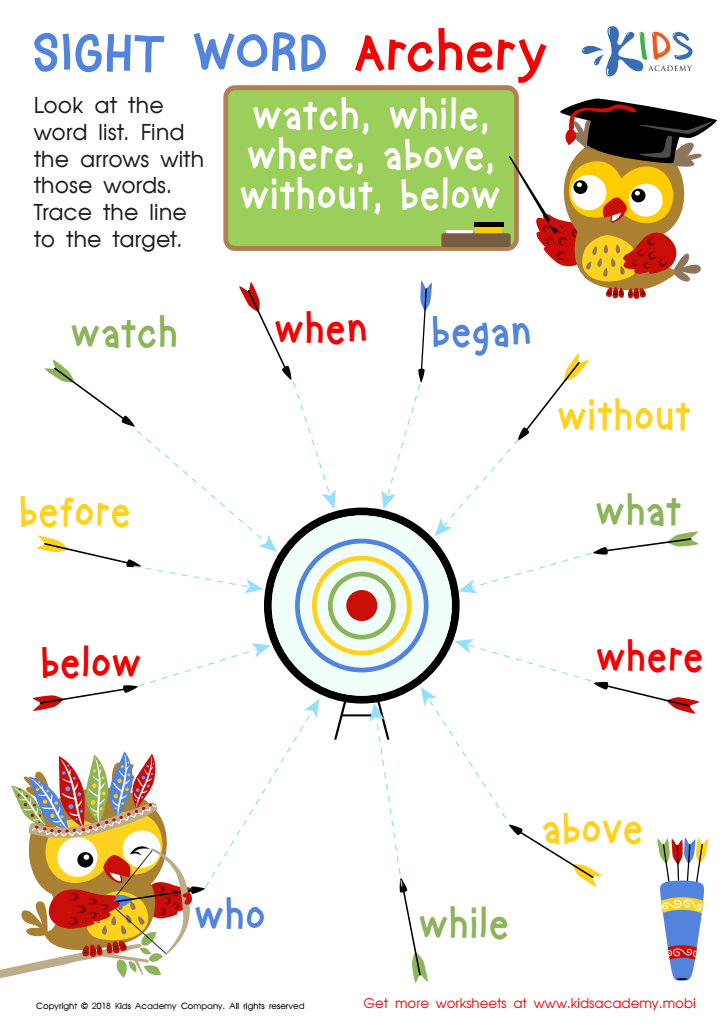
Sight Word Archery Worksheet
Read the words list with your kids, pointing at each one. Ask them to do the same. Help them find the arrows with those words and trace the line to the target in the centre.
Sight Word Archery Worksheet
Worksheet
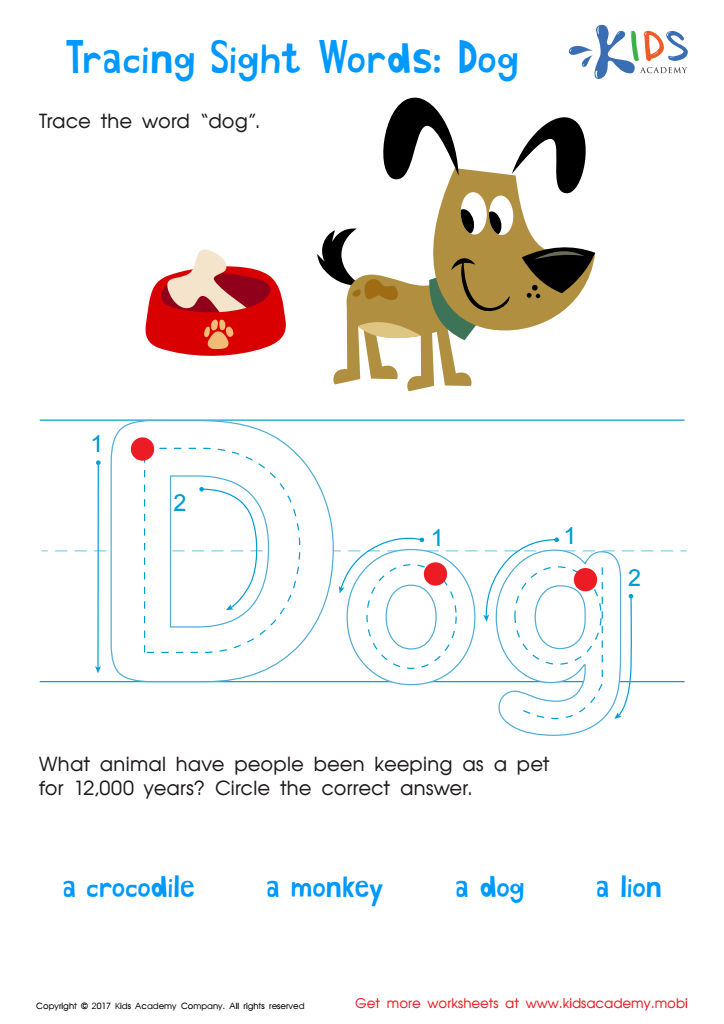
Dog Worksheet Sight Words Worksheet
Get your kids excited to read with our dog-themed sight words worksheet!
Excite your child to read with our sight words worksheet: dog edition! Featuring a lovable dog character to put a smile on any kid's face, this worksheet helps kids practice reading and writing the word "dog". Build a library of words they can read quickly and promote increasing literacy skills with early fluency! Get them ready for reading with our dog-themed sight words worksheet!
Dog Worksheet Sight Words Worksheet
Worksheet
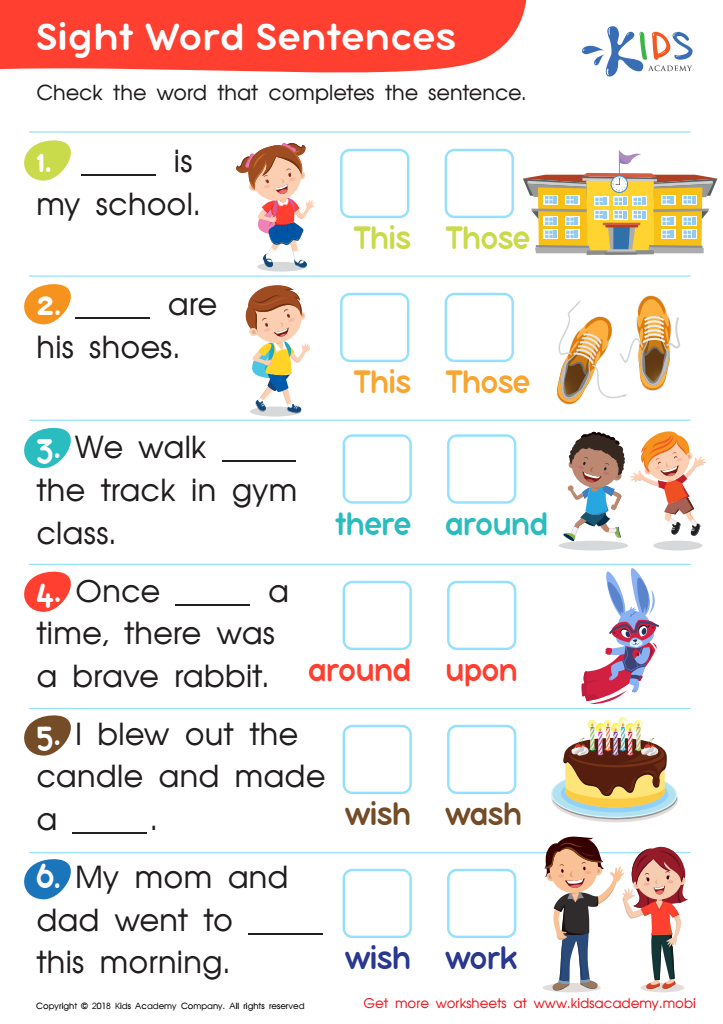
Sight Word Sentences Worksheet
Improve reading fluency! Have students fill in the blank with the correct sight word to complete sentences. Sight words are often tricky to decode - they don't follow phonics or spelling rules. To read smoothly, young learners must know them by memory. Use this printable and help kids master their sight words!
Sight Word Sentences Worksheet
Worksheet
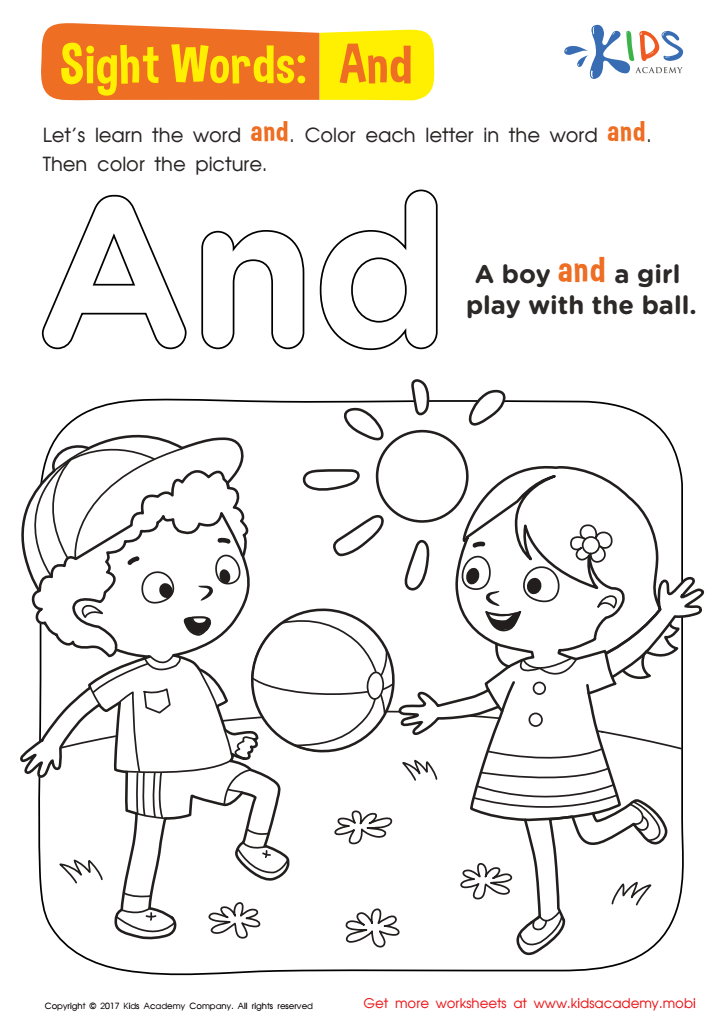
And Worksheet Sight Words Worksheet
Help your child get a jumpstart on reading with sight words! Print out this fun worksheet and get your child to read the sentence. Point out the word "and", then color the word and enjoy the rest of the scene! It's a great way to introduce sight words and get their early reading skills going!
Download (PDF)
 Assign to My Students
Assign to My Students
And Worksheet Sight Words Worksheet
Worksheet
Join Kids Academy for Free
Who is primarily going to use this learning content?








Sight word recognition and phonics are crucial components in early literacy development for children aged 6-8. At this stage, children are transitioning from learning basic sounds and letters to constructing and understanding sentences. Sight word recognition enables them to identify common words instantly, fostering reading fluency and comprehension. When children can quickly recognize a high-frequency word, they can concentrate on understanding the text rather than decoding each word individually.
Phonics, on the other hand, teaches children how letters represent sounds, helping them to decode unfamiliar words. This foundational skill empowers young readers to tackle new texts with confidence and competence. Together, sight word recognition and phonics create a comprehensive reading strategy that lays the groundwork for lifelong literacy.
Moreover, stronger reading skills contribute to better academic performance across subjects, as reading is fundamental in learning. Parents and teachers who prioritize these skills also cultivate a love for reading, encouraging exploration and critical thinking. By supporting sight word recognition and phonics, adults can help children build the necessary tools for successful communication, empowering them for future academic and personal endeavors. Overall, focusing on these essential literacy strategies enables children to engage with the world around them more effectively and enthusiastically.







