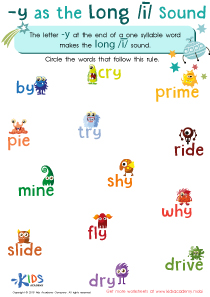
Spelling practice Silent Vowels Worksheets for Ages 6-8
3 filtered results
-
From - To
Enhance spelling proficiency with our "Silent Vowels Worksheets for Ages 6-8." Perfect for young learners, these engaging and educational worksheets help children master silent vowels in words. Each worksheet is designed to reinforce spelling rules, improve phonemic awareness, and build confidence in writing. Through fun and interactive exercises, kids will learn to identify and use silent vowels correctly, enhancing their literacy skills. Ideal for classroom use or at-home practice, our printable worksheets provide a solid foundation in spelling for early grade students. Spark a love for learning and boost academic success with these essential tools!
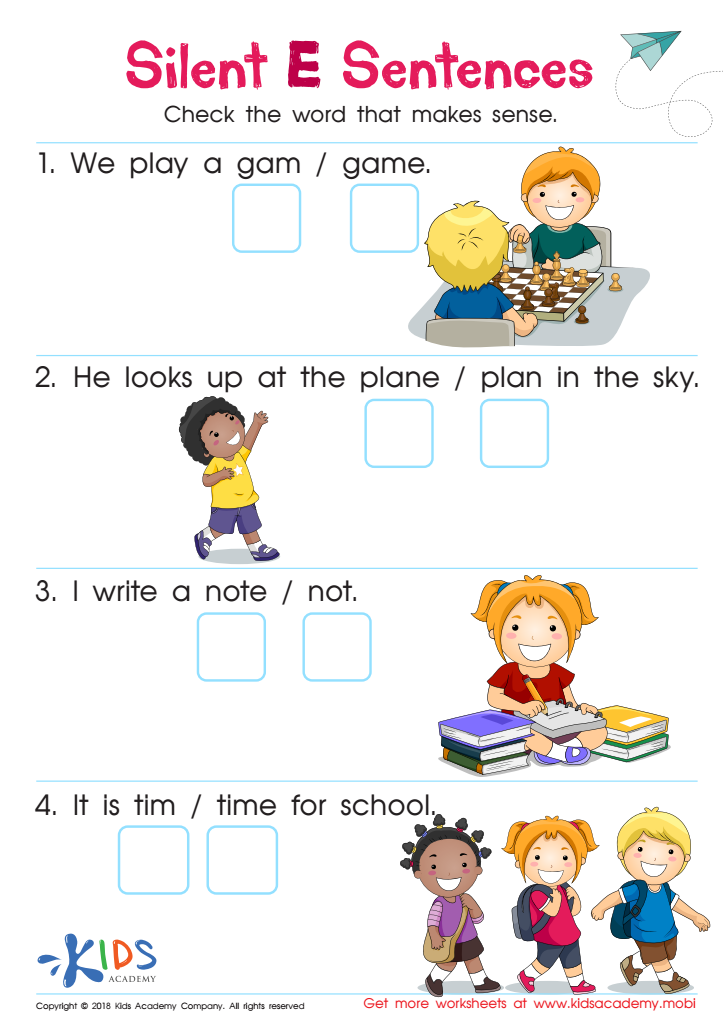
Silent E Sentences Worksheet
 Assign to My Students
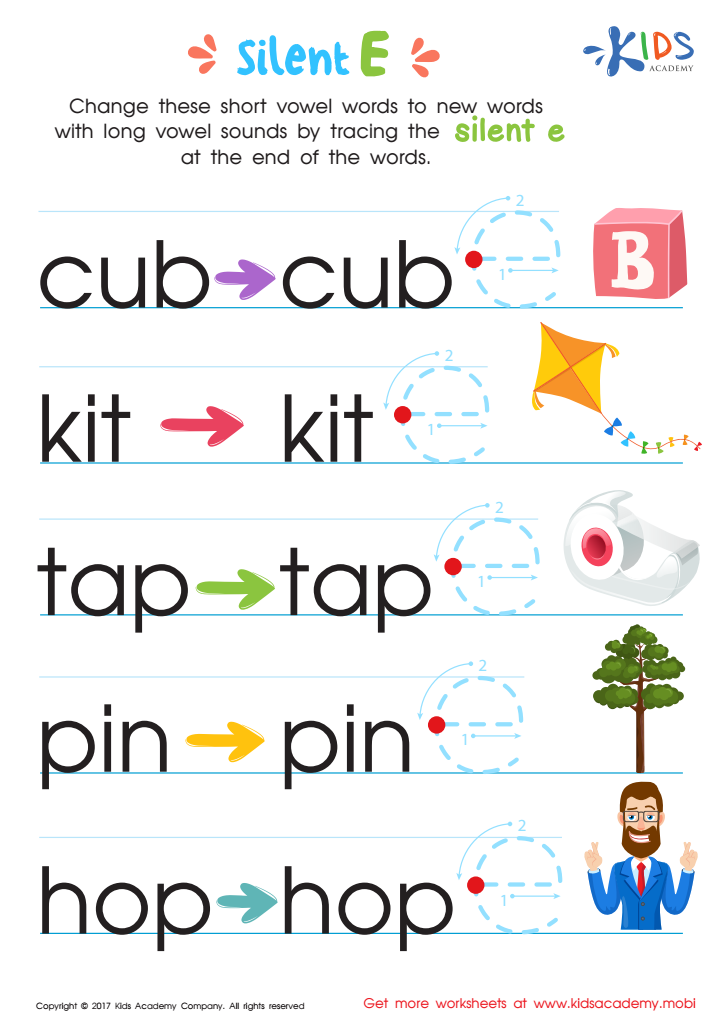
Silent E Words Worksheet
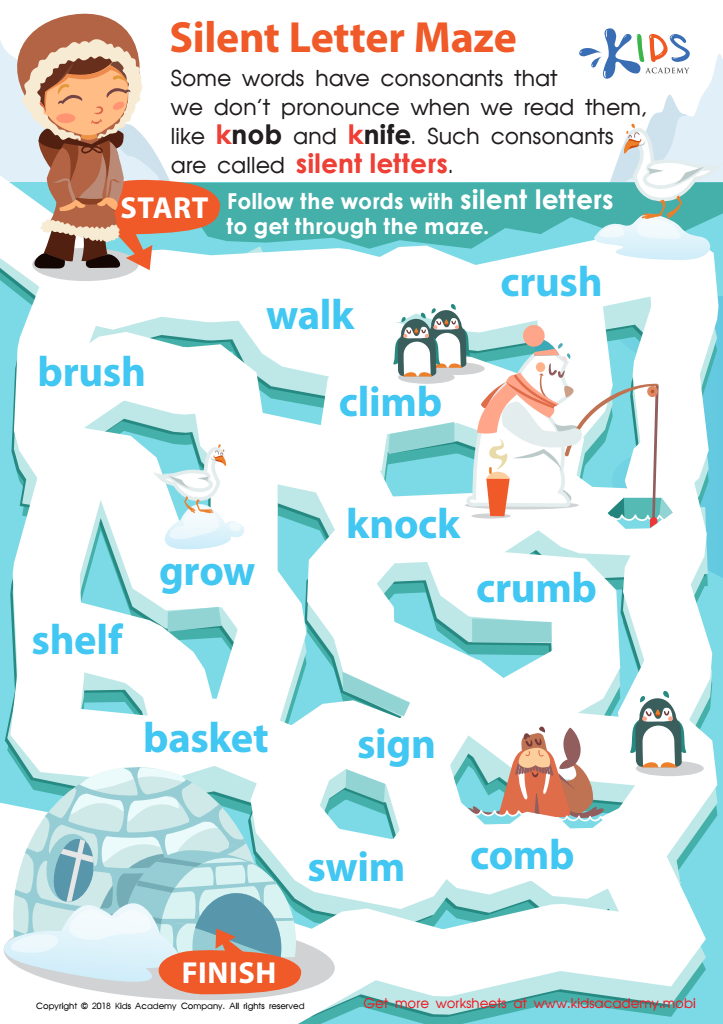
Silent Letter Maze Worksheet


Spelling practice focusing on silent vowels is crucial for children aged 6-8, as it directly impacts their foundational literacy skills. At this developmental stage, young learners are transitioning from basic word recognition to more complex reading and writing tasks. Silent vowels – letters that appear in words but aren't pronounced – can be particularly challenging. Words like "knee," "sign," or "island" demonstrate these tricky aspects of English spelling.
If children don't receive targeted practice, they may struggle with reading fluency and spelling accuracy. Misunderstanding silent vowels can lead to incorrect pronunciations and hinder comprehension, affecting overall academic performance and confidence. By incorporating fun and engaging exercises, parents or teachers can demystify these puzzling elements. This practice also supports phonemic awareness, emphasizing the relationship between sounds and letters, which is a key component of reading proficiency.
Moreover, mastering silent vowels improves written communication skills. Accurate spelling helps children convey their thoughts clearly, avoiding misunderstandings and promoting better self-expression. Regular practice establishes strong language habits that benefit lifelong learning. Ultimately, attention to silent vowels enhances literacy development, setting children on a path to academic success and effective communication.