Fine motor skills development Tracing Letters Worksheets for Ages 6-8
3 filtered results
-
From - To
Enhance your child's fine motor skills with our Tracing Letters Worksheets designed for ages 6-8. These engaging printable resources combine fun and education, allowing young learners to practice letter formation while improving hand-eye coordination and dexterity. Each worksheet features vibrant illustrations and a variety of tracing activities that capture your child's attention and encourage independent learning. As children trace letters, they strengthen their grip and pencil control, laying a strong foundation for future writing skills. Ideal for at-home practice or classroom use, these worksheets are a delightful way to empower your child's learning journey through hands-on activities. Explore our collection today!
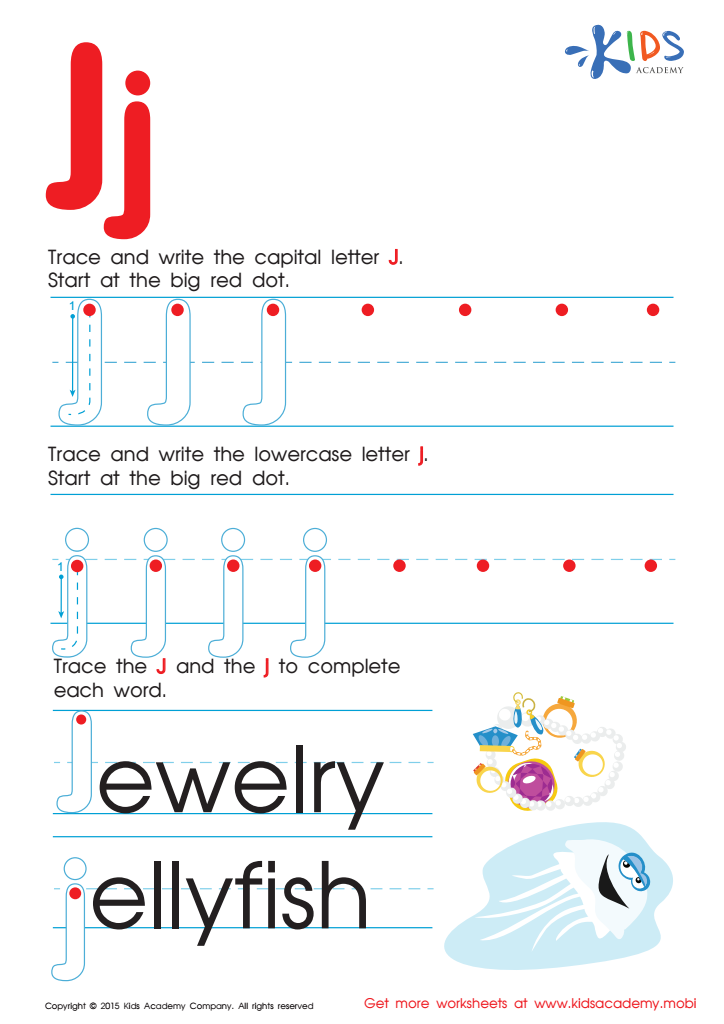
Letter J Tracing Page
 Assign to My Students
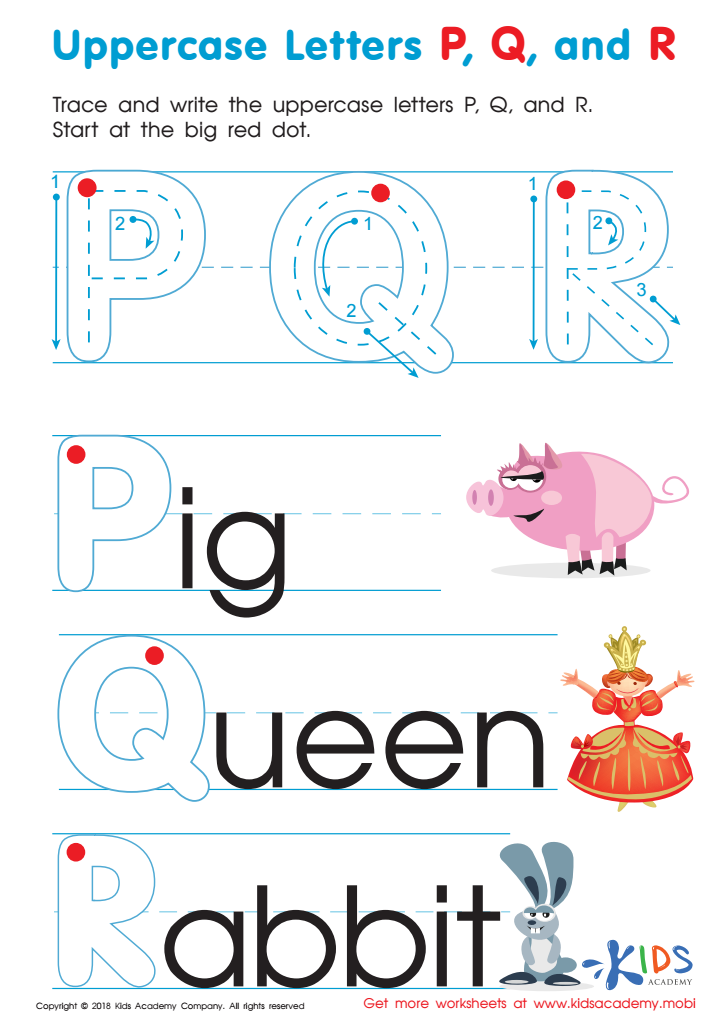
Uppercase Letters P, Q, and R Worksheet
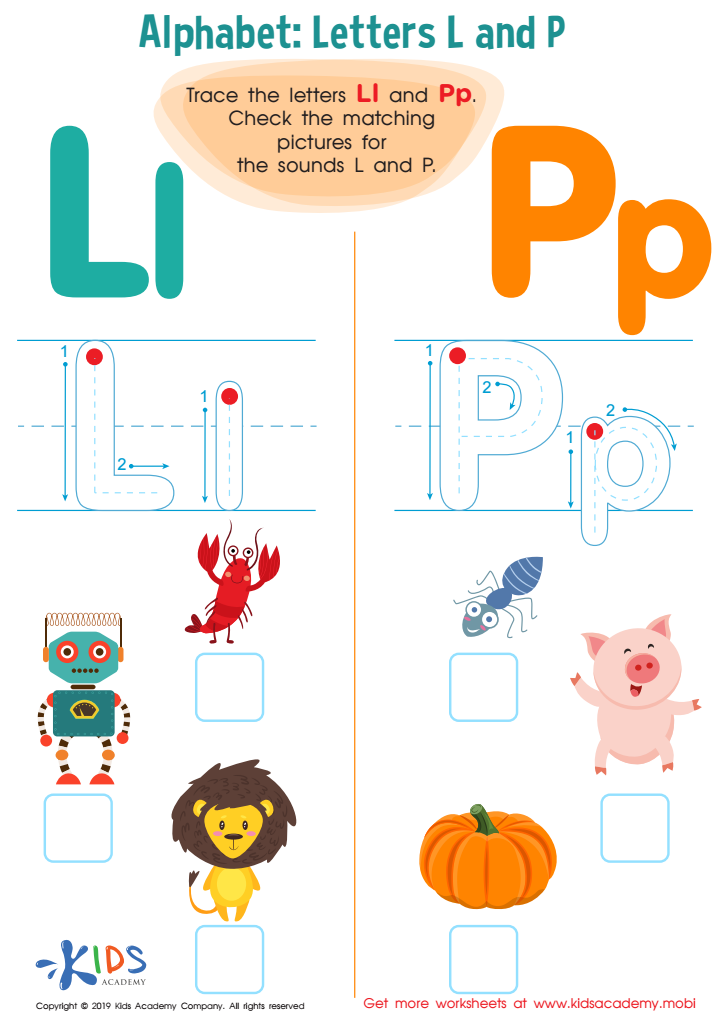
Letter L and P Tracing Worksheet








Fine motor skills are crucial for children's overall development, particularly in the ages of 6-8, when they are engaged in various activities requiring hand-eye coordination and dexterity. Tracing letters is an essential exercise in developing these skills, as it helps children gain control over their hand movements, which is vital for writing.
When parents and teachers encourage kids to trace letters, they’re not only helping them learn letter shapes but also enhancing their grip and finger strength. This foundational skill supports effective writing and aids tasks like tying shoelaces, using scissors, and manipulating small objects, all of which contribute to a child's independence.
Moreover, mastering fine motor skills can boost a child's self-confidence. As they improve their ability to control a pencil, they feel more capable in their educational activities. Tracing letters also provides a structured way for children to practice literacy in a fun, engaging manner, making learning more enjoyable.
Additionally, these skills are intertwined with cognitive development, as children process shapes and patterns while staying focused on the task. Therefore, nurturing fine motor skills through activities like tracing letters is essential for overall cognitive, physical, and emotional growth, making it a priority for both parents and educators.








