Alphabet familiarity Upper & Lowercase Letters Worksheets for Ages 6-8
7 filtered results
-
From - To
Enhance your child’s literacy skills with our engaging Alphabet Familiarity worksheets designed for ages 6-8! Our printable resources focus on both upper and lowercase letters, making learning fun and interactive. Children will explore the alphabet through captivating activities that encourage letter recognition, matching, and writing practice. These worksheets are perfect for reinforcing essential skills, ensuring your child becomes confident in identifying and using letters. With colorful illustrations and varied exercises, students will naturally develop a strong foundation in reading and writing. Give your child a head start in their educational journey with our thoughtfully crafted alphabet worksheets!
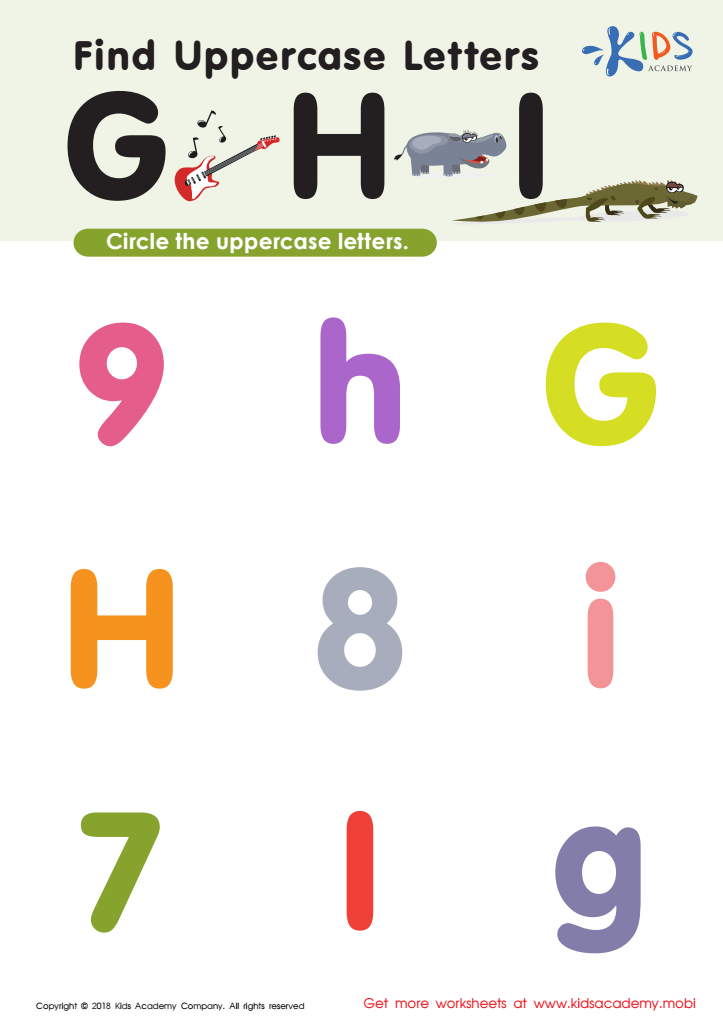
Find Uppercase Letters G, H, and I Worksheet
 Assign to My Students





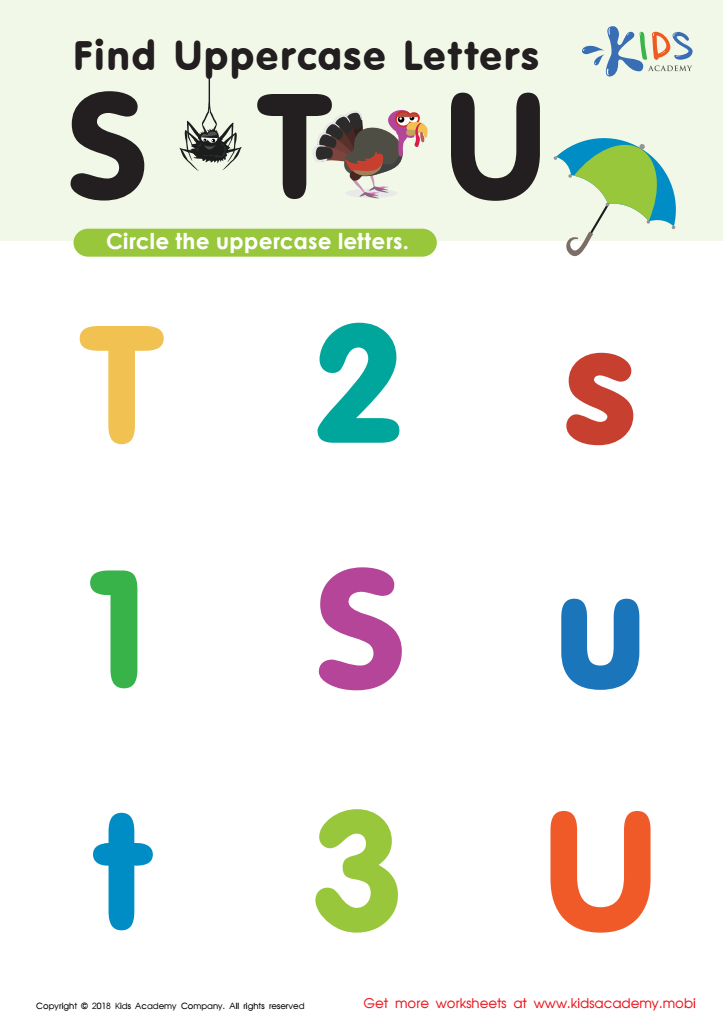
Find Uppercase Letters Worksheet
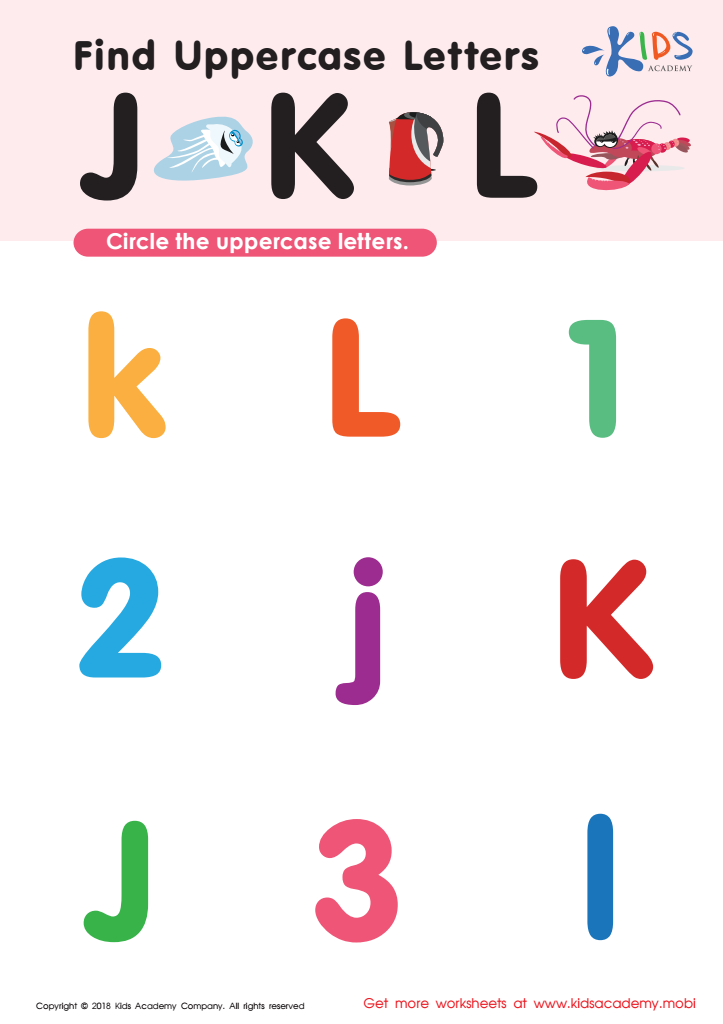
Find Uppercase Letters J, K, and L Worksheet
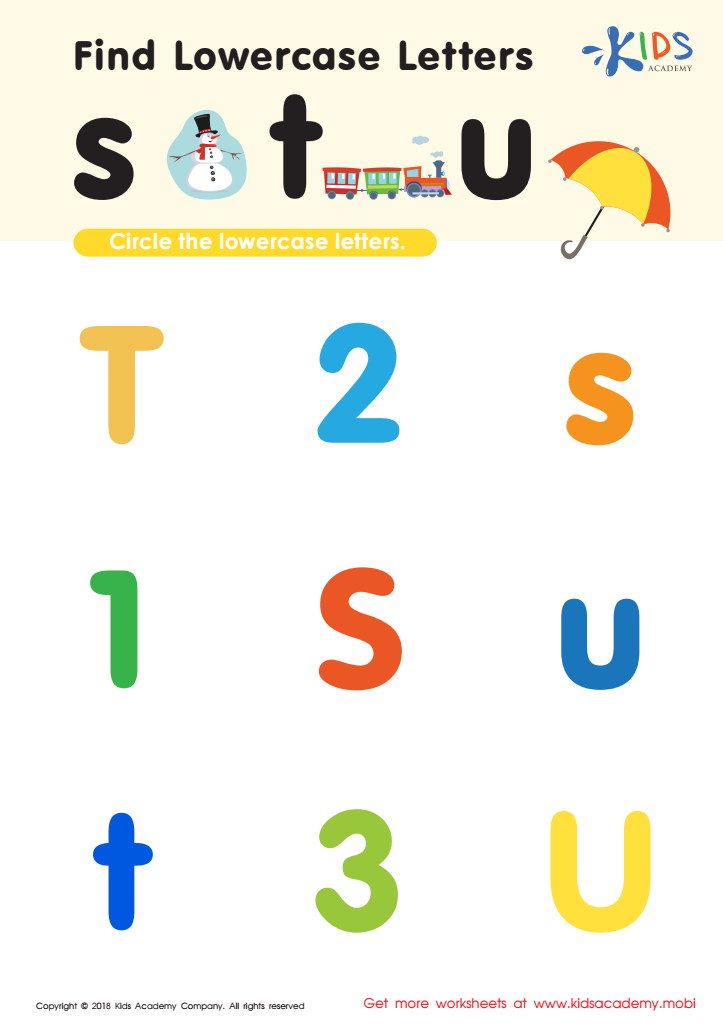
Find lowercase Letters s t u Worksheet
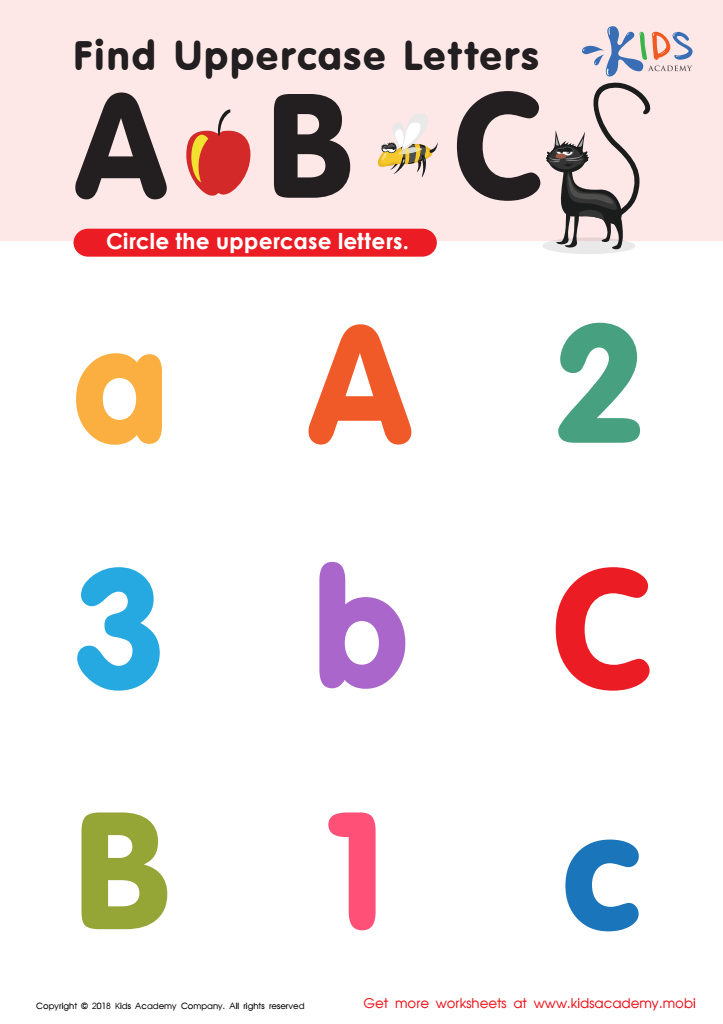
Find Uppercase Letters A, B, and C Worksheet
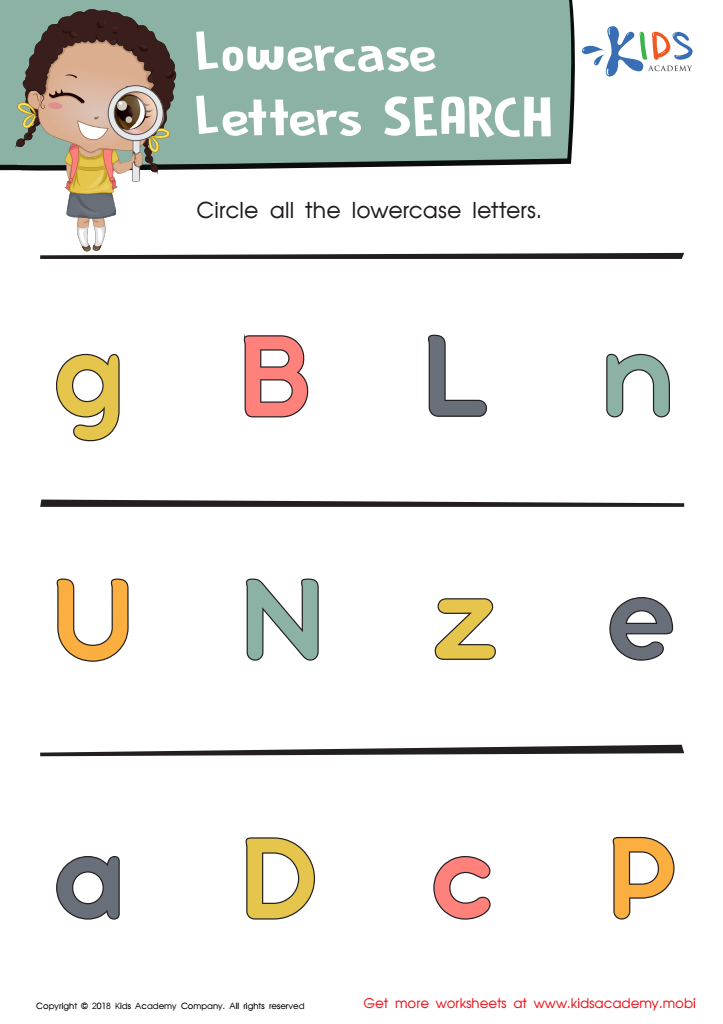
Lowercase Letters Search: Assessment Worksheet
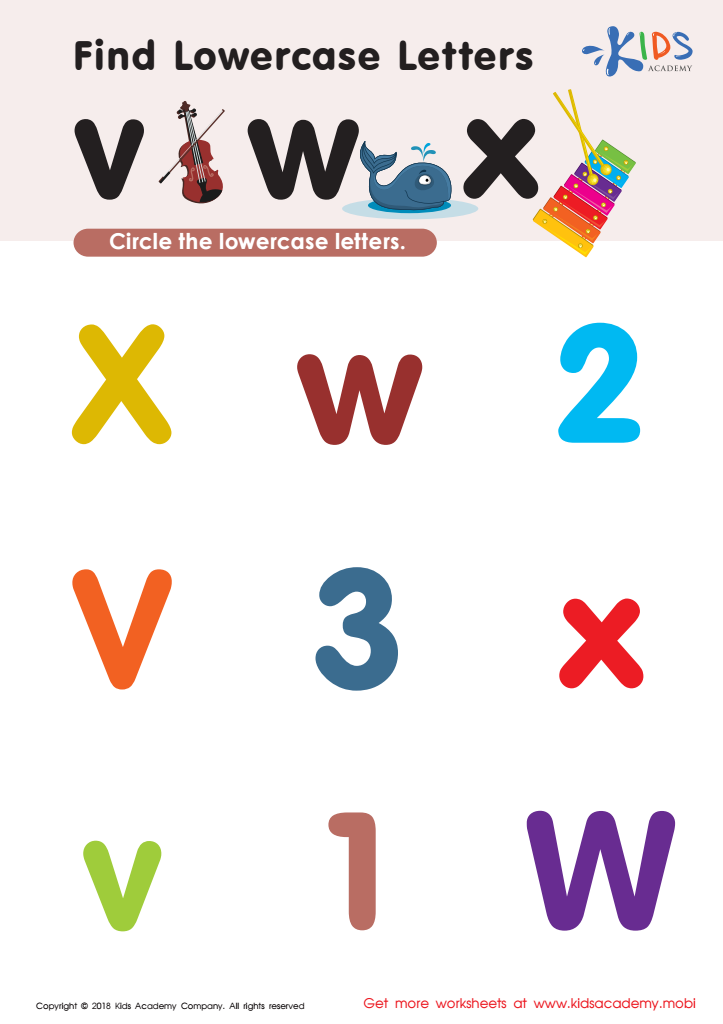
Find Lowercase Letters v w x Worksheet






Alphabet familiarity, particularly with upper and lowercase letters, is crucial for children ages 6-8 as it lays the foundation for reading and writing skills. At this stage, children are moving from learning to read to reading to learn. Recognizing both uppercase and lowercase letters helps them decode words more effectively, enhancing their reading fluency.
Moreover, understanding the distinction between upper and lowercase letters is vital for proper sentence structure and overall literacy development. Most printed text combines both forms, so familiarity ensures children can navigate materials confidently. This knowledge also aids in their writing, enabling them to use the correct dimensions, enhancing their ability to communicate ideas clearly.
Additionally, letter recognition influences self-esteem; children who can confidently identify and use letters are more likely to participate in reading and writing activities, fostering a love of literacy. Parents and teachers play a pivotal role in this development by incorporating fun and engaging activities, such as games or flashcards, to reinforce letter knowledge.
By promoting alphabet familiarity, adults can empower children to become enthusiastic readers and writers, setting the stage for lifelong learning and academic success. Encouraging this skill in young learners makes a significant impact on their educational journey.







