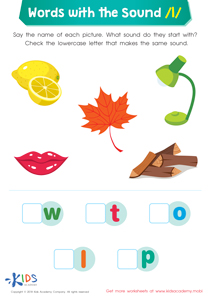
Alphabet Recognition Uppercase Letters Worksheets for Ages 6-8
10 filtered results
-
From - To
Boost your child's literacy with our "Alphabet Recognition Uppercase Letters Worksheets" designed for ages 6-8. These engaging worksheets provide a fun and interactive way for young learners to master uppercase letter recognition. Varied activities, including matching, tracing, and coloring, enhance learning by engaging multiple senses. Our expertly crafted worksheets aim to build confidence and establish a strong foundation in reading. Ideal for both classroom use and home practice, these resources support educators and parents in making learning enjoyable and effective. Empower your students’ early literacy journey today with these invaluable alphabet recognition tools.
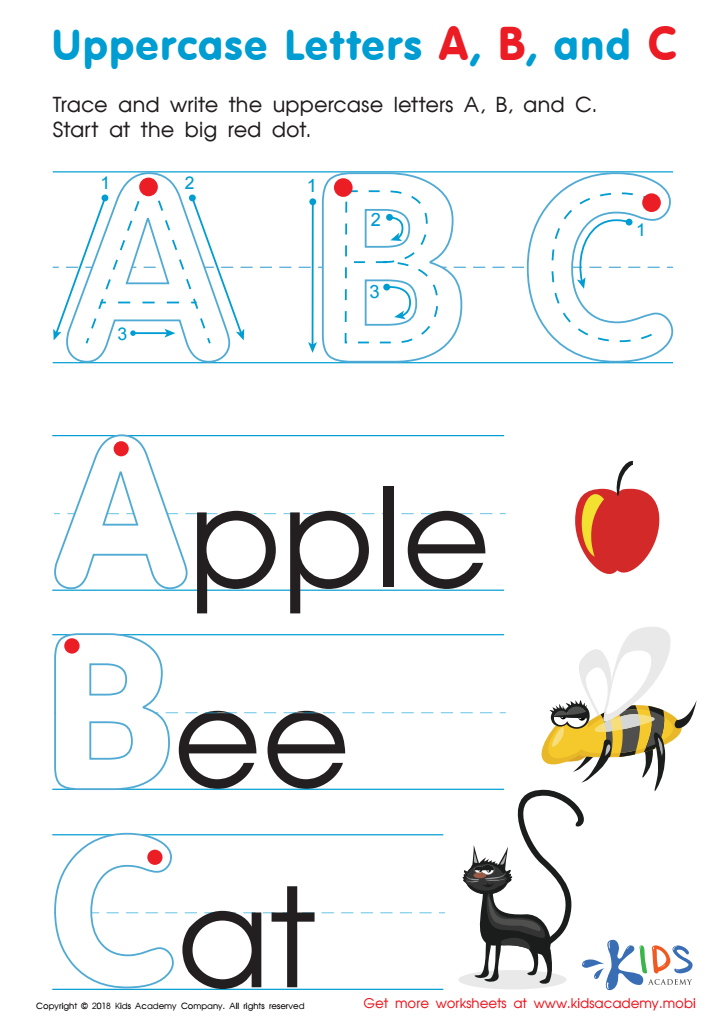
Uppercase Letters A, B, and C Worksheet
 Assign to My Students
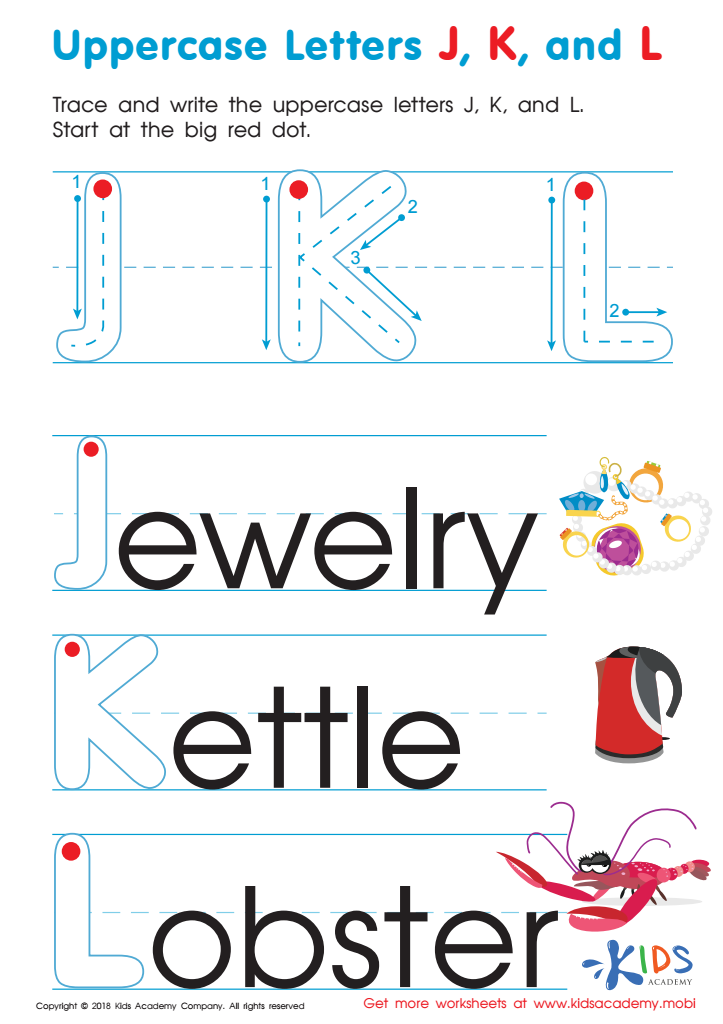
Uppercase Letters J, K, and L Worksheet
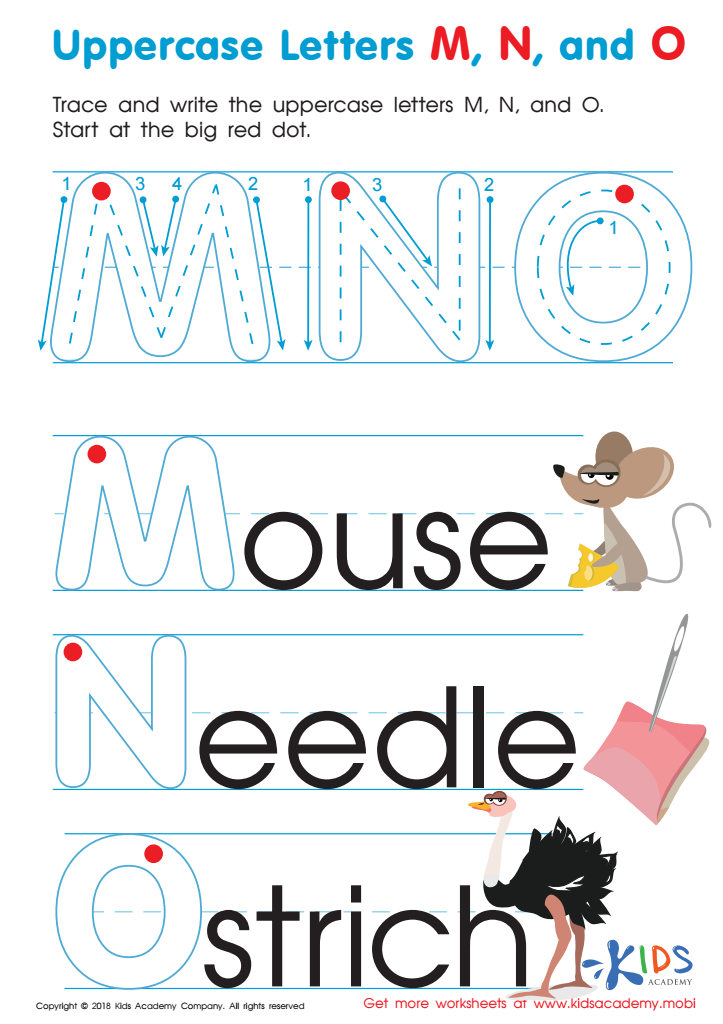
Uppercase Letters M, N, and O Worksheet
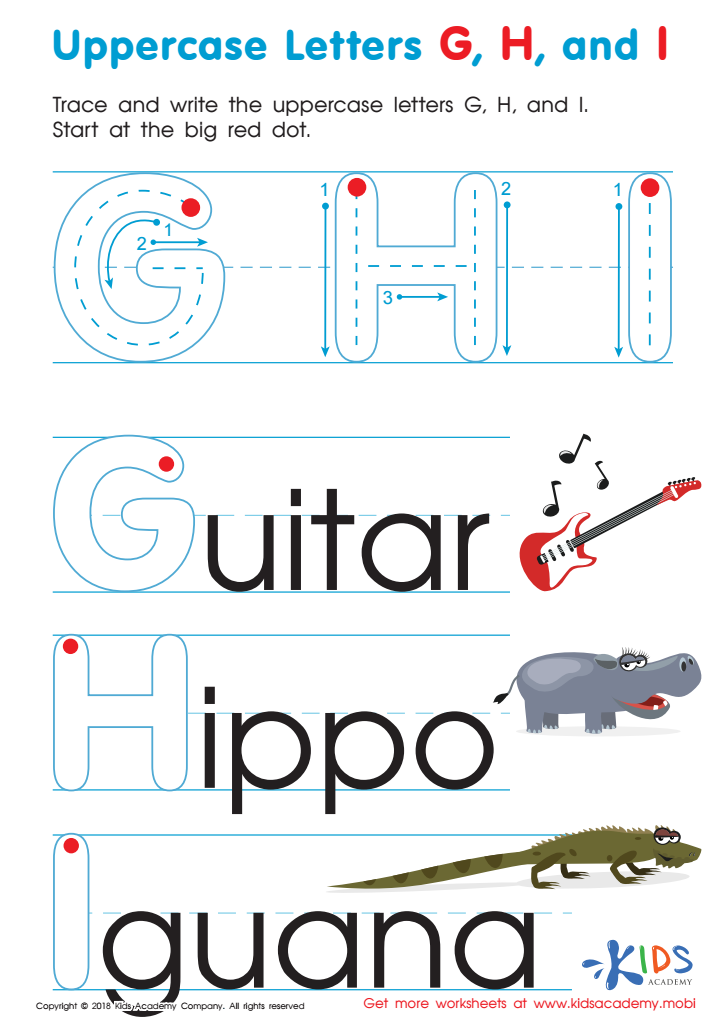
Uppercase Letters G, H, and I Worksheet
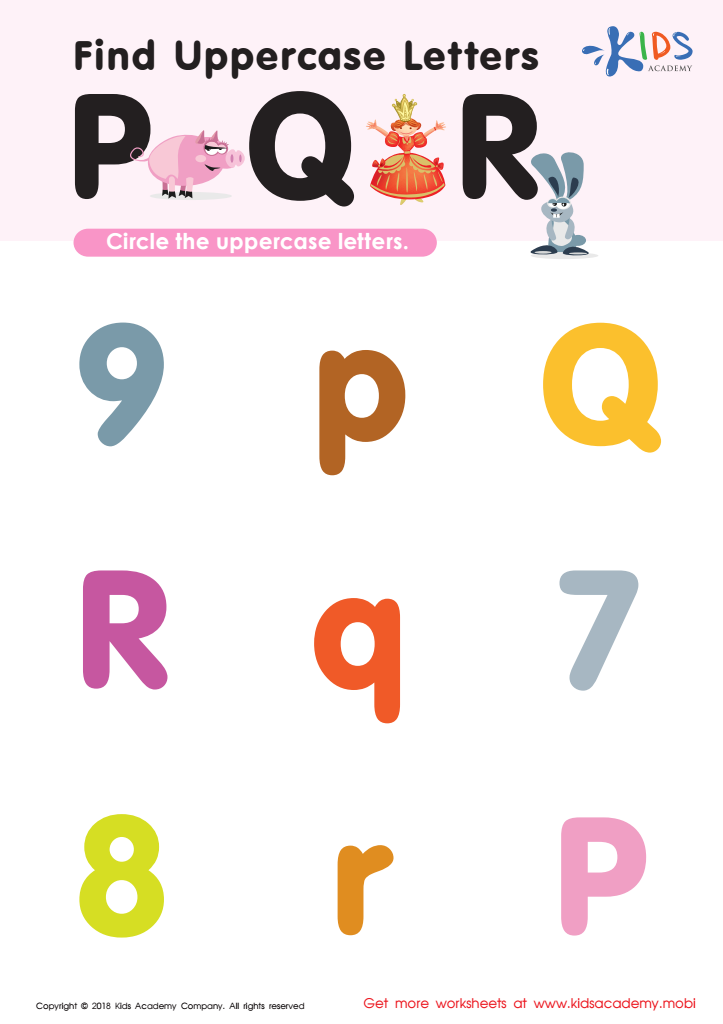
Find Uppercase Letters P, Q, and R Worksheet
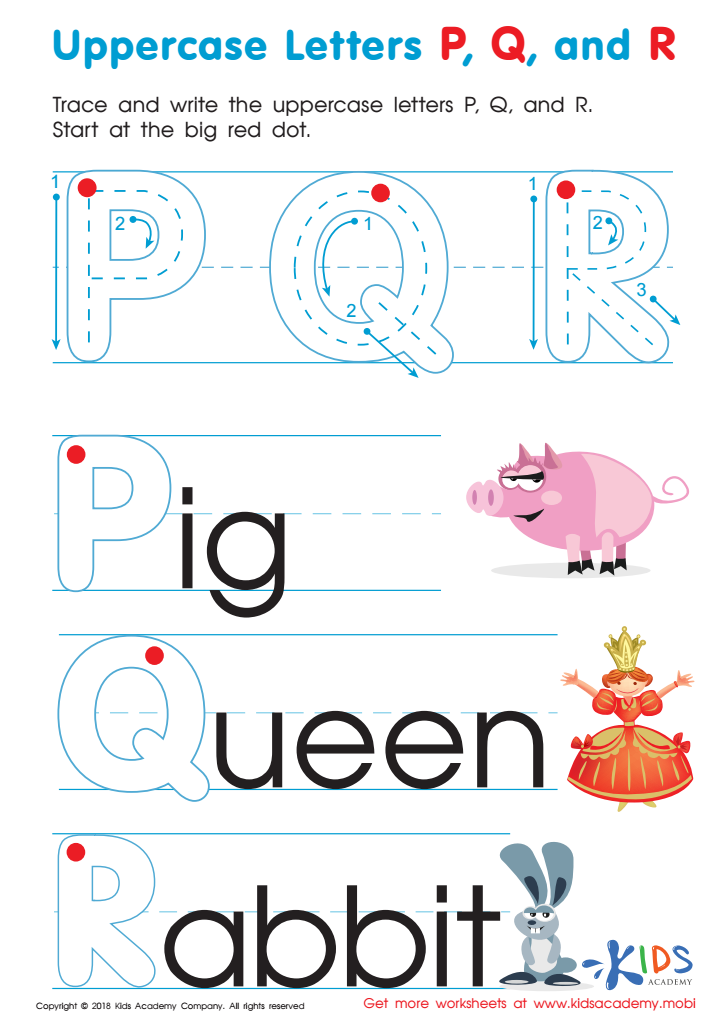
Uppercase Letters P, Q, and R Worksheet
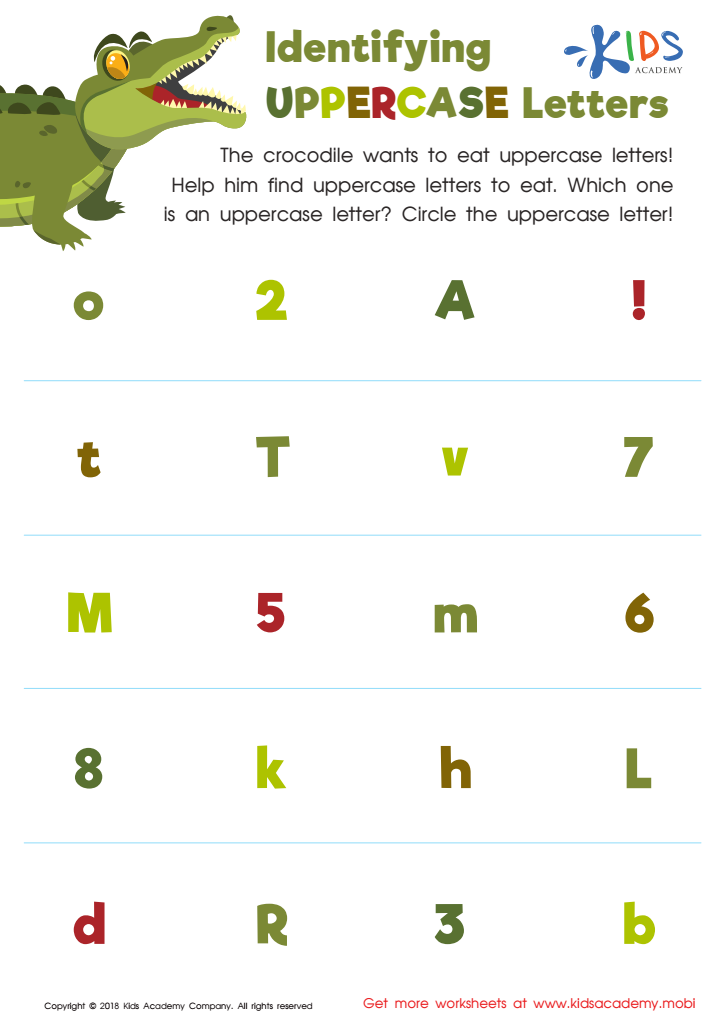
Identifying Uppercase Letters Worksheet
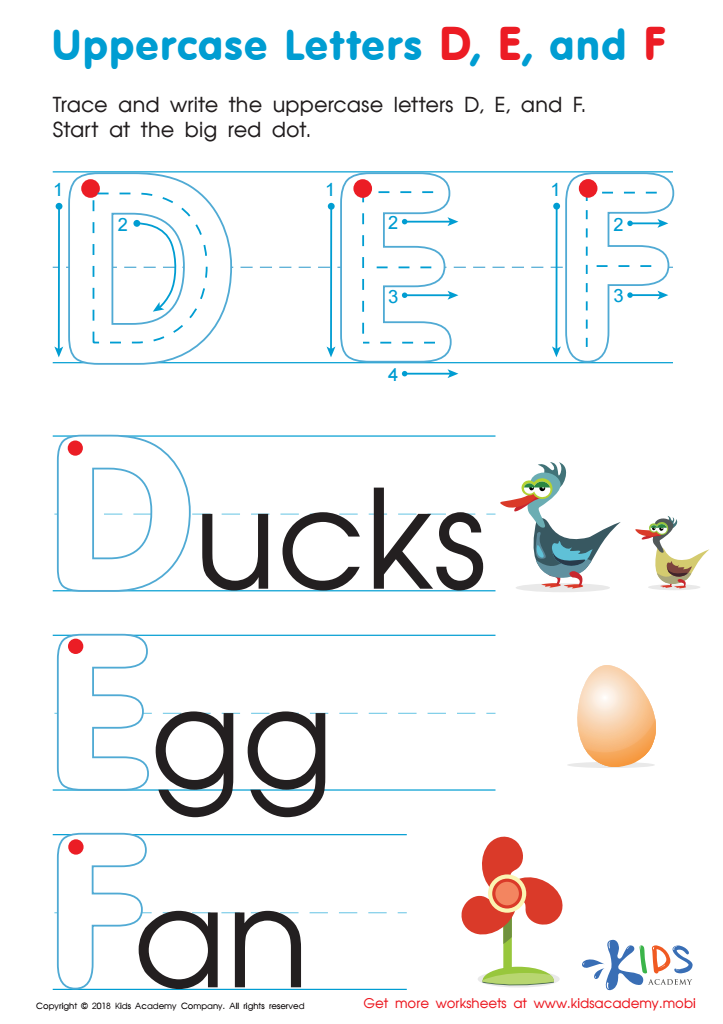
Uppercase Letters D, E, and F Worksheet

Uppercase Letters Y Z Worksheet
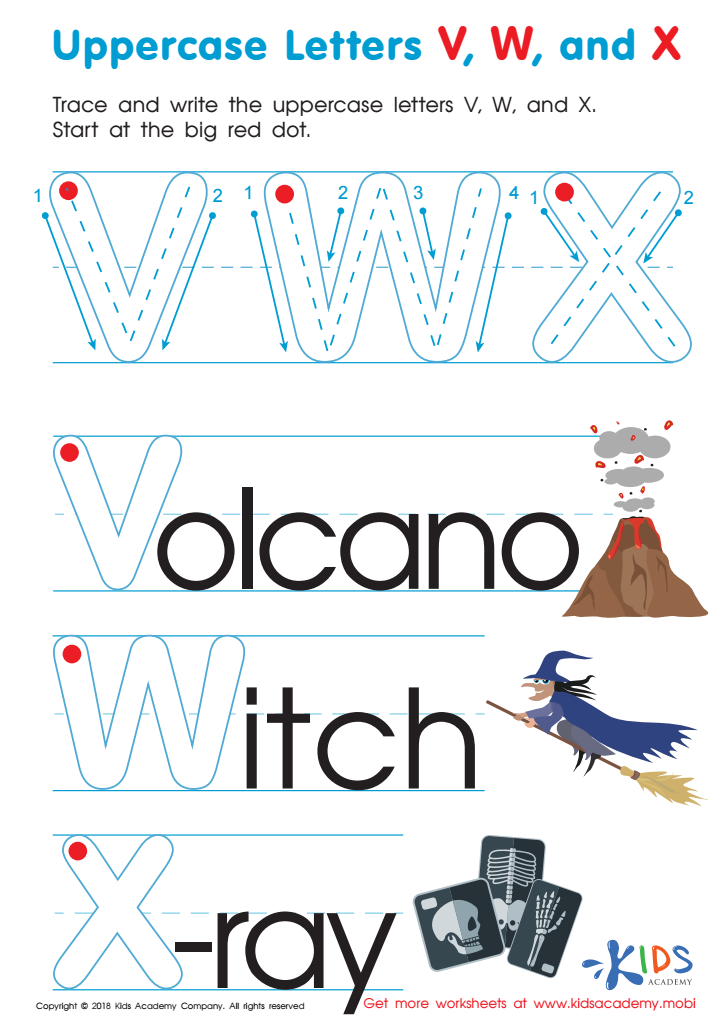
Uppercase Letters V, W, and X Worksheet








Alphabet recognition, particularly of uppercase letters, is fundamental for young learners aged 6-8. It lays the groundwork for reading and writing skills, crucial components of overall academic success and lifelong learning. When children can easily identify and name uppercase letters, they build a solid foundation for phonics, which involves the relationship between letters and sounds. This skill is essential for decoding words while reading and for encoding sounds into letters while writing.
Uppercase letters are often the first form teachers introduce because they are more uniform in shape and easier to distinguish than lowercase letters, which tend to have variations (e.g., 'b' and 'd'). Proficiency in recognizing uppercase letters thereby fosters confidence in children as they tackle more complex tasks such as word recognition and sentence formation. It also aids in visual discrimination and cognitive development, enhancing memory, concentration, and analytical abilities.
Moreover, children who master uppercase letter recognition can more easily grasp alphabetical order, which is pivotal for dictionary use, organizational skills, and various classroom activities. Given that learning is reciprocal, parents’ or teachers’ support in this area through engaging activities and positive reinforcement can make a significant difference, helping young children achieve early literacy milestones and setting the stage for future academic achievements.