Vocabulary enhancement Vowel Diphthongs Worksheets for Ages 6-8
5 filtered results
Difficulty Level
Grade
Age
-
From - To
Subject
Activity
Standards
Discover the "Vocabulary Enhancement Vowel Diphthongs Worksheets" designed specifically for children aged 6-8. Our engaging and interactive worksheets help young learners explore the dynamic sounds of vowel diphthongs, boosting their vocabulary and phonemic awareness. Through fun activities, such as matching games and fill-in-the-blanks, kids will develop their linguistic skills while enhancing their reading and writing abilities. These resources encourage independent learning and provide a solid foundation for future literacy success. Perfect for teachers and parents seeking to enrich their child's educational experience, these worksheets make mastering vowel diphthongs both enjoyable and rewarding! Start building vocabulary confidence today!
Favorites
With answer key
Interactive
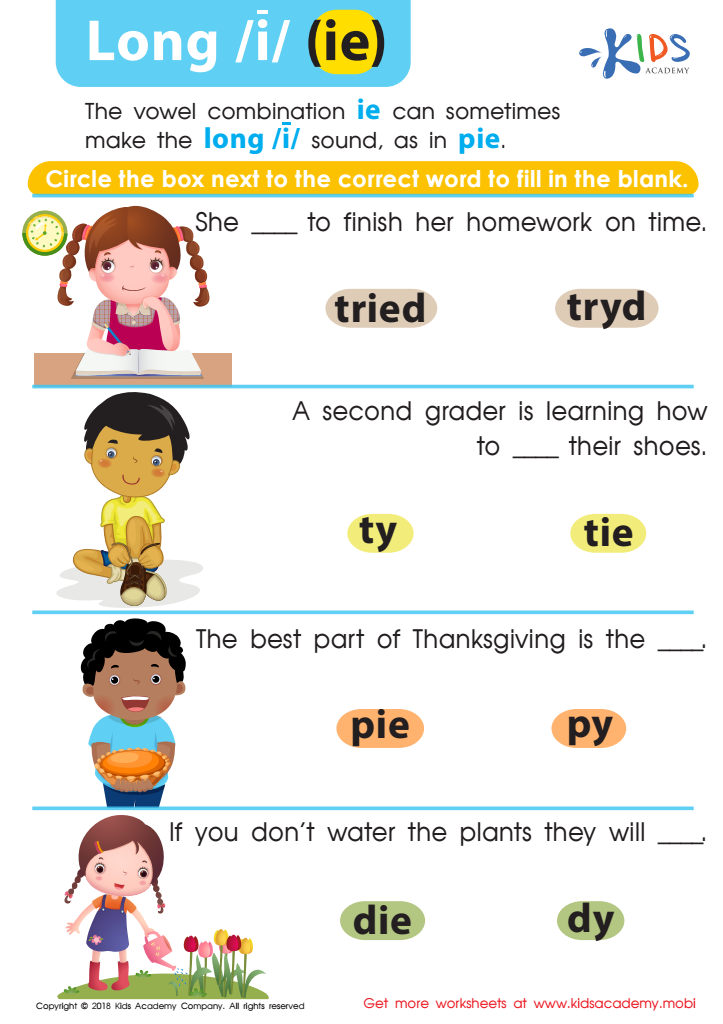
Reading: Long I and IE Worksheet
Have your child list words with the long /i/ sound (eg. 'pie'), and if needed, help them out with some examples. Read each word in the worksheet together and check their answer by having them circle the correct word.
 Assign to My Students
Reading: Long I and IE Worksheet
Worksheet
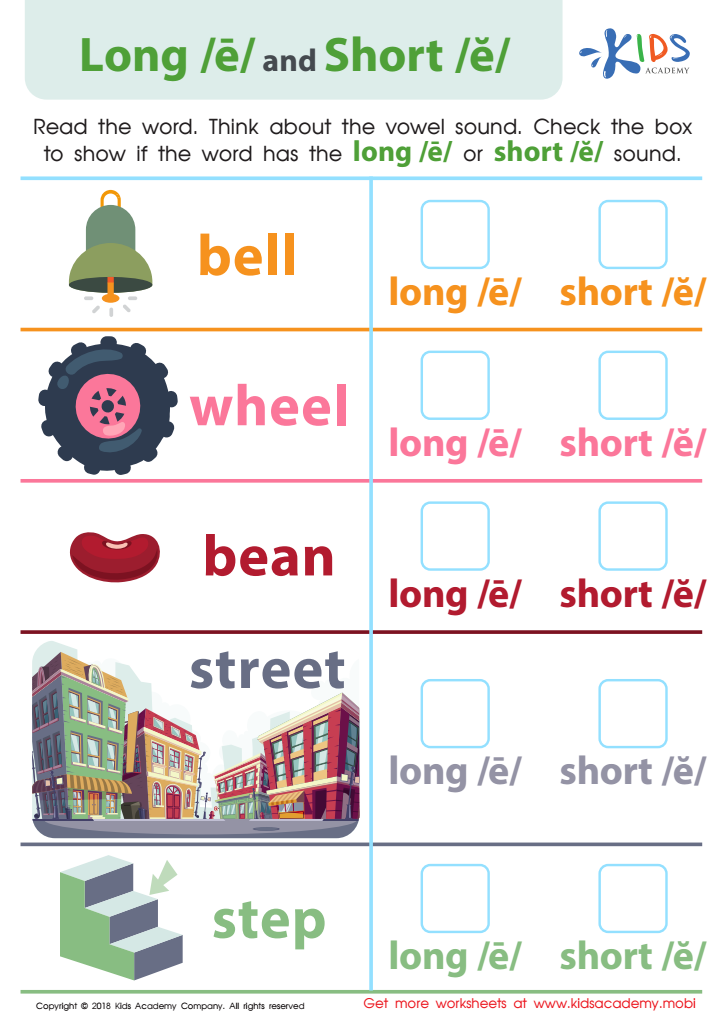
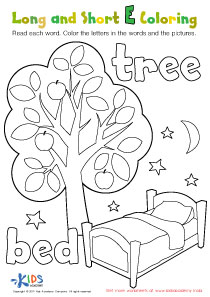
Reading: Long E and Short E Worksheet
Provide your students with valuable practice in distinguishing long and short E sounds with this worksheet. They'll look at pictures and read the words, then decide which sound is being used. It's an effective tool to help them master a difficult concept.
Reading: Long E and Short E Worksheet
Worksheet
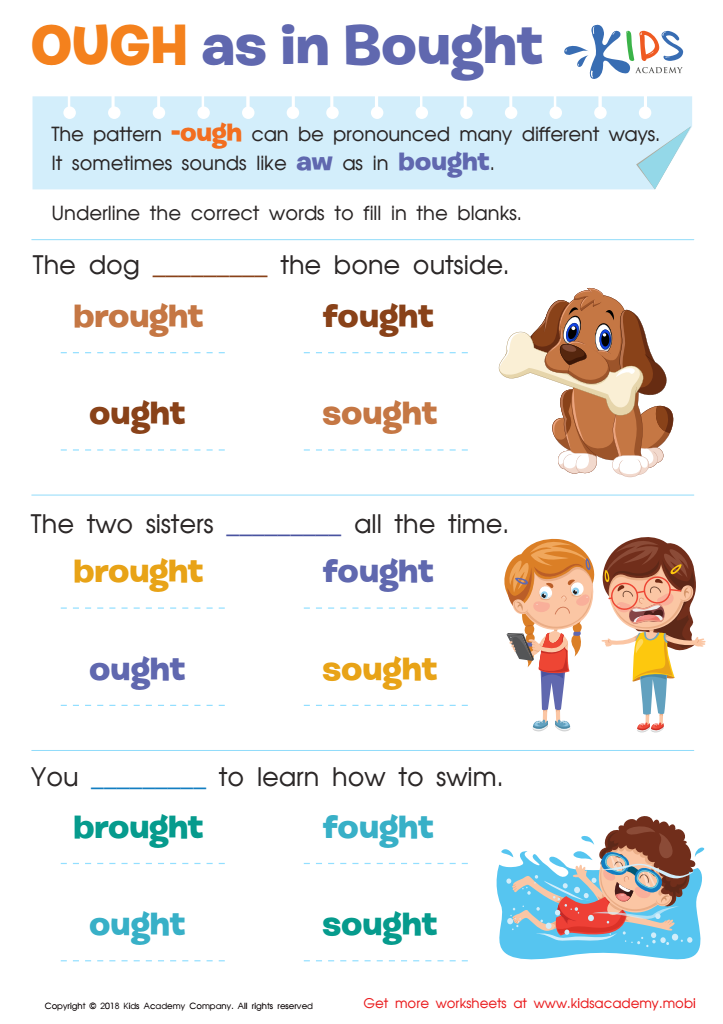
OUGH as in Bought Worksheet
Use this worksheet to teach your child the different pronunciations of -ough. For example, -ough can sound like ‘aw’ in ‘bought’. Ask your child to give more examples and help them underline the correct answers to fill in the blanks.
OUGH as in Bought Worksheet
Worksheet
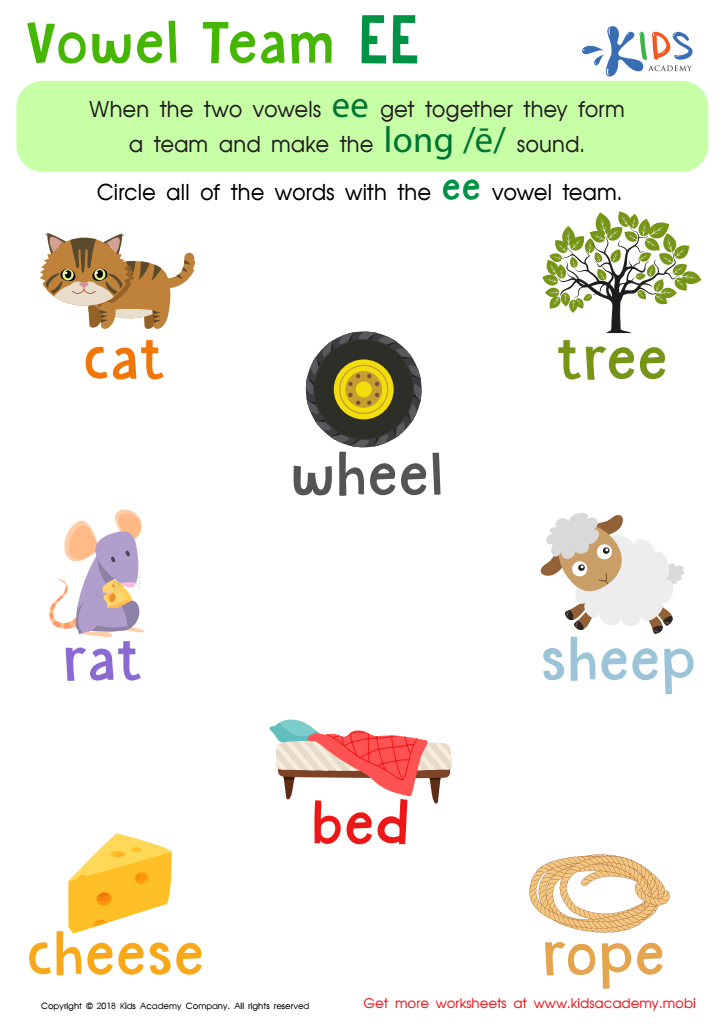
Reading: Vowel Team EE Worksheet
This worksheet is perfect for helping young learners master the /ee/ vowel team. It shows the first vowel with a long sound and the second vowel silent. It also provides pictures for unfamiliar words for readers of all levels. It's an ideal resource for teaching phonics skills.
Reading: Vowel Team EE Worksheet
Worksheet
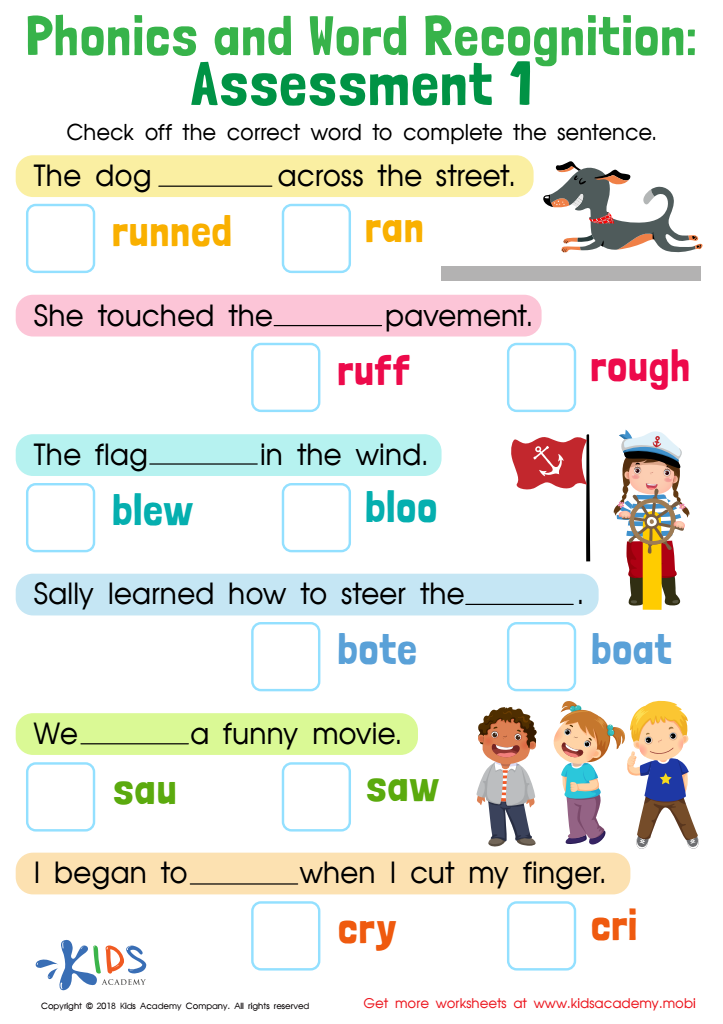
Phonics and Word Recognition: Assessment 1 Worksheet
This worksheet tests phonetics and word recognition. Students should be familiar with past tense verbs. Read incomplete sentences, then read multiple options and help students select the correct one.
Phonics and Word Recognition: Assessment 1 Worksheet
Worksheet
Join Kids Academy for Free
Who is primarily going to use this learning content?


Vocabulary enhancement and the understanding of vowel diphthongs are crucial for children aged 6-8. At this developmental stage, children are refining their reading, writing, and communication skills, which serve as foundational elements for their future academic success. Vowel diphthongs—combinations of two vowel sounds within the same syllable (like "oy" in "boy" or "ou" in "cloud")—play an integral role in the English language.
By emphasizing vowel diphthongs, teachers and parents can improve children's phonemic awareness, which is vital for decoding unfamiliar words. This skill not only enhances their reading fluency but also expands their vocabulary. A broader vocabulary allows for improved comprehension and expression, enabling children to engage more effectively in conversations and academic discussions.
Moreover, mastering diphthongs helps minimize reading difficulties later on and fosters a love for language. The ability to decode complex words increases children's confidence, promoting a positive attitude toward literacy. With enhanced vocabulary and phonetic skills, children will be better equipped for their educational journey, potentially preventing future learning gaps. Thus, prioritizing diphthong education can lay a strong foundation for children's language development, supporting their overall academic growth and communication abilities.