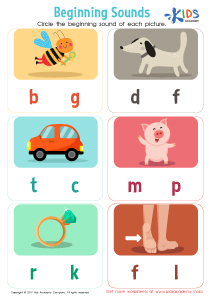
Sound differentiation Vowels Worksheets for Ages 6-8
3 filtered results
-
From - To
Unlock your child's ability to identify and differentiate vowel sounds with our engaging "Sound Differentiation Vowels Worksheets" designed for ages 6-8. Tailored to make learning fun, these worksheets help young learners recognize and practice vowel sounds through interactive activities, illustrations, and exercises. Boost literacy skills and phonemic awareness in a way that's enjoyable for kids. Each worksheet is expertly crafted to reinforce foundational language skills and support academic growth. Foster a love for reading and enhance your child's confidence in mastering vowels with Kids Academy's trusted resources. Get started today and watch your child succeed!
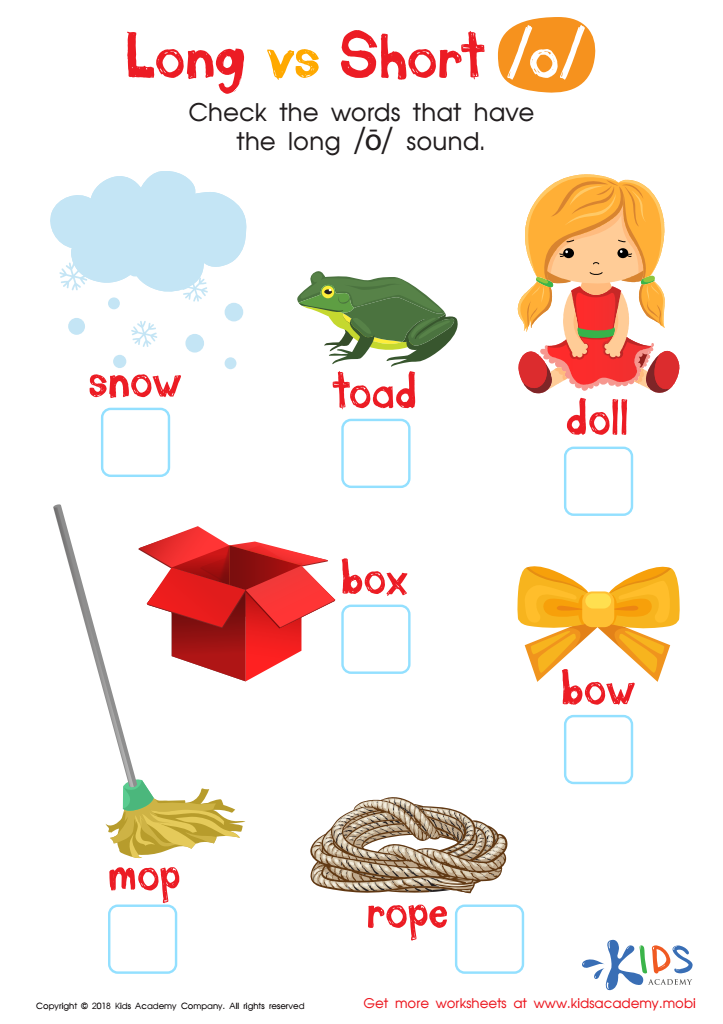
Long vs Short O Reading Worksheet
 Assign to My Students
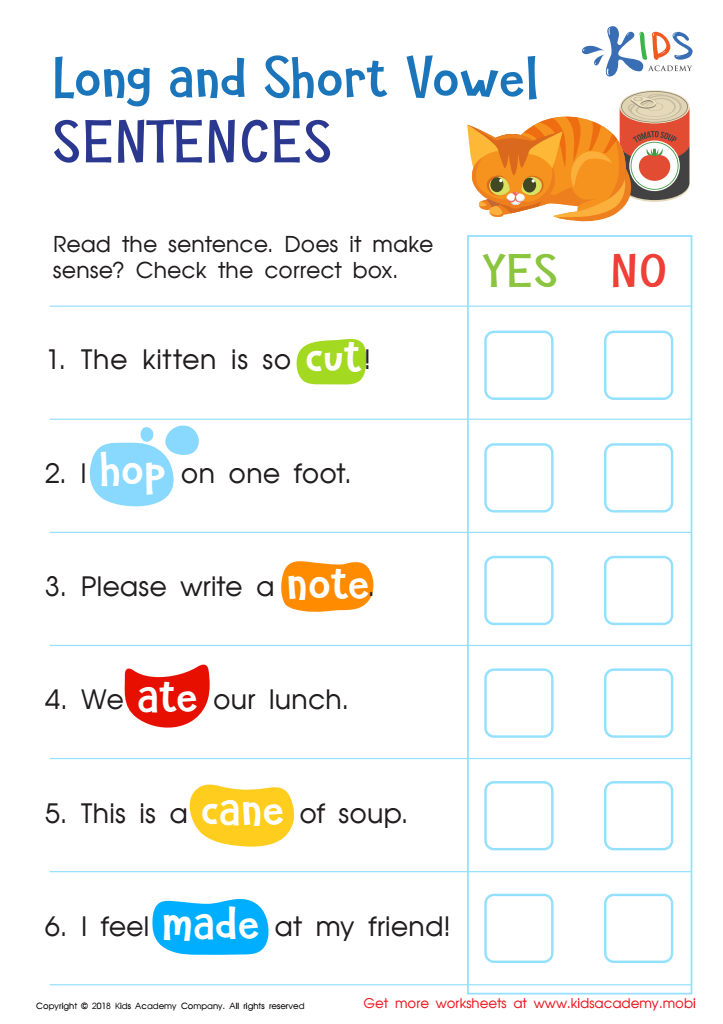
Long and Short Vowel Sentences: Assessment Worksheet
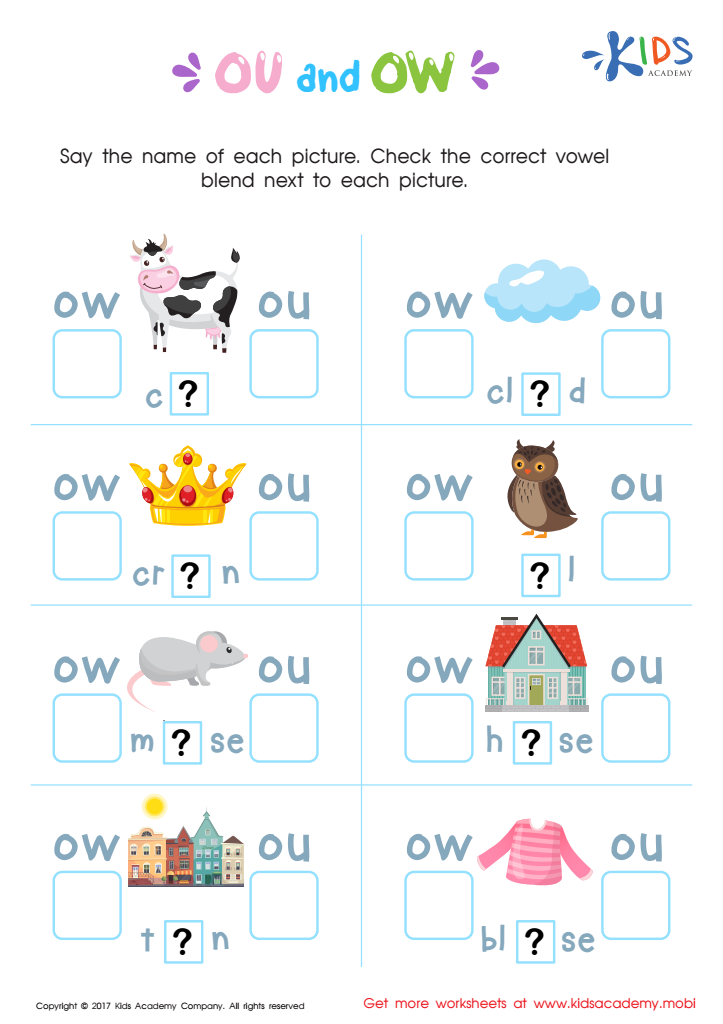
OU and OW Words Worksheet





Understanding and differentiating vowel sounds are crucial for children ages 6-8 as they form the bedrock of early literacy and language development. At this formative stage, children are learning to read and write, foundational skills that will impact their academic success. Vowels carry significant weight in these tasks as they are present in every word, and recognizing their sounds correctly aids in phonemic awareness, leading to better decoding skills.
Phonemic awareness, particularly with vowels, enables children to spell and read new words accurately, contributing to a broader vocabulary. Additionally, clear articulation of vowel sounds improves pronunciation, which in turn enhances oral communication skills – vital for social interactions and expressing ideas effectively.
Difficulties in differentiating vowel sounds can lead to misunderstandings in reading and writing, often causing frustration and hindering progress. This, in turn, can affect a child's confidence and interest in learning. By paying attention to vowel sound differentiation, parents and teachers can ensure children develop strong linguistic abilities, setting a firm foundation for future educational endeavors and effective communication. Supporting vowel sound differentiation through engaging activities also makes learning enjoyable, fostering a lifelong love for reading and learning.