Sound recognition Vowels Worksheets for Ages 6-8
5 filtered results
-
From - To
Enhance your child's phonetic awareness with our Sound Recognition Vowels Worksheets, designed specifically for ages 6-8. These engaging worksheets provide interactive activities that help students identify and distinguish vowel sounds in various words. By combining play with learning, your child will develop essential literacy skills while having fun. Each worksheet promotes sound recognition through vibrant illustrations and diverse exercises, ensuring an enjoyable learning experience. Perfect for classroom or home use, these resources will boost your child's confidence and proficiency in reading. Encourage their love for language with our thoughtfully crafted worksheets that pave the way for future literacy success!
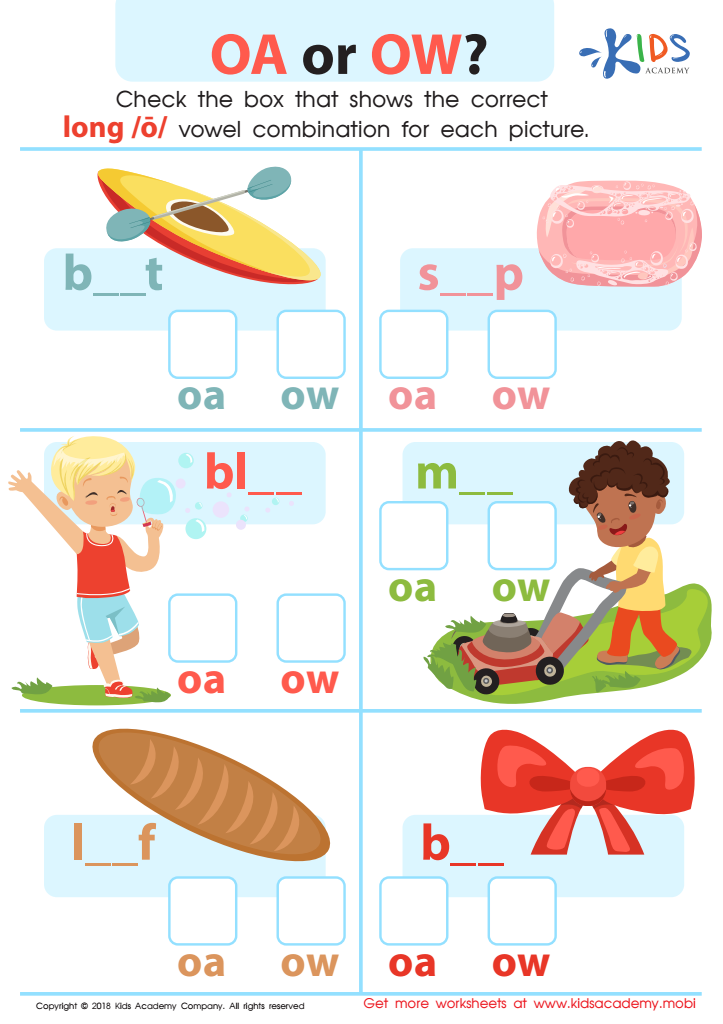
Reading: OA or OW Worksheet
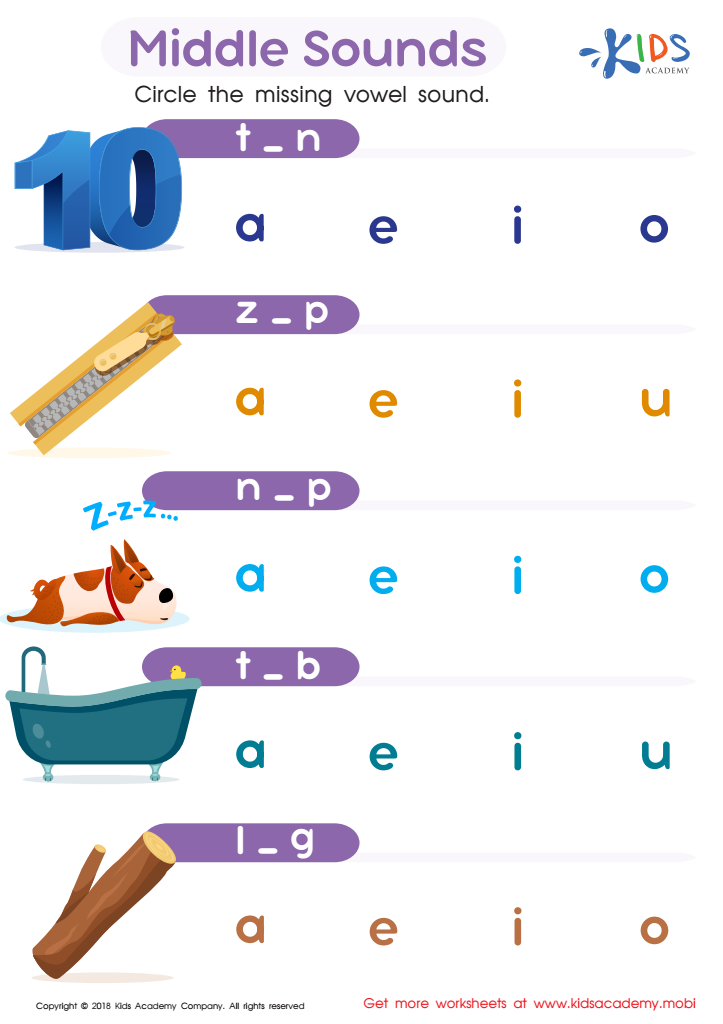
Middle Sounds Worksheet
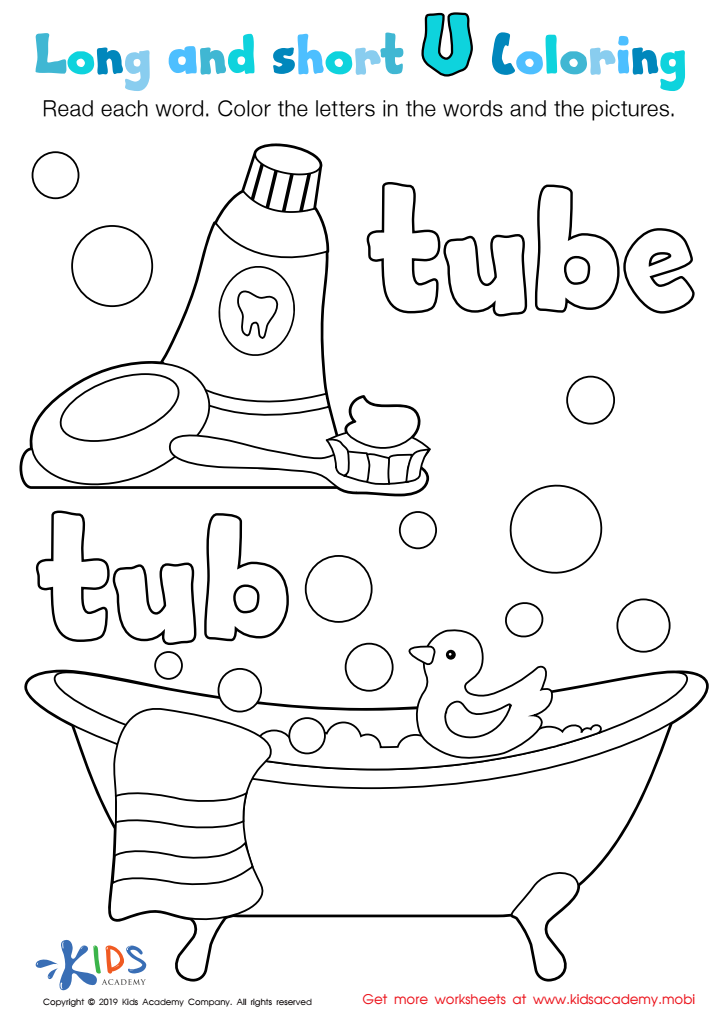
Long and Short U Worksheet
 Assign to My Students
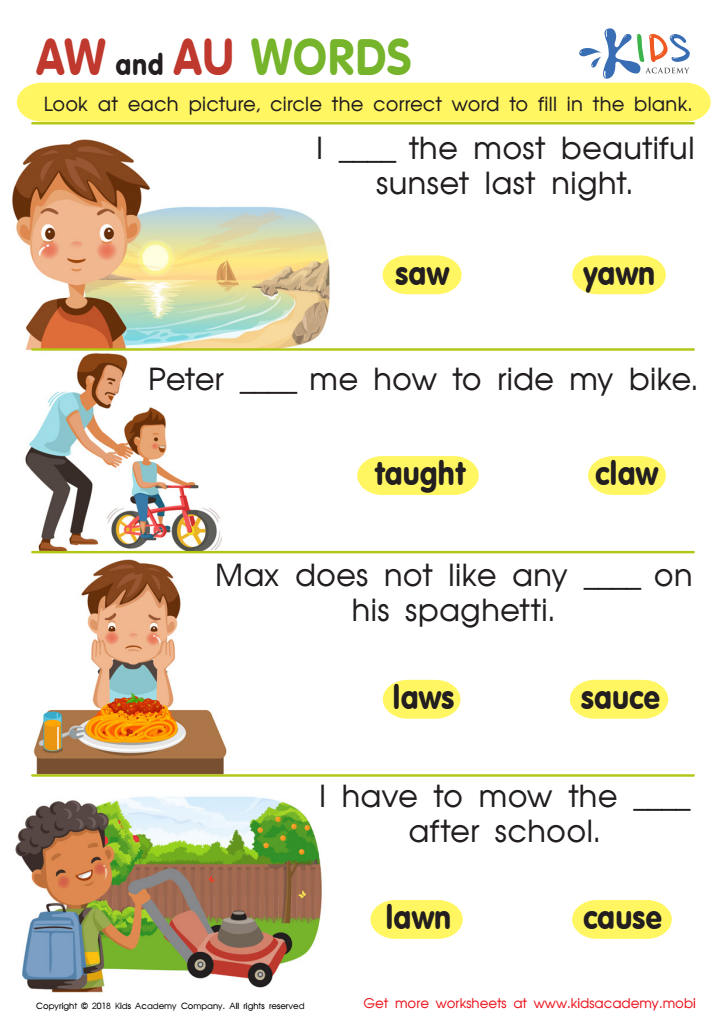
Reading: AW and AU Words Worksheet
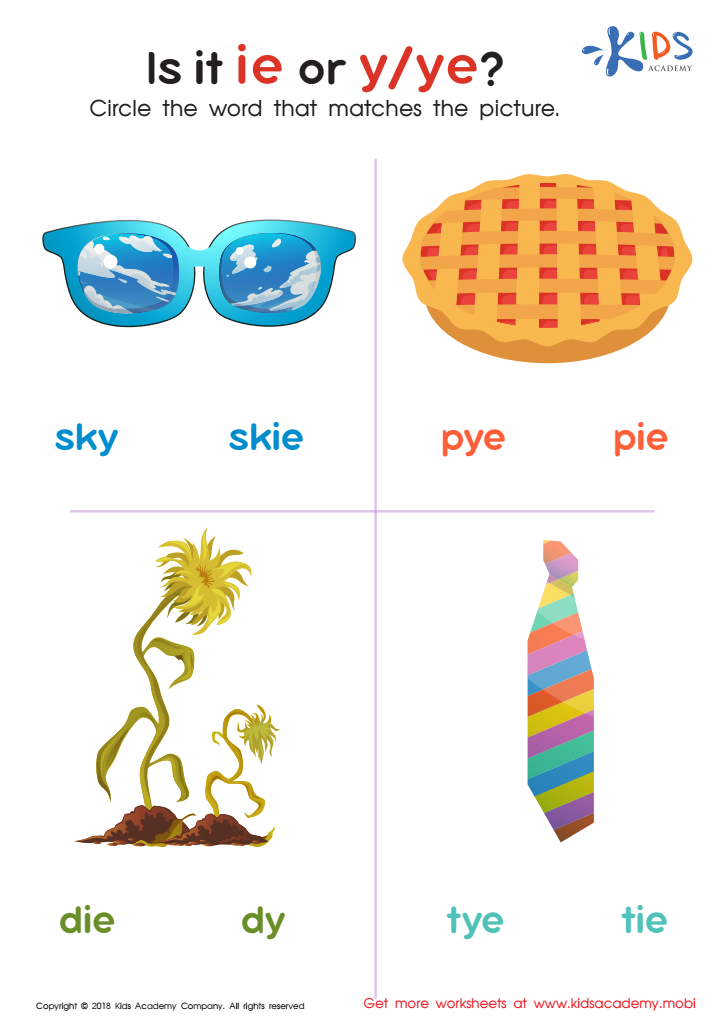
Is It IE or Y/Ye? Worksheet





Sound recognition, particularly of vowels, is crucial for children aged 6-8 as they develop foundational literacy skills. Vowels form the backbone of most words; understanding their sounds enables children to decode and manipulate language effectively. For early readers, recognizing vowel sounds is essential for identifying words, which supports reading fluency and comprehension.
When children grasp vowel sounds, they can engage in phonemic awareness activities, improving their ability to rhyme, segment, and blend sounds. This skill not only aids reading but also enhances spelling proficiency, making it easier for children to write coherently. Furthermore, developing sound recognition fosters confidence in language use, encouraging children to participate vocally in classroom discussions and social interactions.
Moreover, in our increasingly digital world, sound recognition is linked to emerging technologies, including language learning apps and speech recognition tools. By supporting sound recognition in young learners, parents and teachers not only lay the groundwork for future academic success but also equip children with tools for navigating an evolving technological landscape.
Ultimately, prioritizing sound recognition of vowels in early education cultivates a love for reading and learning, leading to lifelong benefits in communication skills and critical thinking.







