
Word identification Vowels Worksheets for Ages 6-8
5 filtered results
Difficulty Level
Grade
Age
-
From - To
Subject
Activity
Standards
Enhance your child's reading skills with our engaging Word Identification Vowels Worksheets, designed specifically for ages 6-8! These worksheets provide an interactive way for young learners to explore vowel sounds and improve their word identification skills. Utilizing colorful illustrations and fun exercises, students will practice recognizing vowels in various words, which aids in developing their reading fluency. Our carefully crafted activities cater to different learning styles, ensuring that every child can participate and learn at their own pace. Perfect for both classroom and home use, our worksheets make mastering vowels an enjoyable adventure for early readers. Start fostering a love for reading today!
Favorites
With answer key
Interactive
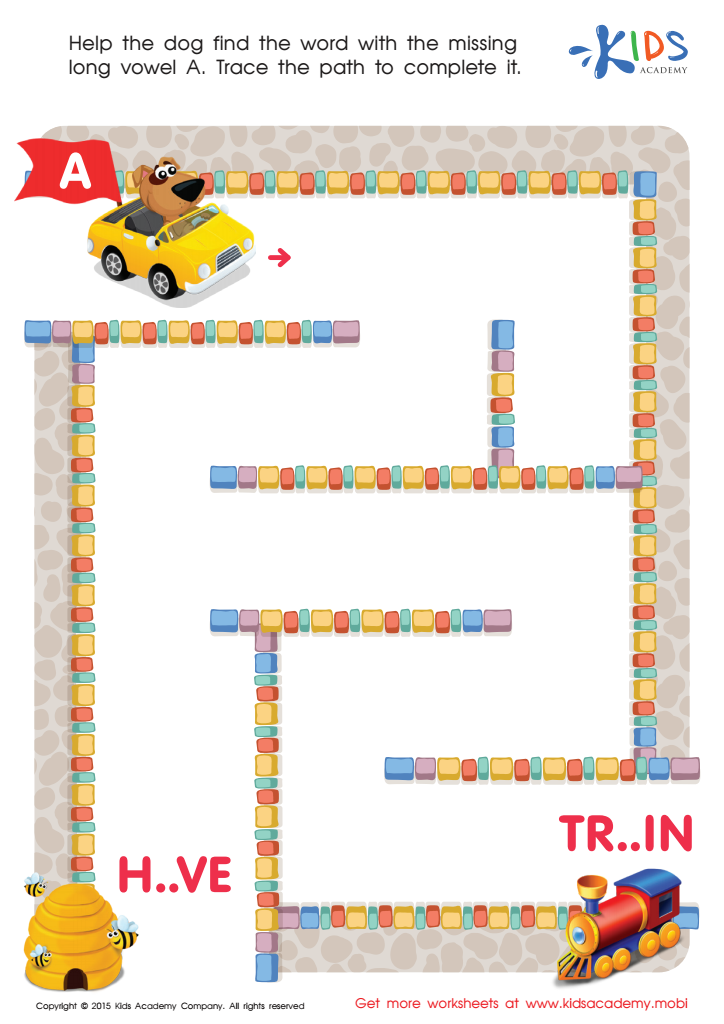
Long Vowel Sound A Worksheet
Teach your young learner about the long vowel A with this colorful free printable phonics worksheet. The long vowel A says its name while the short vowel A does not. Complete the worksheet by tracing the root to the toy train and helping the dog by filling in the missing letter A. Have them practice writing and spelling with phonics while having fun!
Long Vowel Sound A Worksheet
Worksheet
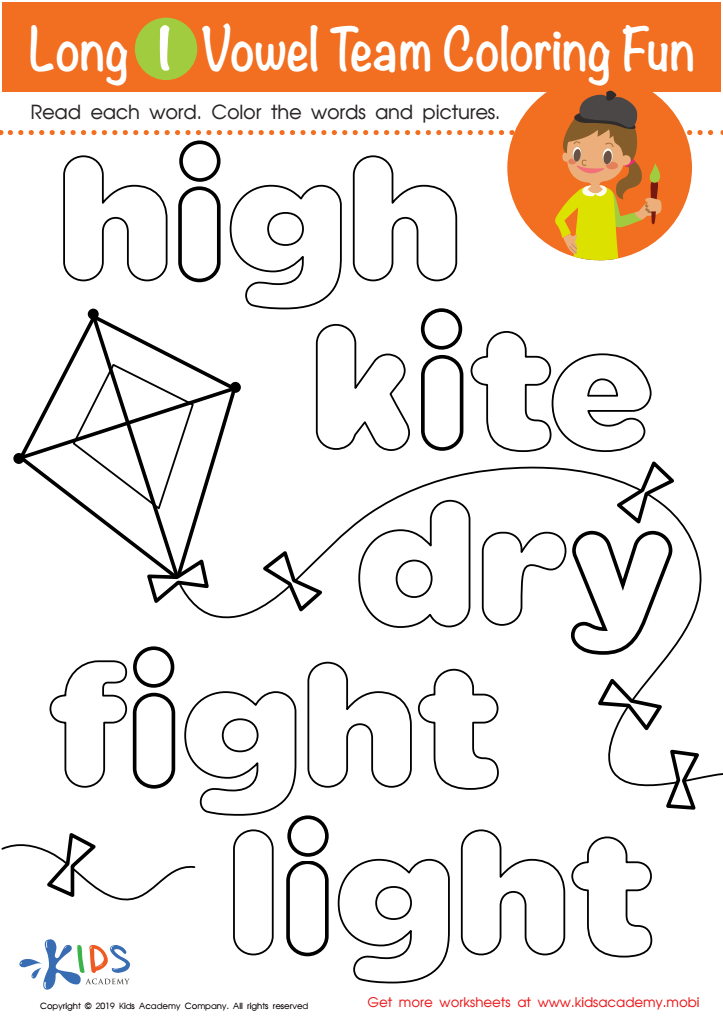
Long I Vowel Team Coloring Worksheet
This worksheet provides practice with letter combinations that make the long "i" sound while enhancing creativity and motor skills with a fun coloring activity. Unknowingly, new readers learn key phonics skills while having fun!
Download (PDF)
 Assign to My Students
Assign to My Students
Long I Vowel Team Coloring Worksheet
Worksheet
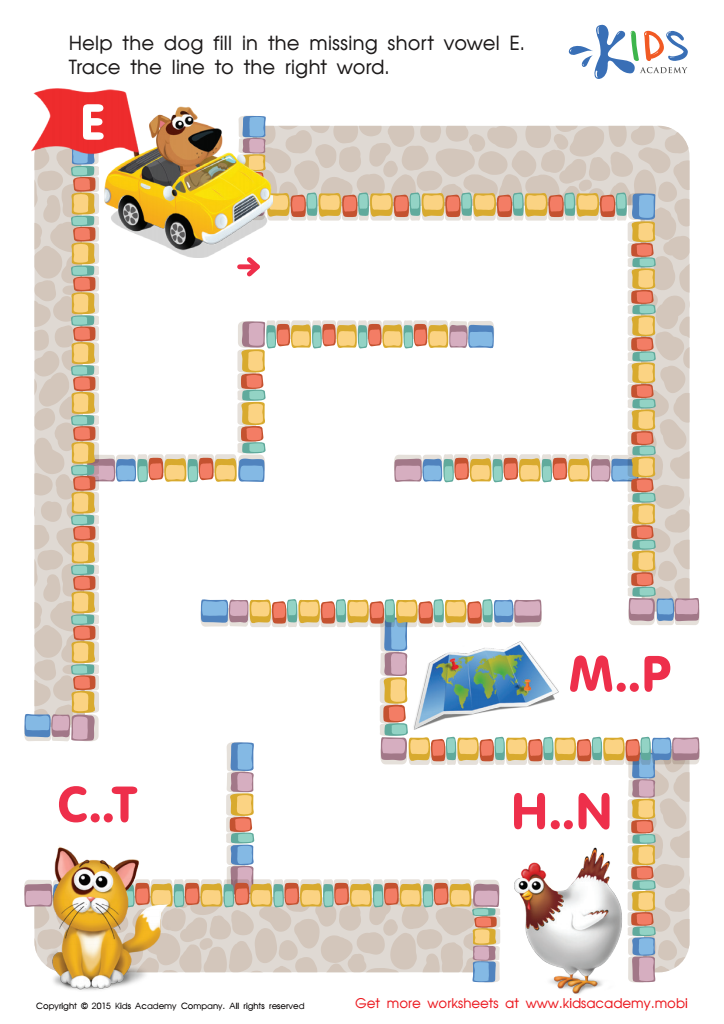
Short Vowel Sound E Worksheet
This free printable phonics worksheet helps kids learn the short vowel sound E. Kids need to help the dog complete the word “hen” by finding their way through a maze. It teaches kids to see the connection between letters and sounds and also strengthens their writing and spelling skills. Fun and educational, this phonics worksheet is great for kids. Want more? Check out here.
Short Vowel Sound E Worksheet
Worksheet
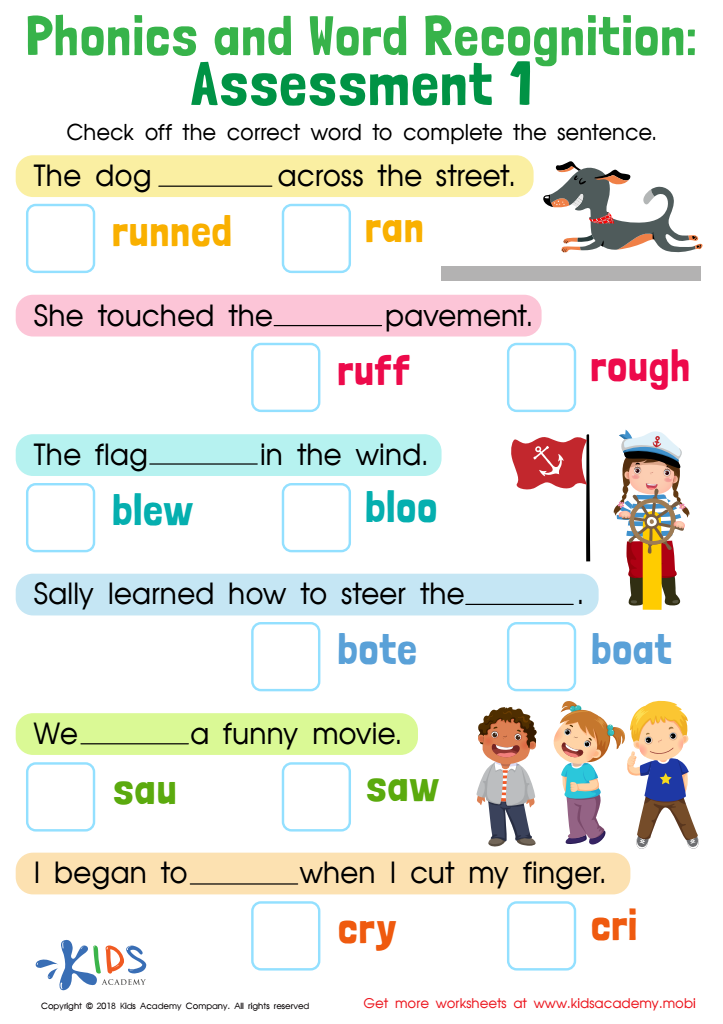
Phonics and Word Recognition: Assessment 1 Worksheet
This worksheet tests phonetics and word recognition. Students should be familiar with past tense verbs. Read incomplete sentences, then read multiple options and help students select the correct one.
Phonics and Word Recognition: Assessment 1 Worksheet
Worksheet
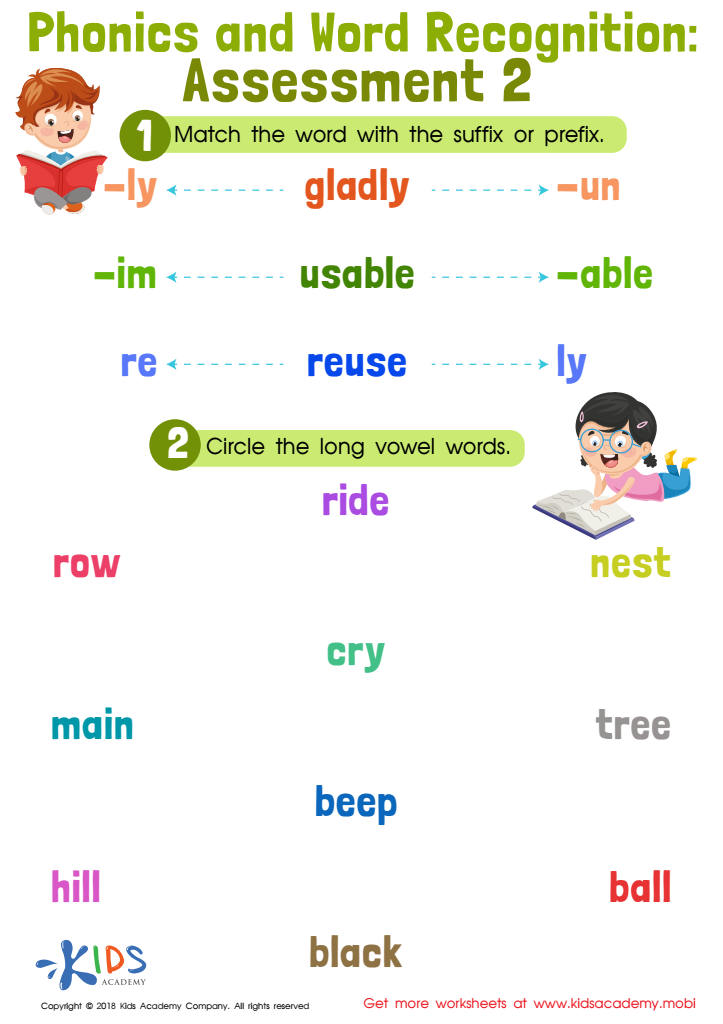
Phonics and Word Recognition: Assessment 2
Give kids common examples of suffixes and prefixes, such as "un-," "unhappy," "ness," "happyness." Ask them to match each word in the word recognition exercise to the correct suffix or prefix. Test phonetic understanding by having them circle the long vowel sounds.
Phonics and Word Recognition: Assessment 2
Worksheet
Join Kids Academy for Free
Who is primarily going to use this learning content?





Word identification, particularly focusing on vowels, is crucial for children aged 6-8 as it lays the foundation for their literacy development. During these formative years, children are learning to decode and recognize words, a skill that directly influences their reading comprehension and overall academic success. Understanding vowels is essential because they are the core components of syllables and play a key role in word formation.
Children who grasp vowel sounds can better navigate their reading experiences, enabling them to decode unfamiliar words more effectively. This, in turn, fosters confidence as they become fluent readers and enjoy literature. Furthermore, a strong grasp of vowel patterns helps enhance their spelling abilities, making writing more accessible and enjoyable.
Teachers and parents should prioritize word identification skills, particularly with vowels, because they support not just reading but critical thinking and communication skills. As children develop these foundational skills, they also cultivate a love for reading, which is vital for lifelong learning. Investing time in teaching vowel sounds and word identification can have lasting benefits, enhancing a child’s literacy journey and promoting academic achievement in various subjects. Recognizing the importance of these skills can lead to more targeted support and encouragement from parents and educators.







