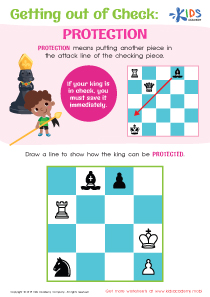
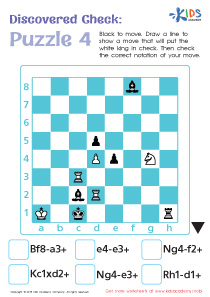
Critical thinking development Chess Worksheets for Ages 6-8
5 filtered results
-
From - To
Enhance your child's critical thinking skills with our engaging Chess Worksheets, specifically designed for ages 6-8. These fun and interactive activities not only introduce fundamental chess concepts but also challenge young minds to strategize and solve problems. By exploring different chess scenarios, children will develop essential skills such as logical reasoning, decision-making, and spatial awareness. Our worksheets are perfect for both classroom settings and at-home learning, making them a great resource for parents and teachers alike. Foster a love for chess while equipping your child with vital cognitive skills needed for academic success. Start their journey in critical thinking today!
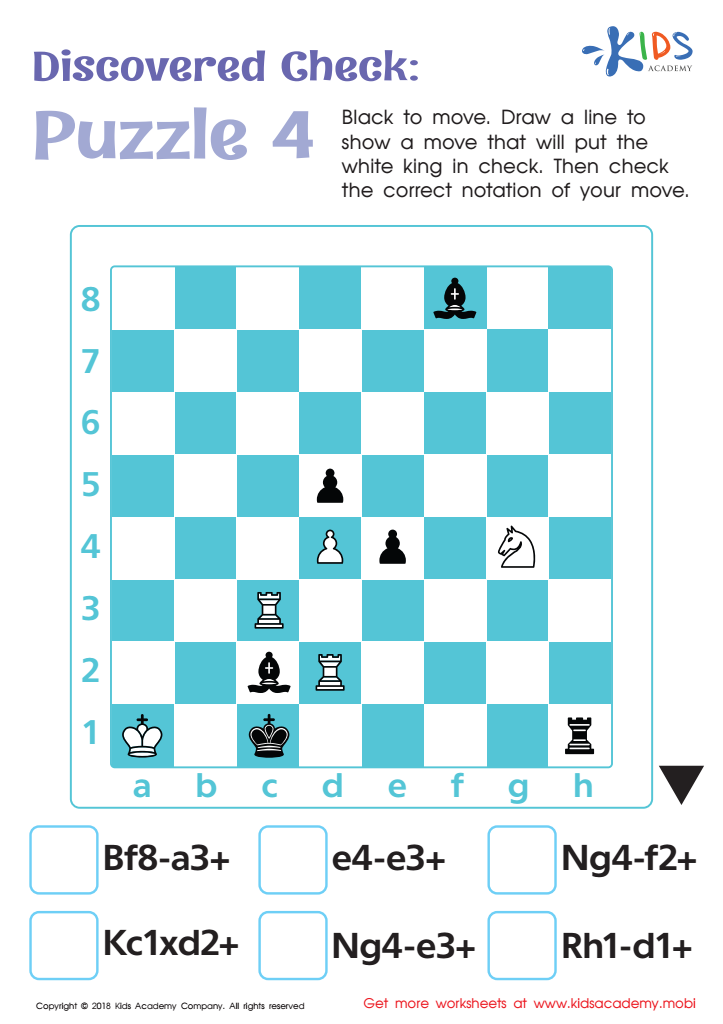
Discovered Check: Puzzle 4 Worksheet
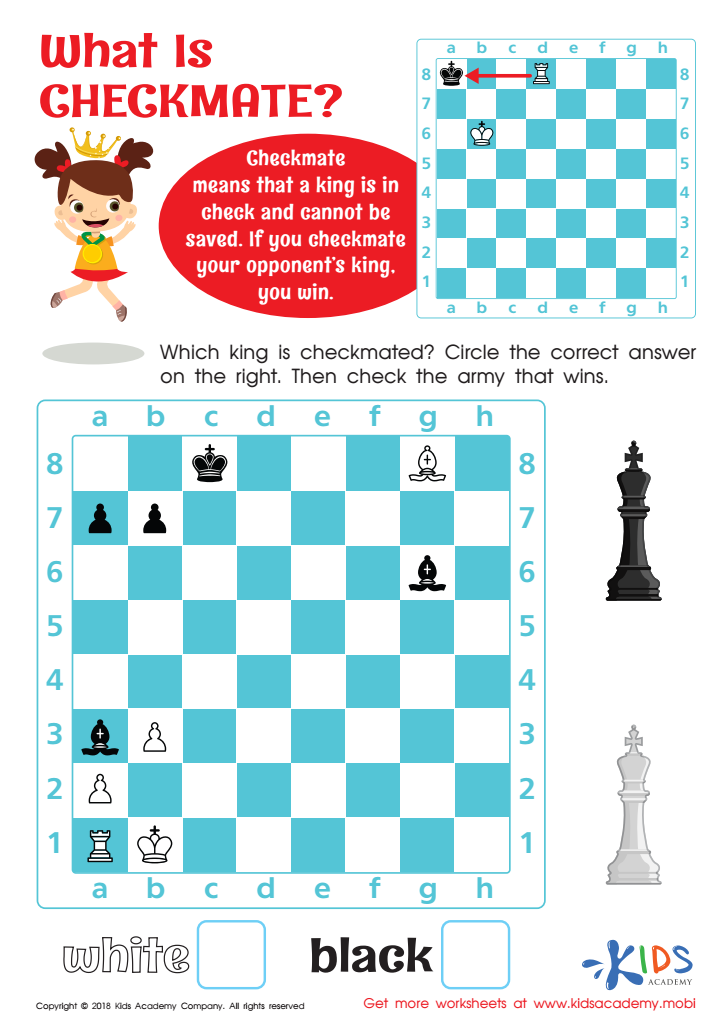
What is Checkmate? Worksheet
 Assign to My Students
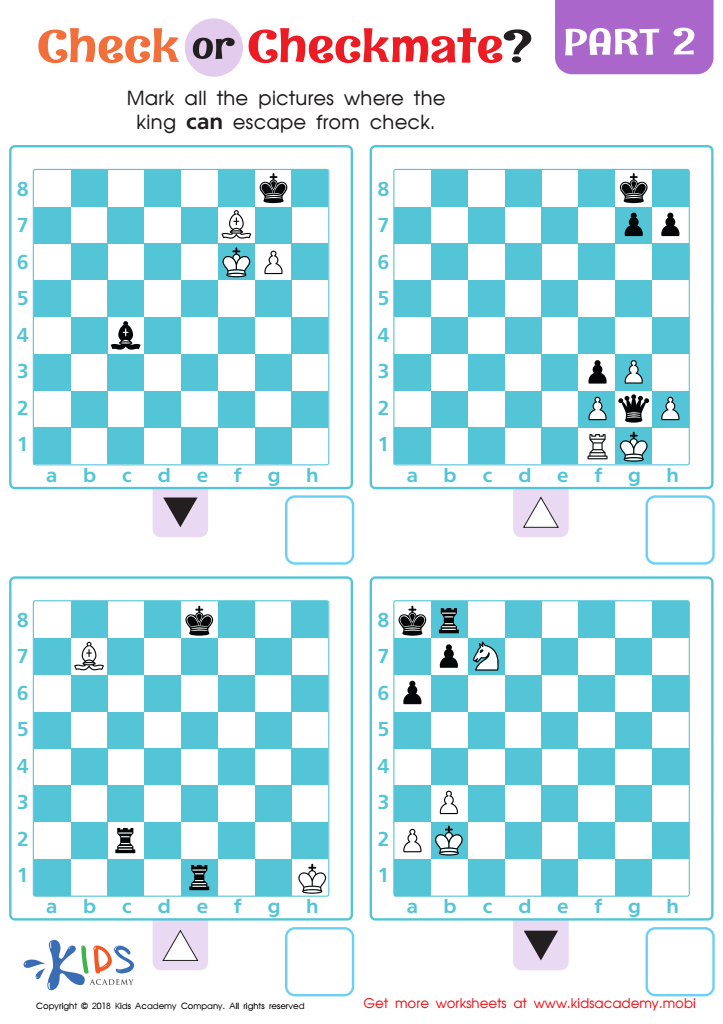
Check or Checkmate: Part 2 Worksheet
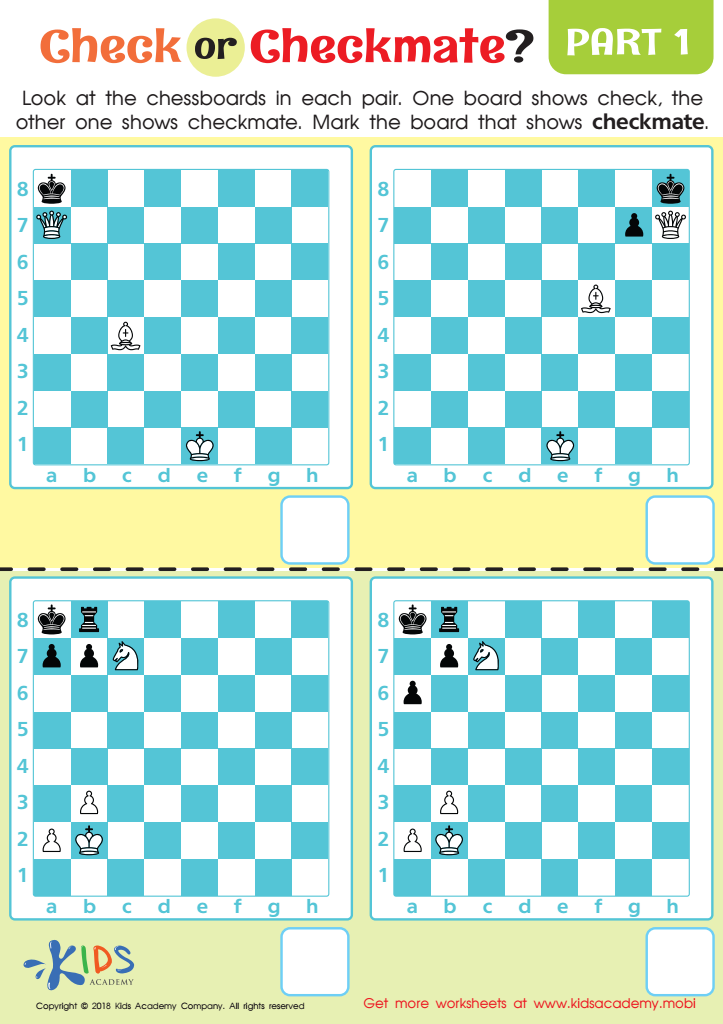
Check or Checkmate: Part 1 Worksheet
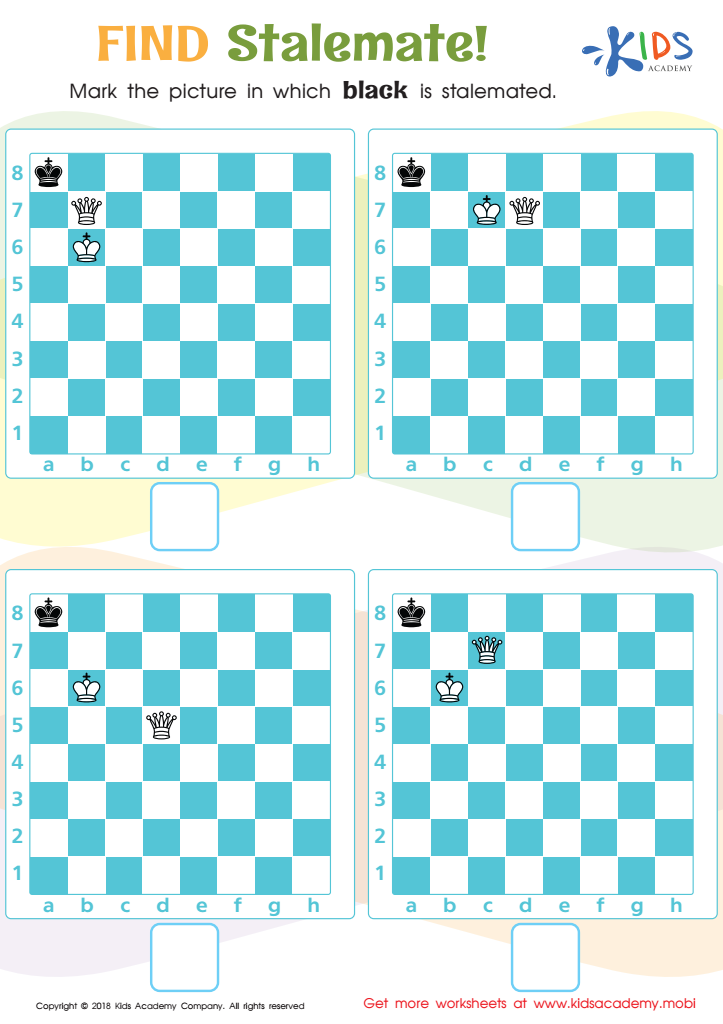
Find Stalemate! Worksheet







Parents and teachers should prioritize critical thinking development through chess for children aged 6-8 because it fosters essential cognitive skills. At this early age, children are highly responsive to learning through play, and chess offers a unique blend of enjoyment and intellectual challenge.
Engaging with chess helps young learners develop problem-solving abilities as they evaluate potential moves, anticipate opponents' strategies, and adapt to changing situations. This strategic thinking also enhances their ability to plan ahead, an important skill not only in games but also in academic pursuits and everyday life.
Moreover, chess encourages patience and the ability to handle defeat gracefully, teaching resilience and perseverance. These qualities are crucial for children's emotional development and can contribute to improved academic performance.
Furthermore, chess involves patterns and logical reasoning, helping children strengthen their analytical skills, which are valuable across all subjects, especially math and science.
By cultivating these critical thinking skills early on, parents and teachers equip children with the mental tools necessary for success in school and the complexities of life, shaping them into thoughtful, decisive individuals. Consequently, incorporating chess into educational strategies can be a powerful means of fostering a generation of innovative thinkers.