Problem-solving practice Chess Worksheets for Ages 6-8
3 filtered results
-
From - To
Discover our engaging "Problem-Solving Practice Chess Worksheets" designed for children ages 6-8! These worksheets blend the strategic world of chess with essential problem-solving skills, helping young learners enhance their critical thinking and decision-making abilities. Each worksheet offers fun puzzles and exercises that challenge kids to think ahead, analyze scenarios, and develop effective strategies. Perfect for both classroom learning and at-home practice, our materials are tailored to capture the attention of beginner chess players while framing complex ideas in accessible ways. Foster your child's cognitive growth and ignite their passion for chess with our thoughtfully designed resources!
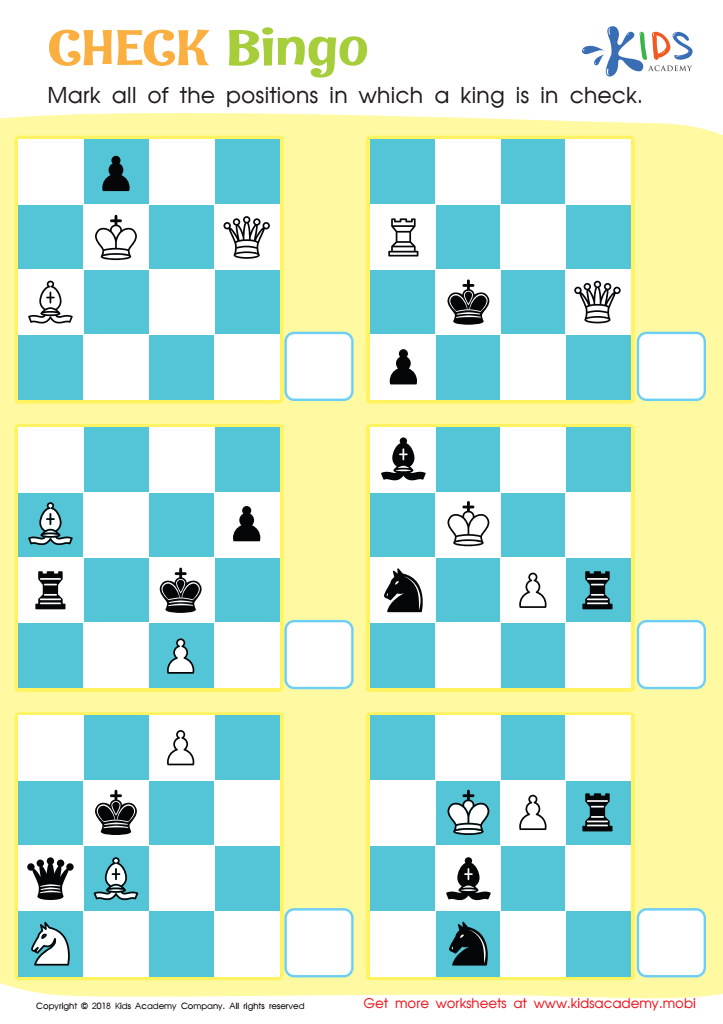
Check Bingo Worksheet
 Assign to My Students
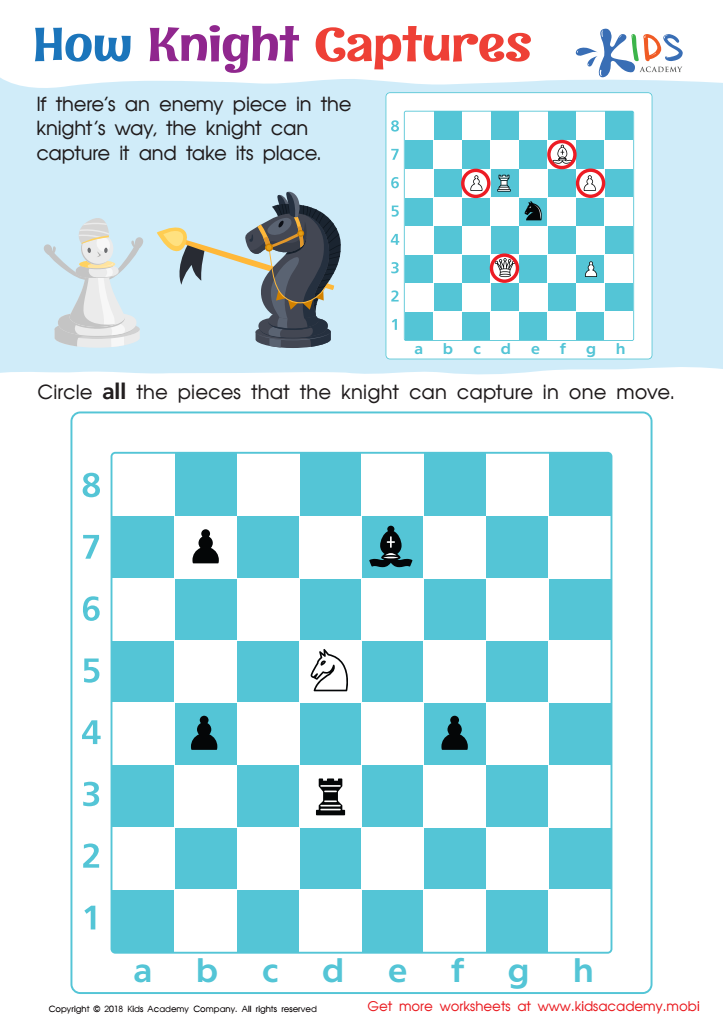
How Knight Captures Worksheet
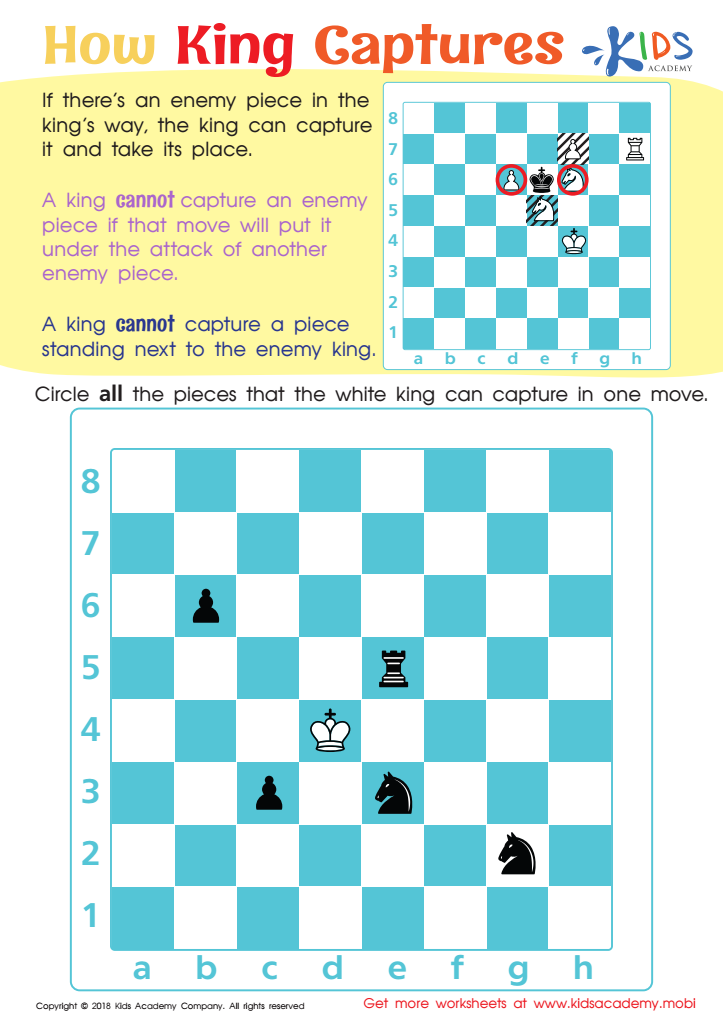
How King Captures Worksheet


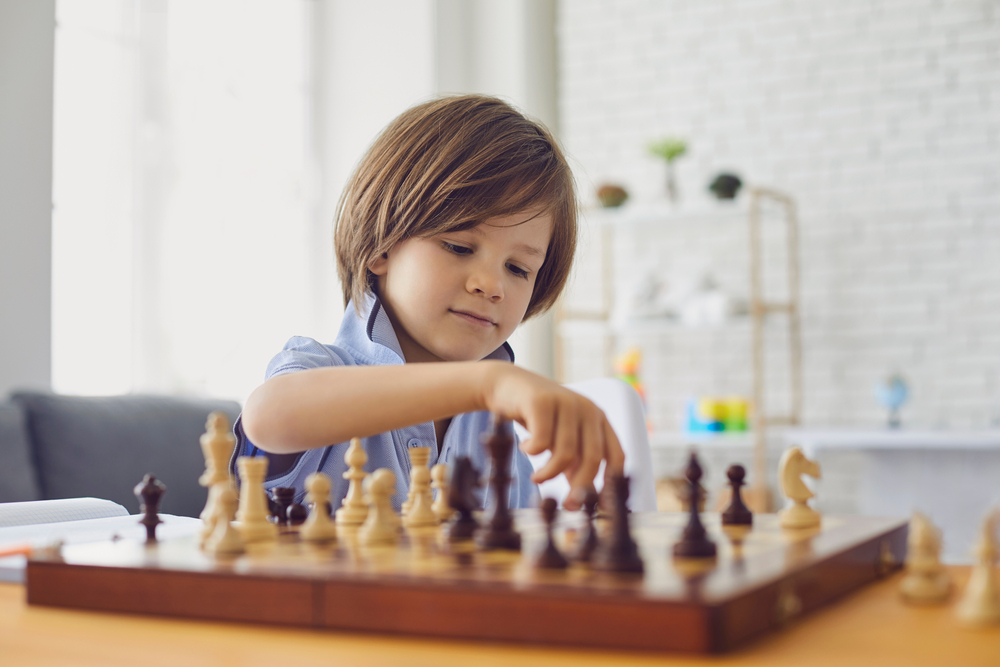

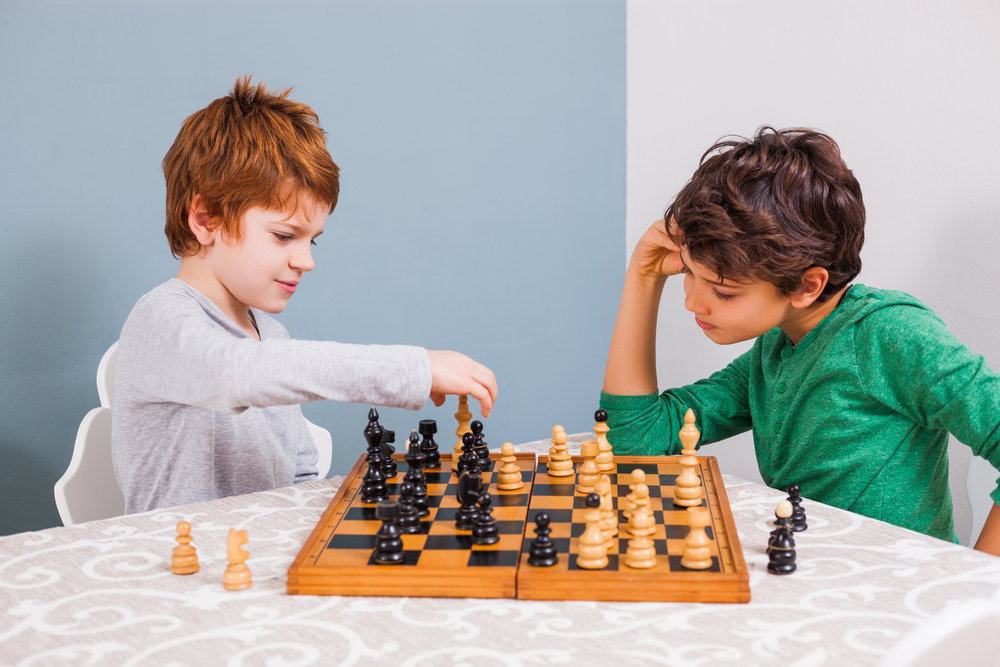


Problem-solving practice through chess for children ages 6-8 is crucial for their intellectual and social development. Chess is not just a game; it is a powerful educational tool that enhances critical thinking skills, encourages strategic planning, and fosters creativity. As children play, they learn to analyze situations, anticipate consequences, and evaluate their decisions, which are vital problem-solving skills transferable to real-life situations.
Furthermore, chess nurtures patience and perseverance. Young learners often face challenges in the game, teaching them to stay focused and resilient through setbacks. This experience can improve their overall attitude towards challenges in academic work and personal life.
Socially, chess can promote interaction among peers, as it is often played in groups. This collaborative environment helps children learn to communicate effectively, respect others, and work as a team, laying the groundwork for good social skills.
Finally, chess exposure at a young age sets the stage for lifelong learning. The cognitive skills developed through chess can lead to improved academic performance in subjects like math and science. Consequently, parents and teachers should encourage chess practice, enriching children's developmental journey while fostering a sense of fun and engagement in problem-solving.