Understanding chess rules Chess Worksheets for Ages 6-8
7 filtered results
-
From - To
Unlock the fascinating world of chess for young learners with our "Understanding Chess Rules" worksheets, designed specifically for ages 6-8. These engaging, printable activities introduce essential chess concepts through colorful illustrations and interactive tasks, making learning fun and accessible. Children will explore the rules governing each piece, how to move them, and fundamental gameplay strategies. Our worksheets not only enhance critical thinking and problem-solving skills but also foster a love for the game. Perfect for classrooms or home use, these resources will empower your child to become confident chess players, ready to challenge friends and family alike!
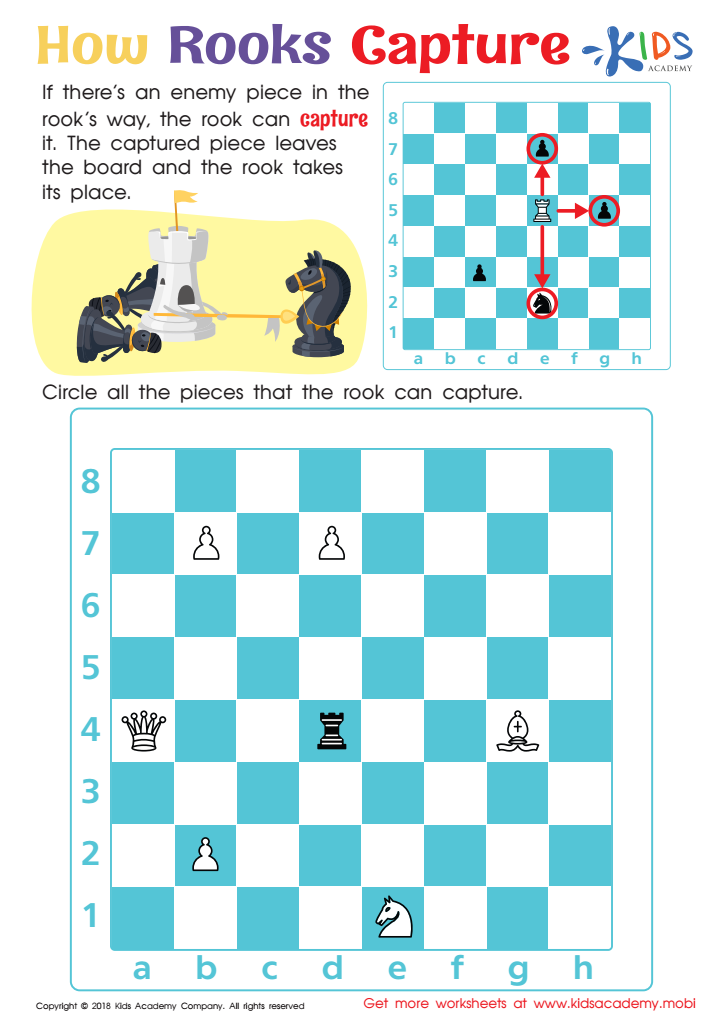
How Rooks Capture Worksheet
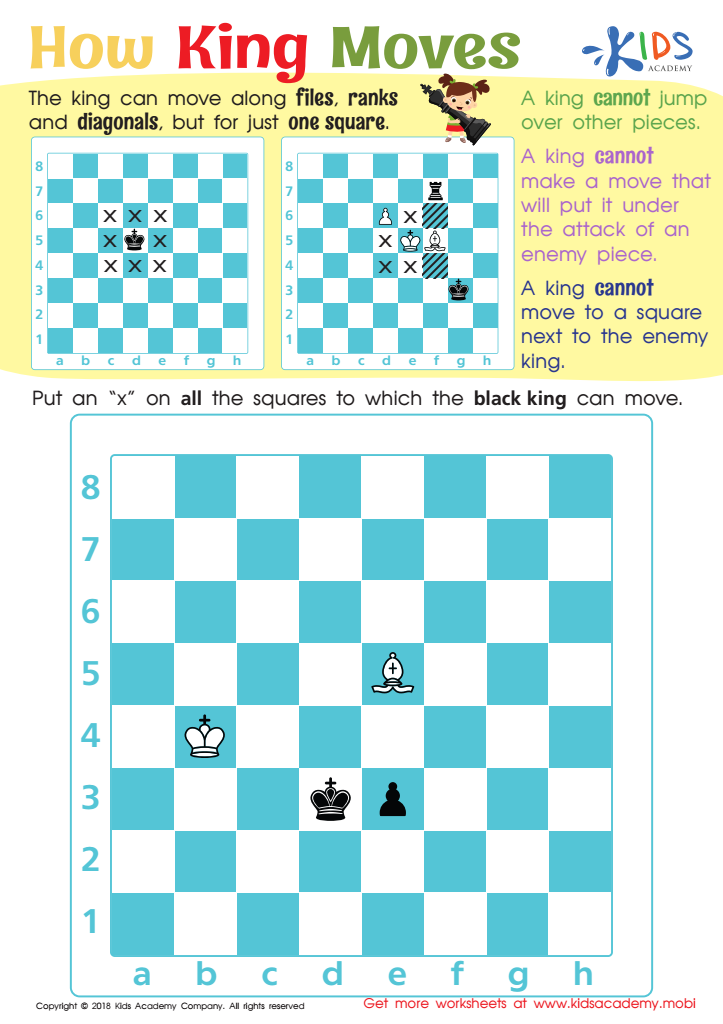
How King Moves Worksheet
 Assign to My Students
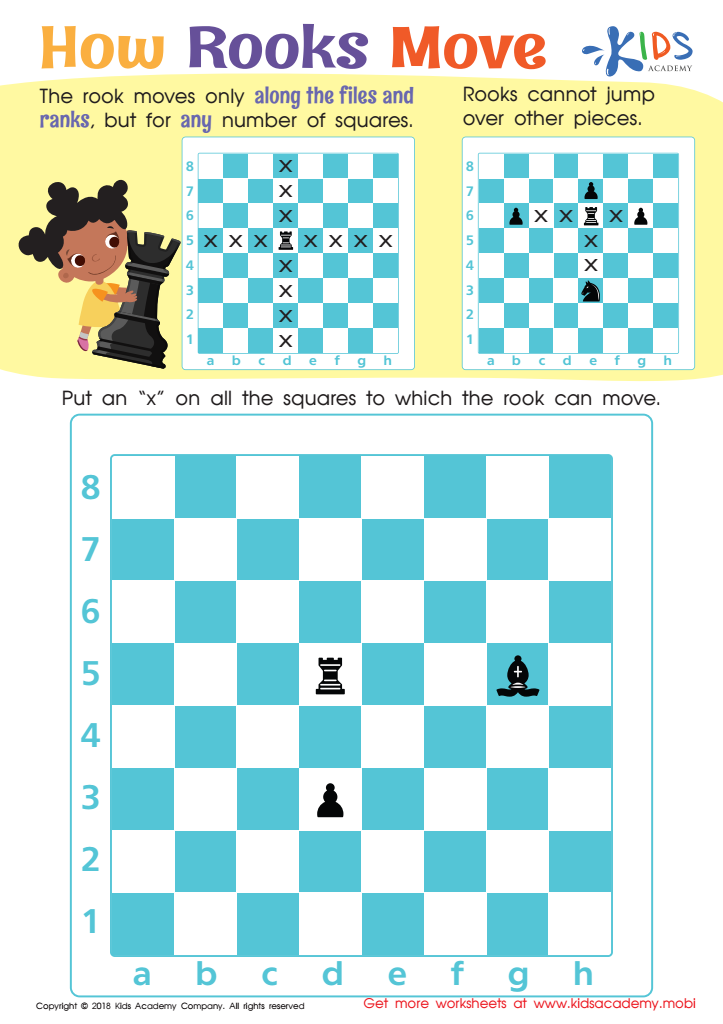
How Rooks Move Worksheet
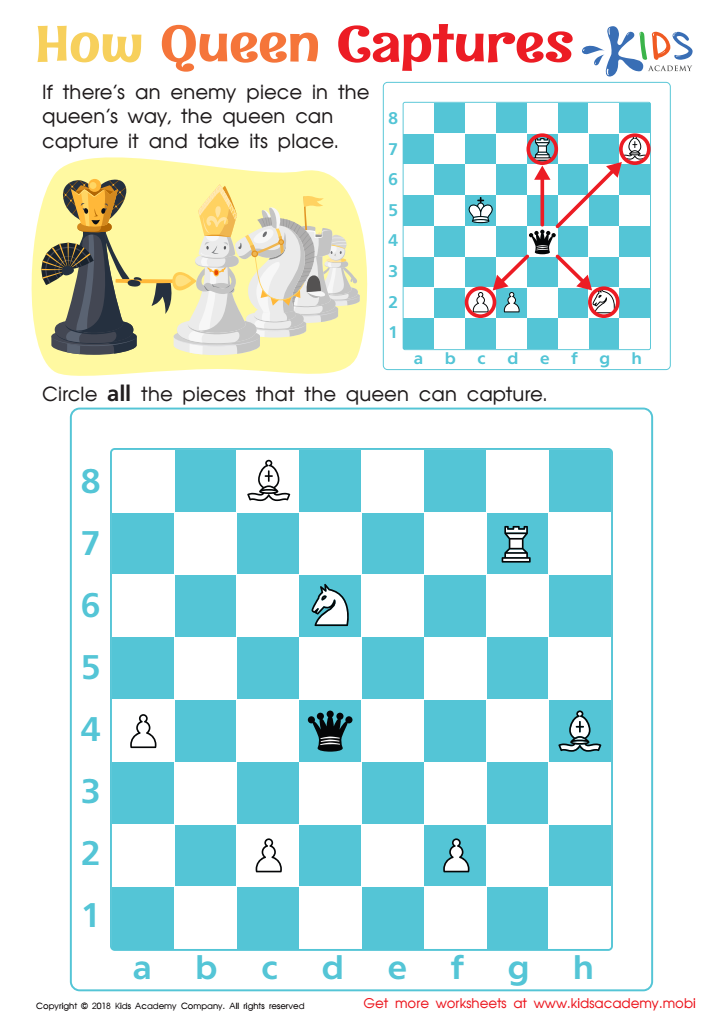
How Queen Captures Worksheet
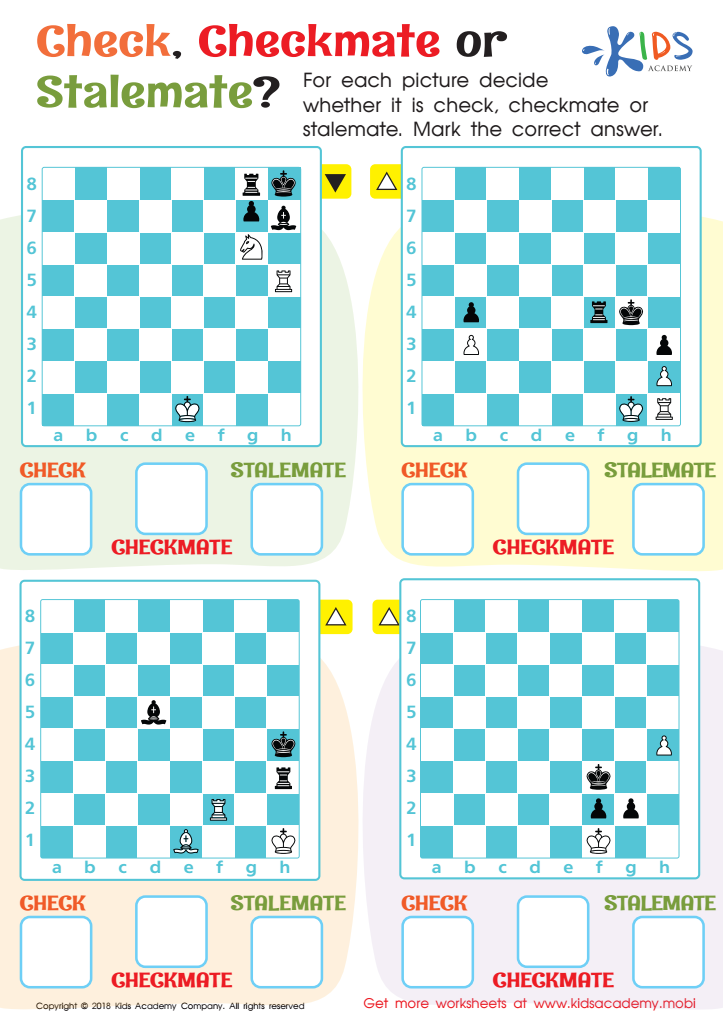
Check. Checkmate or Stalemate? Worksheet
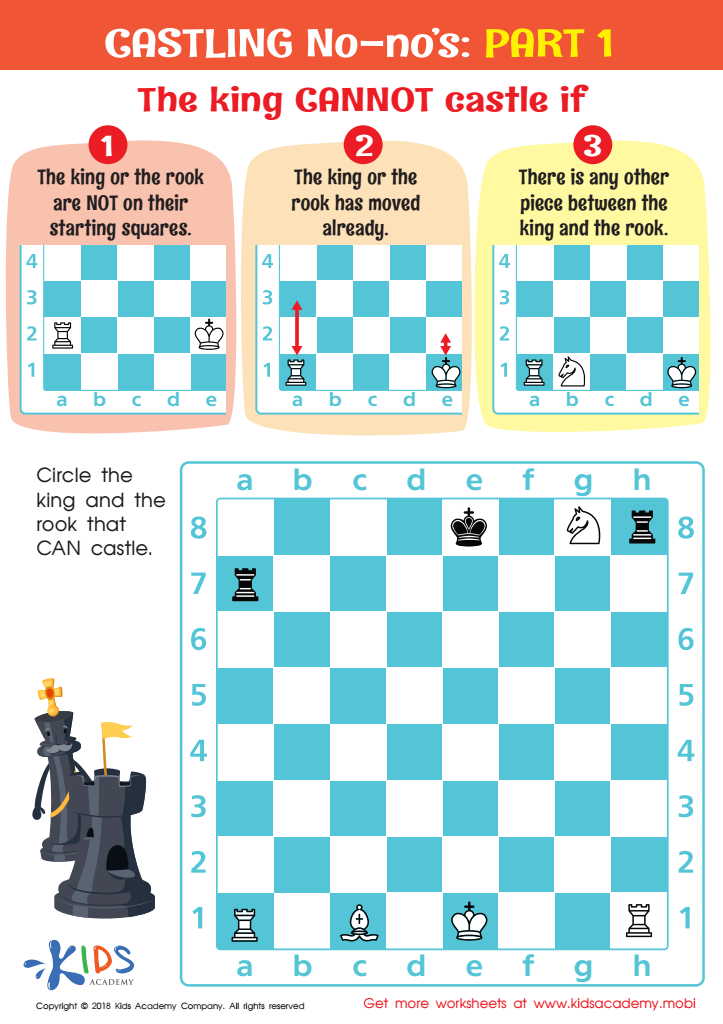
Castling No–no's: Part 1 Worksheet
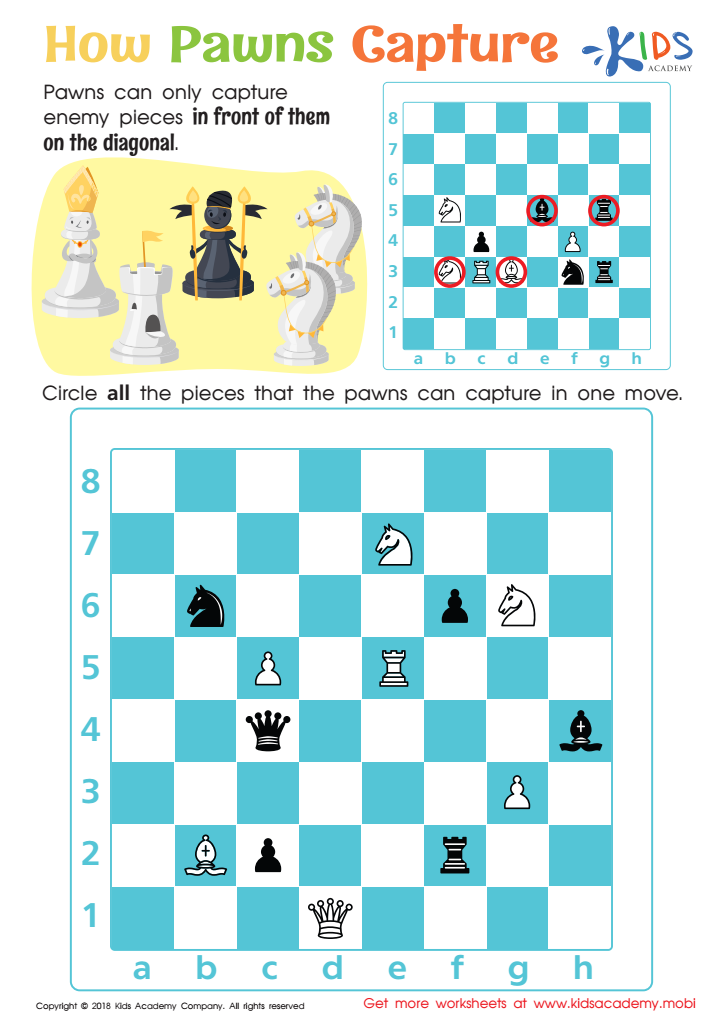
How Pawns Capture Worksheet







Understanding chess rules is crucial for parents and teachers working with children aged 6-8. First and foremost, chess promotes critical thinking and problem-solving skills. By learning the rules, children develop the ability to analyze situations, make decisions, and anticipate outcomes, which are invaluable skills not only in chess but in academics and life.
Moreover, understanding chess rules fosters patience and discipline. The game requires concentration and the ability to think ahead, teaching children to pause and reflect before acting. This translates to improved impulse control in various areas of life, including social situations and classroom behavior.
Additionally, chess can enhance social skills. Playing with peers offers children opportunities to communicate, collaborate, and even cope with losses gracefully—an essential life lesson.
Lastly, involving parents or teachers in this learning process creates stronger bonds. When adults participate in teaching kids about chess, it encourages healthy interactions and shared experiences, promoting a love for learning.
Therefore, understanding chess rules holds great value because it not only enhances cognitive and social abilities but also strengthens family and teacher-student relationships, making it a holistic educational tool.